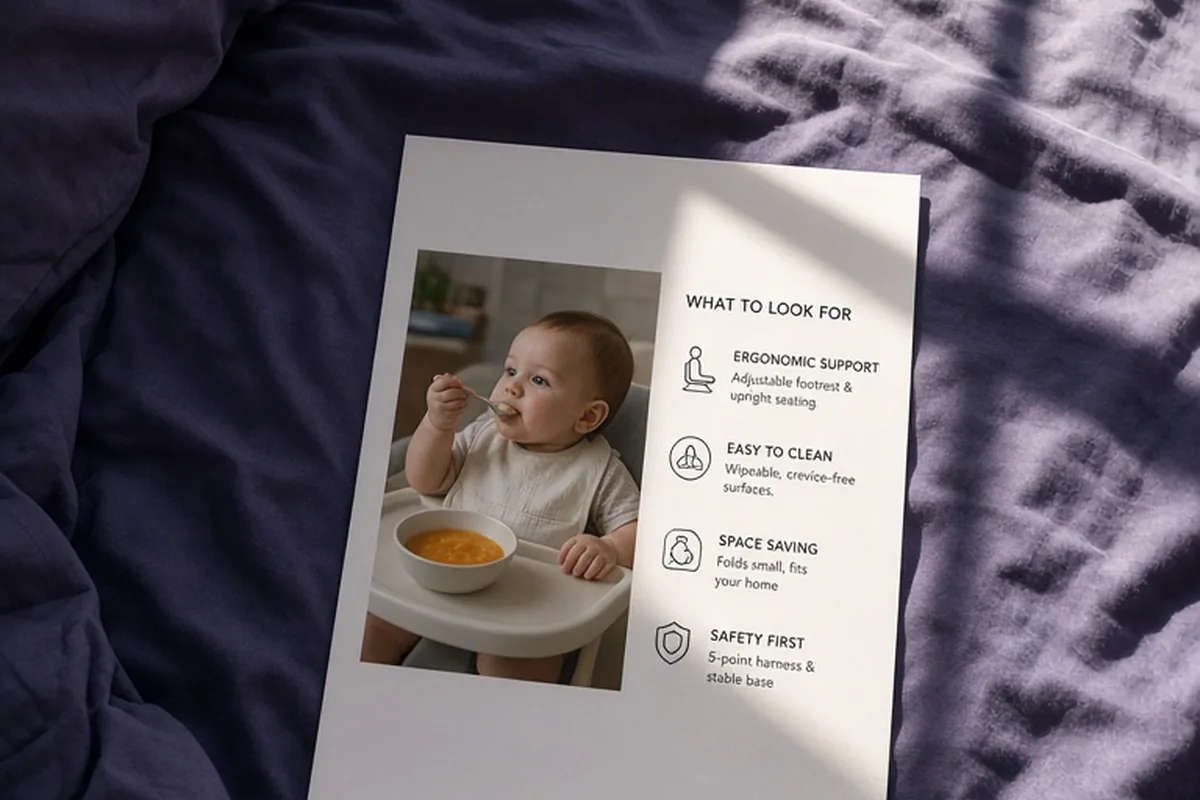
The best high chairs provide upright ergonomic support with an adjustable footrest, simple crevice-free wipeability, a secure five-point harness, and dimensions that suit your dining area. Depending on your home layout and budget, top options range from long-lasting convertible wooden chairs that grow with your child to lightweight, budget-friendly plastic models designed for rapid cleanup.
Introducing solid foods is a major milestone in your baby's development, but managing the daily reality of mealtime requires practical equipment that supports healthy posture and fits into your home routine.
Ergonomics and Posture Support for Developing Eaters
A high chair is more than just a piece of furniture that elevates an infant to table height; it serves as a foundational platform for motor development and safe swallowing. When babies begin exploring purees or solid finger foods around six months of age, their trunk stability is still maturing. Proper seated posture directly influences oral motor control and chewing mechanics. An upright sitting position prevents slouching, reduces fatigue during meals, and allows the diaphragm and abdominal muscles to function efficiently, which supports clear swallowing and a natural gag reflex.
To achieve optimal positioning, look for chairs that support the ninety-degree rule: hips, knees, and ankles should all rest at approximate right angles. A supportive, flat seat prevents the pelvis from tilting backward, while an adjustable footrest provides vital grounding. When an infant's feet dangle without support, their core muscles work overtime to maintain balance, diverting energy away from grasping food, chewing, and self-feeding. If you choose a model without an integrated footrest, adding an aftermarket wooden foot support or a sturdy rubber band can help stabilize your baby's feet during meals.
One common trade-off in chair design involves excessive cushioning and built-in recline functions. While reclining chairs are marketed for younger infants who drink bottles, they should never be used in a tilted position during solid food consumption. Soft, pillow-like inserts can also cause a baby to sink sideways, destabilizing their core. Choosing a firm seat that keeps your child upright ensures they remain properly aligned from their very first spoonful through independent toddler meals.
Ease of Cleaning and Daily Maintenance Realities
Mealtime with an infant or toddler is inevitably messy, making cleanup efficiency one of the most important everyday considerations. Food puree, yogurt, and crushed crackers quickly find their way into every available seam, screw hole, and fabric fold. A chair that looks sleek in a showroom can quickly become a source of daily frustration if it requires complete disassembly or extensive scrubbing after every snack. Evaluating how easily a chair wipes down will save significant time and prevent hidden food residue from spoiling.
High chairs constructed from smooth molded plastic or sealed wood with minimal hardware crevices are generally the easiest to maintain. Removable tray covers that fit inside standard dishwashers offer convenient sanitation, but the base tray beneath them must also be simple to detach and wipe. Look closely at the harness system as well; woven nylon straps that cannot be unclipped or wiped clean easily tend to absorb grease, oils, and stains over time. Models with stain-resistant, wipeable coated webbing or easily removable, machine-washable straps drastically simplify post-meal tidying.
Fabric seat pads represent another significant maintenance trade-off. While padded cushions can offer short-term comfort for smaller babies, fabric covers with deep seams, piping, or quilted patterns trap crumbs and liquids. If you prefer a cushioned model, prioritize waterproof or wipe-clean polyurethane surfaces without exposed foam, or select a chair where the cushion can be fully omitted once the child demonstrates stable independent balance.
Space Efficiency, Foldability, and Small-Kitchen Solutions
The overall footprint of a high chair can significantly impact kitchen and dining room traffic flow. Traditional standalone high chairs often feature wide, splayed legs designed to maximize stability and prevent tipping. However, in smaller kitchens, tight breakfast nooks, or narrow dining spaces, wide-angled legs can easily become tripping hazards for caregivers moving around the table. Before settling on a specific design, measure your available floor space and observe how the legs interact with surrounding chairs and walkways.
For homes where floor space is at a premium, several alternative designs provide full functionality without demanding permanent floor real estate. Folding high chairs collapse flat to lean against a pantry wall or slide into a closet between meals. Alternatively, booster seats that strap securely onto existing dining chairs elevate your baby directly to family table height while utilizing furniture you already own. Hook-on table chairs, which clamp directly onto sturdy countertops or tables, offer another compact solution that is equally well-suited for everyday urban living and frequent travel.
Compact and portable options do come with specific trade-offs to keep in mind. Folding chairs often have more mechanical hinges and joints where food debris can accumulate, requiring periodic deep cleaning. Hook-on seats and chair-mounted boosters must be checked regularly for secure attachment, and hook-on models are not compatible with glass tabletops, single-pedestal tables, or tables with decorative drop aprons that block clamp clearance.
Long-Term Value and Convertible Grow-With-Me Designs
A high chair purchase can either serve a temporary six-to-eighteen-month window or adapt across several years as your child grows into childhood. Convertible wooden high chairs are engineered with fully adjustable seat boards and footplates that adjust in height and depth. These designs start as infant feeding chairs with a harness and tray, transition into toddler booster seating at the family table, and eventually convert into ergonomic desk or dining chairs capable of holding older children and adults.
Evaluating the true financial value of a convertible chair requires looking beyond the initial retail price tag. Basic minimalist plastic high chairs are often inexpensive upfront and serve their basic purpose reliably, but they are typically outgrown around age two or three when the child requires more legroom or wants to sit directly at the family table. A higher-end adjustable wooden chair costs more initially, but its multi-year lifespan can eliminate the need to purchase separate toddler boosters or step-stool seating later on.
When calculating the cost of convertible systems, pay close attention to included components. Some manufacturers bundle the infant seat, five-point harness, and tray into a single package, while others sell the core wooden frame and require separate purchases for feeding accessories, cushions, and tray attachments. Factoring in the complete bundle cost helps ensure you choose a chair that matches your budget and long-term seating plans.
Essential Safety Features and Everyday Mealtime Habits
Safety is the primary consideration when evaluating any feeding seat. Active babies and toddlers frequently shift their weight, lean over the side to drop utensils, or push vigorously against tables. A safe chair design combines structural balance, certified materials, and reliable restraint systems to prevent slips, falls, and tipping accidents during mealtime.
A five-point safety harness that secures both shoulders and hips is essential for young infants who are just learning to sit upright, as it prevents them from sliding down or standing up in the seat. As children become older and more stable, some chairs allow a transition to a three-point lap belt, provided a crotch post remains in place to prevent slouching through leg openings. Beyond harness design, physical placement within your home plays a crucial role in preventing accidents; never position a high chair close enough to a wall, counter, or heavy table where a child could push their feet against the surface and tip the chair backward.
Caregivers should establish consistent safety checks before and during every feeding session to ensure equipment remains properly configured and secure.
- Always fasten and adjust the harness straps snugly every time your child is placed in the seat, even for short snacks.
- Verify that tray attachments and locking mechanisms click completely into place before placing food or drinks within reach.
- Inspect removable footrests and adjustable seat plates periodically to ensure screws and brackets have not loosened with daily vibration.
- Never leave a child unattended in a high chair or allow older siblings to climb on the frame while the chair is occupied.
Matching Chair Construction to Your Family Lifestyle
Selecting the right high chair ultimately depends on how your family approaches meals and shared living spaces. If your household prioritizes eating together directly at the dining table, a chair with an adjustable seat height that slides neatly under standard table edges without a bulky tray will encourage social interaction and family bonding. If quick, casual kitchen island feedings are more common, you may need a chair compatible with counter-height seating or an easily maneuverable freestanding model.
Aesthetic preferences and materials also play a legitimate role in your choice, as a high chair will likely remain a prominent fixture in your dining area for years. Natural hardwood finishes blend seamlessly with standard dining room furniture, while sleek modern plastics offer light weight and portability. Consider how often you will need to move the chair between rooms; lightweight frames or models with integrated non-marking rear wheels make it easy to shift the seat from kitchen counter to dining room as your daily routine shifts.
Take time to list your top two non-negotiables—such as ultra-fast cleanup, small footprint, or multi-year longevity—before making a final purchase. By prioritizing the specific practical features that alleviate daily friction in your home, you can choose a high chair that keeps mealtime safe, comfortable, and stress-free.
Illustrative Scenarios
Balancing Space Constraints and Daily Utility
A family living in a two-bedroom apartment needed a high chair for their six-month-old infant. Their dining area consisted of a small four-person table with tight walkway clearance into the kitchen. Initially considering a wide-stance traditional high chair, they noticed the splayed legs would block the kitchen doorway. They instead selected an adjustable wooden convertible chair with a vertical, narrow footprint that pulled directly up to their table and tucked neatly beneath the tabletop when not in use.
Key point: Measuring actual room walkways and evaluating chair base dimensions prevents mealtime furniture from becoming daily household tripping hazards.
Frequently asked questions
When is a baby ready to sit in a standard high chair?
Most babies are ready for a high chair around six months of age when they can sit upright with minimal support and hold their head steady. They should show signs of developmental readiness for solid foods, such as good trunk control and interest in mealtime.
Why is an adjustable footrest considered an important feature?
A footrest supports your baby's feet, creating a stable ninety-degree angle at the hips, knees, and ankles. This firm base of support prevents dangling legs, reduces core fatigue, and stabilizes the body so your child can focus on chewing and swallowing safely.
Is a dishwasher-safe tray insert necessary?
While not strictly required, a removable dishwasher-safe tray cover significantly speeds up cleanup after messy meals. It allows you to quickly remove the dirty surface for sanitizing while leaving the main tray attached to the chair.
How do I choose between a plastic high chair and a wooden convertible model?
Plastic chairs are typically lighter, less expensive, and exceptionally easy to wipe down, making them great for short-term use and tight budgets. Wooden convertible chairs cost more and require careful wiping, but they adapt into functional toddler and youth seating for years.
Your next step
Measure your dining area dimensions and table height today to determine whether a compact booster, a space-efficient convertible frame, or an easy-wipe freestanding chair best matches your home routine.