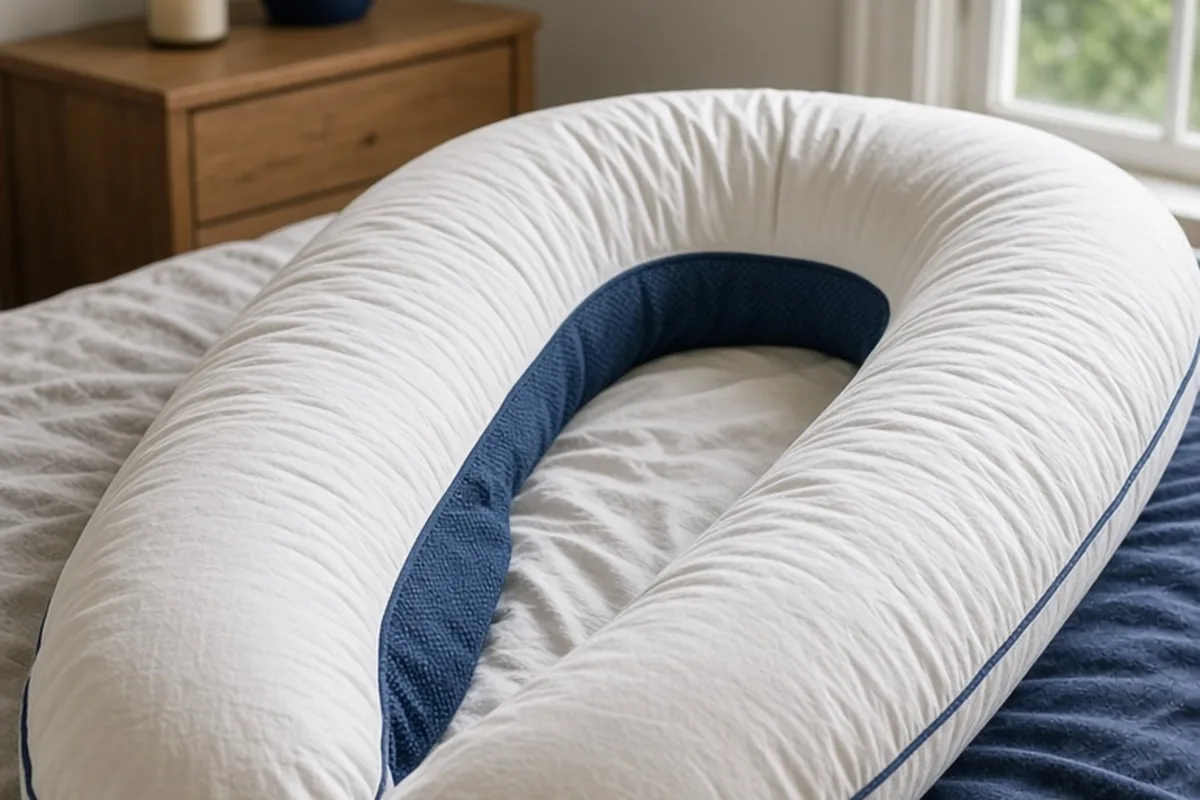
The best pregnancy pillow depends on your sleep position, available bed space, and specific body aches. Full-body U-shaped pillows offer balanced back and belly support for restless side sleepers, while C-shaped pillows cradle the head, spine, and knees in a smaller footprint. Wedge and modular pillows provide targeted relief for hip or abdomen strain without overcrowding shared mattresses.
Finding restful sleep during pregnancy often requires extra structural support to keep your spine aligned, relieve pressure on your pelvis, and cushion your growing belly. Because sleep preferences and room setups vary widely, selecting the right pillow means evaluating overall shape, fill density, breathability, and long-term usability.
Comparing Full-Body U-Shaped and C-Shaped Contours
Full-body contours are designed to support multiple pressure points simultaneously by running along both sides or the primary curvature of your body. A U-shaped pillow wraps completely around you, featuring two long parallel arms connected at the top. This configuration provides equal support to your front and back without requiring you to reposition the pillow when turning over during the night. It excels at preventing accidental back-sleeping while simultaneously elevating the upper knee to take torque off the sacroiliac joint. However, U-shaped options occupy substantial space, often taking up nearly half of a queen-sized mattress, which can be an important consideration if you share a bed.
A C-shaped design offers a more curved, asymmetrical silhouette that tucks smoothly under the head, curves along the spine or belly, and slips between the legs at the bottom. This layout delivers comprehensive head-to-toe alignment while leaving one side open, making it easier to slip in and out of bed for frequent nighttime bathroom visits. While a C-shaped pillow takes up less surface area than a U-shaped alternative, switching sleeping sides usually requires flipping or reorienting the entire cushion. Choosing between these primary shapes largely comes down to whether you prioritize symmetrical back support or easier nighttime mobility.
Evaluating Wedge Pillows and Modular Multi-Piece Systems
Wedge pillows and modular sets serve as targeted alternatives to large, continuous cushions. A pregnancy wedge is typically a compact, angled piece of dense foam designed to slide discreetly under the abdomen, behind the lower back, or beneath the knees. Because wedges focus on a single zone of discomfort, they allow you to continue using your preferred head pillow and do not crowd your sleeping partner. For example, placing a firm wedge slightly under the lower belly can reduce forward ligament pulling without changing your overall sleep setup.
Modular systems expand on this concept by linking two or more adjustable cushions with an elasticized fabric connector. These setups frequently feature dual side wedges that gently cradle both the abdomen and lower back, keeping you securely positioned on your side. The primary trade-off of modular and wedge designs is that they do not offer continuous, integrated support from head to ankle. If you experience widespread joint discomfort across your shoulders, hips, and knees simultaneously, a modular wedge might require supplementary cushions to achieve full-body relief.
Selecting Fill Materials for Density, Durability, and Firmness
The interior fill determines how well a pregnancy pillow retains its shape under continuous body weight. Polyfill, made of polyester fiberfill, is the most common material because it is lightweight, plush, and generally economical. It provides a soft, cloud-like feel that yields easily under pressure, making it comfortable for side sleepers who prefer gentle cushioning. However, polyfill tends to compress and flatten over several months of nightly use, often requiring regular fluffing or occasional re-stuffing to maintain adequate elevation between the knees.
Memory foam and shredded foam blends offer significantly higher resistance and long-term durability. Solid or shredded memory foam conforms precisely to body contours, distributing pressure evenly across the pelvic girdle and lumbar area. While shredded foam can be adjusted by adding or removing material through zippered inner liners, it makes the pillow noticeably heavier and firmer. Natural options such as organic latex or wool provide responsive resilience with minimal off-gassing, though they often carry a higher price point and require careful spot cleaning.
Managing Temperature Regulation and Cover Fabrics
Metabolic changes during pregnancy frequently lead to elevated body warmth, making heat retention a primary factor in pillow selection. Dense foam cores and synthetic outer fabrics can trap body heat, especially in designs that enclose the sleeper on both sides. To counteract heat buildup, look for pillows that incorporate cooling gel infusions, open-cell foam structures, or breathable, naturally moisture-wicking textiles such as bamboo-derived rayon, organic cotton, or linen.
Practical maintenance is equally essential because large pregnancy pillows cannot easily be placed into standard washing machines. A durable, removable, and machine-washable outer cover with an extended zipper track simplifies weekly laundering. When evaluating fabric choices, soft jersey cotton feels similar to a broken-in T-shirt and stretches gently over contours, while velvet and minky covers offer cozy warmth that may be overly insulating in warmer climates or during summer trimesters.
Aligning Pillow Dimensions with Bed Size and Sleep Positions
A pregnancy pillow should fit comfortably within your existing bedroom environment without compromising personal space or sleep quality. Oversized full-body models measure anywhere from 50 to 65 inches in length and over 30 inches in width. In a full or standard queen bed shared with a partner, such expansive dimensions can create an unintended physical barrier and restrict natural movement. Measuring your mattress width and accounting for personal sleeping boundaries helps prevent nighttime frustration.
Your habitual sleep position also dictates the most suitable pillow dimensions and layout. Dedicated side sleepers generally benefit from medium-firm elevation that keeps the top knee parallel to the hip, preventing pelvic rotation. Combination sleepers who shift positions throughout the night often fare better with flexible J-shaped designs or detachable multi-piece pillows that allow one arm of the cushion to be unzipped or repositioned without disrupting your entire rest.
Assessing Postpartum Longevity and Multi-Use Functionality
While pregnancy pillows are primarily chosen for prenatal comfort, many models offer practical utility well into the postpartum period. A flexible C-shaped or detachable U-shaped pillow can be looped around the waist to serve as an ergonomic nursing or bottle-feeding prop, reducing shoulder and arm fatigue during feeding sessions. Modular cushions can also be repurposed as supportive backrests for sitting upright in bed while reading or resting.
Before selecting a model solely for its secondary uses, ensure its primary shape meets your current prenatal sleep requirements. Extremely rigid wedges or oversized specialty pillows may not bend easily into feeding positions, whereas highly malleable fiberfill pillows adapt seamlessly across multiple configurations. Considering how easily a cushion transitions to everyday lounging helps maximize the long-term value of your investment.
Frequently asked questions
When is the best time to start using a pregnancy pillow?
Many people introduce a pregnancy pillow around weeks 16 to 20 when the abdomen expands and side sleeping becomes more necessary. However, you can begin using one earlier if you experience lower back tension or hip discomfort. Starting early helps you establish comfortable side-sleeping habits before physical strain peaks.
Can I use standard household pillows instead of a pregnancy pillow?
Yes, arranging regular pillows between your knees, behind your back, and under your belly can provide temporary relief. However, standalone pillows often shift or separate during the night, requiring frequent readjustment. Dedicated pregnancy pillows stay unified to maintain consistent pelvic and spinal alignment.
How do I choose between shredded memory foam and polyester fiberfill?
Choose shredded memory foam if you need dense, firm support that will not flatten under heavy pressure and you appreciate adjustable fill levels. Opt for polyester fiberfill if you prefer a lightweight, soft cushion that is easier to maneuver in bed. Consider your sensitivity to pillow weight and how often you plan to adjust it.
What is the best way to clean a large pregnancy pillow?
Select a model featuring a fully removable, zippered cover that can be machine washed and dried on gentle cycles. For the inner pillow insert, spot clean soiled areas with a mild detergent and allow it to air dry thoroughly. Avoid machine washing bulky solid foam inserts to prevent clumping or tearing.
Your next step
Assess your specific pressure points, bed dimensions, and temperature preferences to choose between full-body wraps, compact wedges, or modular designs for consistent, restorative rest.