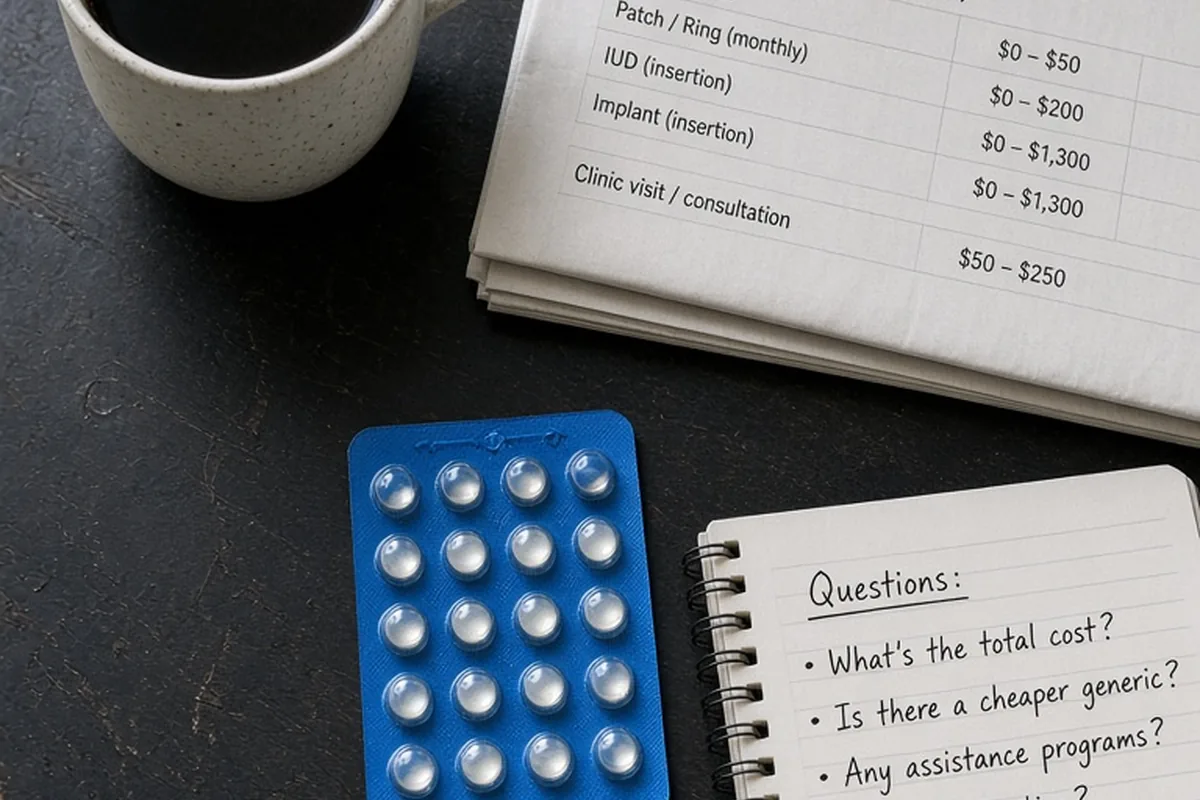
Birth control costs without insurance vary based on the method chosen, whether a medical procedure is required, and where you obtain the care. Out-of-pocket expenses typically combine clinical consultation fees with the retail price of the medication or device. Options range from affordable generic prescriptions and sliding-scale community health clinics to direct-to-consumer telehealth platforms and manufacturer patient assistance programs.
Navigating reproductive healthcare without private health insurance or public coverage requires understanding both direct medication expenses and associated clinical fees. Because pricing varies widely across pharmacies, clinics, and digital platforms, learning how contraceptive billing works allows you to identify reliable, budget-friendly options that fit your medical needs and lifestyle.
The Total Bill Breakdown for Contraceptive Care
When calculating the cost of birth control without insurance, the total out-of-pocket expense often involves more than the price tag on a pack of pills or a medical device. Total costs typically include two distinct categories: clinical service fees and pharmacy or supply charges. Depending on the method you choose, you may encounter an initial medical evaluation fee, diagnostic or screening tests, the retail price of the contraceptive product, and future follow-up or renewal charges.
Clinical fees encompass the time and expertise of a licensed healthcare provider who evaluates your medical history, discusses contraindications, checks blood pressure when relevant, and writes the prescription. For methods that do not require an invasive procedure, such as oral contraceptive pills, patches, or vaginal rings, this visit may occur in an office or through a secure virtual consultation. For procedural methods, including intrauterine devices (IUDs) or contraceptive implants, the clinical bill often includes specialized procedural fees for insertion, sterile equipment, local anesthetic, and eventual device removal.
Understanding this separation between professional service fees and medication prices is critical when gathering quotes. A pharmacy can tell you the cash price for dispensing a three-month supply of medication, but they cannot quote the consultation fee charged by an independent clinic. Conversely, a medical office might quote their fee for a visit while the pharmacy bills separately for the product. Clarifying whether a quoted price includes both the consultation and the physical product prevents unexpected medical bills.
Further reading: CDC: Contraception and birth control methods
Further reading: Office on Women's Health
Oral Contraceptives, Patches, and Rings: Recurring Supply Price Factors
Prescription methods that require regular replacement—such as daily oral contraceptive pills, weekly transdermal patches, and monthly vaginal rings—operate on a recurring payment model. Because you purchase these methods monthly or in multi-month bundles, the cumulative annual cost depends heavily on whether you use a generic formulation or a brand-name product, as well as the dispensing pharmacy you select.
Generic oral contraceptive pills generally offer the most economical recurring prescription path. Generic medications contain the exact same active hormones and therapeutic mechanisms as their brand-name equivalents, yet retail cash prices for generics are substantially lower. In contrast, newer progestin formulations or patented delivery systems without generic equivalents carry higher retail cash prices. If your provider prescribes a specific brand name, asking whether an equivalent generic alternative is available can significantly reduce your monthly outlay.
Where you fill your prescription also causes wide price variations. Large retail supermarket chains, independent community pharmacies, big-box wholesale clubs, and mail-order pharmacies all set their own cash prices for identical medications. Purchasing a 90-day supply in a single transaction often yields a lower per-month cost than filling a single 30-day pack each month, while also reducing the frequency of pharmacy visits or shipping fees.
Further reading: CDC: Contraception and birth control methods
Long-Acting Reversible Contraception (IUDs and Implants): Upfront vs Long-Term Expenses
Long-acting reversible contraceptives (LARCs), which include hormonal and copper intrauterine devices (IUDs) and subdermal hormonal implants, have a fundamentally different cost structure than monthly methods. These devices require a higher upfront investment because you are paying for several years of continuous contraception in a single clinical encounter.
The upfront cost of a LARC combines the acquisition cost of the physical device with the provider's fee for the insertion procedure. In some cases, a clinician may also recommend a preliminary consultation or a follow-up string check, which can add separate office visit charges. Furthermore, LARC users must account for the eventual cost of removal or replacement at the end of the device's approved lifespan or whenever they decide to discontinue the method.
When evaluated on an annualized basis across several years of use, a long-acting device can often prove more economical than paying monthly cash prices for pills, patches, or rings over the same duration. However, meeting the initial upfront expense without insurance can be a barrier. If you prefer a long-acting method, exploring community clinics, manufacturer patient assistance programs, or installment payment plans can help manage the initial procedural cost.
Further reading: CDC: Contraception and birth control methods
Further reading: Office on Women's Health
Using Title X Clinics and Community Health Centers for Sliding-Scale Care
For individuals without insurance, safety-net healthcare facilities such as Federally Qualified Health Centers (FQHCs) and Title X family planning clinics offer an accessible pathway to affordable reproductive services. Title X is a federal grant program dedicated to providing comprehensive family planning and related preventive health services to patients regardless of their ability to pay.
These clinics utilize a sliding fee scale, which adjusts the cost of medical visits, procedures, and contraceptive supplies based on your household size and documented income level. Patients with income below certain federal poverty thresholds may receive services at minimal or no out-of-pocket cost, while those with moderate income receive services at reduced, discounted rates compared to private medical practices.
To take advantage of sliding-scale discounts, you will typically need to provide basic income documentation during registration, such as recent pay stubs, tax returns, or a written declaration of financial support. Even if you do not qualify for the lowest fee tier, Title X clinics and community health centers often purchase contraceptive medications and devices at deeply discounted public health pricing, passing those savings directly on to cash-paying patients.
Further reading: Office on Women's Health
Telehealth Platforms and Direct-to-Consumer Birth Control Delivery
Direct-to-consumer digital health platforms have expanded access to birth control by bundling medical consultations and home delivery into streamlined, cash-pay services. These platforms operate across most US states and offer a practical alternative for people who do not have easy access to an in-person clinic or who want predictable, transparent pricing.
Telehealth platforms typically charge a nominal initial consultation fee, which covers a licensed clinician reviewing your medical questionnaire or conducting a virtual visit. If approved, the platform dispenses the prescription through an affiliated mail-order pharmacy and ships the medication directly to your residence, often in discreet packaging with automated refills every one to three months.
While digital platforms provide pricing transparency and convenience, it is important to understand their operational boundaries. Most telehealth services focus primarily on oral contraceptive pills, patches, vaginal rings, and emergency contraception; they cannot perform physical exams or insert procedural devices like IUDs and implants. Additionally, recurring subscription models may automatically charge your payment method on file, so you should monitor renewal schedules and cancellation policies closely.
Further reading: CDC: Contraception and birth control methods
Prescription Discount Programs and Manufacturer Patient Assistance
If you receive a prescription from a private doctor or urgent care clinic but lack pharmacy coverage, prescription discount programs and manufacturer assistance can substantially lower the cash price at retail counters. These tools function outside of traditional insurance and are designed specifically for uninsured or underinsured consumers.
Free pharmacy discount cards and digital coupon apps negotiate discounted cash rates with retail pharmacy chains. You simply present the coupon or mobile code to the dispensing pharmacist when dropping off or picking up your prescription. The savings vary depending on the specific medication, the manufacturer, and the participating pharmacy chain, making it advantageous to compare pricing across several local pharmacies before selecting where to fill your order.
For proprietary, brand-name contraceptives and long-acting devices that lack generic alternatives, pharmaceutical manufacturers frequently operate Patient Assistance Programs (PAPs). These programs provide free or deeply discounted devices directly to eligible individuals who lack insurance and meet specific financial criteria. Enrolling in a PAP generally requires an application completed jointly by you and your prescribing healthcare provider prior to ordering or inserting the device.
Further reading: Office on Women's Health
Over-the-Counter and Emergency Contraception Out-of-Pocket Realities
Non-prescription birth control methods and emergency contraception represent another category of out-of-pocket spending. Barrier methods such as male and female condoms, spermicides, and contraceptive sponges can be purchased directly off the shelf at pharmacies, grocery stores, and online retail outlets without a doctor's visit or clinical consultation fee.
The availability of daily over-the-counter oral contraceptive pills has also created a direct retail option that completely bypasses clinical consult fees. While this eliminates visit expenses, the ongoing monthly cash price is paid entirely at retail. For those needing emergency contraception to prevent pregnancy after unprotected intercourse or method failure, oral emergency pills are available directly on store shelves or online, though branded formulations carry higher retail prices than generic equivalents containing the same active ingredient.
To reduce costs on over-the-counter methods, purchasing barrier supplies or emergency contraception in advance through online bulk retailers or community health organizations is often far more economical than buying single packages during an urgent retail run. Many public health departments, campus wellness centers, and local community groups also distribute barrier supplies and emergency contraception at zero cost.
Further reading: CDC: Contraception and birth control methods
Further reading: Office on Women's Health
Questions to Ask Before Scheduling Your Contraceptive Appointment
Taking an active approach to financial communication before receiving care prevents billing surprises and ensures you find the most economical pathway for your chosen method. Healthcare administrative staff and pharmacists are accustomed to answering cash-pay inquiries, but you must ask specific, targeted questions to get accurate estimates.
Before booking an appointment at an in-person clinic, call their billing department and ask for the exact self-pay consultation fee. Inquire whether they offer a prompt-pay cash discount for paying in full on the day of service, and ask whether any required routine tests or screenings incur separate laboratory fees. If you are seeking an IUD or implant, ask explicitly whether the quoted price covers the clinical insertion procedure alone or includes the physical device itself.
When consulting your healthcare provider during the visit, let them know up front that you are paying out of pocket. Request that they prescribe an affordable generic version whenever possible, and ask if they can write the prescription for a 90-day supply to reduce per-unit pharmacy costs. Finally, contact two or three local pharmacies or check prescription discount platforms to compare the retail cash price for that exact drug name and dosage before submitting your order.
Further reading: Office on Women's Health
Frequently asked questions
How much does a doctor visit for birth control cost if I do not have insurance?
The out-of-pocket cost for an in-person office visit varies widely depending on the provider, geographical region, and facility type. Community health centers and Title X clinics offer sliding-scale fees based on your income, while telehealth platforms often provide straightforward, low-cost virtual consultations.
Can I get an IUD or implant without insurance?
Yes, you can receive an IUD or implant without insurance through public health clinics, Title X centers, or private practices. Because these devices have higher initial upfront costs for the product and insertion procedure, you can lower expenses by utilizing sliding-scale clinics or applying for manufacturer patient assistance programs.
Are generic birth control pills just as effective as brand-name versions?
Yes, generic birth control pills are therapeutically equivalent to their brand-name counterparts and must meet the same strict safety and efficacy standards. Choosing a generic option is one of the most effective ways to lower your monthly out-of-pocket medication expenses.
Do I need a prescription to buy emergency contraception?
Most oral emergency contraceptive pills containing levonorgestrel are available over the counter without a prescription or age restriction. Certain other emergency contraceptive pills require a prescription from a licensed healthcare provider, which will involve a consultation fee if you do not have coverage.
Your next step
Contact your local Title X family planning clinic or check a verified prescription discount tool today to compare out-of-pocket cash prices before booking your appointment.