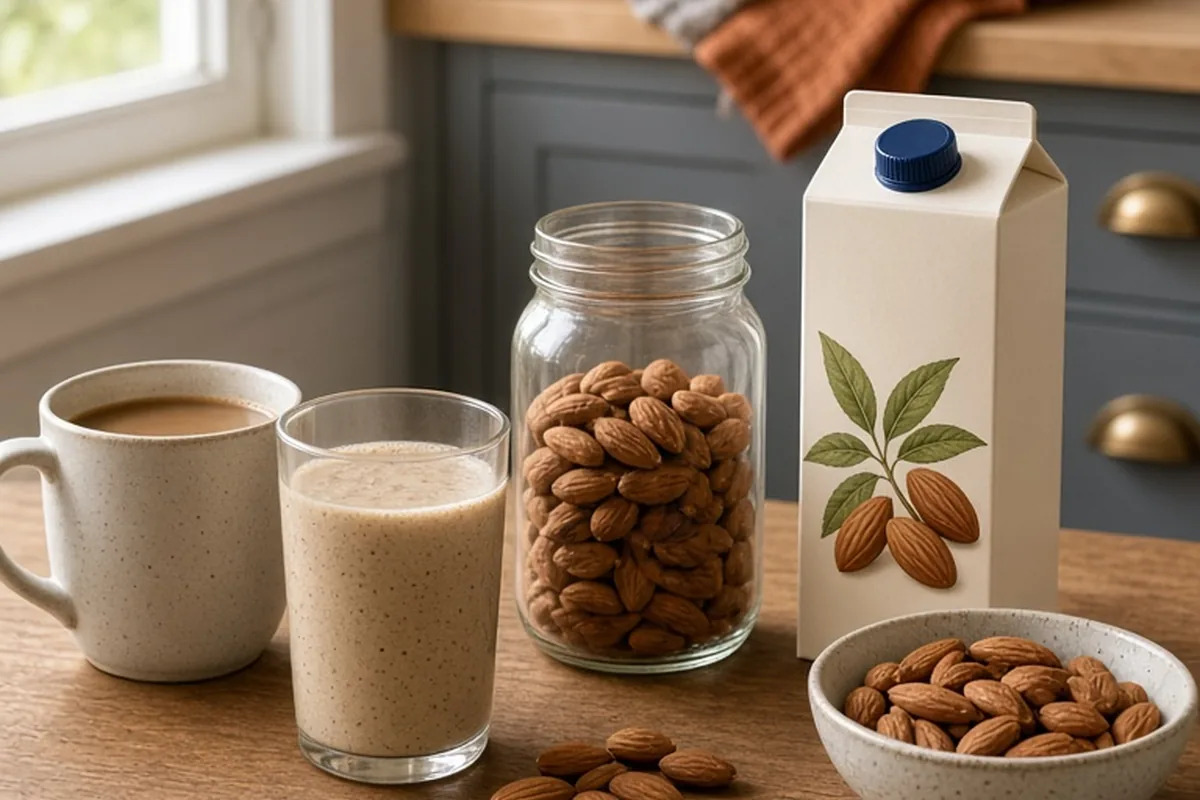
Plain almond milk made simply from almonds and water rarely causes acne on its own. However, commercial almond milks frequently contain added cane sugars, flavoring syrups, and thickeners like carrageenan or gums. These additives can elevate blood sugar, promote systemic inflammation, or disrupt gut balance, which may trigger or worsen breakouts in sensitive individuals.
Switching from dairy milk to plant-based alternatives is a common move for anyone trying to manage inflammatory skin issues. When unexpected bumps appear after pouring almond milk into your daily smoothie or morning coffee, determining the root cause requires looking beyond the nut itself to the full ingredient panel.
The Difference Between Whole Almonds and Packaged Milk
Almonds in their raw, whole state provide skin-supportive nutrients, including antioxidant-rich vitamin E, zinc, and dietary fiber. When you eat a handful of whole almonds, the natural fat and fiber structure slows digestion, leading to a steady energy release without dramatic hormonal fluctuations. However, the commercial beverage sold in cartons behaves quite differently inside the body. Commercial almond milk consists primarily of filtered water blended with a relatively small percentage of processed almonds, which strips away much of the whole-nut fiber matrix.
Because the physical matrix of the almond is broken down during industrial processing, your digestive system handles the beverage much faster than whole nuts. Furthermore, manufacturers often compensate for the thin, watery consistency of strained nut water by blending in emulsifiers, stabilizers, fortifying minerals, and flavor enhancers. When assessing whether your beverage is contributing to clogged pores or cystic bumps, you must evaluate the finished commercial formulation rather than the nutritional profile of raw tree nuts alone.
How Added Sugars in Plant Milk Affect Sebum Production
The single most frequent trigger for breakouts in almond milk drinkers is hidden sugar. Flavored varieties, such as vanilla, chocolate, or original sweetened cartons, often contain between seven and twenty grams of added sugar per serving. Consuming fast-digesting liquid sugars causes a rapid spike in blood glucose levels. In response, your pancreas releases insulin, which in turn signals the liver to produce insulin-like growth factor one.
Elevated insulin and related hormonal signals stimulate the sebaceous glands in your skin to produce excess oil, known as sebum. At the same time, these growth factors can accelerate the proliferation of skin cells around the pore lining, creating the exact conditions where dead skin and trapped oil form microcomedones. If you consume sweetened almond milk multiple times a day in lattes, oatmeal, and protein shakes, you may be maintaining a sustained inflammatory state that promotes chronic breakouts. Choosing unsweetened cartons eliminates this rapid glycemic cascade.
Thickeners, Emulsifiers, and Gut-Skin Interactions
To create a creamy mouthfeel that mimics cow milk, processed nut beverages commonly rely on thickening agents such as carrageenan, guar gum, gellan gum, and xanthan gum. While these food additives are considered safe for general consumption, individual digestive tolerance varies significantly. Carrageenan, a seaweed-derived stabilizer, is particularly well-known for its potential to trigger localized gastrointestinal irritation in sensitive digestive tracts.
The connection between intestinal health and clear skin, often referred to as the gut-skin axis, means that low-grade digestive irritation can manifest externally as inflammatory papules and pustules. When the intestinal lining experiences mild disruption or when gums alter the balance of the gut microbiome, systemic inflammatory mediators can circulate through the bloodstream and exacerbate active skin conditions. If you notice that your skin flares up specifically after consuming heavily thickened dairy-free milks, the gums and emulsifiers may be the primary culprits.
Omega-6 Fatty Acids and Inflammatory Balance
Almonds naturally contain a higher proportion of omega-6 polyunsaturated fatty acids compared to anti-inflammatory omega-3 fatty acids. While omega-6 fats are essential nutrients that your body requires for proper cellular function, a modern diet often contains an excess of omega-6 fats from seed oils and processed foods. When the ratio between omega-6 and omega-3 fatty acids becomes heavily skewed toward omega-6, the body shifts toward a pro-inflammatory baseline.
Drinking moderate amounts of almond milk is unlikely to disrupt this balance on its own, but heavy daily consumption can contribute to overall inflammatory load if your diet lacks balancing omega-3 sources like chia seeds, flaxseeds, walnuts, or fatty fish. Additionally, nuts contain natural defense compounds called phytic acid or phytates, which can bind to minerals like zinc and reduce their absorption. Because zinc plays a critical role in calming skin inflammation and supporting wound healing, consuming excessive amounts of un-sprouted nut beverages could subtly interfere with your nutrient status.
Comparing Almond Milk to Oat, Soy, and Dairy Alternatives
Understanding how almond milk stacks up against other milk options helps clarify whether it is the right choice for your skin type. Traditional cow milk contains whey and casein proteins, along with naturally occurring bovine hormones, which are well-documented triggers for hormonal acne along the chin and jawline. In comparison, almond milk completely avoids dairy-derived hormones, making it a generally safer baseline for people with hormone-sensitive skin.
However, other plant alternatives present their own unique benefits and drawbacks. Oat milk, while naturally sweet and creamy without thickeners, is very high in carbohydrates and can trigger substantial blood sugar spikes that rival skim milk. Soy milk contains plant isoflavones that some individuals tolerate exceptionally well, though others experience breakouts if they have specific sensitivities to legume proteins. Coconut milk provides rich, soothing medium-chain fatty acids, but its high saturated fat content can trigger congestion in individuals whose skin reacts poorly to heavy lipids. Almond milk remains one of the lowest-calorie and lowest-carbohydrate options, provided it is unsweetened.
Conducting a Simple At-Home Elimination Trial
Because skin reactions are highly individual, the most dependable method to determine whether almond milk affects your complexion is a controlled elimination and reintroduction trial. Begin by removing all almond milk and almond-based products from your routine for three full weeks. This duration allows the skin cycle to progress and gives existing surface inflammation an opportunity to subside without new dietary interference.
During the elimination window, replace your almond milk with a neutral, single-ingredient alternative, such as plain hemp milk or homemade pumpkin seed milk. Track your complexion by noting any changes in oiliness, redness, or new breakout frequency. After three weeks, reintroduce a high-quality, unsweetened almond milk with minimal ingredients for three consecutive days. If you experience a sudden emergence of tender bumps or increased congestion within forty-eight to seventy-two hours of reintroduction, your skin is likely sensitive either to almonds or to the specific processing method of that brand.
Selecting and Preparing Skin-Safe Almond Milk Options
If you enjoy almond milk and want to minimize the risk of skin flare-ups, careful label reading is essential. The cleanest store-bought cartons contain only two or three ingredients: filtered water, organic almonds, and perhaps a pinch of sea salt. Avoid brands that list cane sugar, evaporated cane juice, natural flavors, carrageenan, dipotassium phosphate, or multiple industrial gums on the packaging.
For the ultimate control over ingredient purity, making fresh almond milk at home takes less than ten minutes of active preparation. Soak one cup of raw almonds in clean water overnight to soften the nuts and reduce phytic acid content, rinse them thoroughly, and blend them with four cups of filtered water in a high-speed blender. Strain the mixture through a fine nut milk bag into a glass jar. Homemade almond milk yields a naturally creamy texture without the need for artificial stabilizers, emulsifiers, or added sugars, giving your skin the benefits of fresh nut milk without commercial irritants.
Illustrative Scenarios
Identifying Hidden Additives in a Morning Routine
Taylor switched from cow milk to a commercial vanilla almond milk in a daily iced latte, expecting a clearer complexion within a few weeks. Instead, small inflammatory bumps developed along the jawline and forehead. After reviewing the carton, Taylor realized the brand contained twelve grams of added cane sugar per cup along with carrageenan and gellan gum. By switching to a two-ingredient unsweetened almond milk made only from almonds and water, the breakouts cleared over the following month without needing to remove plant milk entirely.
Key point: Skin reactions to dairy alternatives frequently stem from added sweeteners and emulsifiers rather than the core plant ingredient itself.
Frequently asked questions
Does unsweetened almond milk cause hormonal acne?
Unsweetened almond milk does not contain the dairy hormones, whey, or casein that typically stimulate hormonal breakouts. However, if you have an underlying sensitivity to tree nuts or difficulty digesting specific gums in packaged brands, localized inflammation can still appear on the lower face.
Which plant milk is least likely to trigger skin breakouts?
Minimal-ingredient hemp seed milk, unsweetened pumpkin seed milk, and pure two-ingredient almond milk generally carry the lowest risk for acne-prone skin. These options are low on the glycemic index and free from added sweeteners, dairy proteins, and irritating stabilizers.
How long does it take for skin to clear after stopping almond milk?
Skin cell turnover typically takes between twenty-eight to forty days, though inflammatory redness often begins subsiding within two weeks. If almond milk additives were driving your breakouts, you should observe a noticeable reduction in new pimples within three to four weeks of elimination.
Your next step
Check the ingredient list on your current almond milk carton today and switch to an unsweetened variety containing only almonds and water for the next three weeks to evaluate your skin response.