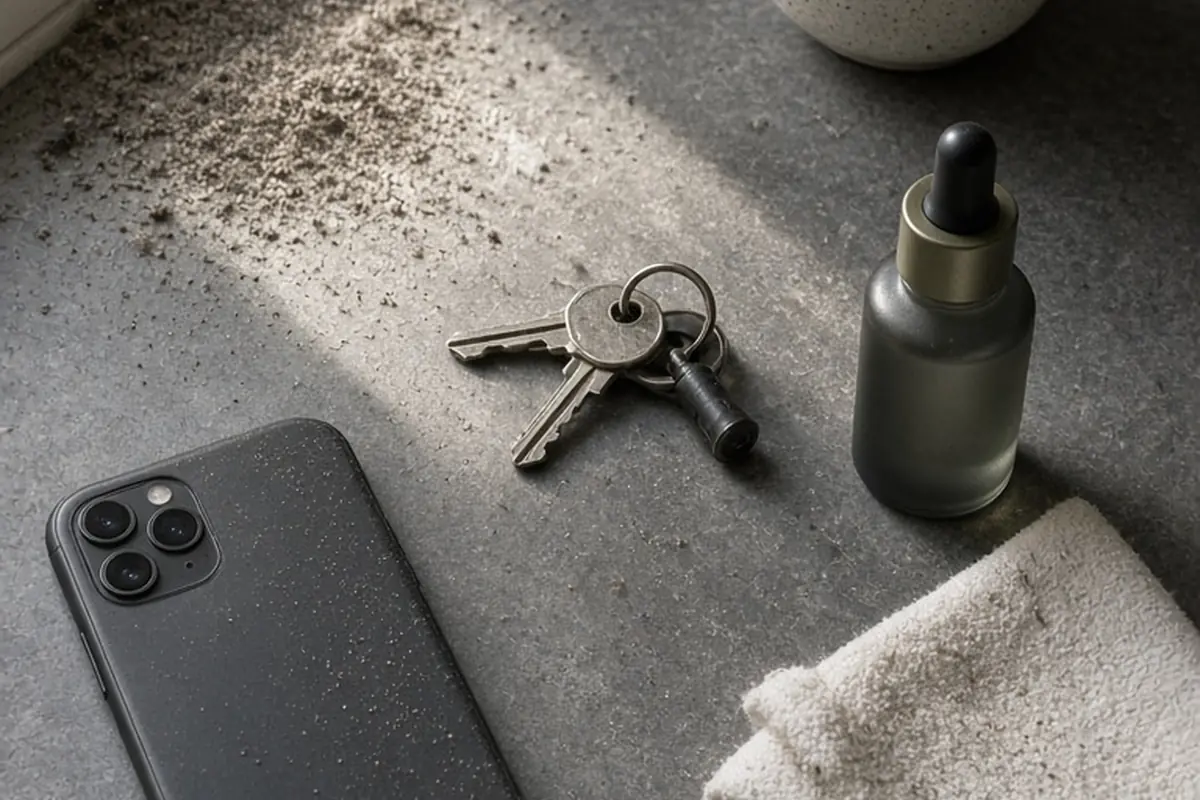
Dust does not directly create acne on its own, but airborne particles can settle onto your skin, mix with natural oils and dead skin cells, and physically clog pores. This trapped buildup creates an environment where acne-causing bacteria can thrive, leading to surface breakouts, inflammation, and irritated skin, particularly in dusty or high-pollution environments.
Everyday environments expose your skin to household dust, pet dander, and outdoor debris that easily cling to facial oils throughout the day.
How Airborne Dust and Environmental Particles Settle into Pores
Airborne dust is a complex mixture of microscopic debris, including dead skin flakes, fabric fibers, soil particles, pollen, and pet dander. When these tiny particles circulate through the air, they naturally land on any exposed surface, including your face and neck. Your skin constantly produces sebum, a natural lipid-rich oil designed to lubricate the skin barrier and prevent moisture loss. When airborne dust lands on an oily surface, the sebum acts like an adhesive, binding the particulate matter to the skin rather than allowing it to fall away harmlessly.
Once bound to facial oils, dust particles can become lodged inside follicular openings, commonly known as pores. Pores naturally shed dead keratinocytes from their inner lining every day. Under normal conditions, sebum carries these dead cells out to the skin surface where they wash away. However, when external dust accumulates inside the pore canal, it creates a physical plug alongside the trapped sebum and shedding skin cells. This mixture forms micro-comedones, the foundational precursors to visible blackheads, whiteheads, and inflamed acne lesions.
Consider someone spending an afternoon cleaning an old garage, sanding furniture, or working in a room with active construction nearby. Within hours, a noticeable film settles across the forehead, nose, and cheeks. If this particulate film remains on the face overnight, the trapped debris disrupts normal pore drainage, frequently resulting in a crop of small, tender surface bumps by the following morning.
The Link Between Dust Accumulation, Bacterial Growth, and Irritation
Clogged pores provide the exact biological environment favored by Cutibacterium acnes, the resident bacterium naturally present in human skin follicles. C. acnes thrives in anaerobic, oxygen-deprived settings rich in lipid nutrients. When a plug composed of dust, sebum, and keratin seals off a pore, oxygen levels inside the follicle drop significantly. The trapped bacteria multiply rapidly, feeding on the trapped lipids and triggering an inflammatory immune response that transforms a harmless congested pore into a red, swollen pimple.
Beyond bacterial overgrowth, dust itself often carries microscopic irritants, biological allergens, and environmental pollutants that trigger localized contact sensitivity. Dust mites, microscopic arachnids that feed on shed human skin cells, produce digestive enzymes found within household dust. When these enzymes rest against a compromised or sensitive skin barrier, they can provoke itching, redness, and low-grade inflammation. This inflammatory state weakens the barrier further, making the skin more susceptible to secondary breakouts and prolonged healing times.
A common trade-off occurs when people mistake dust-induced contact irritation for standard hormonal acne. Treating dust-irritated skin with heavy, aggressive spot treatments or harsh drying alcohols can exacerbate existing inflammation, damaging the moisture barrier rather than resolving the underlying congestion caused by environmental buildup.
Recognizing the Difference Between Dust-Related Bumps and Hormonal Acne
Distinguishing between breakouts caused by environmental factors like dust and those driven by internal hormonal fluctuations helps ensure you choose the right management approach. Hormonal acne typically manifests as deep, tender cysts or nodules concentrated along the jawline, chin, and lower third of the face. These blemishes often correlate with menstrual cycles, high-stress periods, or endocrine shifts, developing deep beneath the surface without an obvious external trigger.
In contrast, breakouts linked to dust and surface debris tend to appear as widespread, superficial congestion. You may notice small closed comedones, tiny whiteheads, or rough texture across areas with high natural oil production or direct air exposure, such as the T-zone, forehead, and upper cheeks. These bumps frequently arise within twenty-four to forty-eight hours after significant exposure to dusty conditions, such as after house renovations, sorting through attic storage, or enduring windy commutes.
While hormonal acne requires targeted internal or systemic support alongside topical care, dust-related congestion responds much more rapidly to thorough external hygiene, gentle barrier repair, and environmental management. Correctly identifying the pattern prevents unnecessary frustration and stops you from over-treating surface-level irritation with overly aggressive interventions.
Common Household and Workplace Dust Hotspots That Impact Skin
Many people assume dust exposure only happens in noticeably neglected or outdoor spaces, but familiar indoor environments frequently harbor substantial amounts of trapped debris. Bedding, particularly pillowcases, serves as a primary contact point where dust, residual hair products, and skin cells accumulate every night. Spending seven to eight hours pressing your face directly against fabric loaded with microscopic dust allows particles to grind into your pores under physical pressure.
Workstations and living areas also host significant reservoirs of airborne particulate matter that circulate invisibly. Ceiling fans with uncleaned blades, dusty heating and air conditioning vents, and computer monitors that attract static dust all contribute to a higher concentration of airborne debris in your immediate breathing and living zone.
Key surfaces that frequently transfer dust and debris to the skin include:
Pillowcases, duvet covers, and decorative throw blankets that are washed infrequently.
Ceiling fan blades, baseboards, and return air grates that blow settled dust back into the room.
Computer keyboards, smartphone screens, and office desks that gather static-charged particles.
Heavy fabric curtains, upholstered chairs, and plush rugs that trap pet dander and outdoor dust.
- Pillowcases, duvet covers, and decorative throw blankets that are washed infrequently.
- Ceiling fan blades, baseboards, and return air grates that blow settled dust back into the room.
- Computer keyboards, smartphone screens, and office desks that gather static-charged particles.
- Heavy fabric curtains, upholstered chairs, and plush rugs that trap pet dander and outdoor dust.
Cleansing Techniques to Remove Particulate Debris Without Stripping the Barrier
Effectively removing dust and environmental grime requires a thorough evening cleansing routine, but aggressive scrubbing is counterproductive. When skin is exposed to dust, the instinct is often to use harsh foaming soaps or abrasive physical scrubs to scour the face clean. However, rough mechanical exfoliation micro-tears the skin surface, strips essential ceramides, and increases transepidermal water loss. A compromised barrier allows future dust particles to penetrate even deeper, fueling a cycle of persistent irritation.
A balanced approach involves using a two-step evening double cleanse when you have experienced significant dust exposure. The first step uses a gentle cleansing oil, balm, or micellar water. Oil-based cleansers adhere to sebum, makeup, and oil-soluble dust particles, dissolving them smoothly without requiring aggressive friction. Massaging an oil cleanser onto dry skin for forty to sixty seconds loosens the sticky bond between sebum and environmental debris.
The second step uses a mild, water-based gel or cream cleanser to rinse away any remaining residue, water-soluble dust, and sweat. Follow this step by gently patting the face dry with a clean, freshly laundered towel rather than rubbing vigorously. This dual approach completely clears the pore openings while preserving the delicate acid mantle needed to resist environmental stressors.
Fortifying Your Skin Barrier to Repel Environmental Contaminants
A healthy, well-hydrated skin barrier functions as a biological shield against airborne pollutants and dust. When the stratum corneum contains an optimal balance of ceramides, cholesterol, and fatty acids, the intercellular matrix remains tightly sealed. This cohesive structure prevents foreign particles and biological irritants from slipping between surface skin cells, limiting the inflammation that leads to breakout activity.
To strengthen your barrier against environmental exposure, incorporate skincare products containing barrier-supporting ingredients such as niacinamide, ceramides, and soothing botanical humectants. Niacinamide supports natural lipid production and calms existing redness, while topical ceramides replenish lost surface fats. Applying a lightweight, non-comedogenic moisturizer both morning and night creates a physical protective buffer that sits between your skin and incoming airborne debris.
Broad-spectrum sunscreen applied every morning provides an additional layer of protection. Mineral sunscreens containing zinc oxide or titanium dioxide sit atop the skin, forming an inert physical barrier that helps deflect both ultraviolet radiation and settling particulate matter. At the end of the day, washing off your sunscreen simultaneously removes the settled dust that accumulated on top of it, keeping your bare skin protected underneath.
Practical Environmental Habits to Reduce Everyday Dust Exposure
Skincare products work best when paired with thoughtful environmental hygiene to minimize the volume of dust you encounter daily. Simple adjustments to your cleaning schedule and indoor air management can substantially lower the quantity of airborne particles landing on your skin during sleep and work hours.
Start by swapping your pillowcases at least twice a week, or more frequently if you have naturally oily skin or sleep with pets. Using smooth, tightly woven fabrics like cotton sateen or silk can also reduce mechanical friction against the skin while you sleep. When cleaning your living space, use damp microfiber cloths instead of dry feather dusters, which merely launch settled particles back into the air where they linger for hours before settling back onto surfaces and skin.
Investing in a high-efficiency particulate air (HEPA) air purifier for your bedroom or home office can dramatically lower ambient dust, dander, and pollen concentrations. Ensuring that HVAC filters are replaced every sixty to ninety days further prevents the recirculating of old debris through your home ventilation system, creating a noticeably cleaner environment for your skin and respiratory system.
Frequently asked questions
Can sleeping on a dusty pillowcase cause acne breakouts?
Yes, pillowcases gather dust, shedding dead skin cells, hair oils, and ambient debris over time. Pressing your face into an unwashed pillowcase for hours can transfer these accumulated particles directly onto your skin, causing clogged pores and localized irritation.
Does dust cause cystic acne or only surface pimples?
Dust primarily contributes to surface-level congestion, such as blackheads, whiteheads, and small inflamed pustules, by blocking pore openings. Deep cystic acne is usually driven by internal factors like hormones and genetics, though dust-induced barrier irritation can make existing cystic inflammation feel more uncomfortable.
Should I wash my face multiple times during the day if I am in a dusty place?
Washing your face repeatedly with foaming cleansers can strip your natural moisture barrier and trigger compensatory oil production. Instead, rinse with plain lukewarm water or wipe gently with micellar water on a cotton pad, followed by a light moisturizer to restore hydration.
Your next step
Switch your pillowcase to a fresh one tonight and adopt a gentle evening double cleanse to keep ambient dust and trapped oils from lingering in your pores.