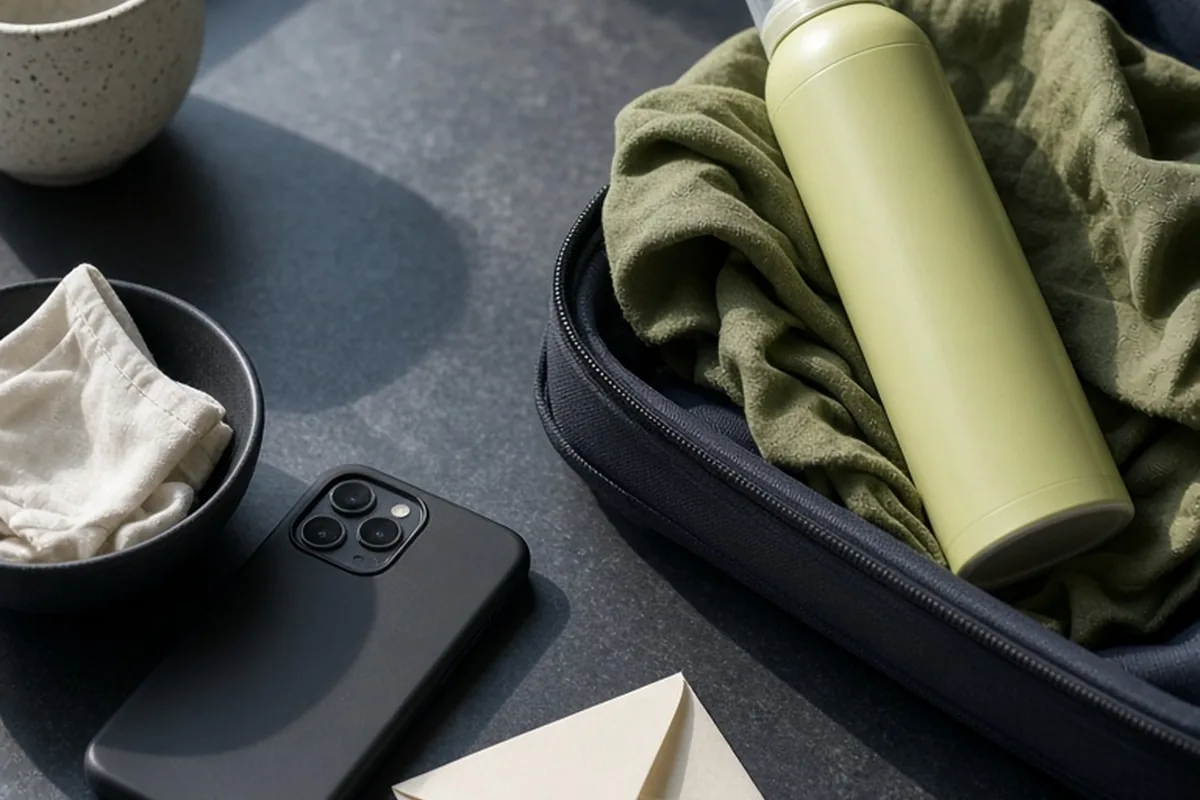
Yes, you can pack aerosol spray sunscreen in checked luggage, provided each container meets standard aviation safety limits. Under FAA and TSA regulations, medicinal and toiletry aerosols are permitted in checked bags if individual cans do not exceed sixteen to eighteen fluid ounces (500 milliliters or 500 grams) and your total combined toiletries do not exceed seventy fluid ounces (two liters). The nozzle must have a secure cap or locking mechanism.
Preparing your sun protection for travel requires understanding the difference between carry-on liquid restrictions and checked baggage hazardous materials rules. Knowing how airlines handle pressurized cans prevents confiscated products and messy suitcase spills.
Understanding FAA and TSA Rules for Aerosol Sunscreens
The Transportation Security Administration (TSA) and the Federal Aviation Administration (FAA) classify aerosol sunscreens under the broad category of medicinal and toiletry articles. Because spray sunscreens contain pressurized propellants such as butane, propane, or isobutane, aviation safety bodies treat them with specific caution compared to non-aerosol lotions. While general hazardous materials are strictly forbidden aboard commercial aircraft, everyday personal care aerosols receive an explicit exemption for both checked luggage and carry-on bags, assuming you observe strict quantity and handling guidelines.
This toiletry exemption exists because the quantities carried by individual travelers for personal hygiene and skin protection present a minimal risk when contained correctly. However, not all sprays qualify under the same rule. Industrial aerosols, spray paints, insect repellents with high concentrations of DEET, and bear sprays face much tighter restrictions or total bans. When preparing sunscreen sprays, you must ensure that the packaging clearly designates the product for personal dermal application, as unmarked or industrial spray canisters will be flagged during automated and manual baggage screenings.
Container Size Limits and Total Capacity Allowances
The primary restriction governing spray sunscreen in checked baggage involves the maximum capacity allowed per container and across all personal care items. According to FAA hazardous materials guidelines, an individual aerosol can must not exceed sixteen fluid ounces (approximately five hundred milliliters) or eighteen ounces by weight (five hundred grams). Standard commercial spray sunscreens purchased in retail stores typically range between five and eight fluid ounces, meaning almost every standard full-size consumer bottle easily satisfies this single-container volume threshold.
In addition to individual bottle limits, aviation regulations impose an aggregate limit on all medicinal and toiletry articles per passenger. The total volume of all toiletries—including your spray sunscreen, dry shampoo, deodorant, hairspray, shaving cream, and liquid lotions—cannot exceed seventy fluid ounces (two liters) or seventy-six ounces by weight (two kilograms). For example, if you pack three six-ounce cans of spray sunscreen, a four-ounce dry shampoo, and a six-ounce shaving cream, your total pressurized toiletry volume comes to twenty-eight ounces, remaining well within the permissible seventy-ounce ceiling.
Preventing Accidental Discharge and Handling Pressure Changes
A critical requirement for checking any pressurized spray canister is securing the release mechanism against accidental discharge during transit. Aircraft cargo holds experience vibration, shifting baggage, and atmospheric pressure changes during takeoff and landing. The FAA explicitly mandates that every aerosol nozzle must be protected by a secure cap, a twist-to-lock collar, or an integrated recessed trigger that cannot be depressed by adjacent items inside your suitcase.
While modern cargo compartments are pressurized and temperature-regulated to prevent canisters from rupturing due to altitude changes, physical impacts from tumbling suitcases can easily knock an unprotected nozzle. If an aerosol trigger catches against a hard shoe heel or luggage frame, it can empty its entire chemical contents onto your clothing within minutes. Inspecting your spray bottle before packing ensures the cap fits tightly and does not pop off under modest pressure, preventing both safety violations and ruined wardrobe items.
Step-by-Step Packing Techniques to Prevent Suitcase Leaks
Packing spray sunscreen requires deliberate placement within your suitcase rather than tossing the bottle haphazardly among your garments. Start by securing the nozzle with its original manufacturer cap. If the bottle features a twist-lock mechanism without a separate cap, twist it firmly into the closed position and wrap a small piece of painter's tape or electrical tape around the collar to prevent it from rotating back into the open state during transit.
Next, seal each sunscreen can inside an individual, heavy-duty zip-top plastic bag. Squeeze out excess air before sliding the zipper shut, creating a secondary containment layer. For added security, wrap the bagged can in soft mid-layer clothing such as towels, sweatshirts, or thick socks, and position it near the center of your suitcase. Placing pressurized items away from the outer perimeter of your luggage cushions them against external baggage handling impacts and prevents sharp corners from compressing the valve.
Comparing Checked Luggage Rules with Carry-On Restrictions
Travelers often confuse checked baggage rules with the standard carry-on liquid restrictions known as the 3-1-1 rule. In carry-on luggage, all liquids, gels, and aerosols are strictly restricted to containers of 3.4 fluid ounces (one hundred milliliters) or smaller, all of which must fit comfortably inside a single quart-sized clear zip-top bag. Because full-size spray sunscreens are rarely manufactured in containers under 3.4 ounces, packing standard six-ounce spray cans in your carry-on will result in confiscation at the security checkpoint.
If you prefer to travel exclusively with a carry-on bag, your options for spray sunscreens are limited to specialized travel-size mini canisters or non-aerosol solid sticks and travel-sized lotion tubes. Checked baggage provides far more flexibility for sun protection volume, enabling you to bring full-size cans suited for week-long beach vacations without sacrificing your carry-on quart bag capacity. However, remember that checked luggage is handled out of your sight, making careful leak prevention even more necessary.
Navigating International Flight Regulations and Local Laws
While domestic flights within the United States adhere uniformly to FAA and TSA toiletry standards, flying internationally introduces varying civil aviation authorities and regional chemical bans. The International Civil Aviation Organization (ICAO) and the International Air Transport Association (IATA) maintain aerosol allowances that closely mirror the FAA limit of two liters total and five hundred milliliters per container. However, specific foreign carriers and regional security agencies may interpret these guidelines with tighter scrutiny, occasionally restricting the total number of aerosol items per passenger.
Furthermore, your destination country or island territory may enforce environmental restrictions on specific sunscreen ingredients. Coastal destinations such as Hawaii, the U.S. Virgin Islands, Mexico's Riviera Maya eco-parks, Palau, and Thailand have implemented bans on chemical UV filters like oxybenzone and octinoxate to protect coral reef ecosystems. Before packing full-size spray sunscreens in checked baggage for an international tropical trip, verify that your chosen formulation complies with local environmental regulations to avoid having products confiscated upon arrival or incurring environmental fines.
Evaluating Spray Sunscreen Versus Alternative Formats for Travel
While spray sunscreen offers undeniable convenience for rapid full-body reapplication and reaching difficult areas like the upper back, it comes with practical trade-offs when traveling. Pressurized aerosol cans carry significantly less usable liquid product than their physical container size suggests, as propellants occupy a sizable percentage of the interior volume. Consequently, a family traveling to a high-sun destination may empty a single six-ounce spray can in just one or two days, requiring multiple cans that quickly eat into luggage weight allowances.
Combining sunscreen formats creates a more resilient, space-efficient travel packing strategy. Consider using a broad-spectrum lotion or water-resistant cream as your foundational base layer applied in your hotel room before heading outdoors, reserving a single checked spray canister strictly for quick midday touch-ups at the beach or pool. Supplementing your kit with compact, non-pressurized solid sunscreen sticks for your face and ears eliminates the risk of facial inhalation, avoids nozzle clogging issues, and reduces the total volume of pressurized toiletries in your luggage.
Illustrative Scenarios
Packing Multiple Sunscreens for a Warm-Weather Family Trip
A family traveling from Chicago to Florida packed three standard 6-ounce aerosol spray sunscreens, two bottles of shampoo, and two cans of shaving gel into their checked luggage. Before packing, they verified that the total toiletry volume across all items was well below the FAA 70-ounce aggregate limit. They taped the locking caps on each spray bottle, sealed them into individual freezer bags, and packed them in the padded center of their hard-shell suitcase.
Key point: Checking the aggregate toiletry volume, securing nozzle locks with tape, and wrapping pressurized bottles inside protective clothing layers avoids security confiscation and prevents leakage from baggage handling.
Frequently asked questions
Will spray sunscreen explode in the airplane cargo hold?
No, commercial airplane cargo holds are pressurized and temperature-regulated, preventing aerosol cans from rupturing due to altitude changes alone. However, physical impacts from rough baggage handling can damage unprotected nozzles, which is why secure caps are mandatory.
How many cans of spray sunscreen can I pack in checked luggage?
You can pack several standard 6-ounce cans as long as the total combined volume of all your checked toiletries does not exceed 70 fluid ounces (2 liters). For example, packing four or five typical spray cans alongside routine hygiene items easily stays within the aggregate limit.
Can I pack continuous spray sunscreen in my carry-on bag instead?
You can only bring spray sunscreen in carry-on luggage if the container is 3.4 fluid ounces (100 milliliters) or smaller and fits inside your single clear quart-sized liquid bag. Full-size bottles over 3.4 ounces must go into checked luggage or be purchased after security.
What should I do if my spray sunscreen does not have a removable cap?
If your aerosol can features an integrated twist-to-lock collar instead of a removable plastic cap, twist the nozzle firmly into the locked position. Apply a small strip of tape around the rotating collar to prevent accidental twisting and discharge during luggage transit.
Your next step
Before packing your suitcase, check that each spray sunscreen is under sixteen fluid ounces, verify your total toiletries remain under seventy ounces, and tape the nozzle caps securely before sealing each can in a zip-top bag.