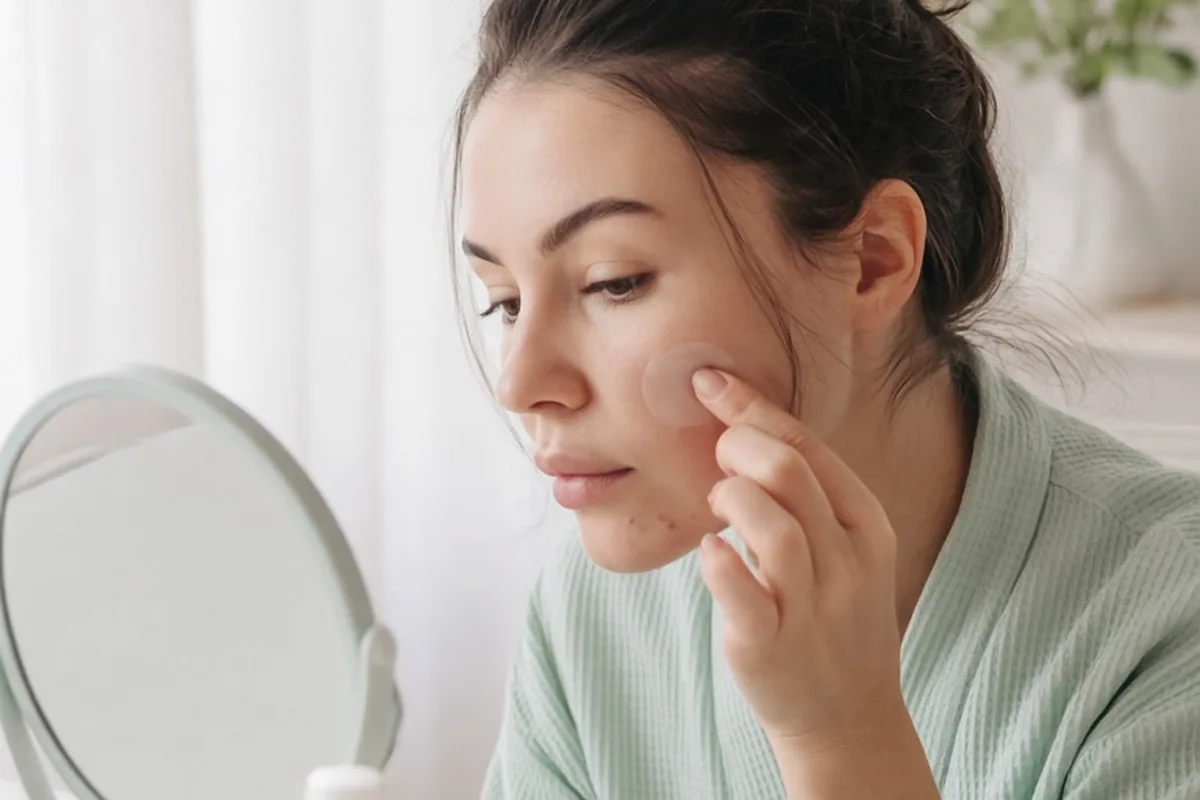
Yes, you can put a pimple patch after skincare, but the patch adheres best to completely clean, dry skin. Heavy creams, facial oils, and active serums prevent hydrocolloid adhesives from sticking and can cause the edges to lift. If you have already finished your routine, gently wipe the target blemish with a damp cotton swab, let it dry, and then press the patch on firmly.
Navigating the order of a skincare routine can feel tricky when you are trying to manage an unexpected breakout alongside daily hydration and treatment steps. Hydrocolloid patches have become an essential tool for protecting blemishes and absorbing fluid, but deciding whether to apply them onto bare skin or over a finished routine often causes confusion.
How Hydrocolloid Patches Interact with Skin Layers
Hydrocolloid dressings were originally engineered for medical wound care to maintain a moist, protected healing environment while absorbing exudate, which is the fluid and pus produced during inflammation. Modern pimple patches use the same technology on a smaller scale, relying on a pressure-sensitive adhesive layer that bonds directly with the top layer of skin cells. For that bond to form an airtight, hygienic seal, the adhesive needs direct contact with a dry surface. When skin is clear of barrier creams, the dressing can flatten against the surface, isolate the blemish from environmental debris, and absorb fluid through capillary action.
When you apply skincare products first, you introduce emollients, humectants, and occlusives that fundamentally alter how the patch interacts with your skin. Humectants like glycerin and hyaluronic acid pull water into the stratum corneum, while oils, ceramides, and silicones form a slippery or semi-permeable film over the pore. If you place a patch directly over these slippery layers, the adhesive cannot anchor properly. Instead of pulling fluid from the pimple, the dressing often absorbs the skincare residue sitting on top of the skin, loosening the sticker before it can perform its primary job.
The Risks of Trapping Active Ingredients Under a Patch
Applying a hydrocolloid patch over potent active ingredients creates an unintended occlusive barrier that can significantly amplify product absorption. Skincare actives such as salicylic acid, glycolic acid, benzoyl peroxide, and retinoids are formulated to deliver targeted benefits when exposed to the open air. When you cover these ingredients with a sealed, non-breathable hydrocolloid bandage, you trap the active compound against the skin, driving it deeper into the epidermis and preventing natural evaporation.
This intensified delivery can easily lead to localized contact dermatitis, severe redness, peeling, or even chemical burns around the perimeter of the blemish. For example, applying a leave-on two percent salicylic acid serum and immediately covering the area with a patch can turn a mild whitehead into an inflamed, raw patch of skin by the next morning. If your routine includes prescription treatments or exfoliating acids, it is generally safer to skip those specific areas entirely or cleanse the surface of the blemish before sealing it.
Comparing Bare Skin Application to Post-Skincare Placement
Applying a pimple patch directly to freshly washed, completely bare skin remains the most reliable method for maximum adhesion and fluid absorption. When the skin is washed with a gentle cleanser and patted dry with a clean towel, the hydrocolloid material forms an uninterrupted perimeter seal. This keeps bacteria out, prevents unconscious picking or touching throughout the day, and ensures the patch remains firmly attached through tossing and turning during sleep. The clear trade-off is that the skin immediately surrounding the patch misses out on your hydrating toners, serums, and moisturizers for that session.
Applying a patch after your skincare routine offers the benefit of keeping the entire face evenly hydrated and protected by your usual barrier creams, which is particularly helpful if your skin tends toward dryness or flaking. However, doing so requires extra effort to ensure the sticker actually sticks. If you apply a patch over rich night creams without preparing the spot first, the edges are prone to rolling, trapping lint, or falling off onto your pillowcase within an hour. Deciding between the two methods usually comes down to the thickness of your products and how long you need the patch to stay in place.
Step-by-Step Method for Applying Patches After Skincare
If you prefer to complete your full skincare routine before placing your patch, you can achieve reliable adhesion by spot-clearing the target area. Begin by applying your regular routine across your face, including your lightweight serums and moisturizer, taking care to avoid slathering heavy oils directly over active breakouts. Allow your skincare products three to five minutes to absorb into the skin so that the surface is not completely wet with unabsorbed liquid.
Next, take a clean cotton swab lightly dampened with water or a gentle micellar water and gently dab the exact head and immediate perimeter of the pimple to remove the top layer of moisturizer and oil. Allow that small spot to air-dry completely for thirty seconds. Once the skin is dry and matte, peel the hydrocolloid patch from its backing without touching the adhesive center, position it centrally over the blemish, and press down firmly for ten to fifteen seconds. The warmth of your finger helps activate the adhesive, ensuring the edges stay sealed even though the surrounding face is fully moisturized.
Differentiating Patch Types and Skincare Compatibility
Not every pimple patch behaves the same way when layered with other skincare products, because formulations and structures vary widely across brands. Standard plain hydrocolloid patches contain no added medication and rely entirely on physical absorption, making them the most sensitive to oily residues. These patches require a clean, dry surface to create the negative pressure needed to draw out fluid from an open or draining blemish.
In contrast, microneedle or active-infused patches are designed with tiny, dissolving crystallites that carry ingredients like tea tree oil, niacinamide, or low-dose salicylic acid directly into the superficial layers of the skin. These patches are meant for early-stage, blind, or under-the-skin bumps rather than draining whiteheads. Because microneedles must penetrate slightly past the surface stratum corneum, any thick layer of barrier cream sitting on the skin can dissolve or blunt the delicate tips prematurely. For active or microneedle patches, bare-skin application is strongly recommended to ensure the micro-darts dissolve properly inside the pore instead of in your moisturizer.
Managing Daytime Routines, Sunscreen, and Makeup
Using pimple patches during the day introduces additional variables, particularly sunscreen and cosmetic coverage. Sunscreen formulations contain UV filters suspended in water-resistant bases, emulsifiers, or silicones that make patch adhesion especially challenging. If you plan to wear an ultra-thin daytime patch, apply it before your sunscreen so the edges lie flat against clean skin. Once the patch is secured, you can gently pat your daily broad-spectrum sunscreen over the rest of your face and around the borders of the sticker without disrupting its hold.
Applying makeup over a pimple patch requires a gentle, stippling technique rather than dragging brushes or sponges across the face. Liquid foundations and concealers can settle around the rim of a hydrocolloid sticker, creating a visible ring if the product gathers in the edges. Choosing beveled, ultra-thin matte patches designed specifically for daytime wear minimizes visibility. When applying foundation, use a soft sponge to press pigment lightly over the patch, avoiding oil-heavy liquid highlighters or setting sprays directly on the perimeter to keep the adhesive intact.
Common Application Mistakes and How to Avoid Them
One of the most frequent mistakes people make is applying a patch over damp skin immediately after using a hydrating toner or essence. While humectant-rich mists feel refreshing, the residual water sitting on the skin weakens the adhesive instantly, causing the patch to slip around within minutes. Always ensure the skin surface has transitioned from damp to completely dry to the touch before pressing the patch down.
Another common issue is attempting to use hydrocolloid patches on closed, non-inflammatory comedones such as deep blackheads or flat, hard bumps. Hydrocolloid material works by drawing out liquid; it cannot dissolve hardened sebum plugs or extract deep cystic inflammation without a fluid head. Using a patch on closed bumps often yields little result and may cause frustration. Reserving standard patches for blemishes that have come to a head or recently drained ensures you get the protective and healing benefits you expect.
Frequently asked questions
Can I put a pimple patch over moisturizer if I let it dry first?
You can, provided the moisturizer is lightweight and fully absorbed into the skin. If the moisturizer contains heavy oils, petrolatum, or silicones, the patch will likely slide off unless you lightly wipe the spot with a dry or damp cotton swab before applying.
Will a pimple patch work if I put it over retinol or acne treatments?
Placing a patch directly over strong treatments like retinol, benzoyl peroxide, or exfoliating acids can trap the ingredient and cause significant irritation, peeling, or redness. It is safer to apply patches to clean skin or keep active treatments away from the immediate area you plan to cover.
How long should I leave a pimple patch on my face?
Most hydrocolloid patches are designed to stay on for six to eight hours, or overnight, until the center turns an opaque white color from absorbing fluid. If the patch becomes loose, lifts at the edges, or turns completely white sooner, gently peel it off and replace it if needed.
Your next step
For your next breakout, decide whether to place your patch on clean skin before your routine or use a damp cotton swab to clear the spot afterward so the hydrocolloid adheres securely without trapping irritating actives.