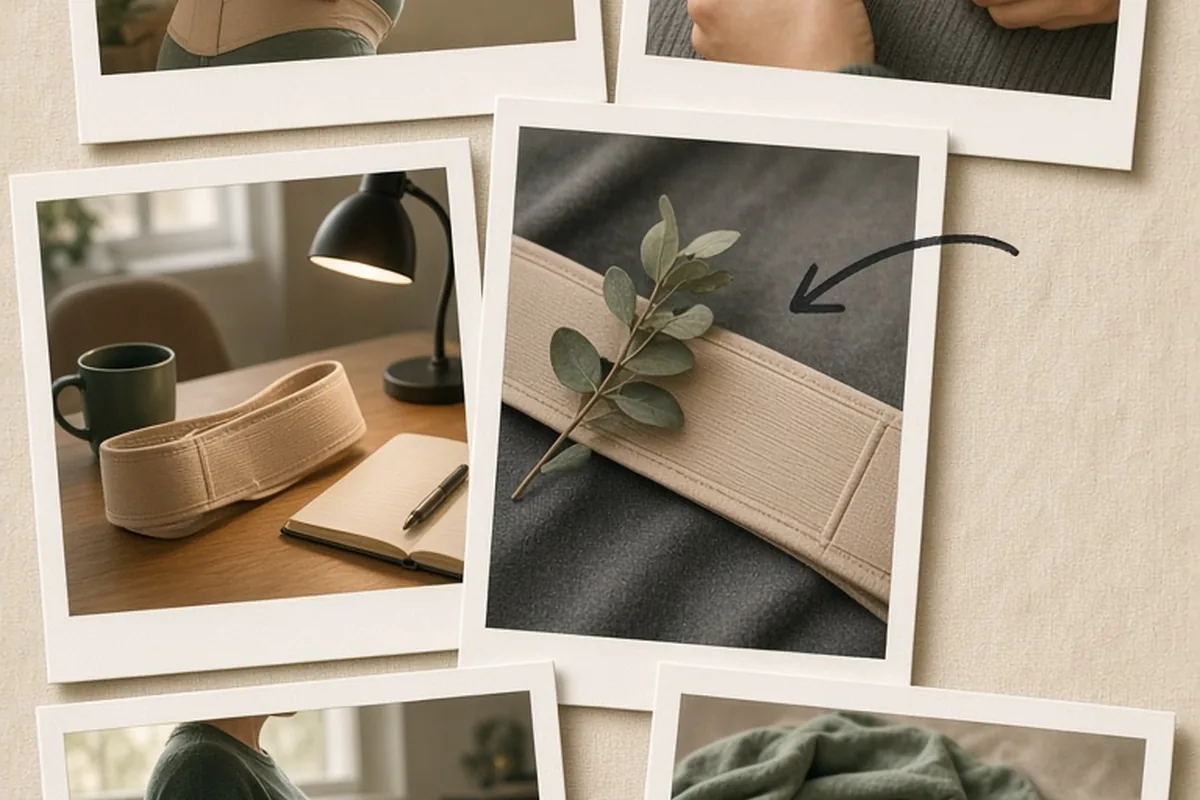
Yes, you can wear a maternity belt while sitting, but you will usually need to loosen or reposition it to prevent uncomfortable pressure on your lower abdomen and thighs. Maternity belts are designed primarily to lift the belly and stabilize the pelvis while upright. When you sit down, your hip angle changes, which can cause rigid bands to dig into your lap or compress your bladder.
Navigating physical comfort during pregnancy often involves balancing mobility with targeted pelvic and back support, especially if you spend hours alternating between walking and sitting at a desk.
How Sitting Changes the Mechanics of Maternity Support
Maternity belts and support bands function by redistributing the forward weight of your growing belly across your lower back, hips, and pelvis. When you stand, gravity pulls your abdomen forward and downward, increasing the natural curve in your lumbar spine. A supportive band counteracts this pull by lifting the lower abdomen and providing a gentle brace around the sacroiliac joints. This mechanical lift relieves tension from overstretched abdominal muscles and stabilizing ligaments.
The moment you transition from standing to a seated position, your hip joints flex to roughly a ninety-degree angle. This movement tilts the pelvis slightly backward and shifts your abdominal mass upward and outward against your thighs. A belt that was snugly fastened for a walk will suddenly feel significantly tighter across your lap. The lower edge of the band can press directly into the hip crease, while the upper elastic may dig into your ribs or upper belly, creating localized pressure points rather than the distributed support you felt while standing.
Understanding this shift helps you manage your expectations regarding garment wear. The belt is not failing or defective when it pinches as you sit down; rather, the geometry of your body has fundamentally changed. Recognizing that standing posture and seated posture require different levels of tension allows you to adapt your gear throughout the day instead of abandoning supportive garments entirely.
Step-by-Step Adjustments for Desk Work and Commutes
If you plan to remain seated for extended periods, such as during an office workday or a long car commute, making deliberate adjustments will keep you comfortable without sacrificing all lumbar stability. Before sitting down, locate the side adjustment straps on your belt. Most multi-piece or velcro-fastened belts feature secondary tension tabs that can be peeled back and loosened in a single motion.
As you lower yourself into your chair, release those side tension tabs to let the main band expand. Slide the front cradle slightly lower so that it rests just beneath the shelf of your bump rather than pressing directly into the lower abdominal fold. If your chair allows, recline the backrest slightly to an angle between one hundred and one hundred ten degrees. This slight recline opens the angle between your torso and your upper thighs, creating more room for both the baby bump and the belt material so the fabric does not bunch or fold over itself.
For daily commutes, always adjust the belt before you begin driving so you are not distracted while on the road. Fasten the vehicle seatbelt in the recommended safety configuration—with the lap belt positioned flat beneath your belly and across your hip bones, never over the bump—and ensure your maternity support band sits smoothly underneath the vehicle restraint. If the combination of the support belt and the car safety belt creates friction or tight pressure, remove the support belt entirely for the duration of the drive.
Signs Your Belt Is Too Tight or Needs Removal
Paying close attention to how your body communicates discomfort is crucial whenever you wear supportive or compressive maternity apparel. A belt should feel like a supportive hammock or a pair of hands gently cradling your lower belly, never like a tight binding or restrictive corset. When seated, normal breathing should feel effortless, and your diaphragm should be able to expand downward without restriction.
If you notice localized pinching along the groin, a feeling of pins and needles in your thighs, increased pressure on your bladder, or persistent shortness of breath, the band is too tight or positioned too high. Another common signal is skin irritation or deep red indentations that do not fade within twenty minutes of removing the garment. In a seated posture, intense downward pressure on the pelvic floor can also indicate that the belt is compressing the abdomen from above rather than supporting it from beneath.
Whenever any of these signs appear, unfasten the belt immediately. Continuing to wear an overtightened band while seated can exacerbate heartburn and acid reflux by forcing stomach contents upward, while also impeding venous blood return from your lower limbs. Give your torso a break, stretch gently, and only reapply the band when you are ready to stand, walk, or after you have widened the fit significantly.
Choosing the Right Style for Sedentary versus Active Days
Not all maternity support garments are built for the same level of movement, and selecting the right design depends heavily on your daily schedule. Rigid, multi-strap orthopedic cradles are engineered with heavy-duty elastic, built-in plastic boning, and upper suspension straps. These provide excellent relief for severe pelvic girdle pain or pubic symphysis discomfort when you are walking or performing household chores, but they are notoriously stiff and uncomfortable for prolonged desk work.
In contrast, seamless elastic belly bands and light knit support tubes offer moderate compression without rigid seams or velcro closures. While they provide less targeted mechanical lift for heavy pelvic pain, they stretch naturally with your body as you change positions, making them far more practical if your day involves continuous sitting. Similarly, reinforced maternity leggings or over-the-belly support shorts can provide continuous, gentle stabilizing tension without digging into your hip joints.
If your routine involves frequent transitions—such as walking across a worksite and then sitting down to write reports—consider a modular belt that features a removable lower pelvic strap. This setup allows you to keep the lightweight tubular sleeve on all day while detaching the rigid lower support strap whenever you sit down for more than a few minutes.
Ergonomic Alternatives for Seated Lower Back Support
A maternity belt is only one tool for managing posture and comfort, and it should not be expected to do the work of a supportive chair. Relying exclusively on an elastic band while sitting can mask poor ergonomic habits, such as slouching, crossing your legs, or perching on the edge of your seat. When you are seated at a desk, optimizing your workstation often delivers greater relief than wearing a belt.
Start by placing a dedicated lumbar support pillow or a rolled-up towel behind the curve of your lower back. This maintains natural spinal alignment and prevents your pelvis from tucking underneath you. Adjust your chair height so that your knees are level with or slightly lower than your hips, and place your feet flat on the floor or on a tilted footrest. An open hip angle naturally reduces the compressive force on your lower belly, making prolonged sitting significantly more tolerable whether you have a belt on or not.
You can also swap your standard office chair for an ergonomic exercise ball or a dynamic seating cushion for short intervals during the day. Sitting on an inflated birth ball encourages gentle pelvic tilts, engages deep core stabilizers naturally, and eliminates the rigid seat edges that can press against a support belt. Alternating between an ergonomic chair, an exercise ball, and a standing desk allows your muscles to work in balanced shifts.
Establishing Healthy Wear Times Throughout the Day
While maternity belts provide welcome comfort, wearing them continuously all day long can lead to over-reliance. The muscles of your abdominal wall, lower back, and pelvic floor need opportunities to engage, stabilize, and support your changing center of gravity on their own. Keeping a support band tightly fastened from morning until night can gradually reduce natural muscle activation, potentially leaving you feeling more fatigued when the belt is eventually removed.
A practical approach is to limit active belt wear to blocks of two to four hours at a time, specifically timing those intervals for when you are on your feet, walking, carrying items, or doing active chores. When you sit down for lunch, a meeting, or an evening resting period, use that transition as a natural cue to unfasten the garment and let your body relax without external compression. Treating the belt as an active-use tool rather than full-time clothing preserves both comfort and muscle function.
Make it a habit to listen to your energy levels as your pregnancy advances into the third trimester. If you find that you cannot sit comfortably without external support, consult with your prenatal healthcare provider or a pelvic floor physical therapist. They can assess your posture, check for specific joint dysfunction, and recommend targeted stretching and strengthening routines tailored to your stage of pregnancy.
Frequently asked questions
Can wearing a maternity belt while sitting harm the baby?
When worn properly, a maternity belt will not harm your baby because amniotic fluid cushions the womb. However, wearing a band too tightly while seated can cause maternal discomfort, digestive distress, and localized pinching, so you should always loosen it if you feel excess pressure.
Should I wear my maternity belt over or under my clothes when sitting?
Wearing the belt over a thin camisole or seamless tank top is usually best when sitting down. This layer protects your skin from friction, prevents rough velcro edges from chafing your hip crease, and makes quick adjustments easier throughout the day.
Why does my maternity belt fold or roll up when I sit down?
Belts typically roll or fold when they are placed too high on the waist, pulled too tight, or made of soft elastic without vertical support ribs. Loosening the band and shifting the lower edge beneath the curve of your belly before sitting usually resolves the bunching.
Your next step
Loosen your maternity belt side straps and recline slightly whenever you sit down, reserving tighter support for when you are active on your feet.