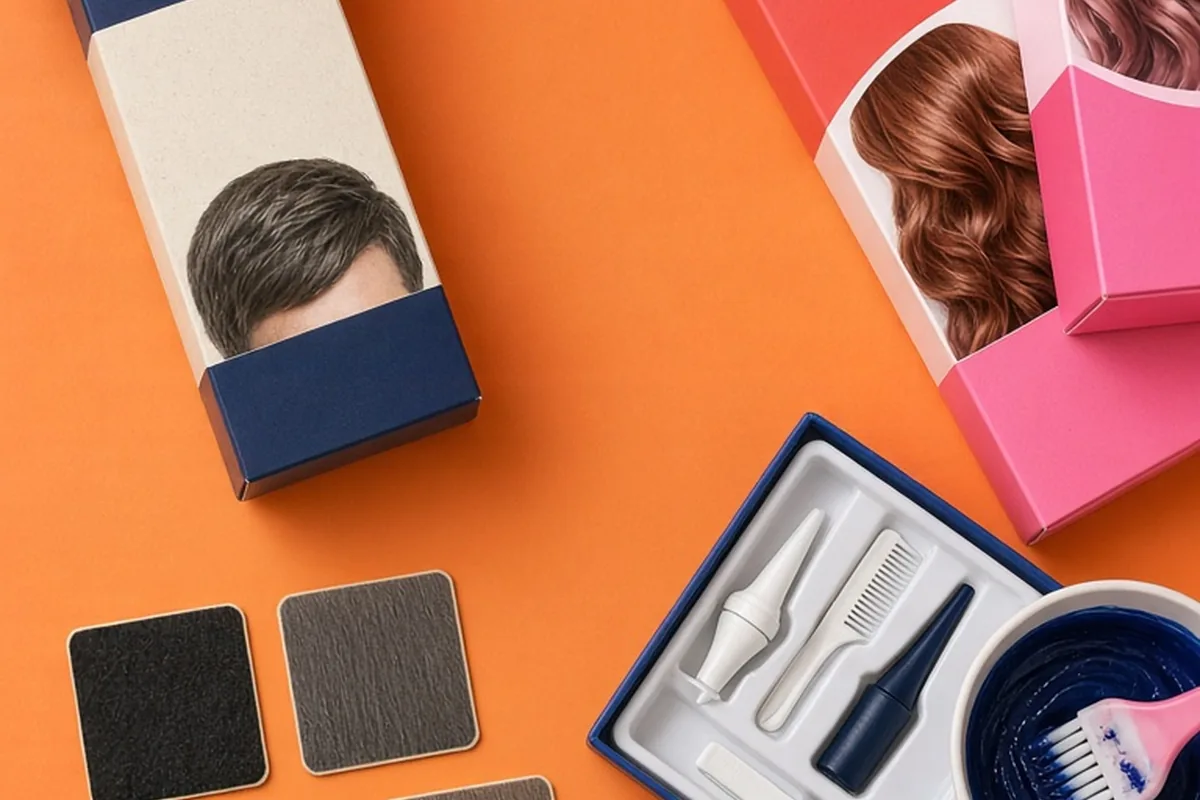
Yes, men can safely and effectively use hair color marketed to women. Hair fibers share the exact same biological structure regardless of gender, meaning dye chemistry functions identically on all scalps. However, products packaged for women often feature higher-volume developers and permanent formulations designed for full saturation. To achieve natural results on shorter hair, men must carefully select cooler undertones, monitor processing times, and use precise application tools.
Standing in the personal care aisle can feel surprisingly confusing when grooming choices are split along rigid marketing lines. While product displays separate minimalist boxes aimed at men from vibrant packages marketed to women, the underlying biology of your hair remains unchanged. Understanding how dye formulations actually work allows you to choose products based on performance, shade accuracy, and hair health rather than packaging.
Hair Fiber Biology and Dye Chemistry Across Genders
Human hair is composed primarily of keratin, a fibrous protein organized into three distinct layers: the outer protective cuticle, the structural cortex containing melanin pigments, and the central medulla. The biological process of altering hair color relies on alkaline agents swelling the cuticle scales so that oxidative dye molecules and hydrogen peroxide can penetrate into the cortex. Because this internal architecture is identical across all genders, hair dye does not possess any gender-specific biological compatibility. A tube of permanent color will lift natural pigment and deposit artificial tones into male hair follicles with the exact same chemical mechanism it uses on female hair.
The primary differences found in personal care aisles stem entirely from consumer marketing and product sizing rather than dermatological science. Women's hair dyes are formulated under the operational assumption that the user possesses longer, layered strands requiring substantial moisture, shine-enhancing conditioners, and multi-tonal reflection. Men's products are typically formulated for rapid gray blending on short crops. Once you look past the packaging aesthetic, you can evaluate hair color purely through chemical categories: demi-permanent versus permanent, developer strength, and the balance of warm versus cool pigments.
Formulation Differences Between Men's and Women's Box Dyes
The most critical technical distinction between products marketed to men and women lies in the developer concentration and dye longevity. Many mainstream male-targeted dyes are progressive or deposit-only demi-permanent formulas designed to camouflage gray hairs in five to ten minutes without fully removing the natural base pigment. In contrast, standard women's box dyes are overwhelmingly permanent formulations paired with twenty-volume developer. This developer actively bleaches a portion of your underlying natural melanin while opening the cuticle, allowing intense artificial color molecules to lodge permanently within the strand over a thirty to forty-five minute processing period.
Using a permanent women's dye offers complete gray coverage and long-lasting hold, but it introduces distinct trade-offs for short hairstyles. Because short hair grows roughly half an inch per month, permanent color creates a sharp, noticeable line of demarcation between the colored ends and natural roots after just two to three weeks. Furthermore, the higher developer strength in women's kits can cause coarse male hair to look uniformly flat, dense, and opaque if applied indiscriminately. If you desire subtle salt-and-pepper blending rather than an absolute color block, standard women's permanent dye may deliver an outcome that looks heavier than expected.
Selecting Shade, Level, and Undertone for Balanced Results
One of the most frequent missteps men make when choosing women's hair color is selecting a shade based on the model's photograph on the box. Women's dyes are frequently formulated with warm gold, bronze, or copper secondary tones designed to produce luminous warmth on long hair. However, on short hair cut close to the scalp, these warm undertones can read as unnatural red, orange, or brassy sheens under direct sunlight. Male facial features, stubble, and eyebrows are generally grounded in neutral or cool tones, making any uninvited warmth in the scalp hair immediately noticeable and discordant.
To ensure a seamless, believable outcome, look for shades described as ash, neutral, or cool natural on the packaging. Additionally, always select a shade that is one to two levels lighter than your target color. Hair color applied to virgin, short hair almost universally processes darker than anticipated because shorter strands absorb dye quickly and lack the light diffusion of longer hair. A box labeled medium neutral brown will often register visually as a dense, dark espresso on short hair, whereas a light ash brown produces a softer, more believable depth.
Application Strategies for Short and Coarse Hair Textures
Women's dye kits are equipped with large applicator bottles designed to drench several inches of hair, which makes controlled application on short hair difficult. Squeezing a liquid dye directly onto a short crew cut or fade forces the formula past the hair shafts straight onto the scalp, resulting in dark skin staining that can linger for days. To control the process, bypass the squeeze bottle entirely. Pour the required developer and colorant into a small plastic bowl, mix them thoroughly, and apply the mixture using a firm tint brush. This allows you to paint the hair fibers deliberately without flooding the scalp.
Preparation and timing require equal precision. Begin by applying a thin barrier of petroleum jelly or heavy moisturizer around your hairline, sideburns, and the back of your neck, taking care not to coat the hair roots themselves. Because short hair processes rapidly due to ambient body heat from the scalp, you should rarely leave a permanent dye on for the full forty-five minutes recommended for long hair. Begin checking the color development in a well-lit mirror around the fifteen-minute mark by wiping a small section clean with a damp towel, rinsing immediately once the desired depth is reached.
The Critical Difference Between Scalp Hair and Facial Hair
When purchasing a standard box of women's hair color, it is tempting to use the leftover mixture to touch up gray patches in a beard or mustache. This should generally be avoided. Facial skin is significantly more delicate, thinner, and prone to contact irritation than the scalp. Permanent women's hair dyes contain levels of ammonia, high-volume peroxide, and paraphenylenediamine that are formulated for the resilient barrier of the scalp, and applying them to the jawline or upper lip frequently causes burning sensations, chemical redness, or allergic contact dermatitis.
Beyond dermatological risks, beard hair possesses a markedly different physical structure than scalp hair. Beard whiskers are thicker, more irregular in cross-section, and protected by a denser cuticle layer, yet they sit directly over sensitive oil glands. Scalp dye applied to facial hair often takes unevenly, producing a splotchy, unnaturally dark, or brassy appearance that clashes with the surrounding skin tone. For facial hair maintenance, dedicated beard formulations or temporary color pens designed for sensitive facial skin provide far safer and more predictable outcomes.
Maintenance Routines and Managing Regrowth on Short Hair
Once you have achieved your target color using a women's dye formula, the primary challenge becomes preserving the tone and managing regular hair growth. Standard men's daily shampoos often rely on aggressive cleansing surfactants formulated to strip heavy oils and styling pomades. These harsh cleansers rapidly strip artificial dye molecules from the hair shaft, leaving the hair oxidized, dry, and distinctly copper-toned within two weeks. Switching to a gentle, sulfate-free shampoo formulated for color-treated hair protects the outer cuticle and keeps the tone stable.
Because short hairstyles require frequent trims to stay tidy, you will notice clean cuts exposing your natural hair color at the perimeter every two to four weeks. Avoid re-dyeing your entire head each time roots appear, as repeatedly applying permanent color over previously dyed ends causes an accumulation of pigment known as color buildup, turning the ends muddy and unnaturally dark. Instead, perform localized touch-ups using a small mascara wand, toothbrush, or tint brush to hit only the new growth at the temples and crown while leaving the rest untouched.
Illustrative Scenarios
Navigating Accidental Oversaturation on a Short Crop
Marcus wanted to tone down prominent silver streaks around his temples before attending a high-stakes professional conference. Seeing a box of dark brown permanent dye in his home bathroom, he assumed leaving it on for the full recommended forty minutes would guarantee complete coverage. When he washed it out, his hair had turned an intensely flat, jet-black shade that looked harsh against his fair skin and created an obvious disconnect with his salt-and-pepper stubble. Feeling self-conscious about the severe look, Marcus visited an experienced stylist rather than applying another color. The stylist used a clarifying wash to gently lift the surface pigment and demonstrated how applying a neutral ash brown for just twelve minutes produces natural, dimensional blending without an ink-like cast.
Key point: Permanent formulas process rapidly on short hair; choosing neutral tones and reducing processing time prevents overly dark, helmet-like results.
Correcting Unwanted Warmth from Permanent Developer
Julian decided to refresh his dulling medium-brown hair using a women's box dye labeled warm chestnut. Within three weeks of daily morning showers, the initial rich tone faded into a brassy, coppery-orange hue that looked completely unnatural against his cool-toned skin. Julian had not realized that the twenty-volume developer in permanent box kits lifts natural undertones, leaving underlying warmth exposed as the top pigment washes away. To fix the issue, he allowed his barber to trim away the brassy tips and transitioned to an ammonia-free, demi-permanent cool ash tone. This softer formula blended his grays naturally and faded evenly over six weeks without ever turning orange.
Key point: Selecting cool or ash tones prevents the natural warmth exposed by permanent developers from reading as brassy on short hair.
Frequently asked questions
Will women's hair dye damage short male hair more than men's dye?
Women's permanent box dyes often contain stronger developers and ammonia levels than quick men's gray-blending products, which can cause slightly more surface dryness. However, because men typically cut their hair every few weeks, the damaged ends are trimmed away before long-term breakage accumulates. Using a hydrating conditioner after application is usually sufficient to maintain softness.
Can I use leftover women's box dye on my beard or mustache?
It is strongly advised not to use scalp dye on facial hair. Facial skin is significantly more sensitive than the scalp, making it vulnerable to chemical burns, irritation, and allergic reactions from high-volume developers. Furthermore, the coarse texture of beard hair absorbs permanent dye unpredictably, frequently yielding patchy, harsh results.
How do I choose the correct shade when buying women's hair color?
Select a shade described as neutral, cool, or ash that is one to two shades lighter than your natural color. Women's dyes often pack heavy pigment concentrations that appear much darker on short hair than indicated on the package. Avoiding warm, golden, or mahogany descriptors will protect you from unwanted reddish or brassy undertones.
Your next step
Inspect your natural root shade under daylight, choose an ammonia-free cool ash formula one shade lighter than your natural hair, and perform a preliminary strand test for fifteen minutes to verify the tone before coloring your whole head.