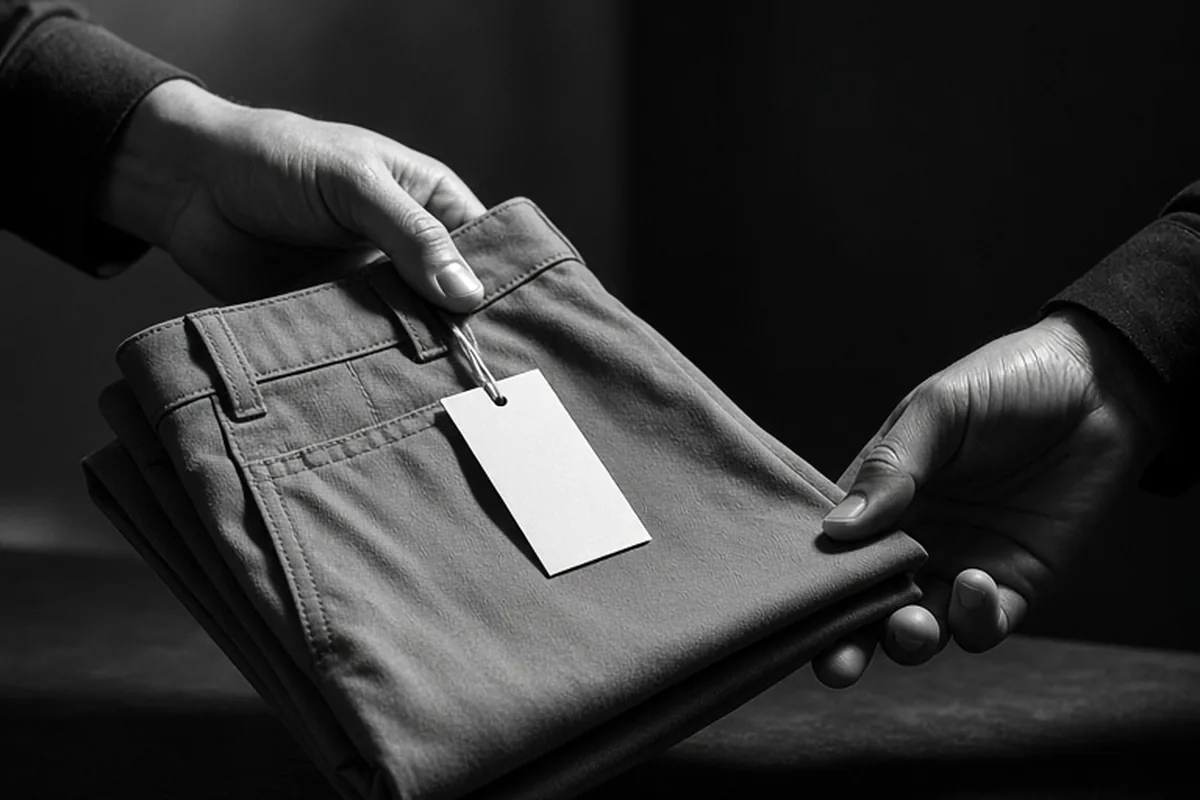
Yes, men can wear women's pants. Pants are simply fabric cut to specific measurements, and many men find better fits, distinct silhouettes, or specific fabric blends in women's sections. The primary differences involve shorter rises, narrower waist-to-hip ratios, smaller pockets, and differing sizing systems. By taking accurate body measurements and focusing on cut rather than gender tags, you can comfortably integrate women's trousers or jeans into your wardrobe.
Fashion retail strictly separates clothing into gendered departments, yet human bodies vary widely across proportions, leg lengths, and waist heights. Navigating menswear alone can sometimes leave you with limited silhouette options or awkward fits, prompting many shoppers to look across the aisle for garments that better match their personal style and physical frame.
Navigating the Differences Between Men's and Women's Sizing Systems
The most immediate hurdle when shopping for women's pants is deciphering the sizing system. Menswear typically labels pants by waist circumference and inseam length in inches, such as 32x30. In contrast, women's sizing usually relies on arbitrary even numbers like 4, 8, or 12, or letter sizing ranging from XS to XXL. To convert your measurements, a common baseline formula is adding 21 or 22 to a women's numerical size to estimate the waist measurement in inches. For instance, a women's size 10 often corresponds approximately to a 31- or 32-inch waist, though brand variations make this rule imperfect.
Because women's apparel accommodates a broader spectrum of hip-to-waist ratios, vanity sizing is common. A garment labeled with a specific waist size may measure significantly larger to allow room for the hips or seat. When shopping online, rely strictly on detailed garment measurement charts rather than standard size conversion tables. If you are shopping in person, grabbing two adjacent sizes will help you quickly gauge how a specific brand structures its proportions relative to your build.
Accounting for Crotch Rise, Inseam, and Anatomical Comfort
The physical structure of pants differs most dramatically at the crotch rise, which is the distance from the middle of the crotch seam up to the top of the waistband. Women's pants are frequently designed with a shorter front rise and a longer, curved back rise to accommodate fuller hips and glutes. For male anatomy, a front rise that is cut too shallow can cause uncomfortable tightness, bunching, or friction when walking and sitting.
To ensure comfort, look for mid-rise or high-rise cuts rather than low-rise styles. A high-rise women's trouser often provides the same vertical clearance as a standard mid-rise men's pant, giving you ample room without pinching. Inseams also tend to run shorter in women's collections, frequently hovering between 28 and 31 inches. If you are taller, seek out lines specifically designated as tall, or check whether the hem has sufficient fabric allowance for a tailor to let down.
Evaluating Pockets, Hardware, and Functional Trade-offs
One significant functional compromise when wearing women's pants involves utility. Pocket depth in women's trousers and jeans is notoriously shallow, and some garments feature completely sewn-shut or faux pockets to preserve a streamlined silhouette. If you are accustomed to carrying a large smartphone, a bulky wallet, and keys in your front pockets, women's pants may require you to rethink your everyday carry setup.
You may also encounter small differences in construction hardware. Zippers on women's pants are frequently shorter due to the shorter front rise, which can affect accessibility. Additionally, fasteners or buttons may occasionally be placed on the left side rather than the right side of the waistband. These hardware details have no impact on aesthetic presentation, but they are practical trade-offs worth considering before purchasing.
- Shallow front pockets that may not hold modern smartphones securely
- Shorter fly zippers that require loosening the belt or unbuttoning entirely
- Occasional faux pockets requiring alternative carry methods like jackets or bags
- Higher proportion of stretch fabrics that may relax over hours of wear
Choosing Cuts and Silhouettes That Translate Effortlessly
Certain styles of women's pants translate naturally into a menswear wardrobe with zero awkwardness. Wide-leg trousers, tailored pleated slacks, flare jeans, and fluid linen pants are standout examples. Womenswear often offers a wider variety of drape, fabric fluidity, and high-waisted vintage silhouettes that are difficult or expensive to find in mainstream menswear departments.
Conversely, ultra-skinny jeans or hyper-contoured jeggings require more caution. These cuts are engineered to hug narrow ankles and widen sharply around the hip curve, which can create unintended proportions on a straighter frame. Focusing on straight-leg, relaxed-taper, or wide-leg silhouettes provides clean vertical lines that complement a balanced outfit while feeling comfortable throughout the day.
Shopping In-Store and Handling the Fitting Room Process
Browsing the women's section in person can occasionally cause self-consciousness, but retail environments are increasingly neutral spaces where shoppers prioritize fit over labels. Sales associates are generally focused on assisting customers with sizing and stock rather than policing which racks you browse. If you feel hesitant, maintaining a calm, matter-of-fact demeanor keeps the experience routine and ordinary.
When taking items into a fitting room, test the pants across multiple postures. Stand, sit down in a chair, and take a few long strides to evaluate how the fabric moves across the thighs and crotch. Check the waistband in the back to ensure there is no significant gap when you sit, which can happen if the hips of the pant are significantly wider than your own torso proportions.
Styling and Integrating Cross-Department Pieces Seamlessly
Integrating women's pants into everyday outfits comes down to balancing proportions and styling with intention. High-rise trousers look particularly sharp when paired with tucked-in knitwear, structured camp-collar shirts, or cropped boxy jackets that highlight the elevated waistline. Because many women's pants emphasize drape, pairing them with sturdy footwear like boots or structured loafers creates an appealing contrast between soft fabric and solid lines.
Pay close attention to fabric composition as well. Women's pants often incorporate higher percentages of elastane, rayon, or modal compared to the heavy cotton drill or rigid denim found in men's departments. While this delivers immediate comfort and movement, garments with significant stretch can lose their shape after repeated wear. Opting for blends with at least ninety-eight percent natural fibers like cotton, wool, or linen ensures the trousers retain their structure.
Illustrative Scenarios
Finding the Right Drape for Tailored Trousers
Marcus spent months searching menswear stores for high-waisted, pleated wool trousers with a relaxed drape, but found only low-rise options or costly bespoke garments. While browsing a thrift store, he found a pair of pleated trousers in the women's section that featured the exact charcoal houndstooth pattern and wide-leg cut he wanted. His initial dilemma was uncertainty over whether the hip curvature would look unflattering on his straighter frame. Marcus took the pants to the fitting room, checked that the front rise did not pinch when seated, and discovered the pleats masked any excess hip volume. He bought them and paired them with a structured jacket.
Key point: Garment silhouette and physical measurements matter far more than department labels when looking for specific vintage or tailored cuts.
Managing Inseam and Rise in Denim
Julian wanted a subtle bootcut jean and ordered a pair from a women's brand based strictly on his standard 32-inch waist conversion. When the jeans arrived, the waist fastened comfortably, but the front rise was too low, causing anatomical pinching, and the pockets barely fit his credit card. Instead of abandoning the idea, Julian returned them and adjusted his approach. He searched specifically for high-rise, 100 percent cotton women's flare jeans and consulted the garment measurement chart for front rise and pocket depth. The replacement pair gave him the comfortable clearance he needed and the exact 1970s silhouette he wanted.
Key point: Checking rise height and pocket usability prevents discomfort when translating waist sizes across departments.
Frequently asked questions
How do I convert my men's waist measurement to a women's pants size?
A standard guideline is to subtract 21 or 22 from your men's waist measurement in inches to find your approximate women's numerical size. For example, a 32-inch waist generally aligns with a women's size 10 or 12. Because sizing varies significantly across brands, measuring the actual waistband of a pair of pants that already fits you is the most reliable method.
Will women's pants be too tight in the crotch area?
They can be if you choose low-rise styles, which have shorter front rise seams designed for different anatomy. Choosing mid-rise or high-rise cuts provides the necessary vertical clearance to avoid friction or pinching. Trying the pants on and sitting down before buying is the easiest way to ensure long-term comfort.
Are the pockets on women's pants usable for everyday carry items?
Women's pants frequently feature smaller, shallower pockets, and some styles have decorative or sewn-shut pockets to maintain a smooth silhouette. If you carry large items like smartphones, a slim cardholder or an external bag can help offset the reduced pocket volume. Always check pocket functionality before purchasing if storage is essential to you.
Can people tell if a man is wearing women's pants?
In almost all cases, onlookers cannot tell which department a pair of pants came from once they are on your body. Visual perception is driven by overall fit, color, and fabric rather than retail labels. As long as the proportions suit your frame and the pants are styled cohesively, they will simply look like a well-chosen garment.
Your next step
Measure the waistband, front rise, and inseam of your favorite pair of trousers today so you have exact reference numbers before exploring options in any department.