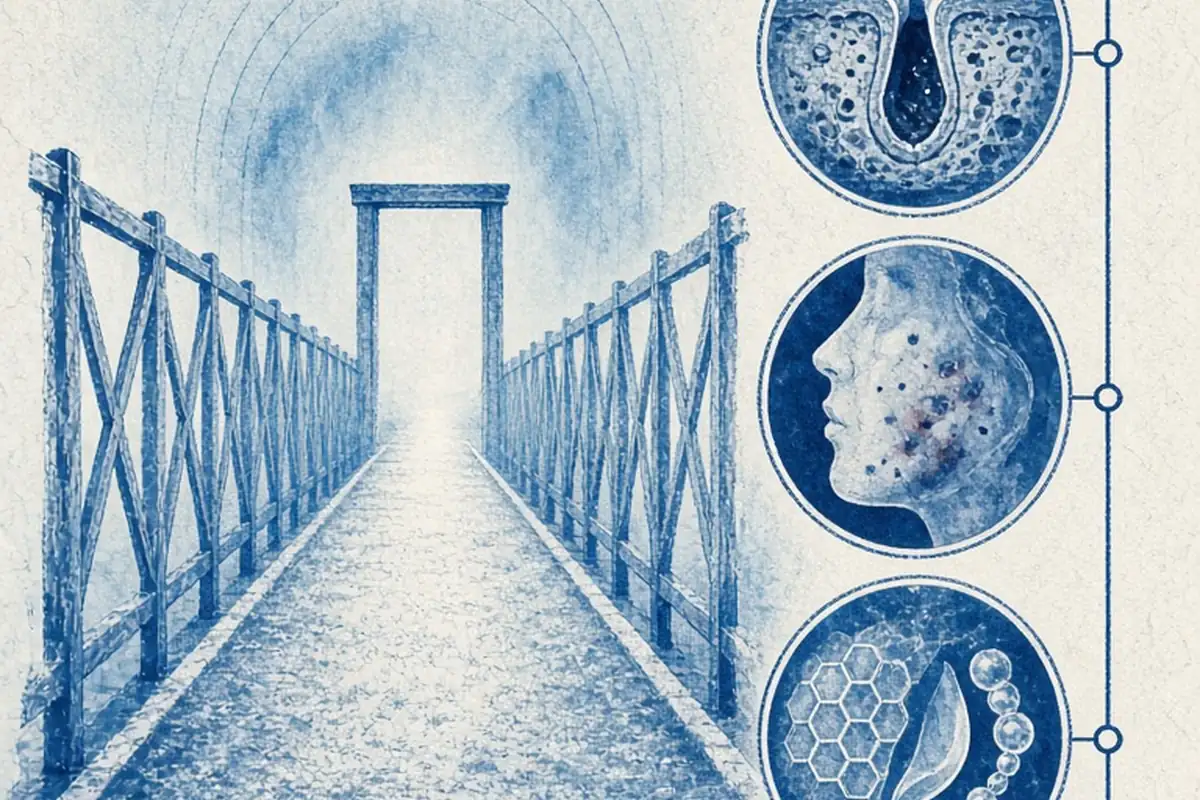
Yes, over-moisturizing can contribute to acne breakouts. Applying too much moisturizer, using heavy occlusive formulas on oily skin, or layering rich creams too frequently can trap dead skin cells, sebum, and environmental debris inside pores. This congestion creates an ideal environment for acne-causing bacteria to thrive, often leading to closed comedones, whiteheads, or small inflammatory bumps along the face.
Moisturizer is essential for maintaining a healthy skin barrier, but applying too much product or selecting the wrong formula can disrupt your skin's natural balance. Understanding how hydration works helps you protect your skin barrier without accidentally causing new blemishes.
How Excess Moisture Leads to Clogged Pores and Breakouts
Your skin naturally regulates hydration and oil production through its lipid barrier and sebaceous glands. When you apply a moisturizer, it generally works by combining humectants to attract water, emollients to smooth rough spots, and occlusives to seal moisture into the stratum corneum. However, applying excessive amounts of thick creams can form an impermeable seal over the skin surface. This heavy layer interferes with natural desquamation, the process where dead skin cells shed smoothly from the lining of your pores.
When dead surface cells cannot shed freely, they combine with your natural sebum to form a sticky plug within the hair follicle. This blocked follicle creates an anaerobic environment where Cutibacterium acnes bacteria can multiply rapidly. The resulting congestion often manifests as non-inflammatory microcomedones, whiteheads, or inflammatory papules and pustules. The issue is rarely moisture itself, but rather the heavy physical film that blocks follicular channels.
The risk of congestion depends significantly on your natural skin type and baseline oil output. Oily and combination skin profiles already produce sufficient lipids to seal in water naturally. Adding heavy, oil-dense creams to these skin types tips the physiological balance from well-hydrated to congested, making breakouts much more likely than they would be on naturally dry skin.
Visible Signs You Are Over-Moisturizing Your Skin
Recognizing over-moisturized skin involves paying close attention to your skin's daily texture and appearance rather than assuming all bumps stem from lack of hygiene or hormonal shifts. One of the clearest indicators is a cluster of tiny, flesh-colored bumps known as closed comedones. These bumps often appear uniformly across the forehead, temples, and cheeks, lacking the redness or painful swelling associated with deep cystic acne.
Another telltale sign is persistent surface slickness that lingers long after application. If your moisturizer still feels tacky, greasy, or heavy thirty minutes after you apply it, the formula is likely too rich or the amount is excessive for your skin's absorption capacity. You may also notice enlarged-looking pores, as trapped sebum and heavy emollient residues accumulate in the pore openings.
Counterintuitively, over-moisturizing can also present as dullness or rough patches. When heavy product buildup inhibits the natural shedding of dead cells, those old cells accumulate on the surface, creating an uneven texture. Many people misinterpret this rough texture as dry skin, leading them to apply even heavier layers and worsening the underlying cycle of congestion.
The Difference Between Dehydrated Skin and Dry Skin
A frequent reason people accidentally over-moisturize is confusing dehydrated skin with dry skin. Dry skin is a genetic skin type characterized by low sebum production, meaning the skin produces fewer natural oils and benefits from rich, lipid-replenishing creams. Dehydrated skin, on the other hand, is a temporary condition where the skin lacks water, even if it produces abundant oil.
When oily or combination skin becomes dehydrated from harsh cleansers, dry weather, or active acne treatments, it often feels tight, irritated, and papery. In response, individuals often reach for heavy, oil-based balms or thick cold creams designed for dry skin. These heavy formulas supply excess oil without delivering sufficient water, leading to clogged pores on top of unresolved dehydration.
To properly treat dehydration without triggering acne, prioritize light, water-binding humectants such as hyaluronic acid, glycerin, and sodium PCA in fluid vehicles. Layering these humectants on damp skin and sealing them with an oil-free gel or lightweight lotion restores water content while keeping pores clear.
Understanding Ingredient Categories: Occlusives, Emollients, and Humectants
Skincare moisturizers rely on three core ingredient families, each playing a distinct role in skin hydration. Understanding these categories allows you to choose formulations that match your skin's specific needs without overwhelming your pores with unnecessary richness.
Humectants, including glycerin, hyaluronic acid, aloe vera, and panthenol, pull moisture from the environment and deeper skin layers into the outer epidermis. Emollients, such as squalane, ceramides, and fatty alcohols, smooth the skin by filling micro-cracks between skin cells. Occlusives, such as petrolatum, mineral oil, shea butter, and beeswax, form a physical shield on the surface to prevent transepidermal water loss.
While occlusives are exceptionally effective for severe barrier impairment or very dry skin, applying heavy occlusives across acne-prone zones can trap sweat, bacteria, and oil. For breakout-prone skin, choosing fluid lotions or oil-free gel-creams rich in humectants and lightweight, non-comedogenic emollients provides optimal hydration without suffocating the skin.
- Humectants: Glycerin, hyaluronic acid, panthenol, and aloe vera pull water into the skin surface.
- Emollients: Squalane, ceramides, and light fatty acids smooth rough texture and support the barrier.
- Occlusives: Petrolatum, heavy plant butters, and thick waxes seal the surface to prevent water loss.
Common Layering Habits That Lead to Product Overload
The popular trend of multi-step skincare routines frequently causes accidental over-moisturization. Applying essences, multiple hydrating serums, facial oils, sheet masks, and thick night creams in immediate succession creates a heavy residue that the skin cannot process or absorb effectively.
Another common mistake occurs when thick balms or creams are applied directly over strong active ingredients like topical retinoids or exfoliating acids. While buffering can reduce irritation, sealing potent actives beneath heavy occlusive layers—sometimes called slugging—can increase penetration unevenly or trap cellular debris, accelerating the formation of whiteheads.
Streamlining your routine to essential steps prevents product buildup and allows you to clearly monitor how your skin responds to each formula. A straightforward regimen consisting of a gentle cleanser, one targeted treatment, and an appropriately weighted moisturizer is often far more effective for maintaining clear, calm skin.
How to Reset Your Routine When Product Buildup Triggers Blemishes
If you suspect that excessive moisturizing has caused a breakout, the first step is a temporary routine reset. For seven to ten days, step back from heavy creams, facial oils, and multiple hydrating steps. Wash your face twice daily with a gentle, pH-balanced foaming or gel cleanser to remove lingering residue without stripping the skin's moisture barrier.
Replace thick creams with a simple, oil-free, lightweight gel-cream containing barrier-supporting ingredients like ceramides or allantoin. Use no more than a nickel-sized amount for your entire face and neck, gently patting it into damp skin until fully absorbed rather than slathering on thick coats.
Once your skin settles, you can introduce a mild chemical exfoliant, such as a gentle 1% to 2% salicylic acid toner, once or twice a week. Salicylic acid is oil-soluble, allowing it to penetrate pore linings and dissolve the trapped sebum and dead cell clusters created by previous product buildup.
Balancing Acne Treatments with Moisture Support
Managing acne often requires using active ingredients like benzoyl peroxide, adapalene, or salicylic acid, all of which can cause initial dryness, flaking, and mild irritation. A frequent reaction to this dryness is overcompensating with heavy barrier creams, which inadvertently restarts the cycle of pore congestion.
Instead of reaching for rich balms, support your skin barrier by adjusting the application technique of your lightweight moisturizer. The sandwich method—applying a thin layer of light lotion, letting it dry, applying your acne treatment, and finishing with another thin layer of light lotion—buffers against irritation while keeping pore exposure to heavy waxes at zero.
Pay close attention to how seasonal changes affect your hydration requirements. A lightweight gel-cream that works well during humid summer months might need to be adjusted to a slightly more emollient lotion in dry winter weather, allowing your routine to evolve alongside your environment without overloading your pores.
Frequently asked questions
Can people with oily skin skip moisturizer completely to prevent acne?
Skipping moisturizer entirely is not recommended because dehydrated skin can overcompensate by producing more oil to protect itself. Instead of skipping this step, choose an oil-free, water-based gel moisturizer that hydrates without adding heavy lipids or occlusives.
How long does it take for skin to clear after reducing heavy moisturizer use?
Most people notice an improvement in surface congestion and bumpiness within one to three weeks after scaling back to a lightweight, non-comedogenic routine. Existing closed comedones may take slightly longer to resolve naturally or may benefit from gentle salicylic acid exfoliation.
Is the slugging technique safe for acne-prone skin?
Slugging, or coating the face with a thick layer of petrolatum, is generally not recommended for acne-prone skin because it traps natural sebum, dead cells, and bacteria inside the pores. If you have dry patches, spot-treat only those areas rather than applying heavy occlusives over your entire face.
How do I know if my breakout is from over-moisturizing or an active ingredient purge?
A purge typically occurs after introducing a cell-turnover active like a retinoid or exfoliating acid and happens in areas where you usually break out. Over-moisturization breakouts usually consist of uniform, small, flesh-colored bumps or whiteheads appearing in areas where your heavy cream sits, even if you never broke out there before.
Your next step
Assess the texture and weight of your current moisturizer today, and try swapping heavy occlusive creams for a lightweight, oil-free gel lotion applied in a nickel-sized amount to damp skin.