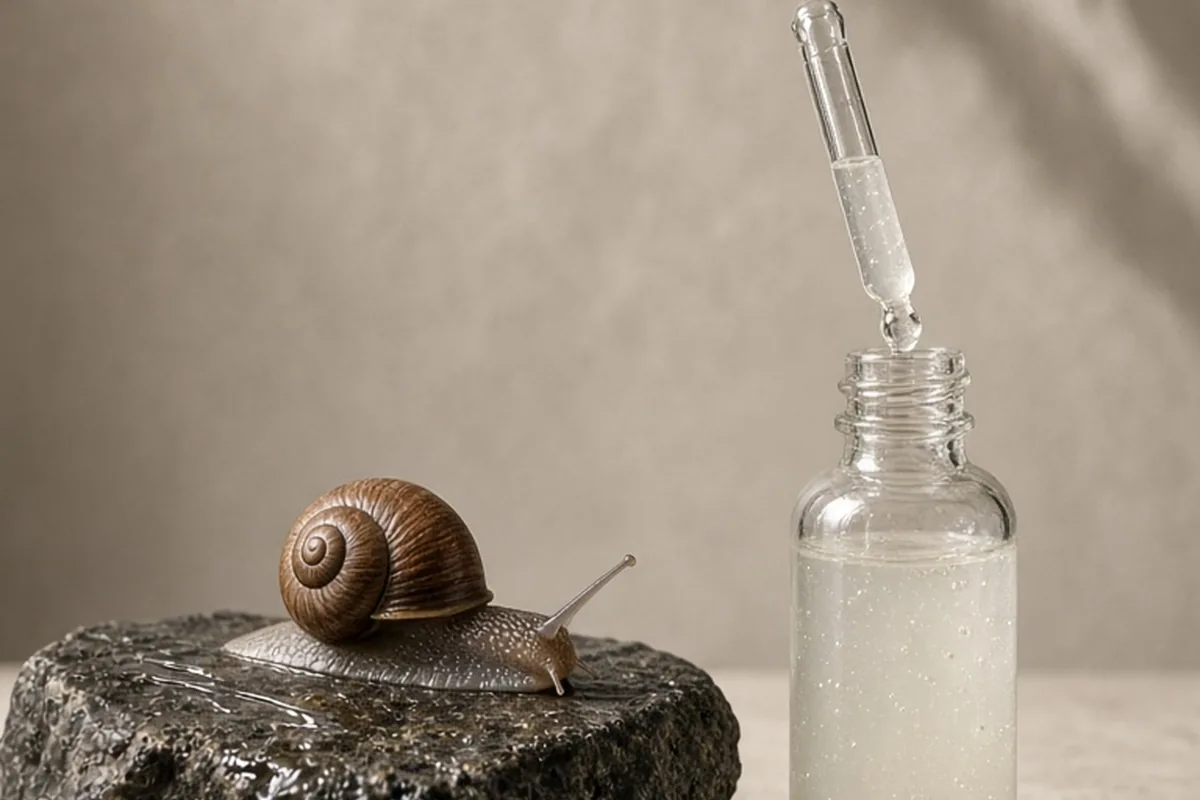
Snail mucin does not typically clog pores on its own, but it can trigger cystic-like inflammatory bumps, contact dermatitis, or deep breakouts in susceptible skin. This usually stems from an allergic cross-reactivity with dust mites or shellfish, sensitivity to formulation preservatives and thickeners, or trapping existing congestion beneath a rich humectant layer. Because snail mucin does not accelerate cell turnover, these breakouts represent irritation or blockage rather than helpful skin purging.
Adding a popular hydrating product to an existing skincare routine often feels like a safe step, particularly when the ingredient is widely celebrated for barrier repair and soothing properties. However, when deep, painful, under-the-skin nodules emerge shortly after introducing snail secretion filtrate, it creates understandable confusion regarding what actually caused the flare.
The Biological Relationship Between Snail Mucin and Pore Congestion
Snail secretion filtrate is predominantly composed of water, glycosaminoglycans, glycoprotein enzymes, antimicrobial peptides, and trace amounts of minerals. In cosmetic chemistry, raw snail filtrate is prized as an exceptional humectant because its sugar and protein complexes bind moisture tightly to the upper layers of the epidermis. Under standard conditions, pure snail mucin carries a very low comedogenic rating, meaning it lacks the dense, waxy lipid profile that traditionally solidifies inside a sebaceous follicle to create a hard microcomedone plug.
Despite this lightweight profile, deep cystic lesions arise through a complex inflammatory cascade rather than basic surface pore-clogging alone. True cystic acne forms deep within the pilosebaceous duct when accumulated dead keratinocytes and sticky sebum create an anaerobic environment where Cutibacterium acnes bacteria proliferate. When a topical humectant film disrupts the natural moisture balance or alters the surface microbiome of someone already vulnerable to follicular inflammation, the skin can respond with an aggressive immune defense. The resulting swelling and vascular dilation manifest as tender, deep nodules that resemble classic hormonal cysts.
Additionally, the film-forming nature of snail mucin can present unexpected challenges for oily or congestion-prone complexions. While humectants are essential for preventing transepidermal water loss, a heavy layer of bio-adhesive glycoproteins can effectively seal in sebum, unwashed pollution, and cellular debris that would otherwise shed naturally. For a person who produces high amounts of thick sebum, this barrier effect can inadvertently pressure the follicular canal, trapping underlying congestion and accelerating the progression from an invisible microcomedone to an inflamed, painful cyst.
Dust Mite Allergies and the Biological Cross-Reactivity Factor
One of the most significant yet under-discussed drivers of severe, cyst-like reactions to snail mucin is immunological cross-reactivity. Snails are terrestrial gastropod mollusks that share specific antigenic protein structures with other invertebrates, notably dust mites (Dermatophagoides pteronyssinus) and crustaceans such as shrimp and crab. A key culprit is tropomyosin, a highly conserved muscle protein, along with other shared invertebrate enzymes that the human immune system can identify as foreign antigens.
When an individual with an underlying dust mite allergy or mollusk hypersensitivity applies snail filtrate to the face, the skin's resident dendritic cells can mount a localized allergic response. Rather than presenting as a standard surface rash or superficial hives, this delayed-type hypersensitivity reaction can manifest as hard, inflamed, erythematous papules and deep, nodular swellings. Because these lesions are deep, throbbing, and slow to resolve, individuals frequently mistake an allergic contact flare for a sudden surge of hormonal or cystic acne.
This biological reaction is especially prevalent in people who have lived with lifelong environmental allergies, asthma, or eczema. The inflammatory mediators released during an allergic reaction—including histamines, prostaglandins, and cytokines—cause profound swelling deep within dermal tissue. If you notice that your breakouts are accompanied by localized heat, persistent itching, tightness, or diffuse redness across the cheeks and neck where you smoothed the product, the primary issue is almost certainly an immune-mediated hypersensitivity rather than conventional sebum-driven acne.
Formulation Additives That May Trigger Deep Follicular Flares
It is rare to apply raw, unformulated snail secretion filtrate directly to the skin; commercial products are complex mixtures requiring structural stabilizers, penetration enhancers, and preservative blends. Snail filtrate is an organic, nutrient-dense biological medium, which makes it particularly hospitable to microbial contamination if not aggressively preserved. Consequently, manufacturers rely on specific preservative systems and synthetic glycols to keep the formulation shelf-stable and to give the essence its distinctive, slippery spread.
Ingredients such as butylene glycol, 1,2-hexanediol, phenoxyethanol, ethylhexylglycerin, and various carbomers are standard formulation companions in snail mucin essences and creams. While these ingredients are well-tolerated by the general population, they can trigger acute irritant contact dermatitis or follicular inflammation in hyper-reactive skin. Penetration enhancers, for example, work by temporarily disorganizing lipid bilayers to allow active hydration to penetrate deeper, but this same action can allow secondary irritants to penetrate fragile follicle linings.
Consider a scenario where an individual with sensitive, acne-prone skin introduces a snail mucin serum that contains a concentrated dose of butylene glycol alongside botanical extracts like chamomile or tea tree. If that person has a baseline intolerance to specific synthetic glycols, the resulting irritation causes follicular wall swelling. The swollen follicle wall closes off normal sebum outflow, quickly transforming a minor irritation into a trapped, infected nodule that looks indistinguishable from a deep cystic breakout.
Why Snail Mucin Never Causes True Skin Purging
In skincare discussions, any sudden onset of pimples after starting a new product is frequently dismissed as a temporary purge. In clinical dermatology, however, purging has a very precise biological definition: it is the accelerated emergence of pre-existing microcomedones caused exclusively by active ingredients that speed up cellular turnover. Ingredients that cause true purging include topical retinoids, alpha hydroxy acids, beta hydroxy acids, and high-strength chemical peels. These compounds prompt the lower layers of the epidermis to shed more rapidly, pushing dormant microcomedones to the surface ahead of schedule.
Snail mucin does not stimulate or accelerate cellular turnover. Although unrefined snail secretions naturally contain trace amounts of glycolic acid, peptides, and enzymatic compounds, the concentration present in finished cosmetic bottles is far too low, and the pH is far too neutral, to function as a chemical exfoliant. The product acts primarily as a restorative humectant, antioxidant barrier, and moisture-binding film, none of which induce rapid cellular desquamation or follicular clearing.
Because snail mucin lacks the biochemical mechanism to purge the skin, any sudden cluster of inflammatory papules, whiteheads, or cystic nodules is an adverse reaction. Believing that a cystic flare is simply a beneficial phase of clearing often leads people to continue applying the product for weeks, compounding the inflammatory damage. Pushing through a reaction to snail mucin only increases the risk of prolonged dermal inflammation, bacterial infection, and lasting post-inflammatory erythema or scarring.
Distinguishing Adverse Topical Reactions from Hormonal Cystic Acne
Because cystic breakouts are deeply rooted in internal physiology, it is common for a routine change to coincide by chance with an internal hormonal shift. Hormonal cystic acne is primarily mediated by circulating androgens that bind to sebaceous gland receptors, triggering excessive production of thick, sebum-rich fluid and encouraging hyperkeratinization along the lower face. When testing a new product like snail mucin, separating cause from coincidence requires evaluating timing, anatomical distribution, and the subjective feel of the lesions.
Hormonal cysts tend to follow predictable spatial and temporal rhythms. They emerge predominantly along the lower jawline, the chin, the corners of the mouth, and occasionally down the neck, often flaring cyclically during the luteal phase of the menstrual cycle or during periods of elevated physiological stress. In contrast, an adverse reaction to a topical product generally manifests across every area where the product was applied. If deep, tender bumps are suddenly developing on the upper cheeks, forehead, temples, or bridge of the nose within forty-eight to seventy-two hours of using snail mucin, the distribution points strongly toward a product-induced reaction.
The physical sensation of the breakout also provides valuable diagnostic clues. Hormonal cysts are typically sore to deep pressure and throb periodically, but they rarely itch or burn on the surface of the skin. A reaction driven by topical irritants or allergic cross-reactivity frequently presents with a persistent itch, a prickling sensation upon application of other products, and widespread surface redness that extends well beyond the borders of the individual bumps.
Safe Patch-Testing Protocol and Recovery Steps for a Flare
If you suspect that snail mucin is triggering cystic bumps, the most practical immediate action is to initiate a complete pause on the product. Continuing use while hoping the skin settles down introduces unnecessary barrier stress. Instead, simplify your regimen to a gentle, non-foaming, fragrance-free cleanser, a basic barrier cream containing physiological lipids like ceramides and squalane, and a broad-spectrum mineral sunscreen. Halting all strong active treatments—such as exfoliating acids and strong retinoids—allows the hyperactive immune response in the dermal tissue to de-escalate.
To soothe active, painful swelling, physical care methods can provide meaningful relief without clogging the area further. Cool compresses applied for five to ten minutes help constrict dilated capillaries and reduce localized heat, while over-the-counter soothing pastes containing zinc oxide or colloidal oatmeal can calm surface inflammation. Avoid attempting to squeeze or manually extract deep cystic bumps; because they lack a direct open channel to the skin surface, mechanical pressure will only rupture the follicular wall internally, spreading inflammation and increasing the likelihood of deep scarring.
Before ever reintroducing snail mucin or testing an alternative hydrating serum, establish a rigorous patch-testing routine. Rather than testing on the delicate inner wrist, which possesses different follicular characteristics than facial skin, apply a dime-sized amount of product to the side of the neck or just beneath the jawline once daily for five to seven consecutive days. Observe the site carefully for any signs of delayed swelling, itching, or cluster papules before committing to full-face application.
Illustrative Scenarios
Differentiating an Allergic Flare from Hormonal Congestion
An individual with persistent chin breakouts added a viral snail mucin essence to their routine to soothe post-acne redness. Within four days, painful, deep nodules developed not only on the chin, but also high on the cheekbones and forehead, accompanied by an intense prickling sensation whenever they cleansed their face. Because they had a documented seasonal dust mite allergy, their skincare professional recommended stopping the essence immediately. Within five days of removing the product and applying cold compresses and a simple ceramide cream, the intense swelling flattened and the itching resolved.
Key point: Recognizing environmental allergies and observing whether breakouts occur outside typical hormonal zones helps pinpoint whether deep bumps are an adverse product reaction rather than standard acne.
Frequently asked questions
Can I use snail mucin if I have a known dust mite or shellfish allergy?
It is generally advised to exercise caution or avoid snail mucin altogether if you have a known allergy to dust mites, snails, or crustaceans. These organisms share common invertebrate proteins like tropomyosin that can trigger cross-reactive contact inflammation and deep bumps. If you still wish to try it, conduct a supervised patch test on a small area of the neck for several consecutive days first.
How long does it take for a snail mucin breakout to clear up?
Once you completely stop applying the product, acute redness, itching, and surface irritation typically begin to subside within three to seven days. Deep inflammatory bumps and cystic nodules may take anywhere from two to four weeks to fully flatten, depending on your skin's natural healing rate. Supporting the skin barrier with simple, non-irritating hydration helps speed up this recovery process.
What are safe hydrating alternatives if snail mucin breaks me out?
If your skin cannot tolerate snail secretion filtrate, look for single-molecule humectants and plant-derived soothers with simpler ingredient decks. Pure hyaluronic acid, beta-glucan, panthenol (vitamin B5), and glycerin serums provide deep hydration without the complex animal proteins found in snail mucin. Centella asiatica and ectoin are also excellent options for calming redness without triggering invertebrate protein allergies.
Why does snail mucin cause itching alongside deep bumps?
Itching paired with deep bumps almost always signals an immune-mediated allergic reaction or contact dermatitis rather than standard acne vulgaris. Snail proteins or formulation preservatives can cause mast cells in the skin to release histamine, which triggers localized nerve itching, vascular swelling, and tissue redness. Traditional acne lesions can occasionally feel sore or tender, but they rarely itch persistently.
Your next step
Temporarily pause the snail mucin for two full weeks, switch to a minimalist barrier-supporting routine, and observe whether the deep swelling recedes before introducing any alternative hydrating products.