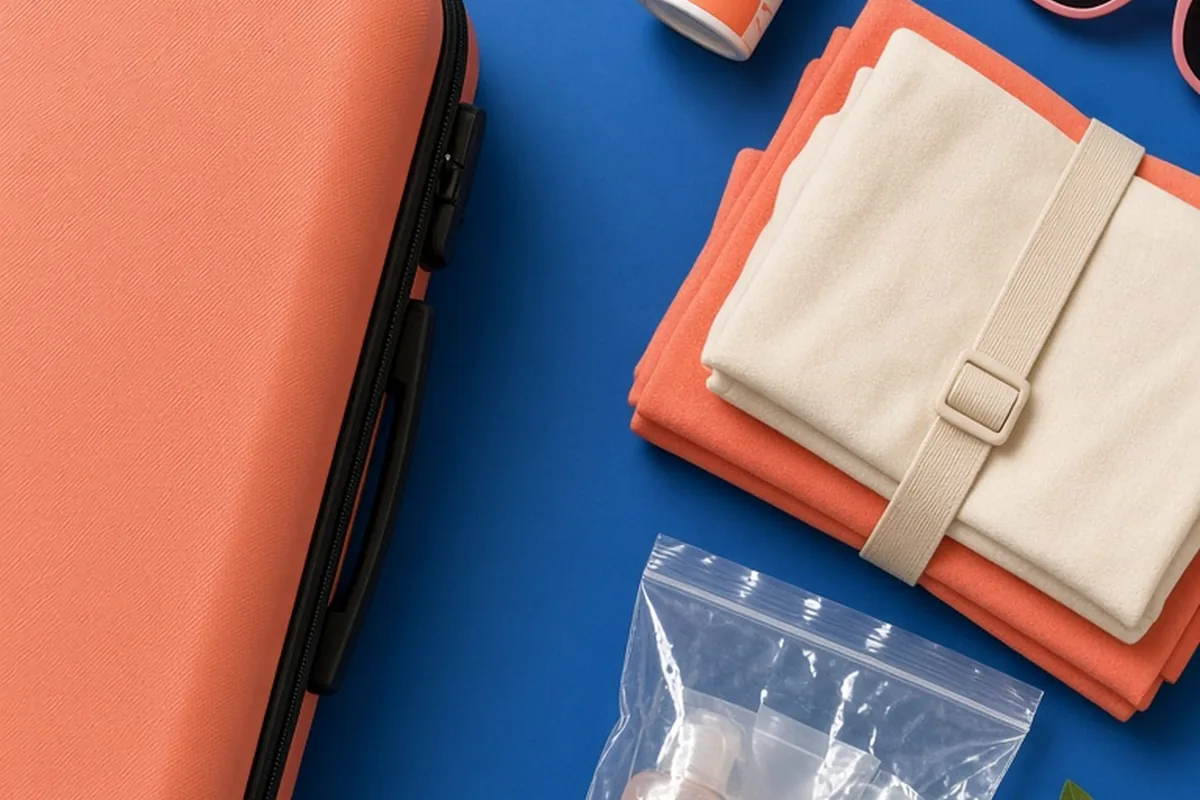
Yes, you can pack spray sunscreen in your checked luggage. Aviation authorities like the Federal Aviation Administration and the Transportation Security Administration permit aerosol toiletries in checked bags if each container is 17 fluid ounces (500 milliliters) or smaller. Across all packed toiletries, the total volume cannot exceed 70 fluid ounces (2 liters) per passenger, and every nozzle must have a protective cap.
Preparing for a sunny getaway often involves gathering plenty of sun care products, but aerosol bottles introduce specific airline safety questions. Understanding how travel regulations apply to pressurized containers ensures your skin protection arrives intact without causing delays at airport security screening.
Aerosol Regulations and Size Limits for Checked Luggage
Aerosol spray sunscreens fall under the category of medicinal and personal care toiletry articles according to civil aviation safety guidelines. The Federal Aviation Administration and the Transportation Security Administration enforce clear volume boundaries to manage the safety risks associated with pressurized gases stored in the aircraft cargo compartment. Under these established regulations, individual aerosol containers placed in checked baggage must not exceed 17 fluid ounces (or roughly 500 milliliters). Most standard drugstore spray sunscreens range from 5.5 to 8 fluid ounces, which means typical off-the-shelf cans sit comfortably within the single-container allowance.
There is also an aggregate limit that applies across all toiletry and medicinal aerosols a passenger packs. The cumulative weight or capacity of all aerosol toiletries in checked bags cannot exceed 70 fluid ounces (or 2 kilograms / 2 liters) per traveler. This aggregate ceiling covers not just your sunscreen sprays, but also any aerosol hairsprays, deodorants, shaving gels, and dry shampoos you pack. If you are traveling as a family, these limits apply per ticketed passenger, allowing you to distribute multiple cans across different bags if you are carrying an extensive supply for an extended holiday.
Essential Precautions for Pressurized Cans in Cargo Holds
While modern aircraft cargo holds are pressurized, the atmospheric pressure inside the hold is still lower than the pressure at sea level. This pressure differential causes the air and propellant inside aerosol cans to expand against the inner walls of the canister and the release valve. Furthermore, luggage is frequently shifted, stacked, and jostled during ground handling, which increases the likelihood of a protruding nozzle being accidentally depressed by footwear, heavy bags, or hardware inside your suitcase.
To prevent accidental discharge, aviation rules mandate that the release mechanisms on all aerosol toiletries be protected by a secure cap, recessed valve, or built-in locking collar. If your sunscreen bottle comes with a twist-to-lock top, turn it fully to the locked position before packing. For standard snap-on plastic caps, wrapping a single strip of masking tape or painter tape around the seam between the cap and the can prevents the lid from popping off when other items compress your bag. As an extra layer of defense, place each spray can into an airtight, sealable plastic bag. In the unlikely event that a valve fails or depressurizes, any leaking liquid remains trapped inside the plastic rather than soaking into your clothing and fabrics.
Comparing Checked Luggage Rules with Carry-On Liquid Restrictions
Choosing between placing your spray sunscreen in checked luggage versus bringing it in your carry-on bag depends on container volume and how quickly you need sun protection upon landing. In carry-on luggage, the standard 3-1-1 liquids rule strictly limits all liquids, aerosols, and gels to small containers of 3.4 fluid ounces (100 milliliters) or less per item. All of these containers must fit comfortably inside a single quart-sized clear bag. Finding aerosol spray sunscreen in containers of 3.4 ounces or less can be challenging, as the vast majority of commercial body sprays are manufactured in 6-ounce or larger formats.
Because of the 3.4-ounce carry-on limit, checked luggage is the only realistic way to transport full-sized aerosol spray cans on a commercial flight. If you are traveling with carry-on luggage only, you will need to search for designated travel-sized spray bottles, switch to a solid stick sunscreen, or simply purchase full-sized spray cans once you arrive at your destination. Relying on destination purchases can be convenient, though resort towns, theme parks, and isolated beach areas often charge significantly higher prices for basic sun care items.
International Aviation Variations and Local Sunscreen Legislation
While the 17-fluid-ounce per container and 70-fluid-ounce total limit is standard under United States FAA regulations and aligns broadly with the International Civil Aviation Organization standards, individual countries and regional carriers occasionally enforce stricter rules. For instance, some European, Asian, or South American aviation security agencies may interpret pressurized aerosol guidelines more strictly or inspect checked luggage manually for flammable gas markings. Checking your specific carrier baggage guidelines before embarking on multi-leg international itineraries prevents unexpected baggage confiscation.
In addition to transport rules, travelers must also consider destination-specific environmental laws governing sunscreen ingredients. Several popular tropical destinations—including the State of Hawaii, Key West, the US Virgin Islands, Palau, Aruba, and certain ecotourism zones in Mexico—have enacted bans on sunscreens containing specific chemical filters such as oxybenzone and octinoxate due to concerns regarding coral reef health. Many standard aerosol spray formulas rely on these chemical UV filters. Before packing your checked luggage, review the active ingredients on the back label to ensure your spray meets the reef-safe criteria required by your destination.
Performance and Practical Considerations for Spray Formulas
Spray sunscreens offer undeniable convenience, particularly for quick touch-ups and hard-to-reach areas like the upper back and shoulders. However, they carry distinct practical trade-offs when compared to traditional lotions and solid sticks. When applied outdoors in breezy or windy conditions, a significant portion of an aerosol spray can drift away before it ever contacts the skin, leading to uneven coverage and an increased risk of missed spots or sunburn. To achieve adequate protection, spray formulas must be applied generously until the skin glistens, and then rubbed in thoroughly by hand.
Another critical factor to keep in mind is flammability during application. Aerosol propellants—typically propane, butane, or isobutane—are highly combustible while airborne and wet on the skin. You should never apply spray sunscreen near open flames, lit campfires, outdoor grills, or smoking materials. Wait until the spray has dried completely on your skin before approaching any heat sources. For delicate areas like the face, avoid spraying the aerosol directly toward your nose, eyes, and mouth; instead, spray the liquid into your palms and massage it gently across your face.
Step-by-Step Guide to Packing Sunscreen for Transit
Packing aerosol sunscreen properly takes just a few moments of planning and guarantees that your luggage stays clean and compliant throughout your journey. Start by gathering all the personal care aerosols you intend to bring and verify that no single bottle exceeds 17 ounces, while the combined volume of all aerosol containers stays well below the 70-ounce threshold.
Follow these practical steps when preparing your suitcase:
By following this simple sequence, you safeguard your clothing, keep your luggage organized, and pass smoothly through baggage handling systems.
- Inspect the nozzle to verify that the integrated lock is turned to the off position or that the original plastic cap fits tightly.
- Wrap a piece of tape around the base of the cap to prevent it from detaching during turbulence and rough handling.
- Seal each bottle inside its own leak-resistant quart or gallon zip-top bag to trap potential residue.
- Position the bottles in the center of your suitcase, surrounding them with soft garments like towels, sweaters, or t-shirts to cushion them against impacts.
- Avoid placing heavy, rigid items like shoes or electronics directly against the aerosol nozzles.
Frequently asked questions
Can spray sunscreen explode in a checked suitcase during a flight?
Modern commercial aircraft baggage holds are pressurized and temperature-controlled, making spontaneous explosions extremely rare. The primary risk is mechanical: heavy shifting items pressing an unprotected nozzle and causing a quiet leak inside your suitcase.
How many cans of spray sunscreen can I bring in my checked luggage?
You can bring multiple cans as long as each bottle is 17 fluid ounces or smaller and the combined total of all aerosol toiletries in your luggage does not exceed 70 fluid ounces. For standard 6-ounce cans, this allows you to pack around 10 to 11 cans per passenger, provided you have no other aerosol products.
Can I bring spray sunscreen in my carry-on bag instead?
Yes, but only if the can is 3.4 fluid ounces (100 milliliters) or smaller and fits inside your clear quart-sized liquids bag. Standard full-sized spray cans exceed this limit and must go into checked luggage.
What should I do if my spray sunscreen cap is missing?
Do not pack an aerosol can with an unprotected nozzle. If the original cap is missing, securely wrap the top with thick masking tape or place a plastic cap from another household bottle over the valve before sealing the can in a sturdy plastic bag.
Your next step
Check your spray sunscreen bottle size against the 17-ounce limit, lock or tape the protective cap securely, and seal the bottle in a plastic bag before placing it in the center of your checked luggage.