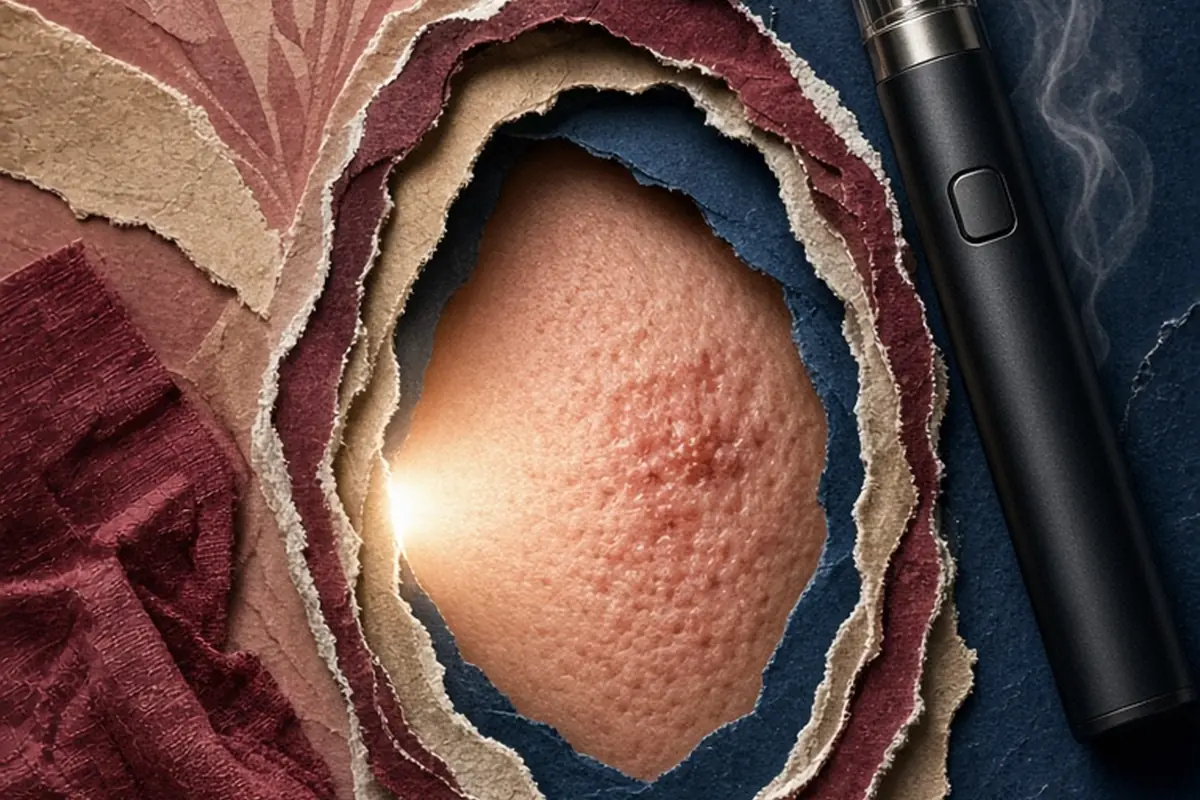
Vaping does not directly produce acne bacteria, but it can significantly encourage breakouts through indirect physiological mechanisms. Nicotine constricts microvascular blood vessels, starving skin tissue of oxygen and nutrients while delaying cellular repair. Meanwhile, aerosolized humectants like propylene glycol pull moisture from dermal layers, prompting compensatory oil surges. Combined with repetitive hand-to-face contact and exhaled chemical residue, vaping frequently creates an environment ripe for clogged pores and persistent inflammation.
Waking up to sudden, stubborn blemishes when your daily routine has otherwise remained stable can be immensely frustrating. While e-cigarettes are often marketed as a cleaner alternative to conventional smoking, the vaporized chemicals and concentrated nicotine they deliver interact continuously with your body's circulation and surface skin health. Examining how electronic vapor alters hydration, sebum consistency, and local tissue recovery can help you understand your skin's behavior and make realistic, supportive adjustments.
How Nicotine-Induced Vasoconstriction Slows Skin Repair
At the physiological level, nicotine acts as a potent vasoconstrictor. Every time you inhale aerosol from a nicotine-containing vape, the compound rapidly enters your bloodstream and causes the tiny blood vessels supplying the dermis to narrow. This vascular constriction diminishes capillary blood flow, which in turn reduces the volume of vital oxygen and restorative micronutrients reaching your skin cells. For someone prone to breakouts, compromised microcirculation means that standard cellular turnover slows down, leaving dead cells and oxidized sebum trapped inside pores for longer intervals.
Beyond initial pore clogging, restricted blood circulation severely hinders your skin's capacity to heal active blemishes. When a pore becomes inflamed, your body relies on efficient blood flow to dispatch white blood cells, flush out bacterial debris, and rebuild damaged collagen structures. In a system regularly exposed to nicotine, that natural wound-healing cascade stalls. A superficial blemish that would normally resolve in three to four days may linger as a swollen, purple-red bump for several weeks, significantly increasing the probability of post-inflammatory hyperpigmentation or micro-scarring.
Consider an everyday example: you experience a tiny comedone on your cheek after a warm workout. In skin with unrestricted circulation, mild cleansing and natural immune defenses resolve the spot within forty-eight hours. Under regular nicotine exposure, however, the sluggish tissue response permits normal cutibacterium acnes colonization to escalate unchecked, transforming a minor non-inflammatory clog into a tender papule. While choosing zero-nicotine e-liquids eliminates this particular vasoconstrictive trigger, it is worth remembering that nicotine-free formulations still introduce other vaporized carriers that interact with your skin surface.
Propylene Glycol, Surface Dehydration, and Compensatory Sebum Surges
The primary liquid bases used in almost all e-liquids are propylene glycol and vegetable glycerin. Both substances are industrial humectants designed to bind with water molecules and generate visible vapor upon heating. When you draw vapor into your mouth and exhale it, these airborne humectants extract ambient moisture from nearby environments, including the exposed mucous membranes of your lips, the delicate perioral area, and your broader facial skin. Over time, this constant hygroscopic effect strips water from the stratum corneum, creating pronounced epidermal dehydration.
When the outer skin barrier experiences rapid water loss, it triggers an innate protective feedback loop. Your sebaceous glands interpret the sensation of parched tightness as a structural breach, prompting them to ramp up oil production in an attempt to form an occlusive lipid shield. Unfortunately, dehydrated skin shedding irregular, flaky corneocytes combined with an overproduction of viscous sebum creates the classic recipe for microcomedones. The result is a confusing skin state that feels taut and dry beneath the surface yet appears shiny, greasy, and congested by mid-afternoon.
Many individuals mistake this sudden oiliness for true oily skin and respond by applying harsh foaming cleansers, alcohol-based astringents, or high-percentage drying washes. This aggressive approach worsens the underlying dehydration, prompting the sebaceous glands to churn out even more oil to survive the routine. The critical boundary here involves recognizing that oil and water are separate components of skin health; stripping the surface further will never correct the moisture deficit induced by vapor-related dehydration.
Vapor Residue, Device Handling, and Contact Breakouts
Breakouts related to vaping often show a distinct geographic pattern across the lower face, concentrating around the chin, mouth corners, and jawline. Part of this distribution stems from the physics of exhalation. E-cigarette aerosol is not merely harmless steam; it is an aerosol suspension of fine and ultrafine droplets containing flavorings, thermal degradation byproducts, and lipid-soluble carrier liquids. When exhaled upward or directly outward, these microscopic droplets settle onto facial skin, mixing with existing surface sweat, atmospheric dust, and makeup to form a pore-blocking film.
Equally influential are the unconscious physical habits that accompany vaping. Handheld vape devices are frequently stored in pockets, purses, car cup holders, or desk tops before being handled dozens of times throughout the day. Every puff involves touching the mouthpiece and bringing fingertips within millimeters of your chin and lips. This continuous mechanical transfer deposits environmental bacteria and device grime straight onto skin that may already be compromised by chemical dehydration and reduced circulation.
For instance, someone working at a computer who reaches for a pod device every fifteen minutes will repeatedly press their thumb and index finger against their jawline or rest their chin on their palm between draws. The resulting friction, known clinically as acne mechanica, works alongside bacterial inoculation to generate clusters of small pustules and closed comedones precisely along those touchpoints. While diligently sanitizing your device and washing your hands helps mitigate microbial transfer, it does not stop the chemical vapor itself from settling against your lower facial contours.
Systemic Stress, Cortisol Modulation, and Hormonal Flares
Acne is deeply connected to your internal endocrine environment, and nicotine is a known central nervous system stimulant that exerts a notable influence on hormonal balance. Consuming nicotine stimulates the sympathetic nervous system, inducing the adrenal glands to release pulses of epinephrine and cortisol. Although many users vape under the impression that it alleviates anxiety, the physiological reaction to repeated nicotine spikes is actually an elevation in baseline systemic stress hormones.
Elevated cortisol levels have a direct stimulatory effect on sebaceous glands, triggering them to produce heavier, more inflammatory sebum. Furthermore, cortisol can dysregulate the immune response, making skin tissue more reactive to ordinary pore bacteria and amplifying local inflammation into deeper, more cystic lesions. Nicotine also alters blood sugar regulation by interfering with cellular insulin sensitivity. Heightened systemic insulin levels can stimulate androgen production, which further accelerates sebum synthesis and thickens follicular linings.
Sleep disruption forms another critical link in this hormonal chain. Using high-concentration nicotine disposables or vaping late into the evening interferes with deep slow-wave sleep and rapid eye movement phases. Because nighttime is when epidermal cell renewal peaks, chronic micro-arousals and poor sleep architecture rob the skin of its primary restorative window. Addressing this systemic cascade requires understanding that topical creams cannot fully neutralize the internal hormonal signals sent by frequent, high-potency stimulant use.
Constructing an Effective Barrier-First Skincare Regimen
If you suspect vaping is exacerbating your skin concerns, overhauling your skincare routine to focus on barrier defense and moisture replenishment is the most constructive starting point. Instead of attacking your skin with multiple abrasive treatments simultaneously, prioritize products that re-establish the moisture barrier while gently promoting gentle cell exfoliation. A well-constructed daily protocol counterbalances the drying humectant pull of vapor while safeguarding sensitive tissues against persistent bacterial buildup.
Begin with a non-stripping, low-pH cleanser used morning and evening to remove ambient vapor film without compromising essential epidermal lipids. Follow this immediately with water-binding humectants on slightly damp skin to replenish lost intracellular moisture, then seal that hydration with a lightweight, ceramide-rich emulsion. For active blemish control, favor chemical exfoliants that soothe inflammation rather than aggressive manual scrubs that risk micro-tears across delicate tissues.
A practical, barrier-supportive framework typically integrates four core elements tailored to combat vapor-associated skin stress:
- Gentle, sulfate-free cream or gel cleanser that effectively removes vapor residues without leaving skin tight or parched.
- Hydrating serum formulated with multi-molecular hyaluronic acid, panthenol, or glycerin to actively draw moisture back into dehydrated tissue.
- Soothing lipid moisturizer enriched with skin-identical ceramides, squalane, or cholesterol to patch breaches in the protective barrier.
- Targeted, anti-inflammatory active such as two-percent salicylic acid or five-percent azelaic acid used two to three nights per week to clear pore linings and minimize redness.
Practical Habits to Minimize Skin Exposure and Support Recovery
Managing the dermatological impact of vaping involves practical lifestyle modifications alongside topical care. If you are working toward reducing or quitting your e-cigarette consumption, implementing harm-reduction adjustments can measurably reduce the environmental and physical burden placed on your complexion. The way you handle your device, direct your exhalations, and manage daily fluid balance directly influences your skin's daily resilience.
First, make a deliberate practice of exhaling vapor completely away from your face and body. Vaping in confined, poorly ventilated spaces like closed cars or small rooms creates concentrated clouds of aerosol that linger and settle onto exposed facial skin; cracking a window or vaping outdoors significantly reduces this topical deposition. Second, establish a strict device-hygiene rule: wipe down the mouthpiece with an alcohol wipe daily, store the device inside a clean case rather than loose in lint-filled pockets, and actively notice whether you rest your fingers against your chin or mouth after handling the device.
Hydration habits also demand conscious recalibration. Because inhaled propylene glycol and vegetable glycerin extract moisture systemically and locally, drinking a full glass of water alongside your sessions helps stave off acute oral and epidermal dryness. While these behavioral tweaks provide meaningful mitigation against everyday surface irritation and contact-related breakouts, remember that complete cessation remains the only guaranteed way to remove nicotine-mediated vascular stress and restore natural microcirculation.
Illustrative Scenarios
Composite Profile: Resolving Lower-Face Flare-Ups After Habit Modifications
Jordan, a graphic designer in their mid-twenties, experienced a sudden outbreak of tender papules along their lower chin and right jawline after switching from occasional social smoking to a high-nicotine disposable pod vape during work hours. Assuming the flare-ups were standard hormonal acne, Jordan applied high-strength benzoyl peroxide washes twice daily. Within three weeks, their skin became raw, peeling, and noticeably oilier, while the clusters of jawline bumps multiplied. Jordan realized they routinely rested their dominant hand on their chin while taking frequent puffs at their desk and noticed their skin felt unusually parched throughout the workday. Jordan adjusted their routine by stepping down nicotine strength, wiping down their device regularly, directing exhaled vapor away from the workstation, and replacing the harsh wash with a ceramide-rich barrier moisturizer and a mild azelaic acid formula.
Key point: Addressing localized breakouts requires evaluating both topical skincare habits and repetitive physical contact. Restoring barrier hydration while mitigating device-to-face friction offers a more sustainable path to skin clarity than aggressively drying out compromised tissue.
Frequently asked questions
Does switching to a nicotine-free e-liquid prevent vaping-related acne?
Switching to nicotine-free vape juice eliminates the vasoconstrictive effects that slow cellular healing and reduce dermal oxygenation. However, zero-nicotine liquids still rely on propylene glycol and vegetable glycerin, which can dehydrate the skin barrier, and they do not prevent breakouts caused by touching your face or settling aerosol residue.
How long after quitting vaping does it take for skin to improve?
Peripheral blood flow begins to rebound within several days of nicotine cessation, improving natural oxygen delivery to recovering tissue. Most individuals notice enhanced surface hydration and a calmer complexion within four to six weeks, which corresponds to one full epidermal turnover cycle.
Why do vape-related breakouts appear primarily around the chin and mouth?
This localized pattern is driven by the physical dynamics of vaping, including repeated hand-to-face contact and lingering aerosol droplets that settle around the lower face upon exhalation. These external irritants combine with natural facial sweat and sebum to clog pores precisely where device handling is most frequent.
Can vaping worsen pre-existing inflammatory skin conditions like rosacea or cystic acne?
Yes, vaping can aggravate existing inflammatory dermatological conditions. Nicotine stimulates systemic stress hormone spikes and alters microvascular regulation, which can exacerbate facial flushing, impair barrier resilience, and transform mild microcomedones into deeper, more painful cystic lesions.
Your next step
Take three days to audit how often you touch your lower face while vaping, clean your device's mouthpiece daily, and replace one aggressive drying acne product with a ceramide-focused hydrating serum to help your skin barrier repair naturally.