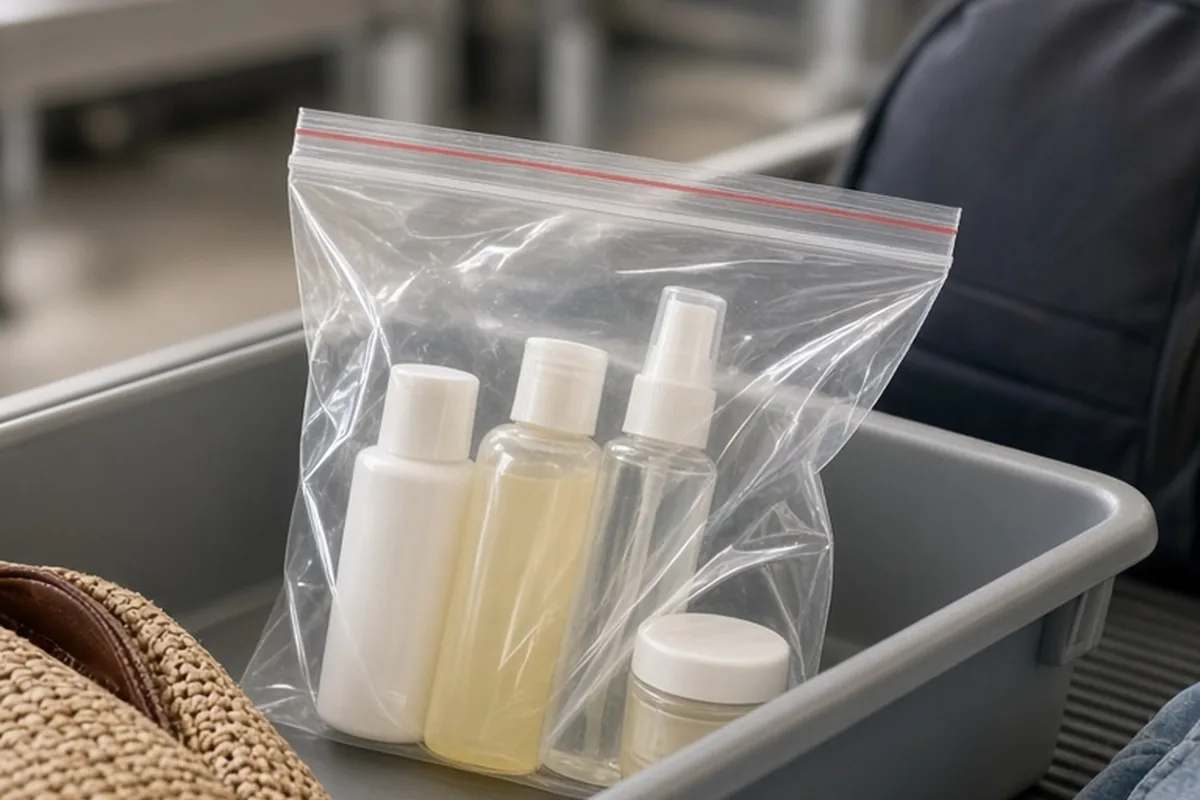
Yes, you can bring sunscreen in a carry-on bag, but liquid, lotion, spray, and gel formulas must adhere to the standard TSA 3-1-1 liquids rule. Each container must be 3.4 ounces (100 milliliters) or smaller, and all travel-sized bottles must fit inside one clear, quart-sized zip-top plastic bag. Solid stick sunscreens and powder formulas are exempt from the liquids limit.
Packing sun protection for an upcoming flight requires understanding how aviation security classifies cosmetic formulas so your essential skincare products make it through the security checkpoint without issue.
Understanding the TSA 3-1-1 Rule for Liquid and Lotion Sunscreens
The Transportation Security Administration regulates all liquids, aerosols, gels, creams, and pastes under the standard 3-1-1 liquids rule. For carry-on baggage, every container of liquid or lotion sunscreen cannot exceed 3.4 fluid ounces, which equals 100 milliliters. It is important to note that the rule applies to the capacity of the container itself rather than the amount of product remaining inside. If you carry a full-size six-ounce bottle that is three-quarters empty, security officers are required to confiscate it because the printed volume exceeds the maximum allowance.
All travel-sized liquid items, including your facial sunscreen, body lotion, foundation, and lip gloss, must comfortably fit inside a single, transparent, quart-sized zip-top bag. Each passenger is permitted only one quart-sized liquids bag in their carry-on luggage. To avoid delays at screening checkpoints, place this clear bag in an easily accessible pocket of your personal item or carry-on suitcase, as some domestic and international airports still require travelers to remove liquid pouches for separate X-ray screening.
Navigating Aerosol and Continuous Spray Sunscreen Regulations
Continuous spray and aerosol sunscreens are popular for quick, full-body reapplication, but they come with stricter security considerations. When packed in a carry-on, aerosol cans are subject to the same 3.4-ounce limit as liquid lotions. In addition, the Federal Aviation Administration and airline safety guidelines require all aerosol containers to have secure caps or locking mechanisms over the release valves to prevent accidental discharge caused by shifting luggage or cabin pressure changes.
A significant practical trade-off with travel-sized aerosol cans is product yield. Because a substantial portion of an aerosol can is pressurized propellant rather than active sunscreen, a 3.4-ounce spray bottle typically provides only two to three full-body applications. For a weekend beach trip, a single travel-sized spray will likely run out before your vacation ends. If you prefer spray formulas, consider packing one travel spray specifically for hard-to-reach areas while relying on a dense cream or stick for primary coverage.
Solid Sticks and Mineral Powders as Liquid-Free Alternatives
One of the most effective strategies for maximizing carry-on space is swapping liquid sunscreens for solid or powder formulations. The TSA categorizes solid stick sunscreens in the same category as solid deodorant and bar soap, meaning they do not count toward your 3-1-1 liquid allowance. You can pack multiple full-sized solid sunscreen sticks directly in your toiletry kit or daypack without placing them in your quart-sized clear plastic bag.
Solid mineral sticks are particularly useful for targeted facial application, sensitive eye areas, and touch-ups on the nose and shoulders throughout travel days. Powder sunscreens formulated with brush applicators offer another liquid-free alternative for setting makeup and reducing shine while providing broad-spectrum coverage. The primary limitation of solid sticks is that applying them across the entire body can feel time-consuming and sometimes leaves a heavier skin finish compared to light fluid lotions.
Medically Necessary Sunscreen Exceptions and Documentation
Under specific circumstances, travelers with documented medical conditions such as severe photosensitivity, lupus, skin cancer history, or extreme UV allergies may request an exemption to the standard 3.4-ounce liquid limit. The TSA classifies medically necessary liquids as permitted items in larger quantities, provided they are declared to a transportation security officer before screening begins.
If you plan to bring a full-sized medical sunscreen through the checkpoint, keep it in its original packaging with the prescription label or manufacturer information clearly visible. Carry a formal letter from your dermatologist or healthcare provider detailing the medical necessity of the product. Inform the screening officer at the start of the lane that you have a medically necessary liquid. The product will undergo separate testing, which may include opening the bottle, vapor testing, or additional physical inspection.
Smart Decanting and Packing Techniques for Short Trips
If your favorite daily sunscreen only comes in full-sized bottles and lacks a travel-friendly version, decanting is a practical solution. Purchase reusable, food-grade silicone bottles or airless pump containers that are clearly marked with a 3.4-ounce (100 ml) capacity or less. When transferring product, use clean cosmetic spatulas to avoid introducing airborne bacteria or moisture that could degrade the preservative system of your sunscreen over time.
Keep in mind that certain chemical sunscreen filters and active ingredients are sensitive to air and light exposure. Decanting them into clear or unsealed jars can reduce formulation stability over extended periods. Always use opaque, airtight travel containers, label them with the product name and expiration date, and decant only the quantity you expect to use during your itinerary. To prevent messy leaks caused by atmospheric pressure drops during flight, wrap the bottle threading with a small piece of plastic wrap before screwing on the cap.
International Security Guidelines and Regional Variations
While the 3.4-ounce (100 ml) liquid threshold is nearly universal across international civil aviation authorities, enforcement practices and security technology vary significantly by country. Many European, Asian, and Canadian airports adhere strictly to the one-liter total capacity rule for liquid bags, and security personnel in some regions may reject non-standard zip bags that exceed standard dimensions.
Furthermore, several emerging destinations with sensitive marine ecosystems—such as Hawaii, the U.S. Virgin Islands, Palau, and parts of Mexico—have instituted local bans on sunscreens containing specific chemical filters like oxybenzone and octinoxate. When flying into these regions, airport shops and local authorities encourage or require mineral-based options containing zinc oxide or titanium dioxide. Checking the environmental regulations of your destination before packing ensures compliance with both aviation security and local conservation laws.
Deciding Between Packing Travel Sizes and Purchasing on Arrival
Deciding whether to pack sunscreen in your carry-on or buy a full-sized bottle upon landing depends on the duration of your trip, your skin sensitivity, and the accessibility of local stores. For trips lasting three days or fewer, two travel-sized 3.4-ounce squeeze bottles typically provide adequate coverage for one person. However, for a week-long tropical vacation involving daily swimming and outdoor recreation, relying solely on carry-on liquid limits can leave you under-protected.
If you have sensitive, acne-prone, or hyperpigmentation-prone skin, finding your preferred non-comedogenic facial formula in a foreign airport convenience store or remote resort gift shop can be difficult and expensive. A balanced approach is to pack your specialized facial sunscreen, eye sticks, and lip treatments in your carry-on luggage, while planning to purchase a standard, high-volume body sunscreen at a local pharmacy or grocery store once you reach your final destination.
Step-by-Step Security Checkpoint Routine for Carry-On Sunscreen
Navigating the airport security line smoothly requires a few deliberate packing habits before leaving home. Group your liquid sunscreens with your other liquid cosmetics in your clear quart-sized bag and position it in the top compartment or front zippered pouch of your bag for quick retrieval. If you are carrying solid sticks or powder brushes, pack them in a separate dry toiletry pouch so your liquids bag remains uncluttered and easy to inspect.
When approaching the screening belt, review the checkpoint instructions, as newer CT scanners at many modern airports allow liquids to remain inside your luggage, whereas traditional X-ray machines require removal. When in doubt, ask the nearest security officer before placing your bags on the belt. Presenting a neatly packed, compliant liquids bag avoids manual bag searches and helps you move through security efficiently.
Illustrative Scenarios
Illustrative Packing Plan: Weekend Trip vs. Week-Long Stay
An illustrative traveler preparing for a four-day beach getaway packs one 3.4-ounce broad-spectrum body lotion and one 1.7-ounce facial fluid inside their quart-sized liquids bag. To ensure enough coverage without overloading the liquid pouch, they supplement their routine with a 1.0-ounce solid mineral stick for reapplication on the nose and ears. For a separate ten-day trip, the same traveler packs only their specialized facial SPF in their carry-on and budgets to purchase a full-sized 8-ounce water-resistant body spray upon arrival at their destination.
Key point: Matching your product formats to trip length prevents TSA confiscation while ensuring adequate sun protection throughout your travels.
Frequently asked questions
Does sunscreen stick count as a liquid according to the TSA?
No, solid sunscreen sticks are classified as solids, similar to bar soaps and solid stick deodorants. They are completely exempt from the 3-1-1 liquids rule and do not need to fit inside your quart-sized liquids bag.
Can I bring a full-size 6-ounce sunscreen if the bottle is half empty?
No, TSA screening officers evaluate the printed capacity of the bottle rather than the amount of remaining formula. Any container with a capacity exceeding 3.4 ounces (100 ml) must be packed in checked luggage, regardless of how much product is left.
Are aerosol spray sunscreens permitted in carry-on luggage?
Yes, aerosol spray sunscreens are allowed in carry-on luggage as long as the canister is 3.4 ounces (100 ml) or smaller and features a protective cap over the nozzle to prevent accidental spraying during flight.
Do airport gift shops sell sunscreen past the security checkpoint?
Yes, most airport pharmacies, newsstands, and duty-free shops located beyond security screening sell full-sized sunscreens. Any liquid or spray purchased airside can be brought directly onto the plane in your personal item.
Your next step
Check your sunscreen bottle sizes before packing, transfer liquids into approved 3.4-ounce containers, and use solid sticks to save room in your quart-sized carry-on bag.