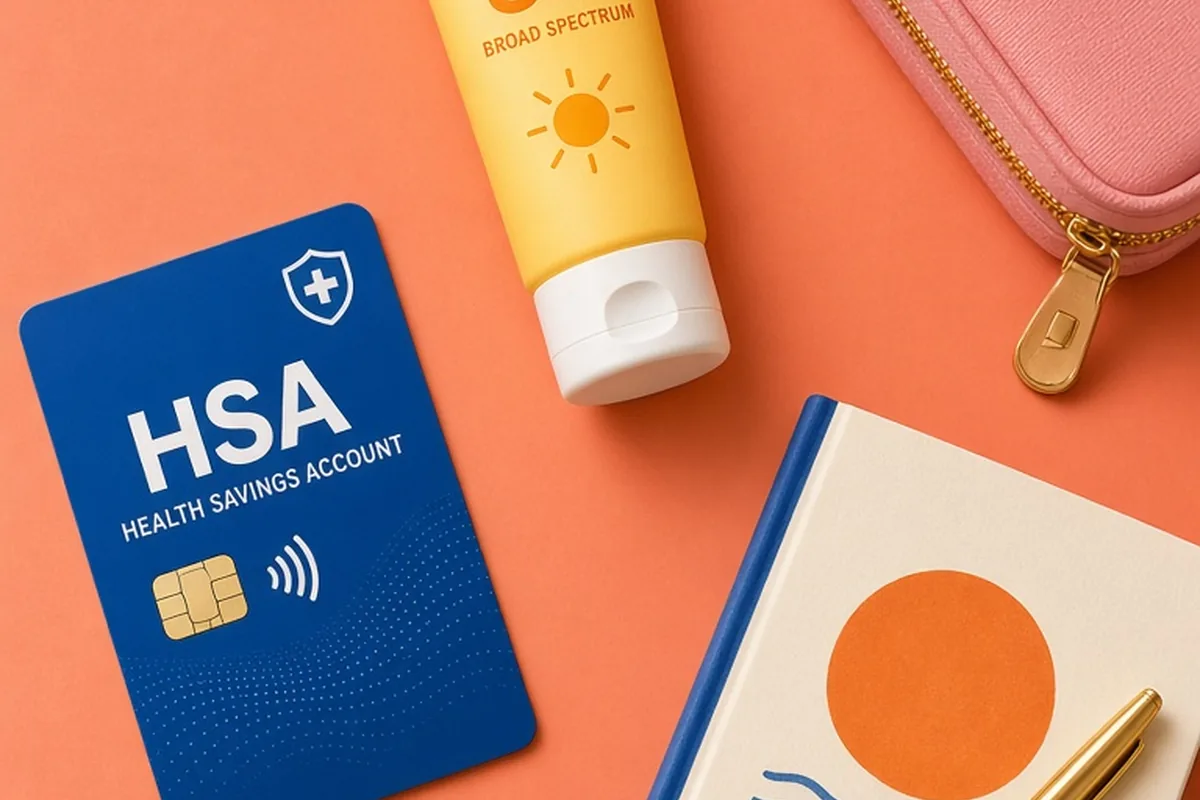
Yes, you can buy sunscreen with a Health Savings Account (HSA) or Flexible Spending Account (FSA) without a doctor prescription. Under IRS guidelines, broad-spectrum sunscreens with a Sun Protection Factor (SPF) of 15 or higher qualify as eligible medical expenses because they protect against skin damage and disease. You can purchase them directly with an HSA debit card or submit itemized receipts for reimbursement.
Navigating health savings rules can often feel complicated, but sun protection is one everyday wellness category where the guidelines are straightforward and beneficial. Using tax-advantaged funds for daily sun care helps you maintain a consistent skincare routine while lowering your out-of-pocket costs on preventive health essentials.
IRS Eligibility Criteria for Over-the-Counter Sunscreens
Federal tax law recognizes sun protection as a legitimate preventive medical measure designed to reduce the risk of skin cancer and premature skin aging caused by ultraviolet radiation. Following legislative updates through the CARES Act, over-the-counter sunscreens no longer require a physician prescription or a letter of medical necessity to qualify for tax-free purchase through a Health Savings Account (HSA) or Flexible Spending Account (FSA). This policy allows account holders to use pre-tax dollars freely on everyday sun defense products throughout the entire calendar year.
To qualify under standard Internal Revenue Service guidelines, the product must be a broad-spectrum formula with a Sun Protection Factor of 15 or higher. Broad spectrum means the formulation defends against both Ultraviolet A (UVA) rays, which contribute to cellular aging and deep tissue damage, and Ultraviolet B (UVB) rays, which cause superficial burning. Products meeting this standard include standard mineral formulas featuring zinc oxide or titanium dioxide, as well as conventional chemical formulations utilizing active ingredients like avobenzone, homosalate, and octisalate.
While an SPF of 15 is the regulatory baseline for tax eligibility, dermatologists and public health organizations commonly recommend opting for broad-spectrum SPF 30 or higher for daily outdoor protection. Eligible product forms include traditional pump lotions, squeeze tubes, continuous spray aerosols, solid twist-up sticks, and powder dispensers, provided the primary stated function on the packaging is ultraviolet protection. Understanding these technical criteria ensures that every bottle you select qualifies cleanly under your health account rules.
Distinguishing Pure Sunscreens from Cosmetic Hybrid Products
The primary distinction for HSA eligibility lies in whether a product is classified primarily as a medical sunscreen or as a decorative cosmetic. Standalone facial sunscreens, daily fluid sunscreens, and moisturizing sunscreens that carry a dedicated Drug Facts label on the rear packaging qualify automatically. These formulas are classified as over-the-counter drugs regulated to prevent disease, making them legitimate medical expenses under federal tax definitions.
Ambiguity often arises with cosmetic hybrid items, such as liquid foundations, BB creams, CC creams, tinted setting powders, and lip glosses that contain added sun protection. If a beauty product is marketed predominantly as makeup and only includes secondary SPF protection, HSA administrators and retail inventory scanners may flag or reject the item as an ineligible cosmetic. However, dedicated tinted mineral sunscreens whose primary identity and labeling denote them as broad-spectrum sunscreens generally qualify without issue.
To avoid unexpected claim denials or reimbursement challenges, inspect the physical packaging before purchasing. If the product features a prominent Drug Facts panel outlining active ingredients, intended uses, and dosage directions, it satisfies over-the-counter drug standards. When choosing between a high-end foundation with SPF 20 and a dedicated tinted broad-spectrum facial sunscreen with SPF 40, choosing the latter guarantees both superior skin protection and seamless HSA eligibility.
How to Pay and Submit for Reimbursement Successfully
The simplest way to buy eligible sunscreen is by using your dedicated HSA debit card at point-of-sale terminals in certified retail environments. Major pharmacy chains, large grocery retailers, and dedicated online health supply storefronts participate in the Inventory Information Approval System (IIAS). This automated inventory network cross-references product barcodes at the cash register, immediately separating eligible items like qualifying sunscreens from non-eligible grocery items and allowing your HSA card to fund only the approved balance.
If you purchase sunscreen from an independent boutique, a dermatologist office, or an online specialty retailer that does not use automated inventory coding, you can still pay with a standard personal credit card or cash and manually request reimbursement later. Log into your HSA custodian online portal, navigate to the claims or distribution section, and submit a digital request to transfer funds from your tax-advantaged balance to your personal checking account.
Proper documentation is critical to safeguard against future tax inquiries or administrator audits. Always retain detailed, itemized receipts that explicitly list the product brand name, exact item description, purchase date, and total dollar amount paid. A generic credit card receipt showing only the total transaction sum is insufficient for audit verification; your records must prove that the individual item purchased was a qualifying over-the-counter healthcare product.
Eligible Sunscreen Formulations for Different Skin Needs
Account holders can tailor their sunscreen choices to specific dermatological needs without worrying about losing reimbursement eligibility. For individuals prone to facial breakouts, oil-free, non-comedogenic sunscreens and matte-finish gels qualify fully, allowing you to invest in lightweight formulas that do not clog pores. Similarly, individuals with sensitive skin, rosacea, or eczema can use HSA funds on fragrance-free physical mineral sunscreens formulated with soothing botanical extracts and gentle zinc oxide.
Active lifestyles and family care are also well supported under HSA spending rules. Broad-spectrum water-resistant sunscreens formulated for swimming, athletics, and high-perspiration activities qualify across various sizes and formats. Pediatric sunscreens designed specifically for babies older than six months and toddlers are equally eligible, enabling parents to purchase protective sticks, sprays, and family-sized pump bottles using pre-tax household dollars.
While clinical formulation benefits remain constant across product tiers, prices can vary significantly between drugstore staples and luxury dermatological brands. A prestige mineral sunscreen costing forty dollars per bottle offers identical tax eligibility to an eight-dollar drugstore lotion, provided both meet the broad-spectrum SPF 15 minimum. Budgeting your HSA funds requires balancing personal formula preferences, daily aesthetic wearability, and total volume needed for complete household protection.
Common Pitfalls That Lead to Rejected HSA Claims
One frequent mistake is assuming that all summer skin care and sun-related products qualify for tax-advantaged reimbursement. Tanning oils and dark tanning lotions, even those containing minimal SPF levels below 15, are classified as cosmetic tanning aids rather than health-protective measures and are strictly ineligible. Similarly, standard after-sun cooling gels and aloe vera lotions generally do not qualify unless they contain medicated active ingredients specifically formulated to treat burns or topical pain.
Another common hurdle stems from incomplete store receipts or ambiguous item descriptions on register printouts. Discount retailers or small convenience stores often print vague descriptions such as general merchandise or beauty item on register slips instead of specifying the sunscreen product name. If an HSA administrator requests verification for such an expense, an ambiguous receipt may result in claim rejection unless you can provide supplemental proof, such as the product barcode or an order invoice showing full item details.
If you accidentally swipe your HSA debit card for an ineligible cosmetic product or receive an administrative denial on a submitted claim, corrective action is straightforward. For accidental card swipes at retail checkouts, you can contact your account custodian to repay the distribution or report the non-qualified expenditure on your annual tax forms. Keeping your sunscreen purchases focused on clearly labeled, high-SPF daily protective formulas prevents these administrative complications.
Maximizing Your Annual HSA Budget with Sun Care Essentials
Integrating sun protection into your broader healthcare spending strategy allows you to optimize your tax savings while maintaining skin health year-round. Because sun damage accumulates through continuous daily exposure during all seasons, purchasing daily facial moisturizers with SPF 30 or higher and lip balms with qualifying broad-spectrum protection provides ongoing medical benefits during winter as well as summer. Building these recurring purchases into your monthly or quarterly health budget ensures you never run low on defense.
When planning your purchases, take advantage of bundled offerings, family multipacks, and end-of-year FSA or HSA account deadlines. If your employer provides a Flexible Spending Account with a use-it-or-lose-it year-end provision, stocking up on non-perishable broad-spectrum sunscreens is an effective way to deploy remaining balances on essential preventive wellness items before funds expire.
Always monitor product expiration dates when purchasing multiple containers of sunscreen in advance. Most broad-spectrum sunscreens maintain full chemical stability and protective efficacy for up to three years from their manufacturing date under proper storage conditions. Avoid storing excess bottles in hot vehicles or direct sunlight, as excessive heat can degrade active protective filters and reduce the shelf life of your investment.
Frequently asked questions
Do lip balms with SPF qualify for HSA reimbursement?
Yes, lip balms and lip treatments that feature broad-spectrum SPF 15 or higher qualify as eligible over-the-counter medical expenses. Purely decorative lip glosses or colored lipsticks with incidental SPF may be denied if classified primarily as cosmetics.
Is a doctor's prescription required to purchase sunscreen using an HSA?
No prescription or letter of medical necessity is required to buy broad-spectrum sunscreen with an SPF of 15 or greater. Changes under federal tax law permanently restored over-the-counter eligibility for qualifying sun protection products without physician documentation.
Can I buy sunscreen for my family members using my HSA funds?
Yes, you can use your HSA funds to purchase qualifying sunscreen for yourself, your legal spouse, and any tax dependents. This includes pediatric sunscreens, sport lotions, and daily face formulas used by qualifying household members.
What should I do if my HSA debit card is declined at checkout for sunscreen?
If an automated register does not recognize the item barcode as eligible, complete the purchase using a personal payment method and retain the itemized receipt. You can then submit the receipt online through your HSA administrator portal for manual reimbursement.
Your next step
Check your favorite daily sunscreen for broad-spectrum SPF 15 or higher, verify that the receipt itemizes the product name, and use your HSA debit card or portal reimbursement to fund your daily sun protection tax-free.