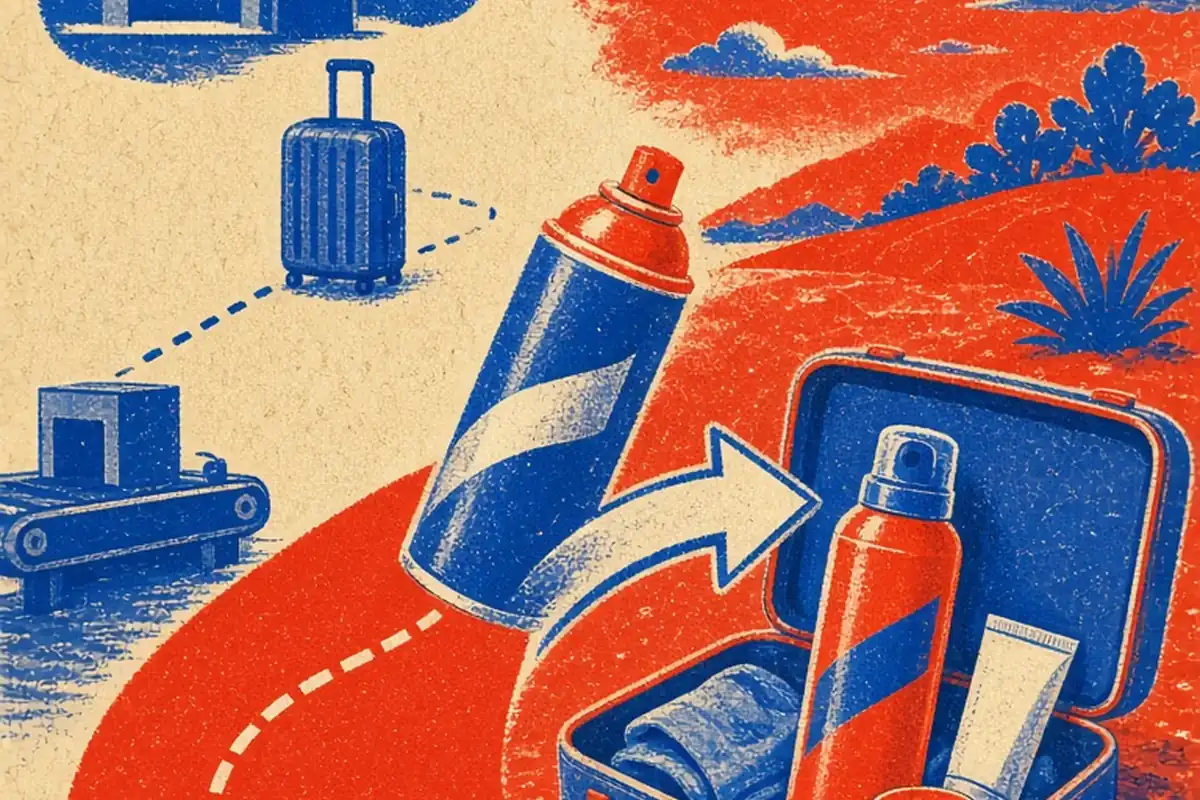
Yes, you can fly with aerosol spray sunscreen in checked bags, provided the container meets federal hazardous materials regulations. The TSA and FAA permit medicinal and toiletry aerosols in checked luggage if each container is 18 fluid ounces (500 ml) or smaller, and the total across all aerosol products per passenger does not exceed 70 fluid ounces (2,000 ml). Containers must also have protective caps to prevent accidental discharge.
Preparing for a sunny getaway often means packing protective skincare, and spray sunscreen is a popular choice for fast, convenient application. However, because aerosol cans contain compressed gas and flammable propellants, airline travelers frequently worry whether these containers are permitted in checked luggage or if they will be confiscated during security screening.
Understanding TSA and FAA Aerosol Regulations for Checked Luggage
The Transportation Security Administration (TSA) and the Federal Aviation Administration (FAA) operate under clear guidelines regarding hazardous materials in aircraft cargo holds. Aerosols are generally restricted due to the pressurized gas inside them, but an explicit exception exists for personal care items, toiletries, and over-the-counter medicinal products. Sunscreen falls squarely under this toiletry and medicinal exemption, meaning standard commercial sunscreen sprays are legal to transport in your checked suitcase.
To stay compliant, travelers must adhere to strict volume limits established under federal regulations. A single aerosol container cannot exceed 18 fluid ounces (approximately 500 milliliters or 16 ounces by mass). Additionally, the total aggregate volume of all toiletry and medicinal aerosols carried by a single passenger cannot exceed 70 fluid ounces (roughly 2,000 milliliters or 68 ounces by mass). This aggregate total includes not only your sunscreen, but also items like hairspray, dry shampoo, deodorant spray, and shaving cream.
Another non-negotiable rule is the requirement for valve protection. The FAA mandates that every aerosol nozzle must be protected by a secure cap, a recessed trigger, or a dedicated locking mechanism. This rule ensures that shifting items inside your suitcase do not continuously depress the nozzle during baggage handling and transit, which could release flammable propellants into the cargo environment.
Comparing Carry-On Liquid Rules with Checked Baggage Limits
When packing sunscreen, deciding between a carry-on bag and a checked suitcase fundamentally changes the size of the container you can bring. For carry-on baggage, the TSA strictly enforces the 3-1-1 liquids rule. Under this regulation, all liquids, gels, and aerosols must be in containers of 3.4 fluid ounces (100 milliliters) or less, and all containers must fit comfortably inside a single clear, quart-sized plastic bag.
Because most full-sized continuous spray sunscreens sold in stores range from 5 to 8 fluid ounces, they cannot pass through passenger security checkpoints in a carry-on bag. Attempting to bring a standard 6-ounce spray can through a security line will almost certainly result in the item being confiscated and discarded by screening officers.
Checking your luggage provides significantly more leeway. A standard 6-ounce bottle of spray sunscreen easily fits within the 18-ounce individual container ceiling for checked bags. For longer beach vacations, family trips, or outdoor excursions where a single travel-sized bottle would run out within a day or two, packing full-sized cans in checked luggage remains the most practical approach.
Managing Cargo Hold Pressure and Preventing Valve Leaks
A common concern among flyers is whether the change in atmospheric pressure at cruising altitude will cause aerosol cans to burst. Commercial aircraft cargo holds are pressurized and climate-controlled, though the ambient pressure is maintained at the equivalent of roughly 6,000 to 8,000 feet above sea level. This minor pressure differential is far below what is required to rupture a properly manufactured commercial aerosol can, which is engineered to withstand pressures well beyond typical flight conditions.
The real risk during air travel is mechanical impact rather than explosive depressurization. Luggage undergoes significant jostling, stacking, and vibration during transit. If heavy items such as shoes, toiletry organizers, or hard-sided gear shift against an unprotected spray nozzle, the valve can be held down continuously. This causes the entire contents of the can to discharge silently into your clothing and personal belongings.
Temperature extremes can also subtly impact container integrity. While heated cargo bays keep temperatures well above freezing, luggage left on outdoor baggage carts during extreme summer heat or winter cold can experience temperature swings. Packaging your aerosols in central, insulated sections of your suitcase helps buffer them against external physical impacts and rapid temperature variations.
Step-by-Step Packing Guide for Aerosol Sunscreen
Packing aerosol sunscreen safely requires a methodical approach that minimizes the chance of accidental spraying or container puncture. Taking five minutes to prepare your bottles before loading your suitcase ensures that you arrive at your destination without greasy, ruined clothing.
Follow these practical steps to pack your spray sunscreen securely before heading to the airport:
- Verify Container Compliance: Confirm that the bottle displays its volume clearly and that it does not exceed the 18-ounce individual limit.
- Engage the Locking Mechanism: If the can features a twist-lock nozzle, rotate it to the fully locked position before packing.
- Secure the Protective Cap: Place the plastic cap firmly over the nozzle. Wrap a small piece of masking tape or painter tape around the seam between the cap and bottle to prevent the cap from popping off under friction.
- Double-Bag in Sealed Plastic: Place each aerosol can inside a heavy-duty, sealable plastic bag, pressing out excess air before sealing. Adding a second bag around the first provides an extra barrier in the rare event of a leak.
- Position in the Center of the Suitcase: Nest the wrapped sunscreen in the middle of your luggage, surrounding it with soft clothing such as towels, jeans, or sweaters to cushion it against external baggage impacts.
Navigating International Flying Regulations and Airline Policies
While TSA regulations govern flights originating in the United States, international travel introduces oversight from foreign aviation authorities such as the European Union Aviation Safety Agency (EASA), Transport Canada, and the International Civil Aviation Organization (ICAO). Fortunately, most international civil aviation bodies maintain harmonized rules for personal toiletries that closely mirror FAA limits: individual containers under 500 milliliters and aggregate volumes under 2,000 milliliters.
However, individual airlines occasionally impose stricter restrictions than federal regulators. For instance, some regional carriers operating smaller turboprop aircraft or budget carriers with specific cargo restrictions may place tighter caps on hazardous materials or total toiletry volumes. When flying on multi-leg itineraries that involve foreign domestic flights, checking your specific airline dangerous goods policy is a prudent precaution.
Customs regulations represent another layer to consider when entering certain countries. A few island destinations and eco-sensitive coastal regions have enacted legal bans on specific chemical sunscreen ingredients, such as oxybenzone and octinoxate, to protect coral reef ecosystems. Even if your aerosol bottle is permitted on the plane, the formula inside might be prohibited upon arrival, making mineral-based alternatives a safer choice for sensitive travel destinations.
Weighing Spray Sunscreen Against Lotions, Sticks, and Buying Locally
Deciding whether to pack aerosol sunscreen in your checked bag involves balancing convenience against practical trade-offs. Spray sunscreens provide rapid application over broad body surfaces, making them popular for active outdoor sports and reapplication over sandy skin. However, aerosols contain propellants, meaning a 6-ounce spray can actually contains less usable liquid product than a 6-ounce bottle of lotion.
Lotions and solid sunscreen sticks offer several travel advantages over sprays. Solid sticks cannot leak, are exempt from carry-on liquid volume limits, and allow for targeted application on sensitive areas like the face, ears, and neck without airborne misting. Lotions also eliminate concerns about aerosol caps coming loose in cargo, though squeeze bottles must still be bagged to guard against pressure-induced cap pops.
Another reliable strategy is purchasing full-sized aerosol sunscreen once you land at your destination. Buying sunscreen at a local pharmacy or market saves valuable weight in your checked luggage, frees up space, and completely removes any worry about luggage inspection delays or spills. If you choose this route, carrying a travel-sized stick or small 3-ounce lotion in your personal item ensures you have sun protection immediately upon arrival before you can visit a store.
Handling Spills, Leaks, and Damaged Containers
If you arrive at your destination and find that an aerosol container has discharged inside your luggage, immediate action can minimize damage to fabrics and gear. Sunscreen formulas often contain oily emollients and chemical UV filters like avobenzone, which can cause yellow or orange staining on light-colored fabrics if left unwashed.
Remove the affected clothing immediately and avoid running it through a dryer, as heat permanently sets sunscreen stains. Pre-treat the oily residue with a liquid dish soap or an enzyme-based laundry stain remover to break down the lipid base before washing in cold water. For hard surfaces or gear, wipe away the propellant residue using warm water and mild detergent.
Inspect the aerosol container itself after any incident. If the plastic nozzle is cracked, the metal casing is deeply dented, or the valve continuously hisses, the structural integrity of the can has been compromised. Do not attempt to force the valve or use tools to clear a clogged nozzle. Safely dispose of damaged aerosol cans according to local waste regulations rather than attempting to pack them for your return flight.
Frequently asked questions
Can spray sunscreen explode in the cargo hold of an airplane?
No, commercial aircraft cargo holds are pressurized, and standard aerosol cans are engineered to withstand pressures far higher than normal flight conditions. The primary risk during flight is an unshielded nozzle being compressed by surrounding luggage, which can cause the can to discharge its contents rather than explode.
How many cans of spray sunscreen can I bring in my checked suitcase?
You can pack multiple cans as long as each container is 18 fluid ounces (500 ml) or smaller and the combined volume of all aerosol toiletries in your luggage does not exceed 70 fluid ounces (2,000 ml). For example, you could safely pack up to three 6-ounce cans of spray sunscreen, provided you have limited other aerosol toiletries.
Does spray sunscreen count toward the TSA carry-on liquid limits?
Yes, if you bring spray sunscreen in a carry-on bag, it must comply with the 3-1-1 liquids rule, meaning the container must be 3.4 fluid ounces (100 ml) or less. Full-sized aerosol sunscreen cans cannot pass through passenger security checkpoints and must be packed in checked baggage.
Your next step
Before packing, check the volume printed on your spray sunscreen can, confirm the protective cap is taped firmly in place, and double-bag the container in the center of your suitcase surrounded by soft clothing.