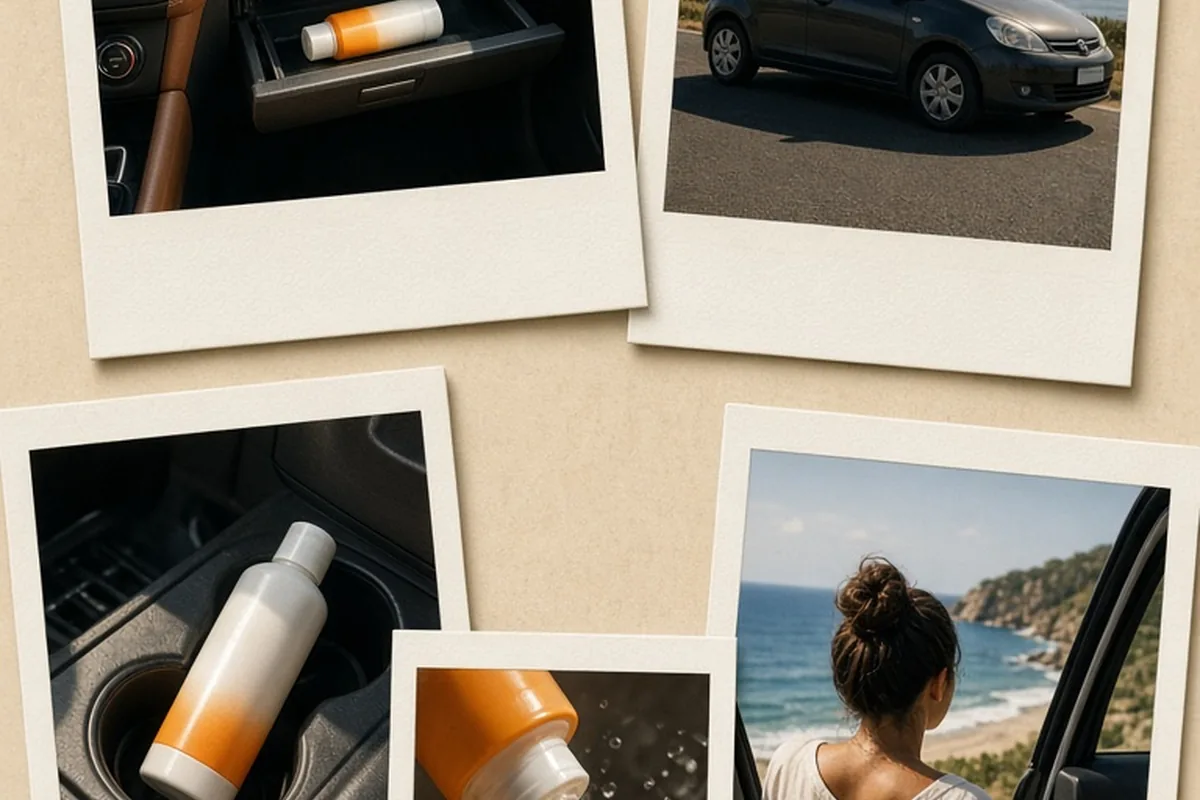
You should avoid leaving sunscreen in the car. Vehicle interiors quickly reach temperatures high enough to break down active UV filters, destabilize emulsions, and degrade preservatives. Heat exposure leaves the formula watery or clumpy, which creates patchy coverage, reduces your protection against UV radiation, and increases the risk of sunburn, skin irritation, and premature skin aging.
Keeping a spare bottle of sunscreen in your glove compartment seems like the ultimate convenience for spontaneous beach days, outdoor workouts, or daily commutes. However, enclosed vehicles act like ovens during warm weather, creating an environment that actively ruins the delicate chemistry keeping your skin safe from solar damage.
How Extreme Heat Destabilizes Sunscreen Chemistry
Sunscreen is not a single static substance; it is a precisely engineered emulsion of water, oils, active UV filters, emulsifiers, and stabilizing agents. When manufactured, these ingredients are blended under controlled conditions to ensure that every drop contains an exact ratio of active filters. When sunscreen sits in a hot environment, the thermal energy accelerates molecular motion, causing the bonds between oil and water phases to weaken and break apart. Once an emulsion separates, active ingredients clump together or sink to the bottom of the container, making it impossible to dispense a uniform layer of protection across your skin.
Both chemical and mineral sunscreens suffer when exposed to excessive heat, though the mechanisms differ slightly. Chemical filters like avobenzone and octinoxate are sensitive molecules that can chemically degrade under prolonged high temperatures, rendering them far less capable of absorbing ultraviolet photons. Mineral formulas containing zinc oxide or titanium dioxide rely on specialized suspension agents to keep the physical particles evenly dispersed. When heat thins these suspension liquids, the mineral particles settle into dense clusters, meaning a single pump might dispense pure inactive carrier lotion with almost no physical shielding power.
Preservatives are another critical casualty of vehicle heat. Sunscreens contain preservative systems designed to inhibit bacterial and fungal growth inside the bottle, especially when you open and close the cap outdoors with sandy or unwashed hands. Sustained heat can deactivate these preservatives. Over time, a bottle left in a warm car becomes an ideal breeding ground for microbes, transforming a protective skincare item into a potential trigger for folliculitis, contact dermatitis, or acne breakouts.
The Microclimate Inside a Parked Vehicle
Most sunscreen manufacturers recommend storing their products at room temperature, typically between 68 and 77 degrees Fahrenheit, with short excursions up to 86 degrees permitted during transit. Parked cars routinely blow past these thresholds even on mild days. Sunlight passes through vehicle windows, heating up the dark dashboard, leather seats, and internal air through the greenhouse effect. On an 80-degree day, the interior temperature of a car can climb to 110 degrees within fifteen minutes and exceed 130 degrees within an hour.
Common storage spots like the glove box, center console, and door pockets offer no meaningful thermal defense. While these compartments shield products from direct visible sunlight, they trap radiant heat and act like small insulated warming chambers that retain high temperatures long after the sun goes down. The trunk of a vehicle can become similarly hot, as metal panels transfer external solar energy directly into the rear cargo space.
Even during cloudy weather or cooler seasons, direct sunlight shining through windshield glass onto a bottle can cause localized thermal spikes. A bottle sitting in a cup holder under direct sun can absorb enough radiant heat to damage the formulation even if the ambient air outside feels pleasant. Relying on your car as a permanent storage locker for sun protection almost always exposes the product to cycles of severe heating and cooling that rapidly accelerate product expiration.
Clear Signs Your Sunscreen Has Gone Bad
Recognizing heat damage requires checking the sensory characteristics of the lotion or spray before applying it to your skin. If you suspect a bottle has spent too much time in a warm vehicle, dispense a small amount into the palm of your hand and examine its texture, color, and scent. A damaged formula usually exhibits distinct warning signs that indicate the emulsion has failed.
Watch for these unmistakable indicators of heat degradation before using a compromised bottle:
- Phase separation, such as clear, oily fluid running out ahead of a thick, curdled cream.
- A gritty, chalky, or sand-like texture when rubbed between your fingers, indicating crystalized or agglomerated mineral filters.
- Unusual thinning, where a previously rich lotion pours out like colored water without any body or viscosity.
- Color shifts, including yellowing, browning, or dulling of an originally bright white or neutral cream.
- Unpleasant odors, such as a sharp plastic smell from heated packaging or a rancid, sour scent from oxidized oils.
The Practical Risks of Applying Compromised Sunscreen
The most dangerous consequence of using heat-damaged sunscreen is the false sense of security it creates. When you apply a compromised product, you believe your skin is shielded with an SPF 30 or 50 barrier, prompting you to stay in direct midday sun far longer than you would unprotected. Because the degraded formula applies unevenly, solar radiation penetrates microscopic gaps across your skin, leading to patchy, severe sunburns and cumulative UV damage that drives premature aging and increases cellular mutation risk.
Heat-damaged formulas are also far more prone to causing acute skin reactions. When active UV chemicals break down into degradation byproducts, they can become potent irritants or photoallergens. Applying these altered molecules to delicate facial skin or sun-exposed shoulders frequently results in burning sensations, red patches, hives, and contact dermatitis.
Furthermore, altered carrier oils and degraded emulsifiers tend to clog pores more aggressively. When an emulsion separates, high concentrations of concentrated emollients hit your skin without the balancing water phase, trapping sweat and bacteria underneath. For anyone managing acne-prone skin, using sunscreen that sat in a hot car can cause sudden clusters of inflammatory blemishes and clogged pores across the forehead, chest, and back.
Smart Solutions for Sun Protection on the Go
You do not have to sacrifice convenience to keep your skin protected during daily travel. Instead of leaving a primary bottle in the glove box, adapt your daily routine with portable, temperature-stable habits. Carrying your sunscreen in a personal handbag, backpack, or tote bag ensures that the product stays in climate-controlled indoor spaces with you rather than baking in an empty car.
If you must keep sunscreen in your vehicle during day trips, sporting events, or beach excursions, treat it like perishable food. Store your sunscreen container inside a small insulated lunch bag alongside a cool pack or a chilled water bottle. The insulation prevents rapid temperature spikes, keeping the formula well below the critical degradation threshold even during peak afternoon heat.
Another effective strategy involves purchasing mini or travel-sized tubes that you replenish frequently from a larger bottle kept safely in your home bathroom. Using smaller quantities ensures you cycle through product quickly before heat exposure has months to degrade the active components. Stick formulas are also slightly more heat-resilient than thin fluid lotions, making them convenient for purse storage, though they will still soften and melt if left on a sunny car seat.
What to Do If You Accidentally Left Sunscreen in the Car
If you accidentally left your sunscreen in a hot car for an afternoon, resist the urge to simply shake the warm bottle and put it straight onto your skin. First, remove the bottle from the vehicle immediately and bring it into a cool, air-conditioned room. Allow the product to return to ambient room temperature completely before opening or inspecting it, as some minor formula thinning temporarily reverses once the product cools down.
Once cooled, shake the bottle vigorously and dispense a quarter-sized amount into your hand. Check carefully for permanent changes. If the product remains separated with clear liquid pooling around clumps, if it feels noticeably grainy, or if the scent has altered, the emulsion has suffered irreversible damage. In that scenario, the only safe choice is to discard the bottle and replace it.
If the texture, color, and odor appear completely unchanged after a single brief heat spike, the product may retain usable protection for short-term, low-intensity situations like walking to your car. However, you should avoid relying on that specific bottle for high-exposure activities such as extended beach outings, boating, or mountain hiking, where absolute peak SPF integrity is critical to preventing severe sunburn.
Illustrative Scenarios
Illustrative Scenario: The Weekend Beach Trip
A commuter left a brand-new bottle of SPF 50 chemical sunscreen in her glove compartment throughout a warm summer workweek. On Saturday, she applied the lotion before spending four hours outdoors. She noticed the lotion felt runnier than normal and squirted out some clear oil, but she assumed shaking the bottle fixed the issue. Despite reapplying regularly, she developed an uneven, stinging sunburn across her shoulders and neck by the evening.
Key point: Heat inside the car broke down the formula's emulsion during the week, causing patchy application and leaving large areas of her skin without functional UV filtering despite diligent reapplication.
Frequently asked questions
Can I fix separated sunscreen by putting it in the refrigerator?
Chilling a heat-damaged sunscreen may firm up the liquid, but it cannot repair broken chemical bonds or restore an emulsion that has fully separated. Once active UV filters clump or degrade, cold temperatures will not redistribute them evenly throughout the lotion. If a product has split or turned gritty, you should replace it rather than trying to salvage it in the fridge.
Are mineral sunscreens safer to leave in the car than chemical sunscreens?
While zinc oxide and titanium dioxide minerals are chemically stable in heat, the base lotion holding them in suspension is not. Extreme car heat breaks down the emulsifiers, causing heavy mineral particles to sink and settle into dense pockets. This separation results in an uneven application that leaves parts of your skin vulnerable to sunburn.
How long can sunscreen stay in a car before it goes bad?
In mild spring or autumn weather with temperatures below 75 degrees, leaving sunscreen in a shaded car for a few hours rarely causes harm. However, on warm sunny days when cabin temperatures exceed 100 degrees, active filter degradation and emulsion breakdown can begin in as little as an hour or two. To avoid guessing product integrity, do not store sunscreen in your vehicle long term.
Your next step
Inspect your current travel sunscreen for texture separation or unusual odors, discard any bottle that has spent days in a hot vehicle, and start storing your daily SPF inside your personal bag.