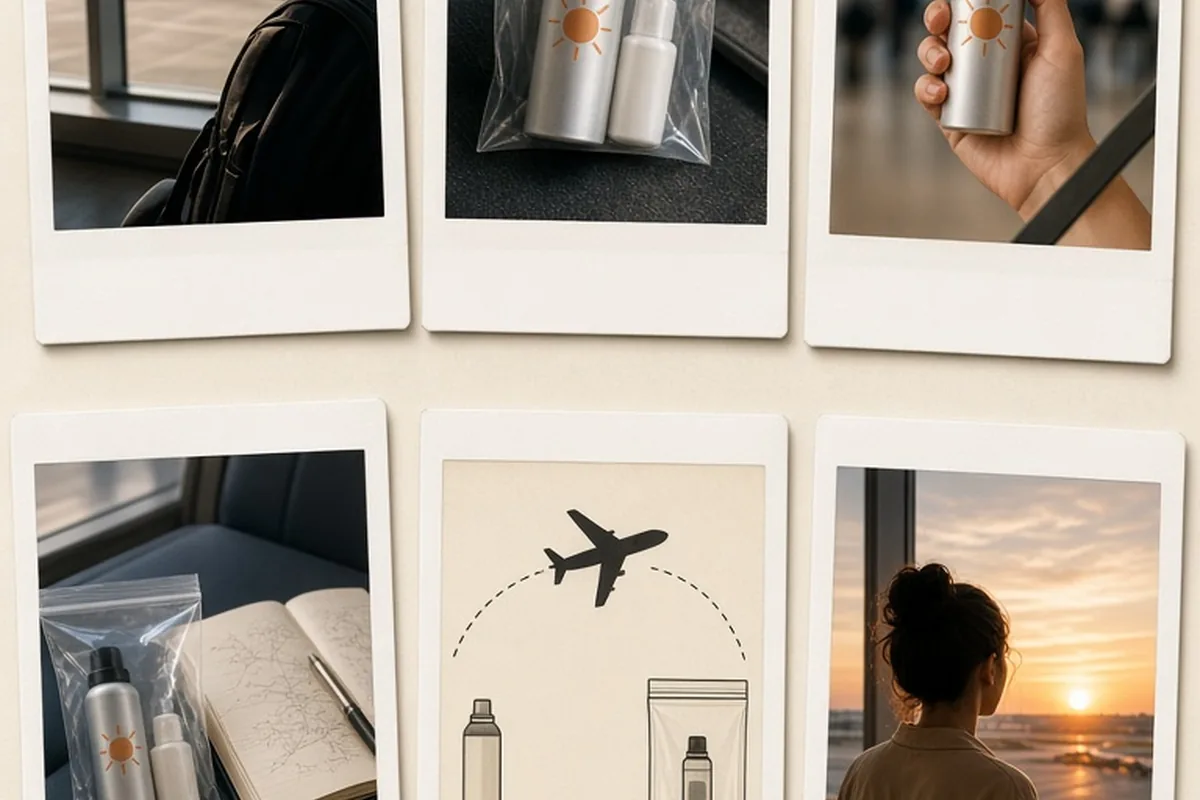
You can take aerosol sunscreen on a plane, but container limits depend on your luggage choice. In carry-on luggage, aerosol cans must be 3.4 ounces (100 milliliters) or smaller and fit into one clear quart-sized bag. In checked bags, full-sized aerosol cans are allowed if each container holds no more than 18 ounces (500 milliliters), with a combined passenger limit of 70 ounces.
Navigating airport security rules for personal care products can feel confusing, especially when packing pressurized sprays. Understanding aviation regulations before packing prevents unexpected delays at airport checkpoints and protects your luggage from messy leaks.
Carry-On Rules and the 3-1-1 Liquids Restriction
The Transportation Security Administration regulates all aerosols under its standard liquids, aerosols, and gels policy. When you place aerosol sunscreen in a carry-on bag, the container must not exceed 3.4 fluid ounces or 100 milliliters. This limit applies to the total capacity printed on the manufacturer packaging rather than the remaining volume inside the canister. Even if an 8-ounce can is nearly empty, security officers will confiscate it at the screening checkpoint because the printed volume exceeds the threshold.
All carry-on aerosols must fit comfortably inside a single, transparent, quart-sized zip-top bag alongside your other travel-sized toiletries. Because aerosol cans are cylindrical and rigid, they consume disproportionately more space within a quart bag than flexible tubes or compact bottles. Packing a travel-sized sunscreen spray alongside toothpaste, shampoo, and facial cleanser often requires careful arrangement to ensure the bag seals completely without tearing.
A practical limitation of travel-sized aerosol sunscreen is its low net product volume. Pressurized cans contain chemical propellants that occupy substantial internal space, meaning a 3.4-ounce aerosol can generally delivers only two to three full-body applications. If you plan an extended beach vacation, relying solely on carry-on aerosol cans may leave you running out of sun protection before your trip concludes.
Checked Baggage Allowances and FAA Hazmat Regulations
Checked baggage allows for significantly larger quantities of aerosol sunscreen because you are not bound by the 3-1-1 carry-on rule. The Federal Aviation Administration permits personal care aerosols in checked luggage under its hazardous materials exemptions for medicinal and toiletry articles. Under these federal rules, an individual aerosol container cannot exceed 18 fluid ounces or 500 milliliters, which easily accommodates standard full-sized spray sunscreen cans sold in grocery stores and pharmacies.
There is also an aggregate limit on the total volume of toiletry aerosols and non-radioactive medicines that one passenger may transport in checked luggage. The combined total across all personal care aerosols—including hairspray, deodorant, shaving cream, and sunscreen—cannot exceed 70 fluid ounces or 2,000 milliliters per person. Release valves on every aerosol container must be protected by a secure cap or another reliable mechanism to prevent accidental discharge caused by pressure changes or rough baggage transit.
While checked luggage provides convenient storage for full-sized sprays, adding multiple aerosol cans increases bag weight and utilizes valuable packing space. A standard full-sized can weighs roughly half a pound, so packing four or five cans for a family trip can noticeably alter your suitcase allowance. Positioning heavy metal cans against soft or fragile travel items also introduces a risk of crushing delicate belongings during transit.
Cabin Pressure, Temperature Shifts, and Packing Security
Commercial aircraft cargo holds and passenger cabins are pressurized, but atmospheric pressure at cruising altitude remains lower than at sea level. This moderate drop in ambient pressure causes the air and propellant inside aerosol cans to push outward against the canister walls and nozzle valve with slightly greater relative force. While commercial aerosol cans are engineered to withstand pressures far greater than standard flight variations, mechanical impacts during baggage handling can compromise a loose valve.
Accidental spraying inside a suitcase is the primary hazard when transporting aerosol sunscreen in checked luggage. Baggage shifting during turbulence or rough handling by automated conveyor belts can depress an unprotected nozzle, discharging greasy sunscreen across clothing and electronics. To minimize this risk, always retain the original protective plastic cap, select bottles with integrated twist-to-lock spray heads, or apply a strip of sturdy tape over the trigger mechanism.
Double-bagging aerosol cans in sealable plastic freezer bags provides an indispensable barrier against unexpected discharge. If a valve is bumped or a seal fails slightly due to temperature swings, the contained mess remains isolated within the plastic pouch rather than spreading through your wardrobe. Once you reach your destination, avoid leaving aerosol cans in hot parked rental cars, as extreme solar heat can dangerously elevate internal canister pressure.
International Flight Guidelines and Destination Restrictions
When traveling internationally, aviation security standards generally mirror the United States framework, but specific enforcement practices can differ. Agencies such as the Canadian Air Transport Security Authority, the European Union aviation security bodies, and the Australian Department of Home Affairs enforce identical 100-milliliter limits for carry-on liquids and aerosols. However, some overseas airports enforce strict container dimension checks and may reject containers that do not clearly display metric volume markings.
Destination-level environmental regulations present another critical consideration for travelers carrying sunscreen. Several popular coastal destinations—including Hawaii, the U.S. Virgin Islands, the island nation of Palau, parts of Mexico, and specific marine reserves in Thailand—have passed legislation prohibiting sunscreens formulated with chemical UV filters like oxybenzone and octinoxate. These bans apply regardless of whether the sunscreen is packaged as an aerosol, cream, or stick.
Before packing your favorite aerosol spray, verify that its active ingredients comply with local conservation laws at your final destination. Mineral-based aerosol sunscreens that use non-nano zinc oxide or titanium dioxide are generally accepted in reef-protected regions, provided they do not contain restricted synthetic chemicals. Reviewing local marine sanctuary requirements prior to departure prevents the disappointment of having expensive products confiscated upon arrival at national park gates.
Aerosol Sunscreen vs. Travel-Friendly Alternatives
Evaluating alternative sunscreen formats can streamline your airport packing routine and conserve limited space. Traditional lotion tubes, solid sunscreen sticks, and compact powder formulas each offer distinct functional trade-offs compared to continuous aerosol sprays. Solid stick sunscreens represent an especially valuable travel option because the TSA classifies solid balms as non-liquids, allowing them to remain in your carry-on luggage without taking up space inside your clear quart-sized bag.
Sunscreen lotions and creams offer significantly greater product density and skin coverage per fluid ounce than aerosol formulations. In an aerosol can, up to half the container volume consists of propellant gas rather than active sunscreen product, which reduces actual product yield. A 3-ounce squeeze tube of concentrated lotion delivers substantially more applications than a 3.4-ounce aerosol spray, making creams far more space-efficient for carry-on travelers.
Application conditions at your travel destination also influence which format performs best. Continuous sprays are convenient for quick touch-ups on dry skin, but applying aerosol sunscreen on windy beaches often results in significant product waste and patchy coverage as the fine mist blows away. Packing a solid stick for facial areas and a dense lotion for initial base applications often provides more reliable protection than depending exclusively on aerosol sprays.
Airport Security Checkpoint Protocol and Preparation
Smooth navigation through the airport screening line requires deliberate organization before you enter the queue. If you are carrying a travel-sized aerosol sunscreen in your hand luggage, place the clear quart-sized bag in an easily accessible exterior pocket of your backpack or carry-on suitcase. Standard security lanes still require passengers to remove liquid bags for separate X-ray imaging, though newer computed tomography scanners at select airports allow liquids to remain packed inside your luggage.
Inspect the manufacturer print on your aerosol can before leaving home to ensure the volume label is legible. If friction has rubbed off the milliliter or fluid ounce text, security officers may treat the item as non-compliant regardless of its physical dimensions. Handling checkpoint interactions politely and understanding that screening personnel have final authority over container acceptance will keep your airport experience low-stress.
If an aerosol sunscreen is flagged during secondary screening and rejected, you will generally have the option to surrender the item, return to the airline ticket counter to check your bag, or hand the item to a non-traveling companion outside security. In most cases, surrendering a low-cost travel spray is far more practical than missing a boarding group, as airport terminal shops routinely stock replacement sunscreens past the security perimeter.
Deciding Between Packing Sunscreen and Buying on Arrival
Choosing whether to pack aerosol sunscreen or buy it after landing depends on your travel itinerary, baggage tier, and skincare needs. If you are traveling exclusively with carry-on luggage for a week-long trip, purchasing full-sized aerosol cans at a local pharmacy near your destination eliminates liquid restriction headaches entirely. This approach preserves carry-on bag space for essential skincare products that cannot be easily replaced.
Conversely, travelers with severe skin allergies, acne-prone skin, or strong preferences for specific cosmetic finishes should prioritize packing known, tested formulas. Tourist enclaves, luxury resorts, and isolated island markets frequently charge steep premiums for basic sun protection, with prices sometimes double or triple standard retail rates. Resort gift shops also carry limited brand selections that may contain heavy fragrances or irritating ingredients.
A balanced hybrid strategy works exceptionally well for many vacationers. Pack a small, compliant mineral stick or mini lotion tube in your carry-on luggage so you have immediate sun protection upon arrival at your destination. Once settled at your lodging, visit a local grocery store to purchase full-sized aerosol cans for daily beach and pool use, avoiding airport packing constraints while keeping expenses reasonable.
Frequently asked questions
Can you pack aerosol sunscreen in your checked bag without the original cap?
While airlines permit aerosol toiletries in checked bags, the FAA requires all release valves to have a protective cap or another reliable means to prevent accidental discharge. If you have lost the original cap, place durable tape firmly over the trigger or use a locking twist mechanism before packing.
Does aerosol sunscreen count as a liquid in carry-on luggage?
Yes, the TSA classifies all aerosols under the same rules as liquids, gels, and pastes. Any aerosol spray in a carry-on must be in a container holding 3.4 ounces (100 milliliters) or less and must fit comfortably inside your single quart-sized bag.
What happens if the volume label on an aerosol sunscreen can has worn off?
TSA officers must be able to verify the container capacity directly from the manufacturer's printed label. If the volume marking is unreadable, security personnel may confiscate the item even if the can appears small.
Are continuous spray sunscreens flammable in aircraft cargo holds?
Standard consumer sunscreen aerosols use propellants that are safe under FAA hazardous material regulations for personal care items when packed correctly. However, you must adhere to the 18-ounce individual container limit and ensure the nozzle cannot be pressed accidentally during transit.
Your next step
Check the printed fluid ounce volume on your aerosol sunscreen cans today and seal them inside protective bags before packing to ensure seamless security clearance and spill-free travel.