Yes, you can bring sunscreen on a carry-on plane bag, provided liquid, lotion, cream, and aerosol formulas are stored in containers of 3.4 ounces (100 milliliters) or less and fit into a single quart-sized bag. Solid stick sunscreens are exempt from liquid limits, while full-sized bottles must be packed in checked luggage.
Navigating airport security rules while trying to maintain your daily skincare routine can feel complicated, especially when heading to sunny destinations. Because sunscreen is available in diverse formulas—from delicate facial fluids and heavy body lotions to continuous aerosol sprays and solid mineral sticks—knowing exactly how transportation security classifies each product will keep your packing efficient and prevent costly items from being discarded at the checkpoint.
Understanding the TSA 3-1-1 Rule for Sunscreen Formulations
The Transportation Security Administration (TSA) and most civil aviation authorities worldwide treat sunscreen as a liquid, gel, or aerosol under standard cabin baggage rules. Under the familiar 3-1-1 guidelines, any liquid or spreadable product in your carry-on luggage must be stored in a container that holds no more than 3.4 fluid ounces, which translates to 100 milliliters. All of these individual small containers must fit comfortably inside one clear, resealable quart-sized plastic bag, with a limit of one bag per passenger.
A common misunderstanding involves the physical amount of product remaining inside a container versus the volume indicated on the label. Security officers evaluate the capacity of the bottle itself rather than how much lotion remains inside. For example, bringing a six-ounce bottle that is three-quarters empty will result in the bottle being confiscated at the X-ray lane, because the container capacity exceeds the 3.4-ounce threshold. To avoid losing your favorite sun care products, always verify the stated volume printed on the packaging before placing it in your hand luggage.
Navigating Aerosol Sprays Versus Lotions and Creams
Aerosol sunscreen sprays are permitted in carry-on bags, but they are subject to additional safety constraints beyond basic liquid size restrictions. The can must not exceed 3.4 ounces, and it must feature a secure cap or a locking mechanism over the release valve to prevent accidental discharge inside the aircraft cabin during transit. Because aerosol cans contain propellant gases, they are categorized as hazardous personal care items and must be handled strictly according to volume and safety caps.
When deciding between sprays and traditional creams for carry-on luggage, formula efficiency is an important trade-off to consider. A standard 3.4-ounce aerosol can contains significant propellant volume alongside the actual sunscreen fluid, which often delivers noticeably fewer full-body applications than a lotion or cream of the identical fluid volume. If carry-on space is limited and you need multiple days of sun coverage, a concentrated lotion, cream, or fluid formula generally offers significantly more usable product per ounce.
- Confirm that spray nozzles possess a firm clip-on protective cap or an integrated twist-lock mechanism.
- Store aerosol cans away from sharp personal items that could pierce or compress the trigger inside packed bags.
- Prioritize dense creams or gel-lotions when packing space is limited to maximize the total number of full-body applications.
Using Solid Sticks and Powder Sunscreens as Carry-On Alternatives
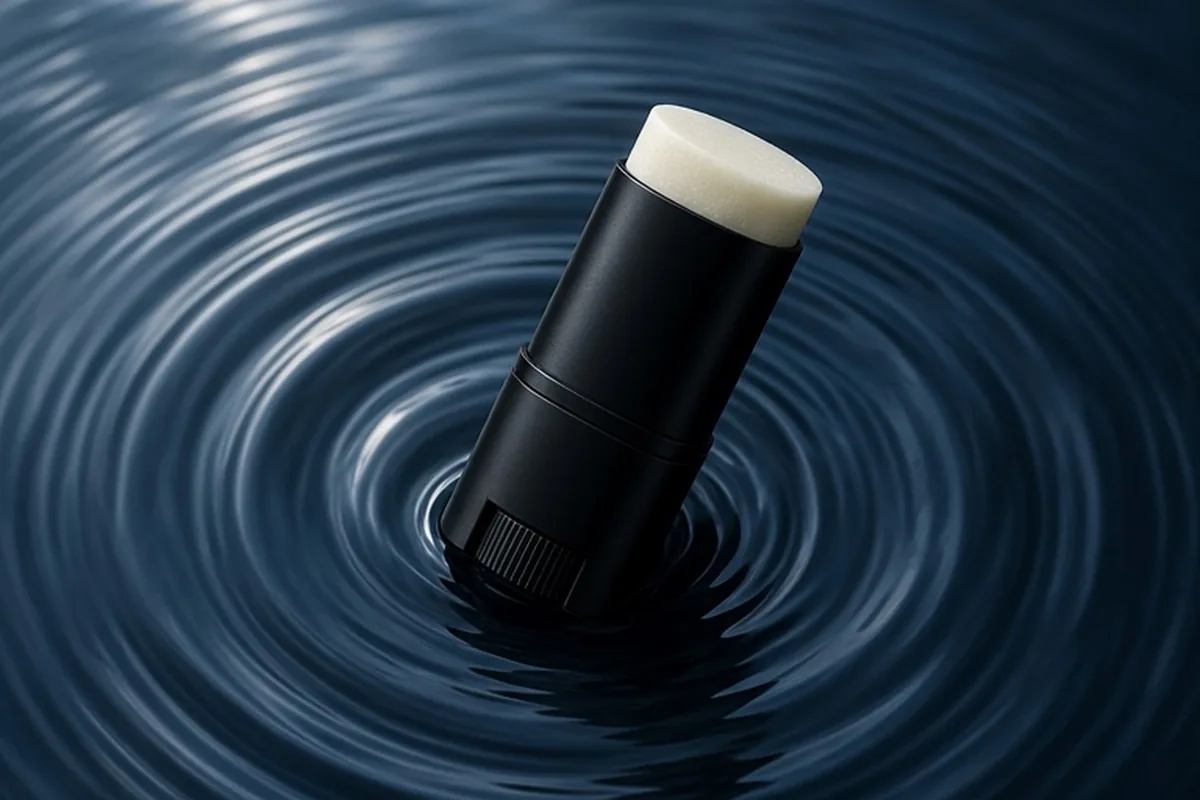
Solid stick sunscreens offer one of the simplest practical solutions for traveling light without running into liquid restrictions. Transportation security agencies do not classify solid stick formulas as liquids, gels, or aerosols. As a result, solid sunscreen sticks can be packed directly into your personal item, purse, or standard carry-on compartment without taking up valuable space inside your single quart-sized liquids pouch.
Powdered mineral sunscreens, which typically come in self-dispensing brush containers, represent another convenient non-liquid choice. While standard passenger rules allow loose powders in hand luggage, travelers inside the United States should note that individual powder containers larger than 12 ounces (350 milliliters) may require separate screening at security checkpoints and could be subject to opening for manual inspection. Keeping travel-sized powder brushes well under this limit ensures a swift, hassle-free passage through screening.
Decanting and Packing Strategies to Prevent In-Flight Leaks
Transferring bulk sunscreen from large household bottles into reusable travel containers is a popular method for staying compliant with security limits, but it requires mindful preparation. The pressure changes that occur during a flight's climb and descent cause trapped air inside bottles to expand and contract, which can force thin fluids through threaded caps. Opting for silicone squeeze tubes or bottles with tight silicone gasket seals helps accommodate pressure differentials without bursting.
When transferring formulas, leave roughly ten percent of empty headspace at the top of each container rather than filling it to the absolute brim. Before screwing the cap on securely, squeeze the bottle gently to purge excess air, and place a small piece of plastic cling wrap over the bottle opening before fastening the screw cap. Placing each decanted bottle inside a separate leak-resistant pouch provides double protection against accidental spills onto clothing, electronics, or personal documents.
Managing Sunscreen Quantities for Multi-Day Vacations
A realistic consideration for carry-on travelers is whether the permitted 3.4 ounces of sunscreen will last the entire duration of an outdoor trip. Thorough full-body application for an adult generally requires approximately one full fluid ounce per use, with reapplications recommended every two hours when outdoors. Consequently, a single travel-sized bottle will realistically cover an adult for only one full day of continuous beach or pool exposure.
To balance this constraint without checking luggage, travelers have several sensible choices. You can pack dedicated travel-sized bottles for facial protection and high-end skincare, and plan to purchase full-sized body sunscreen at a local pharmacy or grocery store upon arriving at your final destination. Alternatively, traveling companions can each carry distinct quart-sized bags to maximize the collective liquid volume across a traveling group, or you can rely heavily on UPF-rated sun shirts, wide-brimmed hats, and shade to reduce total liquid consumption.
International Security Variations and Transit Rules
While the 100-milliliter standard is broadly harmonized across global aviation hubs, local enforcement styles and checkpoint technologies can vary when you fly internationally. Some modern airports in Europe, the United Kingdom, and parts of Asia are rolling out computed tomography (CT) scanners that permit passengers to leave liquids inside bags, but many connecting regional hubs still enforce rigid physical removal of quart-sized bags. Relying on universal 100-milliliter compliance prevents surprises during unexpected layovers.
Purchasing full-sized sunscreen at an airport duty-free shop past the security checkpoint comes with its own specific transit rules. If you have a connecting flight that requires passing through a secondary security screening—such as entering the United States from an international departure—liquids purchased at duty-free must remain sealed in a tamper-evident security bag provided by the retailer with the receipt clearly visible. If your transfer does not permit sealed liquids, the newly purchased item will have to be moved into checked baggage before re-clearing security.
Illustrative Scenarios
Illustrative Scenario: Packing Sun Protection for a Four-Day Trip
A traveler planning a four-day coastal getaway with only a carry-on backpack needs both daily facial protection and body coverage. To stay within carry-on limits, they pack a 1.7-ounce mineral face fluid and a 3.0-ounce nourishing body lotion inside their clear liquids bag. To supplement their body coverage without consuming liquid space, they place a solid mineral sunscreen stick and a lightweight UPF-rated long-sleeve sun shirt in their main pack compartment.
Key point: Combining travel-sized liquid formulas with solid sunscreen sticks and protective apparel allows travelers to maintain comprehensive sun care routines without checking bags or violating airport liquid allowances.
Frequently asked questions
Does sunscreen qualify as a medically necessary liquid at TSA checkpoints?
Standard over-the-counter sunscreen is generally categorized as a standard cosmetic item rather than a medically exempt liquid by TSA screeners. Prescription-strength dermatological treatments may qualify for medical exemptions, but they must be declared to security officers separately for additional manual screening before you enter the standard lane.
Can I bring a large sunscreen bottle if it is almost empty?
No, security screening evaluates the total printed capacity of the bottle rather than the amount of fluid remaining inside. An eight-ounce bottle containing only one ounce of lotion will still be rejected because the container volume exceeds the 3.4-ounce limit.
Are solid sunscreen sticks subject to the quart-sized liquids bag rule?
Solid sunscreen sticks are not classified as liquids or gels, meaning they do not need to fit inside your quart-sized bag. You can pack solid sticks freely alongside dry toiletries in any pocket of your carry-on luggage.
Your next step
Check the printed volume on every sunscreen container before packing, transfer fluids into approved 3.4-ounce containers, and use solid sticks or destination purchases to cover extended outdoor trips seamlessly.