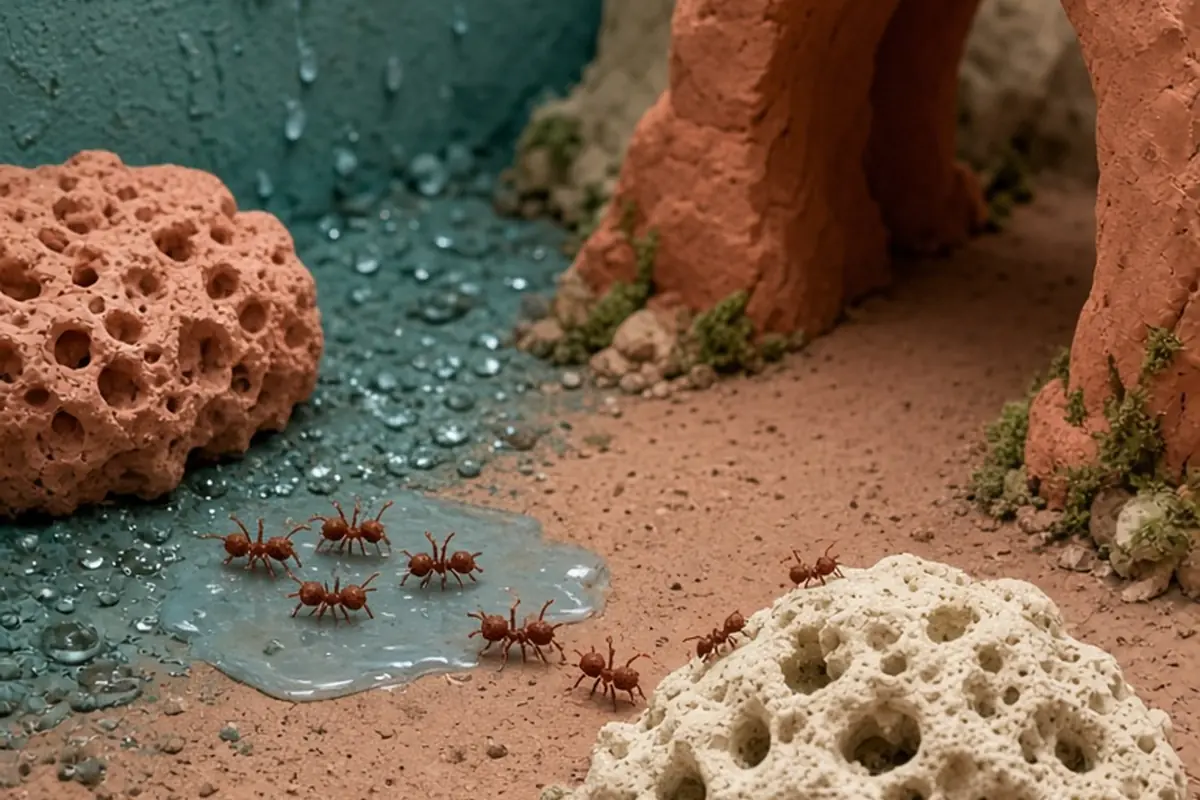
Yes, ants actively seek moisture because they need hydration to survive, regulate nest humidity, and soften nesting materials. While food attracts scouts, persistent water sources like leaking pipes, damp subfloors, condensation, and wet potted soil often draw entire colonies indoors. Species such as carpenter ants and moisture ants specifically establish satellite nests inside damp, decaying wood, making water control essential for prevention.
Homeowners often assume that ants invade living spaces solely in search of sugar or pantry crumbs. However, water is just as critical to an ant colony as food, and an unnoticed plumbing drip or elevated humidity level can trigger a persistent invasion even in a spotless kitchen.
Why Ants Need Water for Biological Survival and Nest Maintenance
Ants possess small bodies with relatively high surface-area-to-volume ratios, making them prone to rapid desiccation. Without access to ambient moisture or free-standing water, individual worker ants lose bodily fluids quickly through their cuticles and respiratory spiracles. In nature, worker ants forage for dew, sap, and moist soil to maintain their internal hydration levels and transport moisture back to the central nest to share with larvae and the queen through liquid exchange.
Beyond individual metabolic survival, water plays a structural role in the health of an ant colony. Developing brood, including delicate eggs and pupae, require tightly controlled relative humidity to prevent drying out or failing to pupate. When outdoor soil becomes arid during extended summer dry spells, or saturated and flooded during heavy spring rains, workers venture inside houses to find balanced microclimates. Interior spaces offer steady temperatures and localized humidity zones that mirror ideal underground conditions, prompting colonies to relocate nesting operations near reliable indoor water supplies.
Ant Species That Specifically Target Damp Environments
While virtually all common house-infesting ant species require water, certain varieties exhibit a pronounced preference for wet structural environments. Species commonly grouped under the term moisture ants, such as yellow ants and cornfield ants, frequently nest outdoors in decaying logs or wet soil. When they enter residential properties, they typically build colonies inside framing timbers, wall voids, or crawlspaces that have already been weakened by persistent plumbing leaks, failing roof flashing, or damp foundation grading.
Carpenter ants represent another significant group closely associated with excess dampness. Contrary to common belief, carpenter ants do not eat wood for nourishment; instead, they hollow out galleries to create satellite nesting cavities for their growing colonies. Sound, dry lumber is challenging for carpenter ants to excavate, so parent colonies preferentially target softened, wet structural wood around window sills, roof valleys, and under-sink framing. Smaller species like odorous house ants and Argentine ants rarely hollow out timber, but they establish high-traffic trails around condensation lines, pet dishes, and bathroom sink drains.
High-Risk Moisture Zones Inside Residential Structures
Bathrooms and kitchens consistently rank as primary hot spots for water-seeking ants because these areas house complex networks of pressurized supply lines, drainage connections, and appliances. Underneath kitchen sinks, subtle drips from shutoff valves or loose slip-joint drain collars create pools of moisture that soak into cabinet particle board. Similarly, dishwashers present a dual risk: the internal wash cavity generates warmth and humidity, while aging door gaskets or micro-leaks in supply hoses provide a dependable water source hidden completely out of sight.
Basements, crawlspaces, and utility rooms present substantial risks due to systemic humidity issues rather than localized pipe leaks. Concrete foundations naturally wick groundwater upward through capillary action, releasing moisture vapor into poorly ventilated subfloor cavities. Laundry rooms with unsealed dryer vent ducts discharge hot, humid exhaust air directly behind drywall, raising ambient dew points and condensing water along wall plates. Even small issues, such as standing water in central air-conditioning condensate pans or water-softener overflow lines, supply sufficient moisture to sustain thousands of ants.
Distinguishing Between Food-Driven and Water-Driven Ant Activity
Determining whether an ant infestation stems from a food attractant or a moisture reservoir dictates how you resolve the problem. Food-motivated foraging typically produces focused, dense trails leading directly to pantry shelves, pet feeding stations, trash containers, or appliance crevices coated with grease or sugar residue. Once workers locate a carbohydrate or protein deposit, they establish chemical pheromone trails that draw steady columns of foragers until the food supply is completely depleted or cleared away.
Water-seeking activity often appears more diffuse and persistent throughout the day, even in rooms that are completely devoid of edible items. Workers may wander individually across clean bathroom tiles, cluster along the rim of a shower drain, or circle condensation droplets on cold window panes. A reliable indicator of a moisture-driven issue is the presence of foraging trails that lead directly into hollow drywall voids or baseboard cracks near plumbing runs without any visible food source nearby. In these circumstances, applying traditional sweet or greasy commercial baits often fails because the colony is prioritizing hydration over macronutrients.
Practical Methods for Eliminating Indoor Moisture Sources
Addressing the environmental conditions that attract ants requires a methodical approach to home moisture management. Begin by conducting a thorough inspection of under-sink cabinetry with a high-intensity flashlight, running your fingers along copper fittings, flexible braided hoses, and P-traps to detect subtle seepage. If cabinet bottoms feel soft, warped, or discolored, peel back loose liners to verify whether persistent dampness has penetrated the subfloor, as drying out these structural layers is essential for breaking the attraction cycle.
In living spaces with elevated ambient humidity, mechanical intervention offers reliable results. Operating a portable or whole-house dehumidifier in finished basements and crawlspaces keeps relative humidity levels below fifty percent, creating an inhospitable dry zone for foraging insects. In bathrooms, run mechanical exhaust fans for at least twenty minutes following hot showers to clear warm moisture from wall surfaces. Inspect tiled showers for cracked grout lines or failing silicone caulk joints along tub perimeters, as standing water easily seeps behind ceramic tile and saturates the backer board.
Outdoor Landscaping and Exterior Moisture Control
The moisture conditions directly surrounding your home foundation heavily influence indoor pest pressure. Dense organic groundcovers, such as shredded hardwood bark mulch, retain significant ground moisture and provide ideal harborage for outdoor ant nests. When thick mulch beds sit flush against concrete stem walls or lap siding, ants easily transition from damp exterior soil directly into interior framing through weep holes and sill-plate gaps. Pulling mulch beds and wood chips back at least six to twelve inches from the foundation perimeter creates a dry physical buffer zone that deters insect transit.
Roof runoff and site drainage also demand careful management. Clogged gutters and misdirected downspouts discharge hundreds of gallons of rainwater directly against the home foundation during heavy storms, soaking perimeter soil and creating saturated framing studs inside exterior walls. Ensure downspout extensions route water at least five to six feet away from the structure, and grade surrounding soil so that it slopes downward away from exterior walls. Trimming tree branches and dense shrubbery away from rooflines and siding allows sunlight and airflow to naturally dry exterior surfaces after rain events.
When Moisture-Seeking Ants Signal Hidden Structural Damage
In many residential scenarios, the sudden emergence of moisture-loving ants serves as an early biological indicator of hidden architectural failures. Because moisture ants and carpenter ants thrive in softened wood fibers, discovering winged reproductive swarmers or continuous worker trails emerging from interior trim often indicates an active water leak inside wall framing or roof trusses. Attempting to manage the infestation solely with surface pesticide sprays masks the underlying symptom without solving the structural decay taking place behind the drywall.
A practical limitation to keep in mind is that eliminating the ants without repairing the water source leaves the property vulnerable to immediate re-infestation by neighboring colonies. If structural timbers have degraded to the point of dry rot or fungal decay, simply drying out the room may not be enough; softened framing members often require complete physical replacement to restore building integrity. If you notice sagging drywall, springy floorboards, or persistent mold odors alongside ant activity, consulting a licensed general contractor or structural specialist alongside pest management professionals ensures both the framing damage and the insect population are fully addressed.
Frequently asked questions
Can standing water attract ants even if my house is clean?
Yes. Ants require moisture for basic hydration and brood regulation regardless of food availability. A completely spotless home with a leaking sink pipe, condensation on windows, or an unemptied pet bowl can still attract regular foraging trails.
Why do I see more ants near my sinks during a drought?
When outdoor soil dries out during prolonged dry weather, natural water sources like dew, puddles, and plant sap disappear. This environmental stress forces colonies to expand their foraging radius indoors toward indoor plumbing traps, damp drains, and bathroom fixtures.
Do moisture ants cause structural damage to dry wood?
No. True moisture ants cannot excavate sound, dry lumber and only colonize wood that has already softened due to fungal rot or chronic water leaks. Carpenter ants also strongly prefer damp wood, although they can occasionally extend galleries into adjacent dry timber once established.
Will chemical ant baits work if ants are searching for moisture?
Standard sweet or protein baits are often ignored when a colony is experiencing severe water deficits. To improve baiting success, eliminate all standing water sources first so that foraging workers redirect their attention to liquid-based pest management solutions.
Your next step
Inspect under-sink plumbing, appliance supply lines, and foundation perimeters for slow leaks or elevated dampness, repairing any plumbing defects and running a dehumidifier to remove the moisture drawing ants indoors.