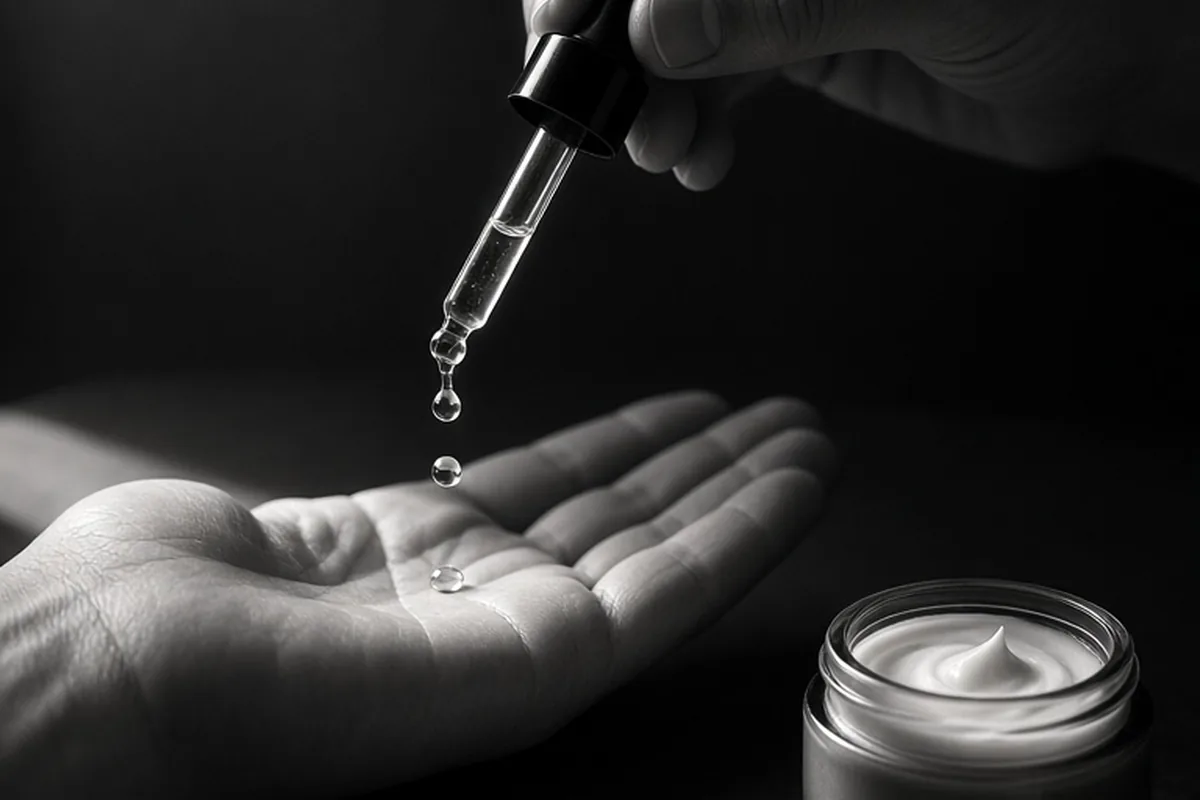
You should apply serum before moisturizer. Serums contain concentrated active ingredients in lightweight, small-molecule formulations designed to absorb quickly into the skin. Moisturizers contain heavier emollients and occlusive ingredients designed to hydrate and seal the skin barrier. Applying moisturizer first creates a protective layer that blocks lighter serums from penetrating, which reduces their effectiveness and leaves residue on the surface.
Navigating skincare steps can feel overwhelming when product textures, active ingredients, and marketing claims collide. Knowing the precise sequence for your products ensures your skin absorbs every active component without irritation, product waste, or frustrating residue.
The Core Rule of Skincare: Working from Thinnest to Thickest
The standard guideline for any effective skincare routine is to apply products in order of consistency, starting with the thinnest water-like liquids and finishing with the thickest creams or balms. Water-based liquids have smaller molecular structures and low viscosity, which enables them to spread easily and sink rapidly into the stratum corneum. In contrast, rich creams contain dense lipids and waxes designed to sit primarily on the outer layers to prevent moisture loss.
When you place a watery or gel-based serum over a thick cream, the serum cannot penetrate the lipid barrier created by the cream. Instead of sinking into your pores, the serum pools on top of the moisturizer, evaporates into the surrounding air, or binds with the cream to form small clumps known as pills. Following the thin-to-thick sequence ensures that each formula reaches its intended depth without fighting through a heavier layer.
Understanding How Molecular Weight and Formulations Function
To understand why layering order matters, it helps to examine what serums and moisturizers are engineered to do. Serums are delivery vehicles for targeted actives such as hyaluronic acid, vitamin C, peptides, niacinamide, or botanical extracts. Because they contain fewer thickeners, waxes, and heavy oils, their primary solvent is usually water, light aloe, or lightweight glycols, allowing the active molecules to move freely and absorb within seconds.
Moisturizers serve a different biological function. They combine humectants (which attract water), emollients (which smooth rough skin cells), and occlusives (which form a physical seal). While serums treat specific conditions such as dullness, fine lines, or hyperpigmentation, moisturizers reinforce the skin barrier and prevent transepidermal water loss. Placing the treatment step directly on clean or toned skin maximizes active contact, while the moisturizer seals those benefits in place.
- Humectants like glycerin and hyaluronic acid draw water into surface layers.
- Emollients like ceramides, squalane, and fatty acids fill microscopic gaps between skin cells.
- Occlusives like shea butter, petrolatum, and dimethicone create a protective shield against moisture loss.
What Happens When You Accidentally Reverse the Order
Applying your moisturizer before your serum will not damage your skin, but it significantly reduces the return on your skincare investment. When a lipid-dense moisturizer covers the skin, it fills the intercellular spaces between dead surface skin cells. A serum applied over this barrier will largely slide across the surface rather than absorbing evenly.
Beyond reduced efficacy, reversing the order frequently causes cosmetic frustration. High-performance serums often contain film-forming agents or gel polymers. When these interact with the waxes or silicones in an underlying moisturizer, they often separate and roll into tiny, rubbery balls during makeup application or daily facial movement. Correcting your order keeps your skin feeling comfortable, matte or naturally dewy, and ready for sunscreen or cosmetics.
Layering Multiple Serums and Active Ingredients
Many people use more than one serum in their daily regimen, which introduces an additional layer of sequencing decisions. When stacking multiple serums before your moisturizer, apply the thinnest, most watery consistency first, followed by slightly more viscous gels or emulsions. For instance, a watery l-ascorbic acid serum should precede a thicker, viscous hyaluronic acid gel.
Timing and ingredient compatibility also play a major role in comfortable layering. Potent actives like direct exfoliating acids (salicylic, glycolic, or lactic acid) or pure vitamin C perform best when applied directly to dry skin and given thirty to sixty seconds to settle before adding a soothing hydrating serum. Layering too many complex actives simultaneously can overwhelm the skin, so alternating morning and evening routines is often more effective than stacking four or five serums at once.
- Morning active options: Vitamin C, niacinamide, or antioxidant blends followed by a hydrating serum.
- Evening active options: Retinoids, peptide complexes, or exfoliating acids followed by a barrier-repair serum.
- Universal hydrators: Pure hyaluronic acid or glycerin serums that layer safely under any moisturizer.
The Exception to the Rule: Buffering Sensitive Skin
While the serum-before-moisturizer rule holds true for nearly all daily routines, there is one deliberate exception known as buffering. If you are introducing a powerful retinoid, high-strength retinaldehyde, or prescription tretinoin, direct contact on bare skin can occasionally trigger peeling, redness, or burning. In these specific circumstances, dermatologists often suggest applying a light layer of moisturizer first, or sandwiching the potent serum between two thin layers of lotion.
Buffering intentionally slows down the absorption rate of the active ingredient, reducing the concentration peak that hits the deeper epidermis all at once. This trade-off decreases irritation while your skin develops tolerance over several weeks. Once your barrier adapts and tolerates the active without flaking or tenderness, you can transition back to applying the serum directly before your standard moisturizer.
Where Facial Oils Fit into the Sequence
Facial oils frequently cause confusion because they are often packaged in dropper bottles similar to serums, yet they behave like heavy emollients and occlusives. If a product is composed primarily of pure plant oils such as rosehip, jojoba, argan, or marula oil, it should not be applied before your water-based serum, and in most cases, it should not be applied under a standard water-based moisturizer either.
Water cannot penetrate through oil. If you apply an oil-based serum first, any subsequent water-based moisturizer or hydrating serum will simply bead up on top. As a general guideline, water-based serums go first, standard moisturizers go second, and pure facial oils should be applied either mixed into your moisturizer or patted gently over the top of your moisturizer as the final sealing step in an evening routine.
Step-by-Step Daily Morning and Evening Routines
Constructing a reliable routine requires knowing where every product sits from the moment you cleanse until you finish. In the morning, the goal is protection against environmental stressors, UV radiation, and dehydration, while the evening routine focuses on thorough cleansing, cell renewal, and deep replenishment.
Allow each product approximately thirty to sixty seconds to settle into the skin before moving to the next step. Your skin does not need to be bone-dry between hydrating layers—in fact, applying a hyaluronic acid serum to slightly damp skin from cleansing or misting enhances water retention—but active treatments like retinoids or direct acids absorb more predictably on dry skin.
- Morning sequence: Gentle cleanser -> Hydrating toner or essence -> Target serum (e.g., Vitamin C) -> Moisturizer -> Broad-spectrum sunscreen.
- Evening sequence: Oil cleanser (if wearing makeup/SPF) -> Water-based cleanser -> Exfoliant or treatment serum (e.g., Retinol) -> Hydrating serum -> Nourishing moisturizer -> Optional facial oil.
Troubleshooting Common Layering Issues
If your skincare routine feels heavy, tacky, or prone to flaking off, the issue is rarely the quality of the products themselves; it is usually related to application technique or excessive volume. Applying half a dropper of serum is often more than enough for the entire face and neck. Using too much product saturates the outer layer of skin, preventing the moisturizer from adhering properly.
Another frequent culprit is silicones. Many primers, day creams, and smoothing serums use dimethicone or cyclopentasiloxane to create a silky slip. If you layer a silicone-heavy serum under a water-based gel cream, or vice versa, the formulations may clash and repel each other. Checking ingredient lists for matching bases (water-with-water or silicone-with-silicone) helps create a smooth, comfortable finish that lasts all day.
Illustrative Scenarios
Resolving Morning Product Flaking and Dryness
A professional experiencing midday tightness noticed that her makeup was constantly flaking and balling up near her jawline. She was applying a rich ceramide cream directly after washing her face, followed by a hyaluronic acid serum and an antioxidant blend because she assumed the cream would protect her skin from the potent serums. After reorganizing her routine to place the watery antioxidant serum and hyaluronic acid on freshly cleansed skin before applying her ceramide cream, the flaking stopped completely and her skin remained hydrated throughout the workday.
Key point: Correcting the application sequence allows lightweight humectants to penetrate deeply while creams lock the moisture in, eliminating pilling and midday dehydration.
Frequently asked questions
How long should I wait between applying serum and moisturizer?
You only need to wait about thirty to sixty seconds, or until the serum feels absorbed and no longer wet on the surface. If you are using a potent active like pure retinol or an exfoliating acid, giving it a couple of minutes to settle can help minimize potential irritation.
Can I mix my serum directly into my moisturizer to save time?
While blending can occasionally work for simple hydrating drops, mixing targeted actives like vitamin C or direct acids into a cream can alter their pH balance and reduce their stability. It is generally best to apply the serum separately first to ensure even absorption and maximum effectiveness.
Do I still need a moisturizer if my serum feels very hydrating?
Most skin types still benefit from a moisturizer because serums lack the occlusive ingredients necessary to lock in water. Without a barrier layer over a hydrating serum, surface moisture can evaporate into dry air, sometimes leaving your skin drier than before.
Your next step
Tonight, cleanse your face, apply your thinnest water-based serum directly to your skin, let it absorb for thirty seconds, and seal it with your regular moisturizer.