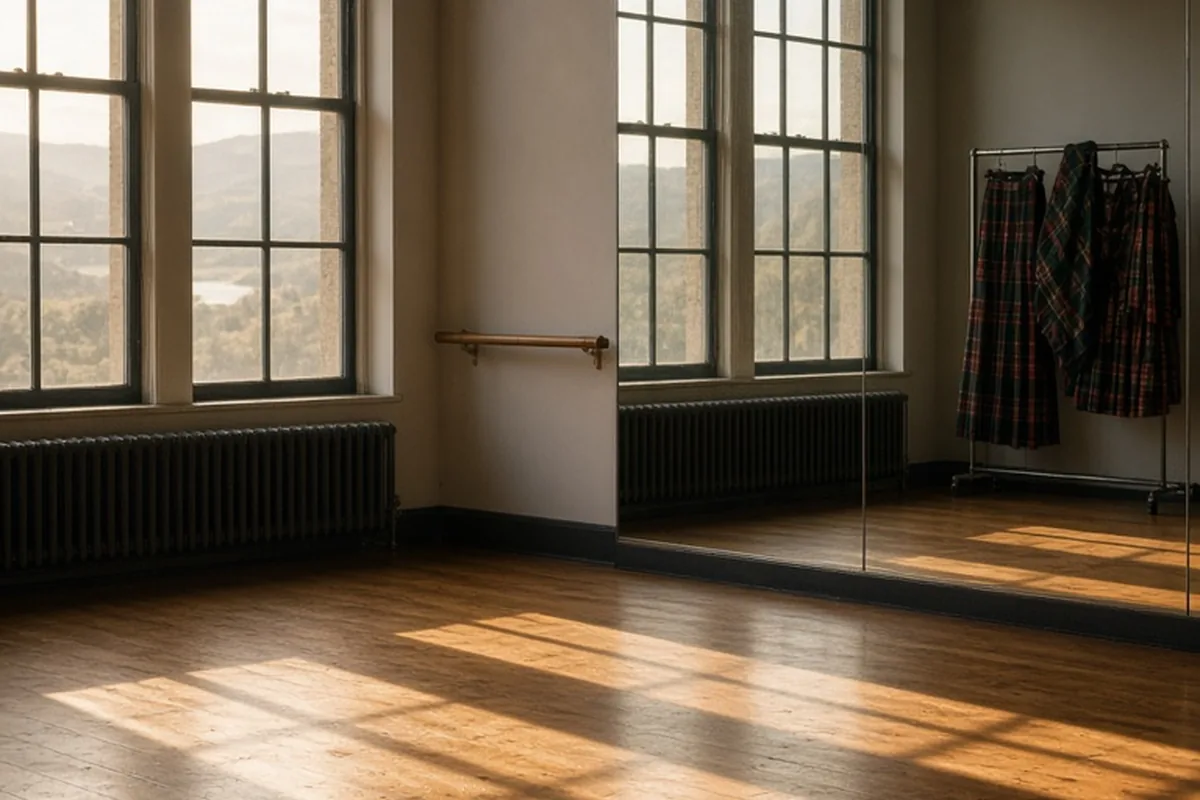
Scottish women wear kilts, tartan skirts, and Highland attire across formal and everyday settings. While traditional historical attire often favored the floor-length arisaid or pleated skirts, modern women wear tailored kilts, kilted mini-skirts, pipe band uniforms, and formal tartan sashes. Women can wear family, regional, or universal tartans to weddings, ceilidhs, and cultural celebrations with confidence and authentic style.
Tartan remains one of the most recognizable cultural textiles in the world, yet questions often arise about whether kilts are exclusively intended for men. Exploring Scottish dress reveals a rich heritage of both traditional and evolving attire for anyone celebrating Celtic culture.
The Historical Shift from the Arisaid to the Modern Kilt
Historically, Scottish Highland dress developed along distinct practical lines for men and women. While men wore the belted plaid (feileadh mòr) and later the tailored small kilt (feileadh beag) for mobility across rugged terrain, women traditionally wore the arisaid (or earasaid). The arisaid was a wide, unpleated or lightly pleated length of woven wool tartan, typically featuring a lighter or white-based sett. Women draped this garment around the body, securing it at the waist with a leather belt and fastening the upper folds at the chest with an engraved silver or brass brooch. It served simultaneously as a formal gown, an everyday working wrap, and protection against harsh Highland weather.
As Victorian romanticism reshaped Scottish fashion in the nineteenth century, structured tailoring replaced loose drapey garments. Scottish women began adopting tailored walking skirts crafted from heavy wool tartan, reflecting the pleating styles and sett patterns seen in men's kilts. Over the twentieth and twenty-first centuries, this evolution culminated in women wearing authentic tailored kilts, kilted skirts of varying lengths, and performance uniforms. Understanding this historical trajectory shows that women's participation in wearing tartan is not a modern gimmick, but an enduring cultural expression that has continuously adapted to modern life.
Formal Event Etiquette: Tartan Sashes and Evening Attire
When attending formal events such as black-tie weddings, St. Andrew's Day balls, Burns Suppers, or evening ceilidhs, women have several distinct ways to wear tartan. A standard convention for white-tie and black-tie occasions is pairing a neutral or jewel-toned evening gown with a tartan sash woven from fine worsted wool or silk. The sash is typically draped across the torso and secured at the shoulder with a clan brooch or Highland pin. This approach provides an unmistakable nod to family or regional heritage while maintaining the elegance of formal evening wear.
Traditional etiquette created by the Lord Lyon King of Arms and clan societies offers guidelines for sash placement based on clan standing and family role. For instance, clan chieftains or the wives of clan chiefs traditionally wear the sash draped over the left shoulder, while most clan members and women marrying into a clan wear it across the right shoulder. In modern, relaxed social gatherings, however, personal comfort and garment neckline often dictate how the sash is pinned. Alongside sashes, floor-length tartan hostess skirts paired with velvet doublets or tailored silk blouses offer a striking and historically grounded alternative for formal hosts and guests alike.
Performance and Uniform Standards: Pipe Bands and Highland Dancing
In competitive and ceremonial arenas, women frequently wear the exact same style of tailored kilt as men. In contemporary civilian and military pipe bands around the world, female pipers and drummers wear the full traditional Highland dress uniform. This assembly includes an eight-yard wool kilt pleated to the sett or stripe, a formal sporran, wool kilt hose with flashes, ghillie brogues, a collared shirt, tie, and a tailored Prince Charlie or Argyll jacket. In these settings, the garment signifies musical discipline, band solidarity, and regional representation rather than gender distinction.
Highland dancing presents another specialized context where kilt garments are central. Female competitive dancers wear tailored dancing kilts paired with velvet vests or sleeveless jackets (known as a waistcoat) and lace inserts for traditional dances like the Highland Fling or the Sword Dance. For national dances such as the Scottish Lilt or Flora MacDonald's Fancy, dancers switch to an Aboyne dress, which incorporates an arisaid-style tartan plaid draped over a gathered skirt and white blouse. Each performance style balances strict technical rules with deep respect for historical movement.
Key Tailoring Differences Between Men and Women's Kilts
While a woman can wear a traditional men's cut kilt, dedicated women's kilts and kilted skirts are tailored differently to accommodate female proportions comfortably. A traditional men's kilt is constructed with a straight drop from the high waist to the hip, hanging squarely from the navel down to the top of the kneecap. In contrast, women's kilts feature a more pronounced flare between the natural waist and the widest point of the hips. Without this tailored shaping, a standard men's kilt can pull at the front aprons or distort the pleating across the rear when worn on an hourglass or pear-shaped figure.
Another subtle structural difference involves the fastening buckles. Traditional men's kilts fasten right apron over left, with the primary buckles situated on the right hip and the under-apron strap on the left. Many traditional women's kilted garments fasten left apron over right, mirroring the standard buttoning conventions of historical women's tailoring. Additionally, women have significantly more flexibility regarding hemline length. Depending on the setting, women's kilted garments range from mini-kilts and mid-calf daywear skirts to floor-length skirts, whereas traditional men's formal kilts strictly hit the mid-knee.
Everyday Styling: How to Wear Tartan and Kilts Casually
Wearing a kilt or tartan skirt outside of formal ceremonies requires balancing classic heritage with modern wardrobe basics to avoid looking like you are wearing a costume. A knee-length or midi kilted wool skirt serves as an excellent anchor piece for autumn and winter outfits. Pairing the rich, patterned wool with a solid-colored merino wool turtleneck, an oversized fisherman sweater, or a crisp tailored blazer creates an intentional, elevated aesthetic. For footwear, structured leather ankle boots, combat boots, or riding boots provide a grounded, practical contrast to the movement of the pleats.
When styling tartan, keeping the rest of the outfit muted is usually the most reliable approach. Because tartan patterns feature intersecting horizontal and vertical bands (the sett) in multiple colors, wearing other bold patterns can create visual clutter. Selecting one understated color from the weave—such as deep bottle green, navy, charcoal, or warm camel—for your top, coat, and tights ensures a cohesive look. For casual outings, street-style adaptations like a short kilted skirt paired with opaque tights, an oversized leather jacket, and low-profile shoes offer a contemporary, confident edge.
Clan Etiquette: Choosing the Right Tartan to Wear
A common concern for both locals and international visitors is whether strict rules govern which tartan a woman is permitted to wear. Historically, tartans became associated with specific Highland clans and Lowland families, particularly following the romantic revival of the nineteenth century. If you have Scottish ancestry through your paternal or maternal lineage, wearing that family's clan tartan is a meaningful way to celebrate your personal roots. If you are married to someone of Scottish descent, tradition warmly welcomes you to wear their clan's pattern as a symbol of familial unity.
If you do not have direct Scottish ancestry, you are still entirely welcome to wear tartan. Scotland has dozens of universal, district, and national tartans created specifically for anyone to wear without needing clan permission. Iconic patterns such as Black Watch, Royal Stewart, Scottish National, Isle of Skye, and Caledonia are open to everyone worldwide. Scottish cultural tradition values enthusiasm, respect, and celebration of the heritage far more than strict genealogical gatekeeping, so anyone can wear a tartan garment with pride.
Illustrative Scenarios
Choosing the Right Attire for an Edinburgh Ceilidh
Claire was invited to attend an upscale Scottish wedding and evening ceilidh in Edinburgh alongside her Scottish partner. Unsure of Highland dress rules, she worried that wearing a kilted skirt might seem like cultural appropriation or violate formal black-tie protocol. Instead of guessing, Claire consulted the hosts and a Highland outfitter, who explained that tartan sashes or floor-length kilted skirts are celebrated choices. She chose an elegant dark green velvet dress, draping her partner's family tartan sash across her shoulder, fastened with a silver thistle brooch. The outfit fit the formal dress code seamlessly and was comfortable for an energetic evening of traditional dancing.
Key point: Consulting event hosts or knowledgeable outfitters clarifies dress expectations, turning potential social anxiety into confident, respectful participation.
Finding the Right Cut for a Highland Gathering
David and his wife Sarah were preparing to attend a regional Highland Games event. David ordered an authentic eight-yard men's kilt in the Black Watch tartan and suggested Sarah buy the same cut in a smaller size. When Sarah tried on the straight-cut kilt, the stiff waistband and straight hip line felt restrictive and flared awkwardly across the back pleats. Realizing the issue was tailoring rather than size, she exchanged it for a women's tailored kilted wool skirt designed with a fitted hip curve. The new garment allowed natural movement throughout the outdoor festival while matching David's formal look.
Key point: Choosing a garment tailored specifically to your body's proportions ensures comfort and maintains the clean lines of traditional pleating.
Frequently asked questions
Which side should a woman pin her tartan sash on?
Historically, most women pin their sash over the right shoulder using a clan brooch. Women who are clan chiefs, wives of clan chiefs, or wives of colonels in Scottish regiments traditionally wear it over the left shoulder, though modern social events allow whichever placement feels most comfortable.
Do Scottish women wear a sporran with a kilt?
Women generally do not wear a sporran when wearing fashion kilts, tartan skirts, or evening sashes, as the accessory is traditionally cut for men's waistwear. The main exception is female pipers and drummers in pipe bands, who wear full traditional band uniform including a regulation sporran.
Is a women's kilt called by a different name?
In everyday speech, they are referred to as women's kilts, kilted skirts, or tartan skirts depending on the length and cut. Historically, the full-length draped garment worn by Highland women was known as an arisaid.
Can I wear a kilt if I am not Scottish?
Yes, anyone can wear a kilt or tartan clothing regardless of background. If you do not have a clan connection, you can choose from universal tartans like Black Watch, Royal Stewart, or district tartans designed for general public use.
Your next step
If you are planning to wear tartan for an upcoming event or everyday styling, select a universal or family pattern and choose a cut tailored to your specific body shape for both comfort and authentic polish.