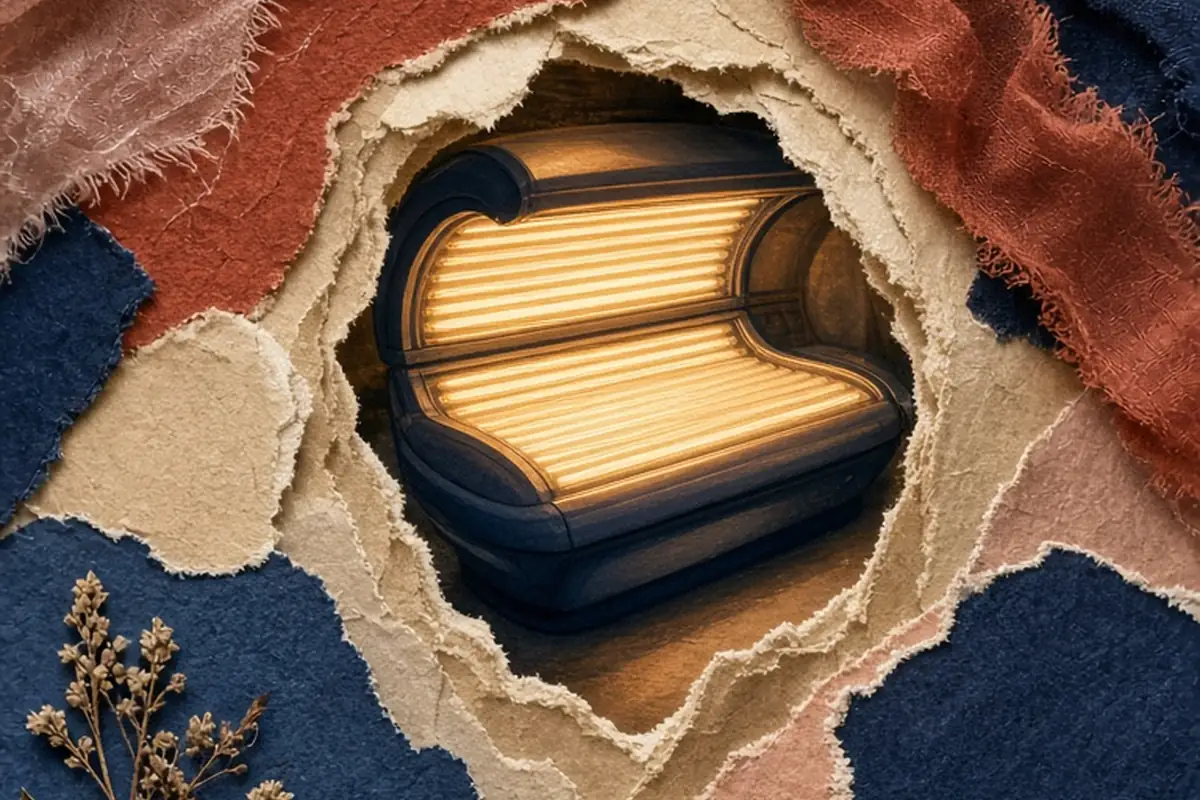
Tanning beds do not clear acne and often make breakouts worse over time. Although ultraviolet radiation can temporarily dry surface oil and a tan may temporarily camouflage redness, UV exposure damages cellular structures, accelerates oil oxidation, and thickens the outer skin layer. This reaction quickly clogs pores and triggers severe rebound breakouts while increasing the long-term risk of scarring, premature aging, and skin cancer.
When dealing with persistent, uncomfortable breakouts, the idea of a simple, all-over treatment can feel remarkably appealing. The warm glow of an indoor tanning bed often looks like an effortless way to dry out active pimples and even out skin tone. However, looking beneath the immediate visual change reveals why artificial ultraviolet exposure creates a damaging cycle for acne-prone skin.
The Origin of the Myth: Why Tanning Beds Appear to Clear Skin
The widespread belief that tanning beds clear acne comes from two immediate, short-term visual changes. First, ultraviolet radiation has a drying effect on the surface of the skin, temporarily reducing the visible slick of excess sebum. For someone experiencing an active breakout, this sudden reduction in surface oil can make blemishes look smaller and feel less inflamed over the course of forty-eight hours.
Second, producing melanin darkens the surrounding skin, which visually camouflages the erythema, or redness, associated with inflamed pimples. When the contrast between a red blemish and the surrounding pale skin decreases, the complexion appears clearer in the mirror. This cosmetic illusion leads many individuals to believe their acne is resolving, even though the underlying bacterial proliferation and pore blockages remain entirely unaddressed beneath the surface.
The Biological Rebound: How Ultraviolet Exposure Worsens Clogged Pores
While the surface may look clearer for a few days, ultraviolet radiation triggers a defense mechanism inside the skin called hyperkeratosis. In response to cellular injury from UV rays, the skin accelerates its cell turnover and thickens its outermost layer, the stratum corneum, to shield deeper tissues. When these dead, damaged skin cells shed rapidly, they mix with natural oils and become trapped inside pores, forming microcomedones that inevitably turn into blackheads, whiteheads, and deep cystic bumps.
Simultaneously, UV exposure causes lipid peroxidation, a chemical reaction where the squalene in your natural sebum oxidizes. Oxidized sebum is significantly more comedogenic and inflammatory than regular sebum, creating an ideal, low-oxygen environment for Cutibacterium acnes bacteria to thrive. Within two to three weeks following a tanning session, most individuals experience a pronounced rebound breakout that is frequently more widespread and harder to treat than the initial blemishes.
Hyperpigmentation and Scarring: The Compounded Aftermath
One of the most persistent frustrations for acne sufferers is post-inflammatory hyperpigmentation, the flat brown, red, or purple marks left behind after a blemish heals. Tanning beds dramatically worsen this condition by overstimulating melanocytes around active and resolving lesions. Instead of blending your skin tone, UV radiation causes these healing spots to absorb excess pigment, turning temporary post-acne marks into stubborn, long-lasting dark spots that can take months or years to fade.
Furthermore, ultraviolet rays degrade collagen and elastin fibers within the dermal matrix. Because your skin relies on robust collagen production to repair the tissue damage caused by inflammatory cysts, UV degradation impairs proper healing. This compromise in structural integrity increases the likelihood that severe breakouts will leave permanent textural scarring, such as ice-pick or boxcar indentations, rather than resolving smoothly.
Tanning Beds versus Medical Phototherapy: Crucial Distinctions
Confusion often arises because dermatologists sometimes utilize light therapy in clinical settings to treat various skin conditions. However, clinical phototherapy and commercial tanning beds are fundamentally different technologies. Clinical treatments use targeted, narrow wavelengths of visible light—such as non-UV blue light to destroy acne-causing bacteria and red light to reduce deep inflammation—without emitting dangerous broad-spectrum UVA or UVB radiation.
In stark contrast, commercial tanning beds emit concentrated UVA rays at levels up to twelve times higher than natural midday sunlight, alongside variable amounts of UVB rays. These tanning emissions are designed exclusively to induce rapid melanin production through cellular stress, offering none of the controlled, targeted antibacterial benefits of medical light devices while delivering maximum cumulative DNA damage.
Reliable Topical Ingredients That Treat Acne at the Source
Achieving consistent, long-term skin clarity requires ingredients that address the four root causes of acne: excess oil production, abnormal cell shedding, bacterial growth, and inflammation. Unlike tanning beds, which provide a temporary surface disguise, scientifically supported topical actives correct these cellular processes without damaging surrounding tissue.
Building a reliable routine involves choosing targeted ingredients suited to your specific breakout type rather than overwhelming your moisture barrier with harsh treatments.
- Salicylic acid: An oil-soluble beta hydroxy acid that penetrates deep inside pores to dissolve accumulated dead skin cells and excess sebum.
- Benzoyl peroxide: An antibacterial agent that introduces oxygen into the pores, neutralizing acne-causing bacteria without causing microbial resistance.
- Topical retinoids such as adapalene: Vitamin A derivatives that normalize cellular turnover, prevent microcomedones from forming, and smooth uneven texture.
- Azelaic acid: A gentle multi-tasker that calms inflammatory redness, inhibits acne bacteria, and prevents post-inflammatory dark spots.
Steps to Repair Your Skin Barrier After Indoor Tanning
If you have recently used tanning beds to dry out your breakouts, your skin barrier is likely dehydrated, sensitized, and prone to increased irritation. Restoring your barrier is the essential first step before introducing active acne treatments, as compromised skin cannot tolerate exfoliating acids or retinoids without further inflammation.
Begin by stripping your routine down to a gentle, non-foaming cleanser and a barrier-repairing moisturizer rich in ceramides, hyaluronic acid, and centella asiatica. Pause all physical scrubs, alcohol-heavy astringents, and strong exfoliants for at least ten to fourteen days. Applying a daily broad-spectrum sunscreen with an SPF of thirty or higher is non-negotiable; protecting vulnerable skin from ambient light prevents newly formed marks from darkening while the tissue regenerates.
Sustainable Daily Habits for Long-Term Complexion Clarity
Clear skin is sustained through gentle, predictable daily habits rather than extreme measures. Consistency with a minimalist, non-comedogenic regimen yields far better results than sporadic aggressive interventions. Ensure you cleanse your face twice daily and immediately after sweating to prevent pore blockages, and resist the urge to pick or squeeze active blemishes, which pushes bacteria deeper into the dermis.
Additionally, evaluate external variables that come into direct contact with your face. Regularly laundering pillowcases in fragrance-free detergent, sanitizing smartphone screens, and using oil-free makeup formulas all reduce incidental surface congestion. Pairing these practical hygiene measures with proven topical treatments provides a reliable foundation for clear skin without compromising your long-term health.
Illustrative Scenarios
Illustrative Scenario: Moving from Tanning Sessions to Barrier Repair
A college student with persistent chest and facial breakouts began using tanning beds twice a week after noticing that his skin looked slightly less red after sessions. Within four weeks, his skin became tight, oily, and covered in clustered, deep bumps that resisted over-the-counter face washes. After consulting a professional, he discontinued tanning, introduced a basic ceramide lotion to soothe barrier irritation, and incorporated a nightly 0.1 percent adapalene gel.
Key point: Masking acne with UV exposure creates severe rebound congestion, whereas repairing the moisture barrier and using a targeted retinoid resolves underlying pore blockages.
Frequently asked questions
Can tanning beds help with severe cystic acne?
No, tanning beds do not resolve cystic acne and often intensify it. Cystic acne stems from deep inflammation and hormonal triggers within the hair follicle, which UV rays cannot heal. Instead, tanning beds weaken the skin's structural collagen and thicken surface dead skin cells, making deep cysts more painful and harder to clear.
Does natural sunlight work better for acne than a tanning bed?
While natural sunlight contains a broader spectrum of light than tanning beds, relying on unprotected sun exposure still damages the skin barrier, oxidizes sebum, and leads to rebound breakouts. Dermatologists advise using broad-spectrum sunscreen daily rather than relying on sun exposure for acne management.
How long does rebound acne last after stopping tanning beds?
Rebound breakouts typically surface two to four weeks after UV exposure and may persist for several weeks as the skin sheds accumulated dead cells. With a gentle barrier-repair routine and appropriate topical treatments like adapalene or salicylic acid, the skin generally rebalances within six to eight weeks.
Can red light therapy beds at salons clear acne without tanning risks?
Commercial red light beds that emit no UV radiation can help soothe inflammation, but their effectiveness depends heavily on precise wavelengths and power output. While safer than tanning beds, salon wellness beds are often less calibrated than medical-grade phototherapy devices and should complement, not replace, proven topical acne care.
Your next step
Replace tanning beds with a gentle daily routine featuring proven topical actives like adapalene or salicylic acid, paired with a broad-spectrum daily sunscreen to clear breakouts safely and protect your skin long term.