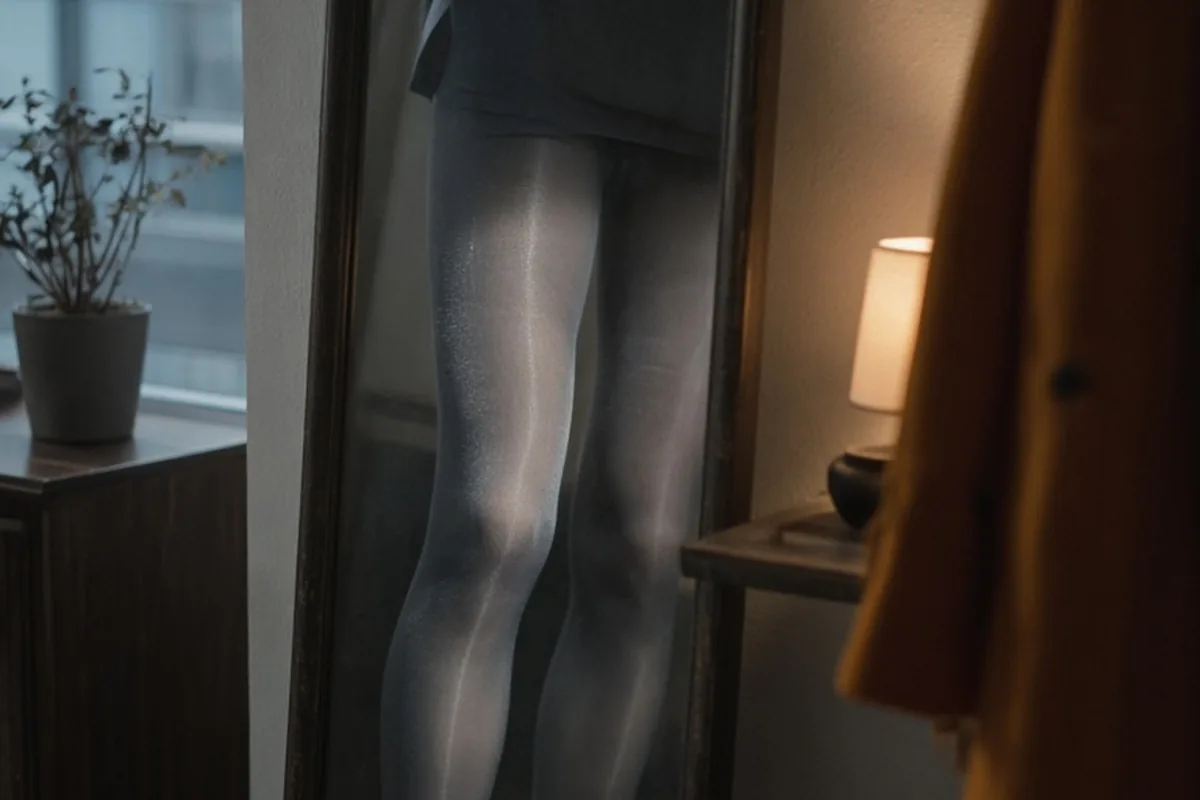
Women hold widely varying views on men wearing pantyhose. While relatively few women consider it an active turn-on, many respond with neutral curiosity, supportive acceptance, or practical indifference, especially when motives are clearly explained. However, some women feel unenthusiastic or uncomfortable due to traditional expectations around masculine style. Open communication, mutual comfort, and confidence generally matter far more than the garment itself.
Curiosity or personal interest in wearing hosiery often brings up understandable anxiety about romantic acceptance, social norms, and personal presentation.
The Spectrum of Female Responses to Men Wearing Hosiery
When considering how women perceive men wearing pantyhose, it helps to understand that reactions rarely fall into a single category. Hosiery has been culturally coded as feminine for several decades in Western society, meaning that an initial reaction is often shaped more by cultural conditioning than by deep-seated personal dislike. Some women find the idea completely unremarkable, especially those who prioritize personal autonomy, body comfort, or non-traditional fashion. Others may be surprised at first simply because they have never encountered a man who wears hosiery, viewing it as an unexpected divergence from standard male attire.
At the same time, individual aesthetic preferences and romantic expectations play a substantial role. For a segment of women, traditional markers of masculinity are central to their attraction, and seeing hosiery on a male partner may diminish that attraction or feel confusing. Conversely, other women view it with playful curiosity, appreciative neutrality, or even warmth, recognizing that clothing is a private, harmless choice. Recognizing that neither enthusiastic approval nor discomfort is universal allows you to approach the subject without assuming rejection or demanding sudden enthusiasm.
Practical Utility Versus Private Expression
A woman's reaction often connects directly to the context in which the garment is worn. Men wear hosiery and close-fitting tights for a variety of functional reasons, ranging from thermal insulation during cold-weather outdoor work to athletic performance, post-exercise recovery, and circulation management. When hosiery is framed around practical comfort, warmth under trousers, or physical support, partners typically understand the choice readily, viewing it through the same lens as specialized thermal base layers or compression gear.
When the choice is driven by tactile appreciation, personal aesthetic interests, or private intimacy, the conversation moves into a more emotionally vulnerable space. Women frequently evaluate this dynamic based on transparency and pacing. If a man wears hosiery as a personal comfort or sensory preference, explaining that reality plainly removes ambiguity. Discomfort often arises not from the nylon material itself, but from ambiguity about what the garment signifies regarding identity, honesty, or expectations for the partnership. Clarifying the underlying motivation helps eliminate guesswork for both individuals.
Navigating Gender Conditioning and Aesthetic Disconnects
Societal messaging places rigid boundaries around male fashion, and both men and women are socialized within those norms from an early age. Because media and retail spaces predominantly market sheer hosiery toward women, a female partner might momentarily struggle to reframe the garment on a man's body. She may wonder whether the preference reflects an unexpressed desire for a specific role in the bedroom, a broader exploration of gender expression, or simply an unconventional wardrobe habit.
Addressing this disconnect requires patience and emotional awareness rather than defensiveness. If a partner appears hesitant, it is rarely an attack on your character; more frequently, it represents the processing of an unfamiliar aesthetic. A constructive path forward involves acknowledging that her feelings are just as valid as your personal tastes. Pushing someone to instantly embrace an aesthetic they do not find appealing can create unnecessary friction, whereas holding space for honest dialogue allows attraction and understanding to adapt naturally.
Constructive Ways to Introduce the Subject to a Partner
Timing and delivery significantly influence how a partner receives personal disclosures about clothing preferences. Bringing up hosiery during a rushed morning, in public, or in the middle of physical intimacy can catch someone off-guard and trigger a defensive or startled reaction. A calmer, low-pressure setting—such as relaxing together at home—creates an environment where both people can speak candidly without feeling trapped or obligated to perform an immediate reaction.
When initiating the conversation, focus on personal comfort, clarity, and low emotional pressure. You might state simply that you enjoy wearing tights or pantyhose under your clothes for comfort, warmth, or relaxation, and wanted to share that part of your routine with her. Framing the share as an invitation to mutual honesty rather than a test of loyalty gives your partner room to process the news at her own pace. It also reassures her that your interest does not impose new demands or expectations on her own wardrobe or identity.
Handling Disinterest, Confusion, or Mixed Reactions
Not every partner will be enthusiastic about the look, and preparing for that possibility is an essential part of healthy communication. A woman may fully support your right to wear what you wish in private or under your clothes while simultaneously feeling that it does not align with her personal romantic preferences. Distinguishing between general acceptance and sexual attraction is critical here: someone can care for you deeply and respect your habits without finding that particular aesthetic erotic or appealing.
If your partner expresses mixed feelings, listen without interrupting or attempting to debate her emotional response. Asking calm, clarifying questions—such as what aspects feel confusing or whether she has specific worries—shows maturity and confidence. A common trade-off in relationships involves finding comfortable middle ground, such as enjoying your hosiery during solo time or under trousers, while keeping shared intimate spaces focused on aesthetics that you both actively enjoy. Mutual respect requires honoring boundaries in both directions.
Maintaining Self-Respect and Grounded Confidence
Carrying an unconventional preference often brings an internal sense of shame, built from years of cultural taboos and fear of ridicule. However, the emotional energy you bring to the topic heavily influences how others perceive it. When a man treats his clothing choices with shame, secrecy, or anxious defensiveness, partners often pick up on the tension and assume the situation is heavier or more complicated than it actually is. Approaching your preferences with calm self-possession establishes a tone of balance and normalcy.
Confidence does not mean being indifferent to a partner's comfort; it means recognizing that having unique preferences does not diminish your worth, reliability, or masculinity. By remaining comfortable in your own skin, you avoid placing the burden of emotional validation entirely onto your partner's shoulders. Whether a current partner shares your enthusiasm, remains indifferent, or decides the dynamic is not for her, maintaining self-respect ensures that your personal peace remains intact regardless of the outcome.
Illustrative Scenarios
Navigating Early Disclosure in a Dating Relationship
Julian had worn sheer tights under his trousers during cold months for years, enjoying both the warmth and the smooth sensory feel. When he began dating Elena seriously, he worried that hiding this habit would erode trust, but he feared she would judge his masculinity if he brought it up clumsily. During an unhurried evening conversation about personal quirks, Julian mentioned casually that he prefers wearing tights under his pants instead of bulky thermals because of their comfort. Elena was surprised at first and asked if it was an athletic layer or traditional hosiery. Julian answered calmly and without embarrassment, clarifying that he just liked how they felt. Seeing that he had no hidden agenda, Elena accepted the explanation with mild amusement, appreciating his straightforwardness.
Key point: Neutral, matter-of-fact communication prevents an unconventional personal preference from feeling like a deceptive secret.
Establishing Boundaries in a Long-Term Partnership
Marcus enjoyed wearing patterned hosiery during private relaxation at home, but he had kept the practice completely hidden from his partner, Claire, for over two years. When Claire unexpectedly found a drawer containing several pairs, she felt alarmed and questioned whether Marcus was hiding an entirely separate double life. Recognizing the breach of trust caused by the secrecy, Marcus apologized for hiding the habit and explained his tactile enjoyment of the fabric, clarifying that his feelings for her had not changed. While Claire was supportive of his personal autonomy, she admitted she did not feel romantically attracted to the visual aesthetic. They agreed Marcus could wear them freely during his solo downtime, maintaining honest communication while respecting Claire's visual preferences during their shared romantic moments.
Key point: Transparency resolves the fear of the unknown, allowing couples to establish compromises that honor both individuality and attraction.
Frequently asked questions
Will wearing pantyhose ruin a woman's romantic attraction to me?
It depends entirely on the woman and what drives her personal attraction. While some women are completely unbothered or open to it, others feel their romantic interest is closely tied to conventional masculine styles. Approaching the conversation with honesty and low pressure allows both of you to determine whether your preferences align comfortably.
How can I tell if my partner is truly fine with it or just being polite?
Pay attention to her ongoing engagement, ease of body language, and willingness to talk about it without awkwardness or sudden withdrawal. If she seems tense, avoids physical closeness, or changes the subject quickly, invite an honest conversation by reassuring her that she is free to express reservations without hurting your feelings.
Is it common for men to wear hosiery simply for physical comfort?
Yes, many men wear hosiery, compression tights, or nylons for practical benefits such as thermal insulation, athletic support, circulation improvement, or gentle sensory comfort. Because hosiery fits smoothly under slim-fitting trousers without bunching, it serves practical utility for diverse daily lifestyles.
Your next step
Schedule an unhurried, low-pressure conversation with your partner to share your preference plainly, focusing on honest self-expression while giving her the time and space to respond naturally.