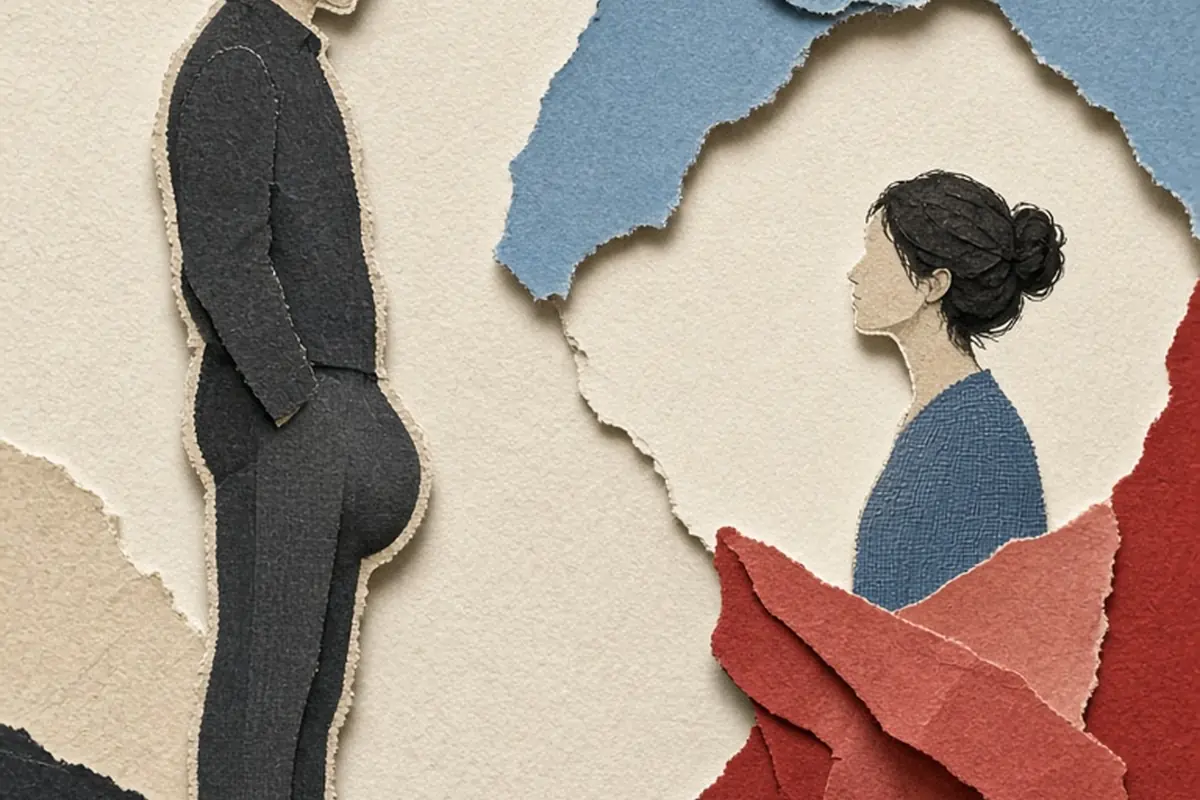
Yes, some women do occasionally look at a man's groin area, but it is rarely a sustained fixation or an automatic signal of attraction. Like men, women naturally scan people's overall appearance and movement in their field of view. While a glance may register physical contours, clothing fit, or unexpected silhouettes, it is typically brief and shaped heavily by the setting.
Curiosity about how other people perceive our bodies is a universal human experience, yet it often carries unspoken awkwardness. Men frequently wonder whether visible contours draw casual notice, quiet appreciation, or unintended distraction in daily life.
How Visual Scanning and Peripheral Awareness Work
Human visual processing relies heavily on rapid, subconscious tracking to make sense of our surroundings. When someone enters a room or walks past on the street, people naturally sweep their gaze across the entire person to evaluate posture, movement, attire, and general presentation. In this rapid assessment, the eyes naturally register high-contrast areas, distinctive silhouettes, or unusual fabric folds without any deliberate romantic or sexual intention behind the movement.
Because visual attention often follows motion and geometry, a momentary downward glance can easily be mistaken for deliberate scrutiny. In reality, most everyday looks are neutral and fleeting. Someone might glance downward simply because a shadow caught their eye, because they were shifting their posture, or because their thoughts were wandering. Assuming that every micro-movement of someone's eyes reflects a conscious evaluation usually leads to unwarranted self-consciousness or misread social signals.
The trade-off in understanding this dynamic lies in accepting that while people do visually take in their environment, you cannot reliably decode another person's inner thoughts from a split-second glance. Recognizing that casual visual scanning is largely automatic allows you to maintain your composure without over-analyzing every momentary shift in someone's gaze.
The Role of Context in Gyms, Beaches, and Everyday Spaces
The environment dictates what people notice and how they interpret what they see. In casual public settings like an office or a grocery store, expectations around modest, structured clothing mean that prominent body outlines stand out primarily as an anomaly rather than an attraction. In these environments, any noticeable contour is more likely to draw fleeting surprise or mild discomfort than romantic interest.
Conversely, spaces designed for physical activity or leisure, such as fitness centers, swimming pools, and beaches, feature attire that naturally conforms to the body. In these environments, form-fitting fabrics like athletic tights, board shorts, or swim trunks normalize visible anatomical shapes. While individuals in these settings may appreciate an athletic build or general physique, the social norm remains focused on personal exercise or relaxation rather than overt staring.
Understanding this environmental distinction helps set realistic boundaries for your own expectations. If you are in a professional or formal space, structured fabrics provide comfort and social ease. In recreational environments, visible outlines are standard, but they still exist within an unspoken social agreement where staring remains invasive and unwanted.
Differentiating Between Casual Observation and Genuine Interest
A common point of confusion for many men is equating a downward glance with romantic attraction. When a woman is genuinely interested in someone, her interest is almost never communicated through an isolated look at his lower body. Authentic social interest typically manifests through sustained eye contact, engaged conversation, open body language, and reciprocal social effort.
A glance at a man's lower body can happen for dozens of benign or awkward reasons that have nothing to do with attraction. An unzipped fly, an awkward crease in denim, an unusual drape of thin fabric, or simple visual daydreaming can all cause someone's eyes to land on a particular spot. Treating a brief glance as an invitation to flirt can lead to uncomfortable interactions and mutual embarrassment.
To navigate this accurately, rely on holistic social context rather than isolated physical observations. If someone is warm, responsive, and actively engaged in speaking with you, that interaction provides a genuine foundation for connection. If someone merely looks in your general direction while passing by, the most grounded response is to simply let the moment pass.
Managing the Spotlight Effect and Body Consciousness
Many men experience heightened anxiety regarding how their bodies appear through their clothing, often falling victim to what psychologists call the spotlight effect. This cognitive tendency causes individuals to believe that others are noticing their physical appearance far more intensely than is actually the case. When you feel self-conscious about light-colored shorts or thin sweatpants, you may project your own hyper-awareness onto the people around you.
This hyper-vigilance often creates a cycle of unnecessary stress. A man who feels exposed may constantly adjust his clothing, check his posture, or nervously scan the room to see who might be looking. Ironically, this restless, nervous behavior draws significantly more attention than the natural shape of his clothing ever would. People notice visible discomfort and awkward adjustments long before they notice subtle fabric contours.
Overcoming this requires shifting your focus outward. Most people are absorbed in their own routines, errands, and personal insecurities. Accepting that you are rarely the center of scrutiny in any public space allows you to carry yourself with ease and unforced confidence.
Practical Wardrobe Choices for Comfort and Discretion
Balancing personal style, physical comfort, and appropriate discretion comes down to selecting the right fabrics and base layers. Garments made from substantial, structured materials like heavy cotton, denim, wool blends, and tailored twill naturally hold their own shape, creating a clean silhouette that minimizes exaggerated outlines without restricting natural movement.
Undergarments play an equally important role in how outerwear rests against the body. Supportive underwear, such as fitted boxer briefs made with a comfortable elastane blend, keeps everything centered and secure, preventing shifting and awkward bunching throughout the day. For lightweight athletic wear or loungewear, choosing darker colors, heathered textures, and shorts with built-in compression liners offers both breathability and reliable coverage.
The goal of thoughtful dressing is not to erase natural anatomy, but to remove distractions so that your personal style and presence take center stage. When your clothes fit well and provide dependable support, you can move through any setting without second-guessing your appearance.
Social Etiquette, Mutual Respect, and Personal Boundaries
Living comfortably in shared social spaces requires a mutual commitment to respect and personal boundaries. Just as men are expected to respect women by avoiding invasive staring or objectification, women generally practice similar discretion. While occasional brief glances occur across all demographics, respectful individuals deliberately avoid prolonged or intrusive looks in public environments.
If you ever find someone staring persistently in a way that feels uncomfortable, you have full ownership of your personal boundaries. You can step away, change your location, or adjust your posture to break the visual line. Maintaining a calm, self-assured demeanor protects your peace of mind far better than reacting with visible irritation or seeking confrontation.
Ultimately, mutual respect thrives when people prioritize interpersonal warmth, good character, and clear communication over physical hyper-focus. By treating your own body and the space of others with dignity, you foster social interactions that feel relaxed, authentic, and comfortable for everyone involved.
Illustrative Scenarios
Navigating Gym Self-Consciousness
Marcus joined a new training facility and wore lightweight performance joggers for his workouts. During his sets, he noticed a woman nearby glance downward toward his legs twice in five minutes. He immediately worried that his pants were too revealing and felt an urge to leave the workout area. Instead of reacting rashly, Marcus took a breath, checked a mirror discreetly, and realized his water bottle had left a large wet spot near his thigh pocket. He repositioned his towel and finished his routine without further stress.
Key point: Fleeting glances usually have practical, harmless explanations rather than critical or invasive meaning.
Interpreting Casual Social Signals
Julian attended a casual rooftop gathering wearing fitted linen trousers. While conversing with a colleague, her gaze briefly dropped toward his waistline before returning to his eyes. Julian briefly wondered if this signaled flirtation and considered making a suggestive comment. Pausing to assess the broader dynamic, he noted her posture was purely professional and she was discussing a quarterly project. He maintained his normal professional tone and had a productive conversation.
Key point: Rely on comprehensive conversational signals rather than brief visual shifts to gauge someone's intent.
Frequently asked questions
Do women judge men based on visible contours through clothing?
Most women do not make character or attraction judgments based on casual clothing contours. What people notice most is overall grooming, posture, cleanliness, and how comfortably your clothes fit your frame.
If someone glances at my lower body, should I take it as a sign to flirt?
No, an isolated glance is not a reliable indicator of romantic interest. Genuine interest is shown through sustained conversation, warm eye contact, and clear reciprocal engagement.
How can I prevent athletic sweatpants from feeling overly revealing?
Opt for joggers made with thicker fleece or structured cotton blends, and choose darker shades like navy, charcoal, or black. Pairing them with supportive boxer briefs or built-in compression liners ensures dependable support and coverage.
Your next step
Take an objective look at your daily wardrobe to ensure your clothing offers the support, fabric weight, and comfortable fit that allow you to feel at ease in any setting.