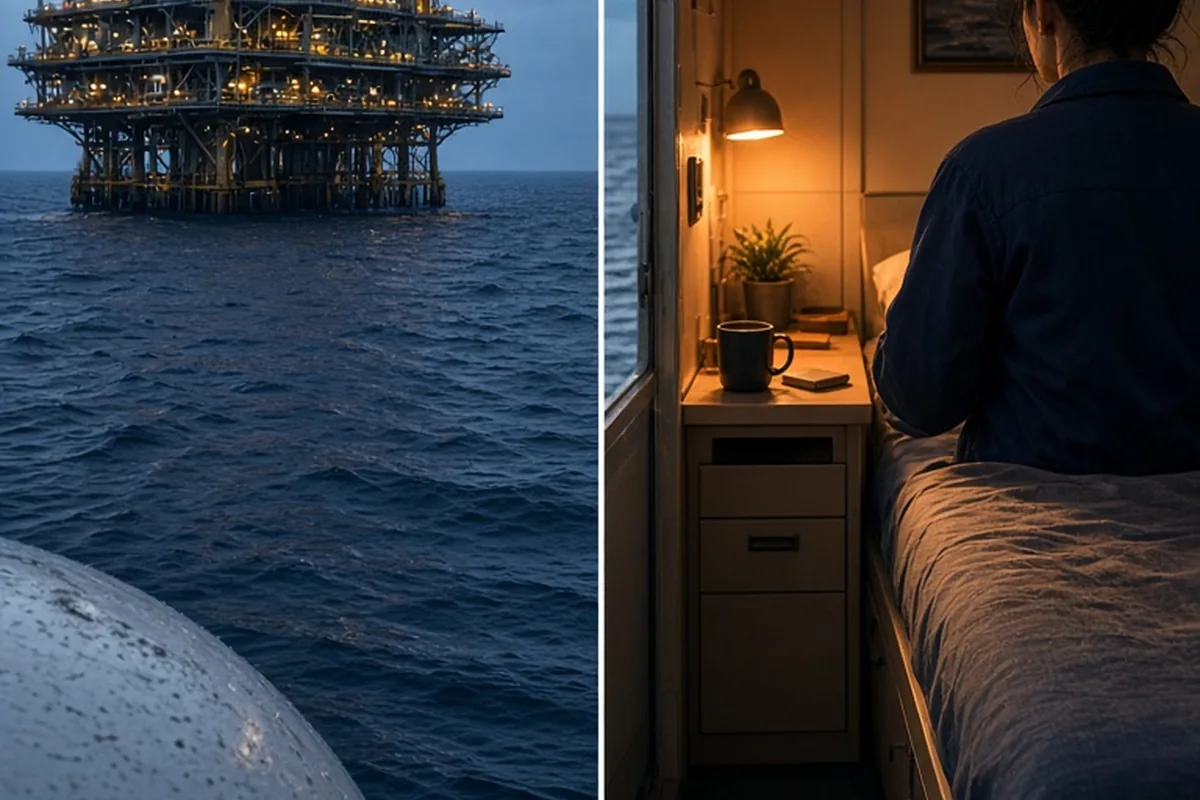
Yes, women work on offshore and onshore oil rigs worldwide. While the offshore oil and gas workforce has historically been male-dominated, women hold critical positions across all operational levels. These include petroleum engineering, geology, health and safety management, drilling operations, logistics, technical inspection, and catering services. Rig operators provide dedicated living accommodations, strict anti-harassment policies, and equal operational training to support female crew members.
Offshore energy production relies on multidisciplinary teams living and working in isolated marine environments for weeks at a time. Understanding how women navigate this demanding industrial sector highlights both the operational reality of modern rig life and the practical career paths available across energy operations.
Technical, Operational, and Support Roles Held by Women
Modern drilling platforms function as self-contained industrial communities requiring a wide spectrum of expertise. Women on oil rigs work in technical engineering fields, geological analysis, drilling control, deck operations, and logistics management. Petroleum engineers oversee reservoir extraction strategies, while chemical and mechanical engineers maintain high-pressure pipeline systems, subsea manifolds, and power generation turbines. In technical inspection, non-destructive testing technicians evaluate weld integrity and structural components under harsh marine conditions.
Beyond engineering, operational and service personnel maintain daily platform viability. Women serve as health, safety, and environment coordinators who enforce regulatory compliance, conduct incident investigations, and manage environmental containment systems. On the drill floor and deck, women work as mudloggers, dynamic positioning officers, crane coordinators, and roustabouts. In addition, platform life depends on dedicated medical officers and camp service personnel who run catering, industrial laundry, and emergency medical clinics. Every position operates within strict standard operating procedures where competence and procedural adherence dictate success rather than physical stature alone.
Living Accommodations and Daily Facilities on Offshore Platforms
Life aboard an offshore rig requires strict residential organization because space on a platform topside is inherently limited. Living quarters, commonly referred to as the accommodation block or camp, house between fifty and two hundred workers depending on the size of the installation. Modern installations provide dedicated cabins for female crew members, typically configured as single-occupancy or two-person shared rooms with en-suite bathrooms. Operators assign room pairings according to shift schedules, ensuring that day-shift and night-shift workers do not disrupt each other during rest periods.
Common areas on offshore rigs are shared equally among all crew members regardless of department or rank. Facilities generally include communal galleys serving hot meals around the clock, quiet recreation rooms, satellite television lounges, and dedicated fitness centers. Rig operators maintain strict policies regarding quiet hours in cabin hallways to protect sleep cycles for personnel working intensive twelve-hour tours. Laundry services are usually centralized, with industrial housekeeping staff washing work coveralls and personal clothing on a daily turnaround to maintain personal hygiene under heavy industrial conditions.
Workplace Culture, Safety Standards, and Professional Dynamics
The offshore sector has evolved significantly from the unregulated conditions of previous decades into a highly structured environment driven by process safety. Modern operators enforce zero-tolerance policies regarding harassment, discrimination, and unprofessional behavior. Because platform crews live and work in close proximity for extended tours, companies recognize that psychological safety, mutual respect, and clear communication are essential components of physical risk management. Toolbox talks and daily safety briefings emphasize operational cohesion above all individual differences.
For many workers entering an offshore environment, adjusting to constant team visibility requires clear professional boundaries. Crew members interact closely throughout twelve-hour shifts, shared meals, and emergency drills, which quickly highlights communication habits and reliability. Establishing respect on a platform comes down to consistent performance, active participation in hazard identification, and collaborative problem-solving during shift handovers. While being a minority demographic on deck can initially feel noticeable, professional focus on shared operational goals generally builds durable workplace trust.
Physical Demands, Personal Protective Equipment, and Endurance
Offshore work is physically demanding, characterized by continuous twelve-hour shifts, steep stair climbs across multiple deck tiers, and outdoor exposure to salt spray, wind, and extreme temperatures. Roles on the drill floor or main deck require endurance, manual coordination, and strict adherence to lifting protocols. Modern rigs increasingly employ mechanized pipe handling systems, hydraulic iron roughnecks, and automated deck winches, reducing the raw physical strain once required for drilling operations and placing greater emphasis on technical precision.
Proper personal protective equipment is essential for safety, and manufacturers now produce gear specifically sized for female proportions. Standard issue items include flame-resistant coveralls, impact-rated work gloves, steel-toed safety boots, hard hats, eye protection, and specialized life jackets. Ill-fitting equipment creates serious safety hazards around moving machinery, making properly proportioned gear an operational requirement rather than an aesthetic preference. Workers must maintain personal physical readiness through regular rest, proper hydration, and conditioning to handle the fatigue that accumulates over a multi-week rotation.
Managing Rotational Schedules and Personal Life Off the Rig
The defining feature of offshore employment is the rotational schedule, commonly configured as two weeks on followed by two weeks off, three weeks on followed by three weeks off, or even four-week hitches for deepwater or international assets. During the on-duty hitch, workers are on site twenty-four hours a day, alternating between twelve hours on shift and twelve hours off. During the off-duty period, personnel return home with complete freedom from daily workplace duties, providing substantial blocks of uninterrupted personal time.
While extended time off offers distinct personal flexibility, the extended time away requires intentional communication and planning with partners, children, and friends. Satellite internet and video calling allow offshore workers to stay connected during off-shift hours, though connectivity can occasionally be limited by marine weather or remote locations. Successfully managing an offshore career involves establishing clear expectations with family regarding availability, managing personal responsibilities autonomously during home cycles, and preparing for the mental transition between intense industrial focus and regular domestic life.
Entry Pathways, Certifications, and Career Progression
Entering the offshore industry involves specific educational, vocational, and safety credentials depending on the desired role. Technical positions, such as petroleum engineer, geoscientist, or production chemist, generally require a relevant university bachelor degree in engineering or physical sciences. Operational and trade roles, including instrumentation technician, electrical technician, and mechanical fitter, typically build on vocational apprenticeships, technical diplomas, or prior naval or industrial maintenance experience.
Regardless of position, all offshore personnel must complete mandatory safety certifications before stepping foot on a vessel or helicopter. Common baseline requirements include the Basic Offshore Safety Induction and Emergency Training, Helicopter Underwater Escape Training, and an offshore medical clearance confirming physical fitness for remote duty. In many jurisdictions, workers must also secure a transportation security credential such as a TWIC card or national seaman book. Career advancement offshore is directly linked to operational experience, safety leadership, and the acquisition of advanced technical qualifications.
Illustrative Scenarios
Navigating Deck Communication as a First-Time Field Engineer
A female electrical engineer arrived on a deepwater production platform for her first three-week hitch to calibrate high-voltage generator controls. Sensing that the seasoned mechanical crew viewed her with polite skepticism, she initially worried about asserting technical authority during morning handovers. Instead of retreating or becoming overly defensive, she spent her first two off-shift hours reviewing platform wiring schematics with the lead technician, asking practical questions about previous component wear, and explaining the calibration steps clearly. By approaching the crew with practical curiosity and operational clarity, she established mutual respect, and the team successfully completed the overhaul ahead of schedule.
Key point: Credibility in technical field environments is established through calm preparation, direct communication, and shared operational respect rather than confrontation.
Establishing Communication Boundaries During Offshore Rotations
An offshore logistics coordinator faced tension with her partner during her four-week rotations because variable satellite Wi-Fi and changing shift handover times caused missed phone calls. Her partner interpreted the brief check-ins as emotional distance, while she felt stressed trying to troubleshoot domestic issues after exhausting twelve-hour tours. They addressed the issue during her home cycle by agreeing on a clear communication routine: a brief morning text before shift start and a dedicated fifteen-minute evening video call during her off-shift window, with an understanding that operational drills might occasionally shift the timing.
Key point: Setting realistic, agreed-upon communication expectations prevents unnecessary relational strain caused by unpredictable remote work environments.
Frequently asked questions
Are living accommodations segregated by gender on offshore platforms?
Yes, sleeping quarters are allocated by gender, with women assigned to dedicated rooms that feature private or shared en-suite bathrooms. Common facilities like galleys, recreation rooms, and gyms are shared by all crew members.
What basic training must a woman complete before working offshore?
All workers must pass an offshore medical examination and complete Basic Offshore Safety Induction and Emergency Training, which includes Helicopter Underwater Escape Training, firefighting, and basic sea survival. Specific operational roles may require additional technical and marine certifications.
How do offshore rotational schedules affect family and relationship stability?
Rotational work provides long blocks of uninterrupted time at home balanced against multi-week absences at sea. Success requires strong independent routines, proactive planning for home responsibilities, and reliable communication habits during off-shift hours.
What non-engineering positions are available for women entering the offshore industry?
Women work in health and safety coordination, logistics planning, materials handling, dynamic positioning, radio operations, medical support, and industrial catering. These positions offer established career progression through on-the-job training and specialized certifications.
Your next step
Review accredited offshore safety training providers in your region to understand prerequisite medical evaluations and certification courses required for offshore facility access.