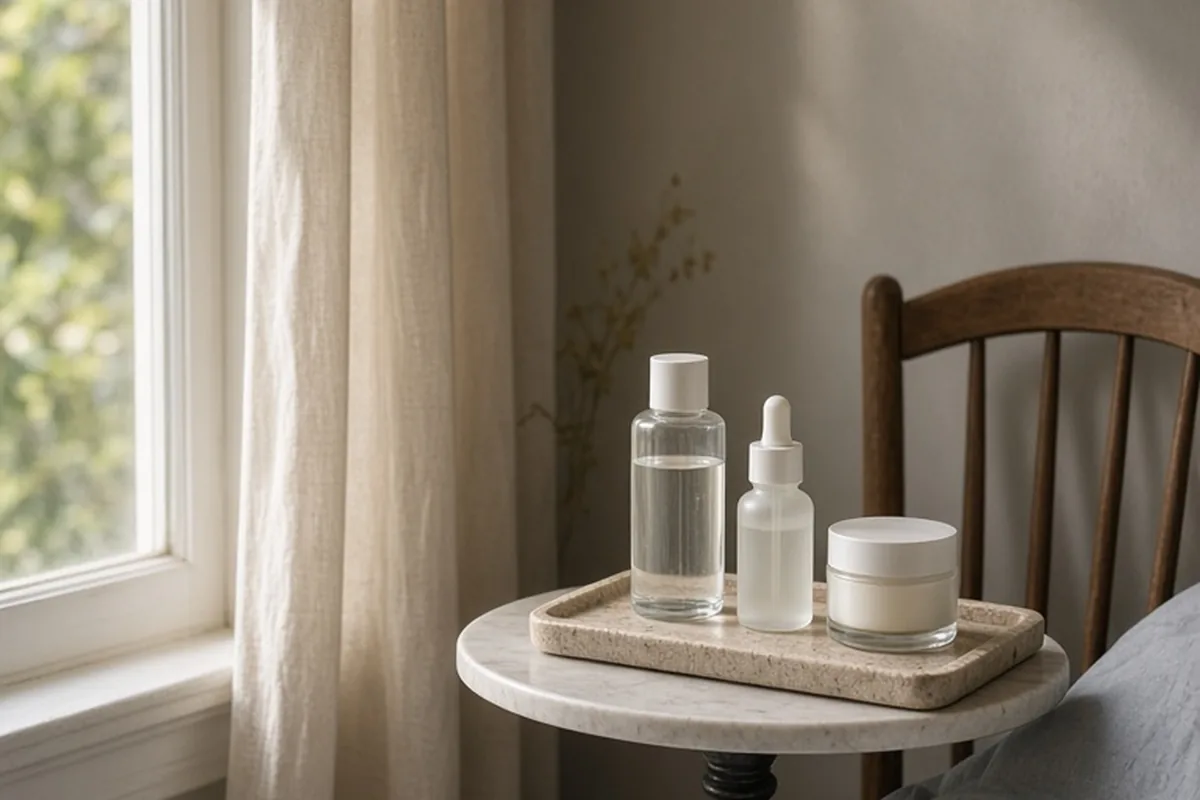
Yes, you should always apply moisturizer after toner. Toners deliver lightweight hydration, rebalance skin after cleansing, or prep pores with active ingredients. Moisturizers contain emollients and occlusives that lock those water-based ingredients into the skin, preventing moisture evaporation. Applying toner on top of moisturizer prevents the toner from penetrating the surface, rendering its active hydrators largely ineffective.
Navigating the order of skincare products can easily feel overwhelming given the sheer variety of essences, toners, serums, and creams available today. Understanding the foundational purpose of each formula clarifies why certain steps must follow others to keep your skin balanced, comfortable, and well hydrated.
The Core Rule of Skincare Layering
Skincare layering relies on a simple physical principle: apply products from the thinnest consistency to the thickest consistency. Toners are almost exclusively fluid and water-based, containing microscopic molecules designed to absorb quickly into the top layers of your skin. Moisturizers, by contrast, are emulsions containing heavier lipids, botanical oils, buttery emollients, or occlusives that sit on top of the skin to create a protective barrier.
If you apply a thick cream first, its lipid barrier physically blocks the watery toner from reaching your skin cells. The liquid simply pools on top of the cream, evaporates into the surrounding air, or breaks down the emulsion you just applied. Reversing the order ensures each product performs its intended job without interfering with the absorption of subsequent steps.
Think of the process like watering a dry garden bed. A light mist softens the soil and prepares it to absorb moisture, while a layer of mulch placed on top keeps that water from evaporating under the sun. Applying the mulch before sprinkling a light mist means the water never actually reaches the root system below.
Why Toners Require a Moisturizer Sealant
Modern toners bear little resemblance to the harsh, alcohol-laden astringents popular decades ago. Today, most formulas focus on replenishing hydration, delivering humectants such as glycerin, hyaluronic acid, beta-glucan, and panthenol to replenish moisture lost during cleansing. Humectants are water-loving molecules that bind to water and pull it directly into the upper layer of the epidermis.
However, humectants have an inherent limitation: they attract water, but they cannot trap it on their own. In environments with dry air, indoor heating, or low humidity, unbound humectants can actually draw moisture upward from deeper layers of your skin toward the surface, where it quickly evaporates into the air. This phenomenon, known as trans-epidermal water loss, can leave your skin feeling tighter and drier than before you began your routine.
A moisturizer provides the necessary counterweight. By layering an emollient lotion or an occlusive cream over your toner, you create a physical seal that holds those water-rich humectants down. This trapped moisture sustains skin pliability and supports a resilient moisture barrier throughout the day and night.
What Happens If You Apply Toner Over Moisturizer
Applying toner over an already-applied moisturizer rarely causes severe harm, but it causes significant product waste and functional failure. When you pat or swipe a watery liquid over a layer of cream, the water resists mixing with the lipids. You will often notice the toner beading up on the skin surface, sliding around without sinking in, or partially dissolving your cream into a greasy film.
Furthermore, using a cotton pad soaked with toner over freshly moisturized skin will simply wipe away the moisturizer you just spent time applying. This removes the protective lipid shield your barrier needs and wastes expensive product. The friction of rubbing a wet pad over an emollient base can also cause unnecessary mechanical irritation, particularly for sensitive or rosacea-prone skin.
A rare exception exists for intentional mid-day facial mists, which people often spray over makeup or daily lotion to refresh skin appearance. Even in that situation, a mist behaves differently than a treatment toner, and over-misting throughout the day without reapplying a touch of moisturizer can gradually dry out the skin surface.
Timing and Technique Between Steps
A common point of confusion is whether you should wait for your toner to dry completely before applying your moisturizer. The best approach depends almost entirely on the type of toner you are using in your routine. For standard hydrating toners loaded with humectants, your skin should still be slightly damp when you smooth on your moisturizer.
Applying a cream onto damp, toner-prepped skin allows humectants and emollients to blend smoothly, capturing surface water before it has any chance to evaporate into the atmosphere. This method often results in a plumper, more supple finish and allows you to use a slightly smaller amount of cream while covering the entire face and neck evenly.
The dynamic changes if you are using an exfoliating acid toner containing ingredients like glycolic acid, salicylic acid, or lactic acid. Chemical exfoliants work best within a specific pH range, and applying a thick neutral cream immediately over an active acid may dilute its effectiveness or cause unpredictable stinging. For exfoliating toners, allow the product to settle and absorb for one to two minutes until dry to the touch before moving forward with your moisturizer.
Adapting the Pairing for Different Skin Types
While the sequence of toner before moisturizer remains universal across all skin types, the textures and weights of the products you choose should reflect your specific barrier requirements. Matching the right formulations prevents common issues like midday shine, clogged pores, or persistent tightness.
For oily and acne-prone skin, heavy creams can feel suffocating when paired with dense liquids. A practical approach combines an alcohol-free, balancing toner containing niacinamide or green tea extract with a lightweight, oil-free gel moisturizer. The gel locks in the fluid toner without introducing heavy waxes or pore-clogging oils, keeping the complexion hydrated without feeling heavy.
For dry or barrier-compromised skin, a single sweep of toner is often insufficient. Many people find success by layering a milky, ceramide-rich toner two or three times on clean skin, followed immediately by a rich cream containing shea butter, squalane, or cholesterol. This technique builds hydration in deep layers before locking it down with a sturdy emollient shield.
Placing Serums and Sunscreen in the Routine
Daily routines rarely stop at just toner and moisturizer. If you use targeted treatments like vitamin C, retinol, or peptide serums, they belong directly between your toner and your moisturizer. The toner prepares the skin surface, lowering resistance and allowing subsequent active serums to spread easily and absorb evenly.
When building a morning routine, your final step after moisturizer should always be a broad-spectrum sunscreen. Sunscreen works by forming an even protective film across the outermost surface of the skin to reflect or absorb ultraviolet rays. Placing a toner or a moisturizer on top of sunscreen disrupts that delicate protective film and leaves areas of your skin vulnerable to sun damage.
In the evening, the routine simply terminates with your moisturizer or an optional sleeping oil. Because facial oils are pure lipids and occlusives, they belong either mixed into your night cream or patted gently over the top of your moisturizer as the very final step of your nighttime regimen.
Common Layering Mistakes and How to Avoid Them
One frequent error is relying on a hydrating toner as a substitute for moisturizer, particularly during warm summer months. While skipping moisturizer might feel refreshing initially, a toner alone cannot protect against environmental moisture loss. Without an emollient or occlusive barrier, skin often compensates by overproducing sebum, resulting in an oily surface coupled with deep dehydration.
Another common mistake is product pilling, where tiny balls of product roll up on the skin when you smooth your cream over your toner. Pilling usually indicates that the toner contains high concentrations of film-forming polymers, gums, or silicones that have not had enough time to absorb before you rubbed on a contrasting cream formulation. Lightly patting products rather than aggressively rubbing them helps prevent this friction.
Finally, be cautious with excessive mechanical exfoliation during toner application. Rubbing rough cotton rounds across the face twice a day can disrupt your lipid barrier over time, causing micro-irritation and redness. Pouring hydrating toner directly into clean palms and pressing it gently into the skin avoids unnecessary friction and saves product.
Frequently asked questions
Can I skip moisturizer if my toner feels very hydrating?
It is generally not advisable to skip moisturizer entirely, even if your toner feels deeply hydrating. Toners lack the occlusive ingredients necessary to lock water into the skin, which can lead to rapid evaporation and rebound dryness. If your skin feels oily, choose a featherlight water-gel moisturizer rather than omitting the step completely.
How long should I wait after applying toner to apply moisturizer?
For basic hydrating toners, you do not need to wait at all; applying your moisturizer while your face is still slightly damp locks in the most hydration. If your toner contains active exfoliating acids like AHA or BHA, waiting one to two minutes allows the product to absorb and work at its optimal pH before being neutralized.
Do I need to wash my face between toner and moisturizer?
No, you should never rinse off a standard toner before applying moisturizer. Modern toners are leave-on treatments designed to deposit beneficial hydrants, antioxidants, and soothing ingredients that your moisturizer subsequently seals in.
Can I mix my toner and moisturizer together in my hands?
While mixing a drop of toner with a thick cream in your palm can sheer out the texture of the moisturizer, applying them sequentially is generally more effective. Layering toner first ensures the lightweight humectants penetrate fully into the skin before the heavier lipids seal the surface.
Your next step
To get the most out of your skincare routine today, examine your current products and ensure you are patting your moisturizer over slightly damp skin right after applying your hydrating toner.