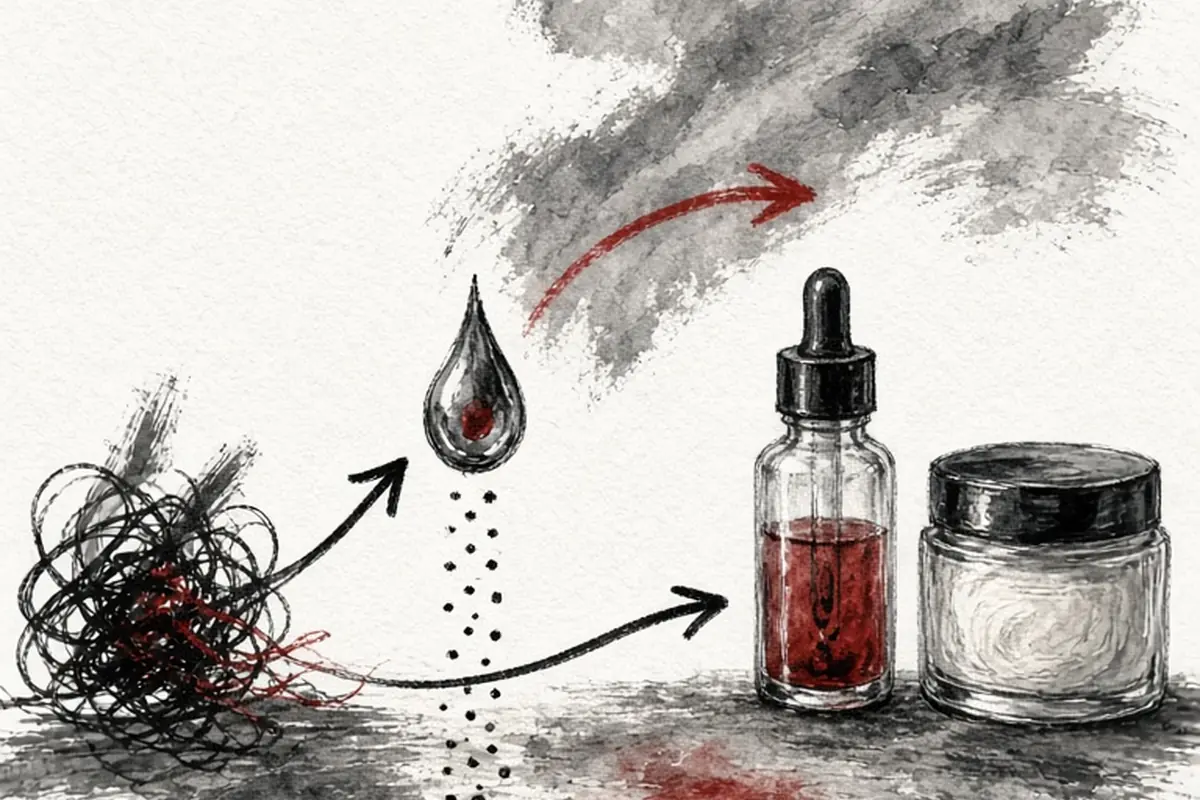
Yes, you should apply serum before moisturizer in virtually every daily skincare routine. Serums feature smaller molecules and lightweight, fluid consistencies designed to deliver concentrated active ingredients into the upper layers of the skin. Moisturizers are formulated with richer emollients and occlusives that seal the surface. Layering moisturizer over serum locks in those active ingredients, while reversing the order blocks serum absorption.
Establishing a reliable skincare regimen often feels overwhelming when you are navigating multiple bottles, textures, and claims. However, determining the correct sequence for your products comes down to basic formulation mechanics and how different textures interact with your skin barrier.
The Core Principle of Layering by Consistency
Skincare layering relies on a straightforward guideline: apply products from thinnest consistency to thickest consistency. Water-based liquids and lightweight gels absorb quickly and penetrate easily, while denser creams and balms sit closer to the surface. When you place a fluid product like a serum over a heavy cream, the heavier product forms a barrier that prevents the thinner formula from reaching your skin.
Understanding this flow helps clarify why serums belong early in your routine. Serums are purposefully engineered as delivery vehicles for targeted ingredients such as antioxidants, peptides, and humectants. They contain minimal heavy waxes or oils, which allows them to disperse rapidly across clean skin. In contrast, standard daily lotions and face creams contain structured lipid networks designed to reinforce your natural moisture barrier. Putting your serum on first ensures those potent ingredients have direct contact with your skin before any barrier-forming agents are introduced.
For example, if you use a lightweight hyaluronic acid serum followed by a medium-weight ceramide lotion, the hyaluronic acid draws water into the surface layers while the ceramide lotion forms a protective blanket over the top. If you were to invert this sequence, the hyaluronic acid would rest on top of the lotion, evaporating into the air or causing the cream underneath to break down unevenly.
Why Applying Moisturizer First Creates an Unwanted Barrier
Moisturizers serve two primary functions: delivering emollient lipids to soften the skin and providing occlusive agents to minimize transepidermal water loss. Common moisturizing components like shea butter, squalane, dimethicone, and plant oils create an effective seal over the stratum corneum. This seal is excellent for keeping moisture inside the skin, but it acts as a physical shield against any water-based product applied afterward.
When a water-soluble active ingredient encounters an occlusive surface layer, it cannot easily penetrate. Instead of sinking in to address concerns like dullness, fine lines, or dehydration, the serum pools on top of the cream. This not only wastes expensive products but can also lead to cosmetic frustration, such as product pilling, tackiness, or clogged pores from unabsorbed residue sitting on the surface.
The primary drawback to this barrier dynamic is inefficiency. While layering incorrectly is unlikely to cause severe damage to your skin, it drastically reduces the return on your investment in specialized treatments. To get the maximum performance out of every bottle on your vanity, you want active formulas touching bare, receptive skin rather than fighting through an emollient shield.
Optimal Timing and Technique Between Application Steps
A common point of confusion is whether you need to wait several minutes between your serum and your moisturizer. In most everyday routines, you only need to wait between thirty and sixty seconds. You want the serum to absorb enough that your face no longer feels wet, but you do not need your skin to feel completely bone-dry before moving on to your cream.
In fact, applying your moisturizer while your skin is still slightly damp from a hydrating serum can significantly boost hydration. Humectants like glycerin, sodium hyaluronate, and panthenol bind to water molecules. Patting your moisturizer over slightly dewy skin traps that surface moisture immediately, preventing the humectant from drying out or drawing moisture upward from deeper layers of your skin in dry climates.
To apply effectively, dispense two to four drops of serum into clean palms or directly onto your fingertips, press gently across your face and neck, and smooth outward without vigorous rubbing. Once the serum feels lightly tacky or settled—usually within half a minute—smooth your moisturizer evenly over the entire area to lock everything in place.
Navigating Specific Actives and the Buffering Exception
Different active ingredients bring distinct formulation requirements. Daytime antioxidant serums, such as L-ascorbic acid (vitamin C), perform best when applied immediately after cleansing or toning so they can neutralize environmental free radicals directly at the skin surface. Similarly, exfoliating serums containing alpha or beta hydroxy acids need direct contact with the skin to help dissolve dead surface cells and clear sebum from pores.
However, there is one notable scenario where altering this sequence can be helpful: the practice known as buffering potent actives like retinoids. If you have sensitive, reactive skin or are just starting a strong retinol or prescription retinoid serum, applying a thin layer of moisturizer first can help reduce irritation, flaking, and redness. The moisturizer slows the penetration rate of the active ingredient, making the formula gentler on your moisture barrier.
Buffering represents a deliberate trade-off. While it slightly reduces the overall potency of the retinoid treatment, it allows you to build tolerance comfortably over several weeks without compromising your skin barrier. Once your skin adjusts, you can transition back to the standard order of applying the retinoid serum directly before your nightly moisturizer.
Differentiating Water-Based Serums from Facial Oils
Confusion often arises when products labeled as serums are actually formulated as pure facial oils or lipid blends. The term serum generally refers to water-based or gel-based solutions, but cosmetic marketing sometimes applies the label to dense botanical oils. The rule of consistency applies here as well: oil is inherently occlusive and acts more like a sealant than a penetrative water-based treatment.
If your product is an oil-based formula—such as rosehip seed oil, argan oil, or a squalane-dominant blend—it should not go before your standard water-based moisturizer. Water cannot penetrate through oil. If you apply a facial oil first and then try to apply a water-based gel cream over it, the cream will struggle to absorb and may slide off your face.
For oil-dominant formulas, the ideal placement is either mixed directly into your moisturizer (one to two drops stirred in your palm) or patted over your moisturizer as the very final step of your nighttime routine. Always check the ingredient list: if water or aloe juice is the first ingredient, it goes before your moisturizer; if an oil or lipid is the primary component, treat it as a sealant.
Structuring Your Morning and Evening Routines
Your daytime and nighttime skincare goals are fundamentally different, which influences how you pair your serums and creams throughout the day. Morning routines focus on environmental defense, hydration, and sun protection. Evening routines prioritize repair, moisture replenishment, and cell turnover while you sleep.
In the morning, keep your steps light and functional. Start with a gentle cleanse or water rinse, apply your antioxidant or hydrating serum, follow with a lightweight daily moisturizer, and finish with a broad-spectrum sunscreen. Because sunscreen must form an uninterrupted protective film on top of the skin to be effective, it always goes after your moisturizer as the final skincare step before makeup.
At night, you have more flexibility to use richer textures and restorative treatments. After thorough cleansing to remove sunscreen, makeup, and daily pollutants, you can apply your treatment serum—such as a peptide complex, exfoliating blend, or retinoid. Follow this with a nourishing, lipid-rich night cream to support skin recovery overnight and prevent moisture loss while you sleep.
Troubleshooting Pilling and Absorption Problems
If you are applying your serum before your moisturizer but notice small flakes, clumps, or rubbery balls forming on your face, you are experiencing product pilling. Pilling happens when formulas fail to bond properly, often caused by conflicting ingredients, applying too much product, or rushing between steps.
A frequent culprit of pilling is the interaction between high-molecular-weight polymers, thick silicones (like dimethicone), and film-forming humectants. When a thick layer of a silicone-heavy moisturizer is rubbed vigorously over a sticky, polymer-rich serum that has not fully settled, the friction rolls the two layers into small clumps rather than letting them fuse smoothly onto the skin.
To resolve pilling, try using smaller amounts of each product—a pea-sized drop is often sufficient for the entire face. Additionally, switch from a vigorous rubbing motion to a gentle pressing or patting technique. Giving your serum an extra thirty seconds to absorb before smoothing your cream on top will also ensure smooth, seamless layering.
Frequently asked questions
Can I skip moisturizer if my serum already feels very hydrating?
If you have naturally oily skin or live in a very humid environment, a hydrating serum may provide enough moisture on its own during hot summer months. However, most skin types still benefit from a light moisturizer or moisturizing sunscreen because humectant serums attract water but lack the occlusive ingredients needed to prevent that hydration from evaporating throughout the day.
Can I mix my serum directly into my moisturizer to save time?
While mixing a basic hydrating serum or facial oil into a simple moisturizer is generally harmless, combining complex active ingredients like direct acids, vitamin C, or retinoids directly in your palm can disrupt the pH balance and stability of the formulas. For targeted treatment serums, applying them separately in their own layer guarantees the best potency and absorption.
What should I do if my serum feels sticky before applying moisturizer?
A slight tackiness is normal for serums rich in humectants like hyaluronic acid or glycerin as they begin binding moisture. You do not need to wash it off; simply wait about thirty seconds for the initial stickiness to settle slightly, and then apply your moisturizer, which will immediately smooth out the texture and eliminate the sticky feel.
Can I use multiple serums before my moisturizer?
Yes, you can layer two or three serums before your moisturizer, provided you continue following the thinnest-to-thickest rule. Apply the most watery, fast-absorbing serum first, follow with slightly thicker gel or milky serums, and finish with your moisturizer to seal all the layers together without overwhelming your skin barrier.
Your next step
Organize your skincare bottles by texture on your counter today, and place your water-based serum immediately after cleansing or toning so it can absorb fully before you lock it in with your daily moisturizer.