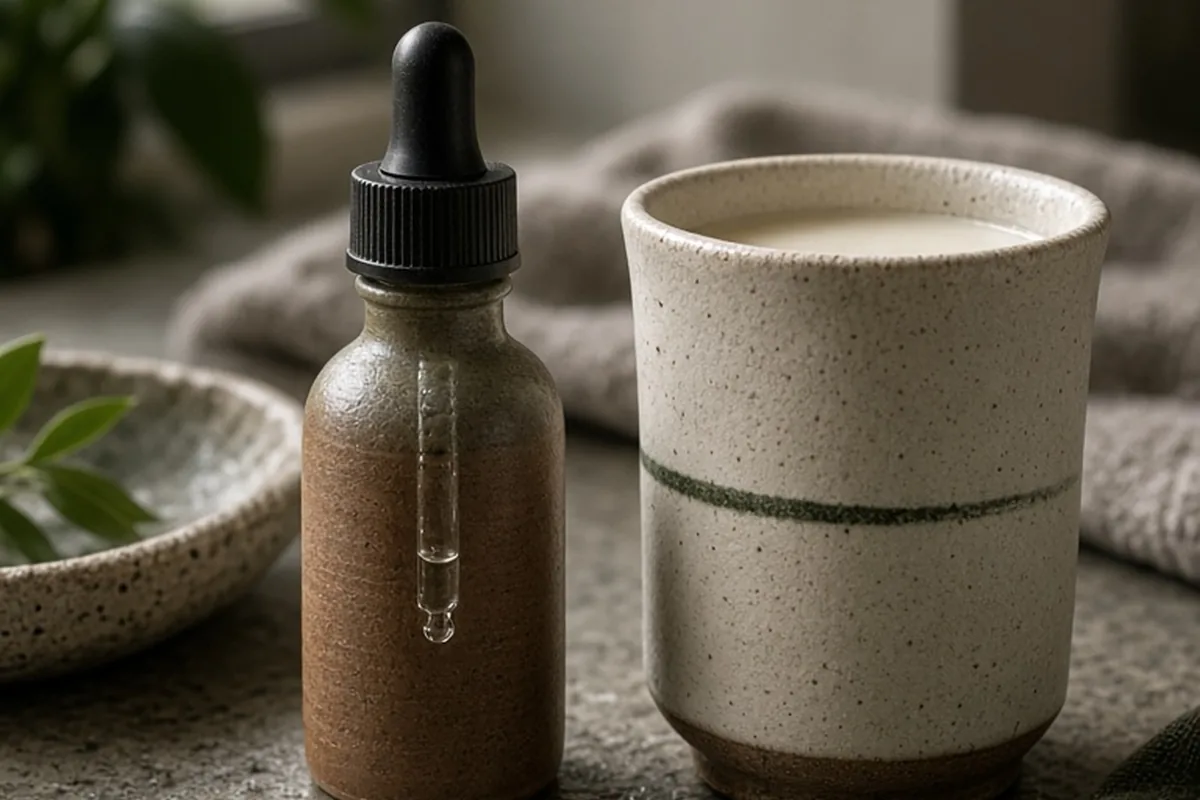
You should always apply facial serum before your moisturizer. Skincare products work best when layered from thinnest to thickest consistency. Serums are lightweight formulas packed with concentrated active ingredients designed to penetrate deeply into the skin, while moisturizers create a heavier protective barrier that locks in hydration. Applying moisturizer first would block the serum from absorbing effectively.
Navigating the correct sequence for daily skincare can feel overwhelming when faced with multiple bottles, jars, and droppers on your bathroom counter. Understanding the functional purpose behind each product category ensures that you get the full value from your routine without wasting product or causing unnecessary irritation.
The Core Rule of Skincare: Layering by Texture and Viscosity
The fundamental guideline of all topical skincare is to apply products in order of consistency, starting with the thinnest, most watery solutions and finishing with the thickest, richest creams. Skincare formulations are designed with distinct vehicle bases that determine how they interact with your skin. Thin liquids, such as essences and water-based serums, contain smaller molecules that move easily into the outer layers of the epidermis. If you place a heavy cream or lipid barrier on your face first, those lighter, water-soluble molecules simply cannot penetrate through the denser oil layer.
Think of your skincare routine as building a protective system from the inside out. When you apply your lighter products first, the skin absorbs their active components directly. Following them with progressively heavier formulations seals those lighter layers beneath a nourishing shield. Deviating from this order by applying a thick lotion followed by a thin liquid will cause the lighter product to pool on top of the cream, evaporate into the air, or cause the formulas to destabilize and roll off the skin in small flakes.
Understanding How Facial Serums Work on the Skin
Facial serums are specialized treatments engineered to deliver high concentrations of specific active ingredients directly to targeted areas of the skin. Unlike standard lotions, serums typically omit heavy thickening agents, occlusive waxes, and dense mineral oils. Instead, they rely on water, light humectants, or specialized fluid delivery systems to transport compounds like hyaluronic acid, niacinamide, vitamin C, peptides, or alpha hydroxy acids into the skin surface quickly and efficiently.
Because serums are formulated to be potent and fluid, they rely on unobstructed contact with freshly cleansed skin. For example, a hydrating serum featuring low-molecular-weight hyaluronic acid works by drawing ambient water into the epidermal surface. If that serum encounters bare, clean skin, it readily binds moisture where it is needed most. If it is forced to compete with a previously applied barrier cream, its ability to hydrate is significantly diminished because the active ingredients are held away from the cellular layers they are meant to support.
Why Moisturizers Must Act as the Protective Seal
Moisturizers serve a very different mechanical purpose than serums. While serums deliver concentrated actives, moisturizers are formulated to fortify the skin barrier and prevent transepidermal water loss, which is the natural process where moisture evaporates from your skin into the surrounding environment. Most moisturizers contain a carefully balanced mixture of humectants to attract water, emollients to smooth rough skin cells, and occlusives to create a physical seal over the surface.
When you apply your moisturizer over your serum, it acts like a secure lid on a container. It traps the active ingredients and hydration delivered by the serum beneath a protective film of lipids and emollients. If you were to invert this order, the occlusive elements within the moisturizer would form a semi-impermeable barrier that repels water-based serums. Placing your moisturizer second ensures that your barrier receives necessary nourishment while actively boosting the performance of the treatment underneath.
Application Timing and Waiting Between Steps
A common point of confusion is whether you need to wait several minutes between applying your serum and your moisturizer. For the vast majority of everyday hydrating and nourishing serums, such as those containing hyaluronic acid, glycerin, or soothing botanical extracts, you only need to wait about thirty to sixty seconds. You want the serum to absorb until your face feels slightly damp and tacky rather than wet, which allows the moisturizer to glide smoothly over the surface without diluting the active layer.
There are, however, specific circumstances where giving a product a few extra moments can be helpful. Highly acidic formulas, such as pure L-ascorbic acid vitamin C serums or chemical exfoliants like glycolic and salicylic acids, work at a lower pH level than standard moisturizers. Allowing these active treatments to dry down for one to two minutes before applying your neutral-pH cream helps prevent premature neutralization of the acid and reduces the likelihood of localized tingling or flushing.
Structuring Your Morning and Evening Application Sequences
Your skincare sequence remains fundamentally consistent between day and night, but the specific types of serums and moisturizers you select will likely shift based on environmental exposure. In the morning, your primary goal is defense against environmental stressors like ultraviolet light, free radicals, and pollution. A standard morning routine begins with a gentle cleanse, followed by an antioxidant serum such as vitamin C, a lightweight daytime moisturizer or gel cream, and finishes with a broad-spectrum sunscreen.
In the evening, your routine transitions toward cellular recovery and structural barrier repair. After thoroughly cleansing away makeup and daytime grime, you can apply targeted restorative serums containing ingredients like retinoids, exfoliating acids, or biomimetic peptides. Because your skin loses more moisture overnight while you sleep, finishing with a richer, more emollient night cream creates an intensive barrier that supports comfort and deep hydration until morning.
Navigating Face Oils and Uniquely Formulated Products
While the rule of applying serum before moisturizer holds true for standard water-based treatments, edge cases like face oils require special consideration. Facial oils are often marketed interchangeably with serums, but chemically they behave as emollients and light occlusives. If a product is composed purely of plant or synthetic lipids such as squalane, rosehip oil, or jojoba oil, it should not be applied under your everyday water-based moisturizer because water cannot readily penetrate an oil film.
When incorporating a true facial oil, you have two practical choices depending on your personal preference and skin feel. You can either smooth two to three drops of oil over your moisturizer as the very final step of your nighttime routine, or you can blend a couple of drops directly into your moisturizer in the palm of your hand before applying. If you are using multiple serums in one routine, always layer the water-based, clear serums first, followed by milky emulsions, and finally any oil-based formulas before moving to your cream.
Troubleshooting Pilling and Formula Incompatibility
If you ever notice small rubbery balls or flakes forming on your skin when applying your moisturizer over your serum, you are experiencing product pilling. Pilling happens when two formulas fail to bond properly, often caused by high concentrations of film-forming polymers, silicones, or heavy synthetic gums that sit on the skin surface. Applying too much product, vigorously rubbing instead of gently patting, or layering oil-heavy creams over water-based polymer gels can trigger this mechanical separation.
To resolve pilling, first assess the quantity of serum you are using. Most facial serums are highly concentrated, meaning three to four drops are sufficient to cover the entire face and neck. Allow the serum a moment to settle into the skin, and apply your moisturizer using gentle pressing and sweeping motions rather than harsh circular friction. If pilling continues, check the ingredient labels for high concentrations of dimethicone or carbomer in both products, as pairing two heavily polymer-reliant formulas frequently causes texture friction.
Frequently asked questions
Can I mix my serum directly into my moisturizer to save time?
While mixing a basic hydrating serum into your moisturizer may save a few seconds, it can compromise the effectiveness of targeted treatments. Concentrated actives like vitamin C, exfoliating acids, and retinol are formulated for direct skin contact and may be diluted or unevenly distributed when blended with thick creams. It is best to apply the serum first and follow with your moisturizer.
Do I still need a moisturizer if my serum feels very hydrating?
Yes, most skin types still benefit from a moisturizer even after using a hydrating serum. Serums supply water and humectants to the skin, but they typically lack the occlusive ingredients needed to prevent that moisture from evaporating into the air. A light lotion or gel moisturizer seals in the hydration so your skin stays comfortable throughout the day.
What happens if I accidentally put my moisturizer on before my serum?
Accidentally reversing the order will not harm your skin, but it will significantly reduce the serum's absorption and effectiveness. The protective barrier created by the moisturizer prevents the serum's active ingredients from reaching the skin surface. If this happens, simply return to the correct order during your next routine.
How many different serums can I safely apply before my moisturizer?
Layering one to two serums per routine is generally ideal for maintaining skin balance and preventing irritation. If you choose to use two serums, apply the thinnest and most water-like formula first, followed by the slightly thicker one, before finishing with your moisturizer.
Your next step
Take a look at your current skincare products tonight, arrange them in order from the most watery fluid to the heaviest cream, and apply your serum directly after cleansing before sealing it with your moisturizer.