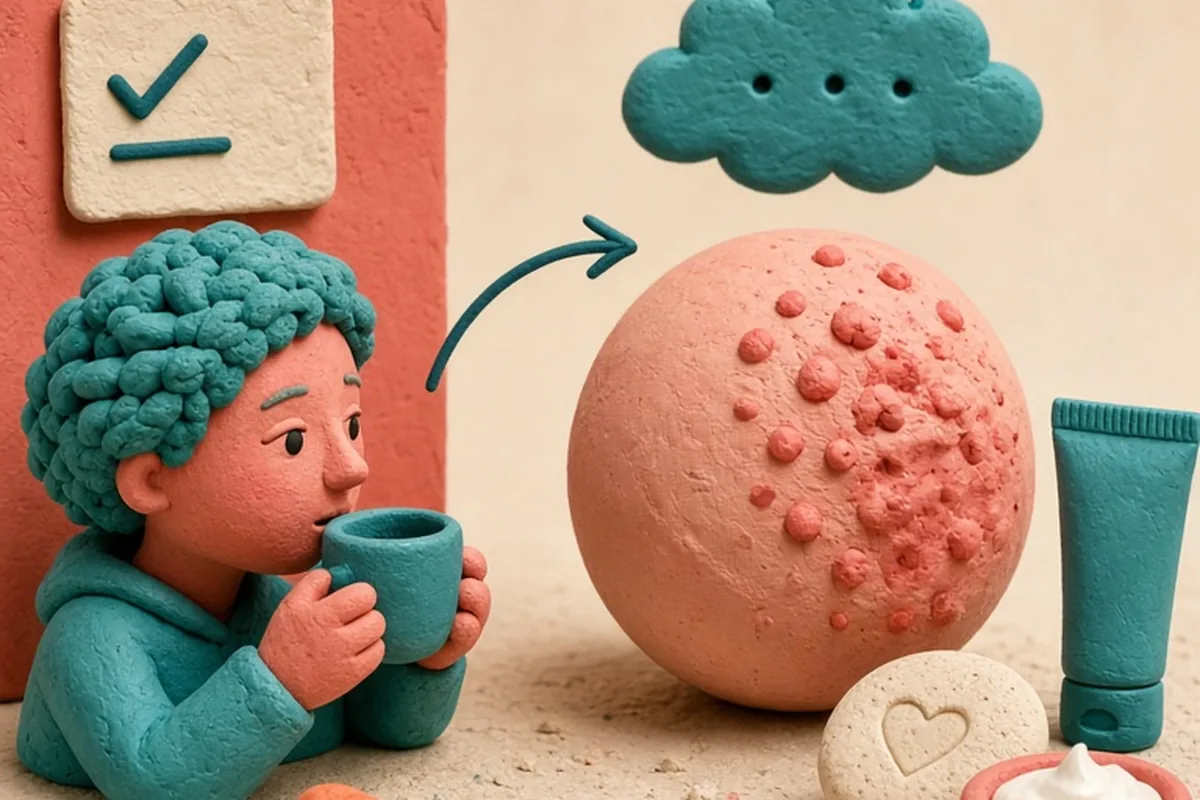
Adderall does not list acne as a standard direct side effect on clinical drug labels, but starting or adjusting the medication frequently leads to breakouts. This reaction typically occurs through secondary physiological and behavioral pathways, including heightened cortisol levels that stimulate excess oil production, severe dehydration, disrupted sleep cycles, reduced appetite, and increased subconscious touching or picking of the skin.
Starting a new prescription stimulant can bring welcome focus and cognitive organization, but noticing unexpected flare-ups along your jawline, forehead, or cheeks can feel frustrating and confusing.
The Biological Link Between Stimulants, Stress Hormones, and Sebum
While amphetamine-dextroamphetamine formulations do not directly deposit pore-clogging residues into your pores, they substantially alter autonomic nervous system activity. Stimulants work by raising extracellular dopamine and norepinephrine in the brain, which triggers an elevated state of alertness. For many people, this shift mimics a mild, sustained physiological stress response. When your sympathetic nervous system remains heightened throughout the day, the adrenal glands release higher amounts of systemic cortisol and related adrenal hormones.
Elevated cortisol levels communicate directly with the sebaceous glands located inside your hair follicles. These glands possess hormone receptors that respond to systemic stress signals by ramping up sebum production. When sebum shifts from a fluid, protective lipid layer to a thicker, hyper-abundant substance, it readily binds with shedding keratinocytes inside the pore lining. This trapped combination creates a low-oxygen environment where resident cutaneous bacteria, such as Cutibacterium acnes, proliferate rapidly, culminating in tender inflammatory papules or closed comedones across the T-zone and jawline.
Systemic Dehydration and the Rebound Oil Phenomenon
A well-documented effect of prescription stimulants is mild to moderate dehydration. Amphetamines naturally increase metabolic rate, mild thermogenesis, and respiration while occasionally functioning as mild diuretics. At the same time, the heightened concentration caused by the medication can suppress the natural thirst reflex, causing individuals to go hours without drinking adequate fluid. When internal hydration drops, the body prioritizes vital organs over peripheral tissues, leaving the epidermis visibly parched and compromised.
When the skin barrier becomes dehydrated, it loses intercellular lipids and natural moisturizing factors, leading to microscopic cracking and surface flaking. In response to this perceived lack of moisture, the skin often mounts a compensatory defense mechanism known as rebound oiliness. The sebaceous glands pump out excess surface oil to prevent further moisture evaporation from the compromised stratum corneum. Unfortunately, this oil pools over dry, un-exfoliated dead skin flakes, forming stubborn blockages that turn into widespread breakouts within weeks of starting or increasing a dosage.
Appetite Suppression, Nutritional Timing, and Skin Health
Stimulants naturally suppress appetite by acting on satiety centers within the hypothalamus. As a result, individuals frequently skip meals during peak medication hours, only to experience intense hunger late in the evening when the dose wears off. This erratic eating schedule often leads to reaching for fast-digesting, high-glycemic carbohydrates or sugary convenience foods that require minimal preparation. Rapid swings in blood sugar generate sudden spikes in circulating insulin, which in turn elevates insulin-like growth factor 1 (IGF-1), a peptide hormone strongly tied to hyperkeratinization and acute inflammatory acne.
Furthermore, prolonged involuntary caloric deficits or irregular nutrient intake can deprive the skin of essential micronutrients required for wound healing and tissue repair. Nutrients such as zinc, vitamin A, omega-3 fatty acids, and dietary antioxidants play critical roles in regulating immune responses in the skin and resolving active inflammation. When irregular eating patterns persist for months, existing blemishes take considerably longer to heal, leading to lingering erythema, post-inflammatory hyperpigmentation, and an accumulation of active lesions.
Disrupted Sleep Architecture and Delayed Nighttime Skin Repair
Because stimulant medications are formulated to extend wakefulness and sustain focus, taking a dose too late in the day or metabolizing the compound slowly can delay natural sleep onset and fragment sleep architecture. Deep non-rapid eye movement (NREM) sleep is the primary biological window during which cellular repair, collagen synthesis, and immune modulation occur. During these restorative hours, cutaneous blood flow increases and nocturnal cortisol drops to its lowest baseline, allowing the epidermal barrier to recover from daytime environmental stressors.
When sleep is consistently curtailed or shallow, nocturnal cortisol remains elevated and the nocturnal skin barrier recovery cycle fails to complete. This persistent low-grade systemic inflammation weakens the skin's local antimicrobial defenses, making it much easier for routine bacterial colonies to trigger visible pustules and painful cysts. Over time, chronically tired skin looks duller, displays heightened redness, and responds more reactively to topical skincare products that were previously well-tolerated.
Tactile Restlessness and Unconscious Skin Picking
Dopaminergic stimulation can sometimes channel physical restlessness into repetitive, fine-motor habits, particularly when sitting at a desk or working under pressure. Many individuals unconsciously engage in tactile scanning, continuously running their fingers over their face, neck, shoulders, or back in search of small bumps or uneven textures. Once an irregularity is felt, the urge to scratch, squeeze, or pick at the site can become intensely focused and difficult to interrupt.
Repetitive touching deposits environmental dirt, ambient sweat, and common hand bacteria directly into open pores. More damagingly, mechanical picking crushes surrounding dermal tissue, forces localized bacteria deeper into the dermis, and creates open wounds that invite secondary bacterial infections. What might have resolved as a minor, invisible microcomedone often turns into a large, inflamed lesion or an excoriation scar that requires weeks of intensive healing.
Daily Skincare Strategies for Medication-Related Breakouts
Managing breakouts associated with stimulant use requires a balanced skincare strategy that prioritizes barrier preservation over aggressive drying treatments. Because stimulant-influenced skin is often simultaneously dehydrated and oily, using harsh astringents, high-alcohol toners, or overly abrasive scrubs will backfire by worsening barrier damage and triggering additional rebound sebum production.
A well-structured routine focuses on gentle, evidence-based topicals that keep pores clear while maintaining optimal lipid hydration. Incorporating active ingredients gradually helps the skin adapt without developing widespread peeling or heightened irritation.
- Cleanse with a mild, non-foaming or low-surfactant gel cleanser morning and evening to lift excess oil without stripping essential barrier ceramides.
- Apply a leave-on 1% to 2% salicylic acid (BHA) liquid two to three times weekly to dissolve sebum deep inside the pore lining.
- Layer a lightweight, non-comedogenic moisturizer containing barrier-supporting ingredients like hyaluronic acid, glycerin, or niacinamide to restore hydration.
- Use a broad-spectrum, mineral or fluid chemical sunscreen daily to prevent post-inflammatory red and brown marks from darkening in ultraviolet light.
- Introduce a low-strength over-the-counter retinoid such as adapalene at night, starting two evenings per week to accelerate cellular turnover.
Lifestyle Modifications to Support Clear Skin
In addition to an effective topical regimen, deliberate adjustments to your daily routine can directly offset the physical side effects of stimulant medication. Proactive planning helps you maintain baseline physiological stability, reducing the internal triggers that drive breakouts before they surface.
Establishing structured cues throughout your day ensures that essential self-care habits are not forgotten during periods of intense concentration.
- Keep a large, marked water bottle at your workstation and set hourly timers to drink consistent amounts of water or electrolyte-infused fluids throughout the day.
- Prepare balanced, protein-rich snacks before taking your morning medication so you have accessible, nutrient-dense fuel available when appetite drops.
- Take your morning and afternoon doses strictly according to your prescriber's schedule to prevent late-day stimulant presence from delaying sleep onset.
- Keep fidget tools, textured stress balls, or tactile rings near your workspace to keep hands occupied and prevent unconscious face touching.
- Wash pillowcases at least twice weekly in fragrance-free detergent to prevent nocturnal contact with accumulated hair oils and skin residue.
When to Consult Your Healthcare Provider
It is important to distinguish common comedonal or inflammatory acne from rare, serious medication reactions. If you develop widespread hives, sudden full-body rashes, swelling around the face or throat, blistering, or high fevers shortly after starting a stimulant, seek immediate medical attention, as these symptoms can indicate a drug allergy or severe cutaneous adverse reaction rather than typical acne vulgaris.
For standard persistent acne that does not improve after six to eight weeks of careful skincare and hydration habits, schedule a conversation with your prescribing doctor or a board-certified dermatologist. Your prescriber can review your dose timing or explore alternative formulation releases that produce smoother blood concentration curves. A dermatologist can offer targeted medical solutions, such as prescription topical antimicrobials, azelaic acid, or oral therapies, allowing you to maintain effective treatment for your underlying condition while enjoying healthy, clear skin.
Illustrative Scenarios
Case Example: Addressing Multi-Factor Breakouts
Jordan began taking an extended-release stimulant and noticed clear cognitive benefits, but within four weeks, painful inflammatory bumps appeared along his jawline and temples. Assuming the breakouts were caused solely by excess surface grease, Jordan started washing his face three times a day with a harsh benzoyl peroxide scrub and skipping facial moisturizer. However, his skin became red, flaky, and increasingly congested. After tracking his daily habits, Jordan realized he was drinking less than two glasses of water a day, skipping lunch entirely, sleeping under six hours nightly, and absentmindedly picking at his jawline during long study sessions. By switching to a gentle hydrating cleanser, adding a light ceramide lotion, using a salicylic acid toner twice a week, and setting scheduled alarms for meals and hydration, his skin barrier recovered and active breakouts subsided over eight weeks.
Key point: Aggressive, drying acne products often aggravate stimulant-induced breakouts by damaging an already dehydrated skin barrier; combining gentle skincare with regular hydration and meal habits produces far better results.
Frequently asked questions
Will my acne go away if I stop taking Adderall?
If the breakouts are driven primarily by behavioral changes and physiological responses linked to the medication, stopping the stimulant will often allow hormone levels, hydration, and sleep to normalize over several weeks. However, you should never stop or alter a prescribed medication without first consulting your prescribing doctor. A dermatologist can usually help you clear your skin while you remain on your necessary treatment.
Does Adderall cause cystic acne or just surface whiteheads?
Stimulants can contribute to both shallow comedones and deeper cystic lesions. The surge in stress hormones like cortisol combined with poor sleep and dehydration can trigger deep, tender inflammatory nodules beneath the skin. Surface whiteheads and blackheads also occur frequently when dead skin cells mix with thick rebound sebum.
Can taking a daily multivitamin or zinc supplement help?
If medication-related appetite loss has caused nutritional gaps, taking a balanced multivitamin or dietary zinc under medical guidance may support healthy immune function and tissue repair. However, supplements cannot replace balanced meals, adequate hydration, and consistent topical skincare.
Are certain skincare active ingredients too harsh to use while on stimulants?
High-concentration alcohol toners, physical abrasive scrubs, and multiple strong exfoliating acids used at the same time can severely irritate stimulant-dehydrated skin. It is safer to choose gentle, low-concentration actives, such as 2% salicylic acid or mild retinoids, and introduce them slowly while maintaining a supportive moisturizer.
Your next step
Assess your daily routine today by setting reminders for regular water intake, preparing balanced meals ahead of time, and switching to a gentle, barrier-friendly skincare routine that supports your skin without stripping it.