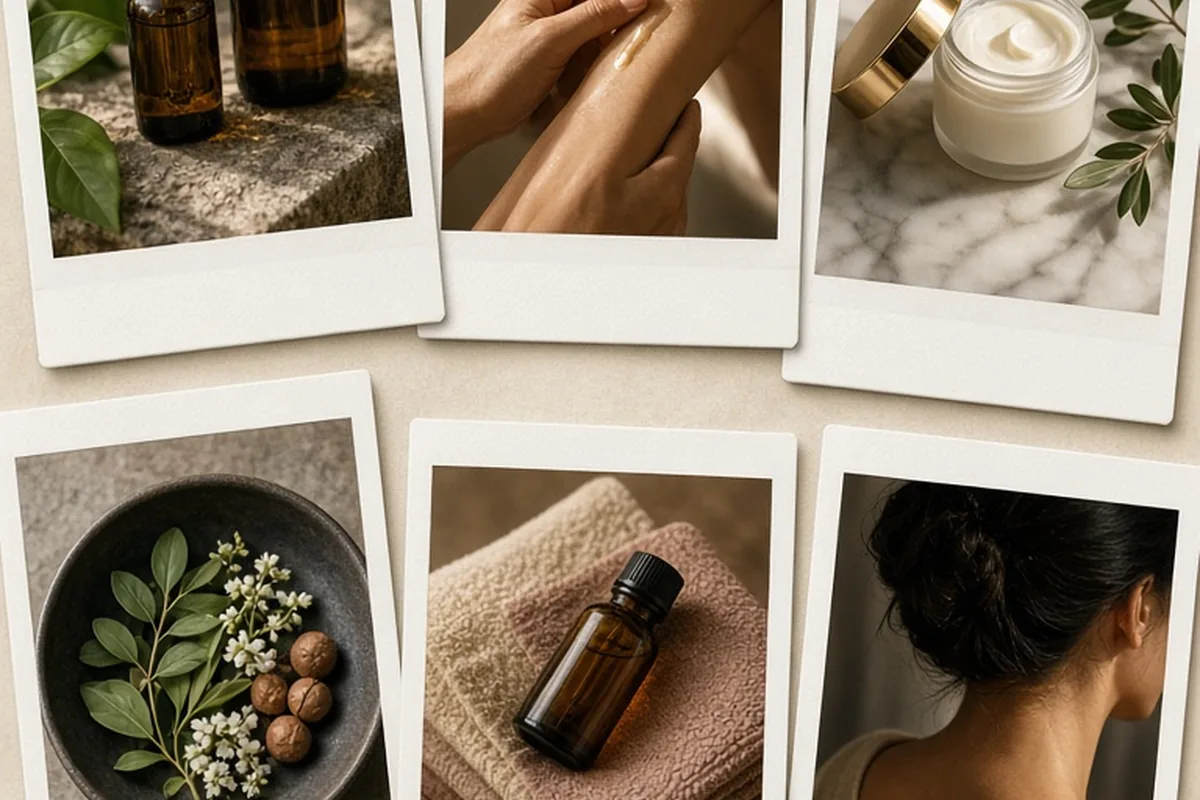
As a standard rule, face oil should go on after your moisturizer. Moisturizers contain water and humectants that hydrate the skin, while facial oils act as emollients and occlusives that lock that hydration inside. Applying oil first forms a lipid barrier that prevents water-based lotions from penetrating, leaving your skin feeling greasy on the surface yet dehydrated underneath.
Navigating skincare steps often feels complicated once multiple textures share the vanity counter. Understanding how facial oils and moisturizing creams interact allows you to build an effective routine that supports your skin barrier without wasting product or causing unnecessary congestion.
The Core Rule of Skincare Density and Absorption
Skincare layering universally relies on the physical properties of water and oil. Standard skincare philosophy suggests applying formulas from thinnest to thickest consistency, which means watery essences, liquid toners, and light serums come first, followed by lotions, creams, and finally botanical or synthetic oils. Because water cannot pass through an intact oil barrier, placing an oil layer directly onto cleansed skin stops any subsequent water-rich product from reaching your skin cells effectively.
Moisturizers typically combine humectants like glycerin or hyaluronic acid with an emulsion of water and light lipids. Their primary task is to deposit hydration into the upper layers of the epidermis. Facial oils, conversely, rarely contain any water at all; they are concentrated lipids designed to soften skin texture and slow down transepidermal water loss. When you place the oil over the moisturizer, it acts like a seal on a container, securing all the water-based moisture underneath for sustained comfort.
- Humectants attract water molecules from the environment and deeper tissue into the outer skin.
- Emollients smooth out rough surface flakes and fill microscopic cracks between skin cells.
- Occlusives create a physical shield across the skin surface to prevent evaporation.
When Applying Face Oil First Might Make Sense
While placing oil last is the standard guidance, specific product formulas and techniques occasionally warrant reversing the order. Exceptionally lightweight dry oils, such as pure plant-derived squalane or cold-pressed rosehip seed oil, feature small molecular profiles that absorb within minutes. If you follow such a light oil with a very heavy, petrolatum-based ointment or a thick cold cream, the dense barrier cream will comfortably seal both the light oil and your natural skin lipids without fighting for absorption.
Another exception occurs during intentional facial massage using tools like a gua sha stone or a facial roller. Applying three to four drops of oil immediately onto damp skin or after an active serum gives the tool necessary glide, preventing friction burns or tissue tugging. Once the massage is finished, you can evaluate your skin; if extra barrier support is needed, a light gel-cream pressed gently over the top can settle comfortably without disturbing the oil layer, provided you pat rather than rub.
The Cocktail Method: Blending Drops Directly Into Cream
If deciding between before or after feels overly tedious, mixing your products together offers a reliable middle ground. Dispensing a normal dime-sized portion of your daily moisturizer into the palm of your hand and blending in one or two drops of face oil creates a freshly made micro-emulsion. This technique enriches a lightweight lotion into a richer barrier balm without requiring extra absorption wait times between steps.
This cocktailing method works especially well during seasonal transitions, such as moving from humid summer weather to brisk autumn air, when your regular cream suddenly feels insufficient. However, you should avoid blending oils into broad-spectrum sunscreens or prescription treatments. Mixing facial oils directly into sunscreen disrupts the uniform film-forming agents that protect skin from ultraviolet rays, leaving patches of your face vulnerable to sun damage.
Tailoring Your Layering Routine to Your Skin Type
Your unique skin behavior should ultimately guide how and where you introduce facial oils alongside your moisturizer. Chronically dry or mature skin types usually thrive with the classic sandwich or sealing method: a hydrating serum, a lipid-rich moisturizer, and a generous coating of nourishing oil like argan, marula, or jojoba pressed over dry areas. This provides immediate relief from tightness and protects against harsh environmental heating or wind.
Oily, congested, or blemish-prone skin requires a more selective strategy. While adding oil to already oily skin might sound counterintuitive, lightweight oils rich in linoleic acid can balance sebum composition. For these skin profiles, use no more than a single drop of oil pressed strictly onto dry perimeter zones like the cheeks and jawline, avoiding the naturally oily T-zone entirely. Alternatively, oily skin types can skip moisturizer at night and use a clarifying oil directly over damp, toner-prepped skin to prevent a heavy, occlusive buildup.
Navigating Morning Sunscreen and Evening Active Ingredients
The time of day changes the rules for using facial oils because daily defense demands different protections than overnight recovery. In morning routines, broad-spectrum sunscreen must remain the outermost functional skincare layer before foundation or powder. Because oils can dissolve the protective chemical and mineral matrices of sunscreens, heavy face oils are best kept out of your morning routine entirely, or limited to half a drop mixed into lotion well before sunblock application.
Evening routines, by contrast, are ideal for generous oil usage because your skin loses more moisture during sleep. When using active ingredients like retinol, retinal, or exfoliating acids, layering requires mindful placement. Applying oil after your retinoid cream seals the active in place, but sensitive skin can also utilize the oil as a buffer underneath potent treatments to reduce initial peeling and irritation, trading a small amount of active potency for greater skin comfort.
How to Spot Layering Mistakes: Pilling, Greasiness, and Dryness
Your skin provides rapid visual and sensory feedback when product order is misaligned. One of the most common signs of incorrect layering is product pilling, where tiny balls of residue form and roll off your face when you apply foundation or touch your skin. Pilling frequently happens when a heavy oil is placed beneath a silicone-heavy cream or a water-based gel, as the incompatible bases repel each other instead of integrating smoothly.
Another telltale warning sign is skin that feels uncomfortably tight and parched underneath a greasy surface sheen midway through the day. This sensation indicates that an oil was applied to dry skin without sufficient underlying water content, or that oil blocked your lotion from penetrating. If this occurs, reset your routine by misting skin with water, applying your humectant lotion first, waiting two minutes, and patting a modest amount of oil on top.
Sequential Morning and Evening Application Schedules
Establishing a consistent rhythm removes guesswork from your daily skincare routine. In the morning, focus on lightweight hydration, antioxidant defense, and reliable sun protection. If your skin is exceptionally dry and requires oil during the day, keep the oil quantity microscopic so it does not interfere with makeup longevity or sunscreen adhesion.
At night, the goal shifts toward repair, replenishing lost lipids, and preventing overnight moisture loss caused by indoor heating or air conditioning. You have far more freedom in the evening to layer rich creams and thicker plant oils, as aesthetic finish and shine are irrelevant while you sleep.
- Morning Order: Gentle cleanser, water-based serum, hydrating moisturizer, one drop of lightweight oil (optional), broad-spectrum sunscreen.
- Evening Order: Double cleanse, exfoliating toner or treatment serum, nourishing night cream, two to three drops of face oil pressed over the entire face and neck.
Illustrative Scenarios
Adjusting Sequence for Winter Dryness
An illustrative scenario involves a person living in a cold climate who noticed persistent flaking around their nose and cheeks despite using both a gel moisturizer and pure squalane oil. Initially, they rubbed three drops of squalane onto dry skin immediately after cleansing, followed by the gel moisturizer. By midday, their skin felt taut and developed visible dry patches. Upon shifting the sequence—applying the water-rich gel moisturizer onto damp skin first, waiting ninety seconds, and then gently pressing two drops of squalane over top—the flaking resolved within three days.
Key point: Oils seal moisture but cannot supply water; applying hydration first allows the lipid layer to lock in moisture rather than locking it out.
Frequently asked questions
Can face oil replace my regular moisturizer completely?
Face oil cannot fully replace a traditional moisturizer because oils only provide lipids, not water or humectants. While an oil keeps moisture from evaporating, your skin still requires hydrating water-based ingredients to stay plump. Skipping moisturizer entirely can eventually leave skin feeling tight and dehydrated underneath.
How many drops of face oil do I actually need to use?
For most skin types, two to three drops of face oil are plenty to cover the full face and neck. Using more than that can overwhelm skin pores, slow down absorption, and leave an uncomfortable greasy film that causes subsequent products or cosmetics to slide off.
How long should I wait between applying moisturizer and face oil?
Waiting roughly one to two minutes allows your moisturizer to absorb slightly into the surface layer before you introduce the oil. The cream should feel settled and tacky rather than wet, which prevents the oil from simply sliding around and diluting the cream's active ingredients.
Can I use face oil if my skin is naturally oily or acne-prone?
Yes, oily skin can benefit from face oils, provided you choose non-comedogenic options rich in linoleic acid, such as rosehip, squalane, or hemp seed oil. Limit application to one drop pressed only onto drier zones, and always apply it after a lightweight, oil-free moisturizer.
Your next step
Inspect your routine tonight, apply your hydrating moisturizer onto slightly damp skin, wait two minutes, and press two drops of oil over your cheeks to see how effectively your skin holds moisture by morning.