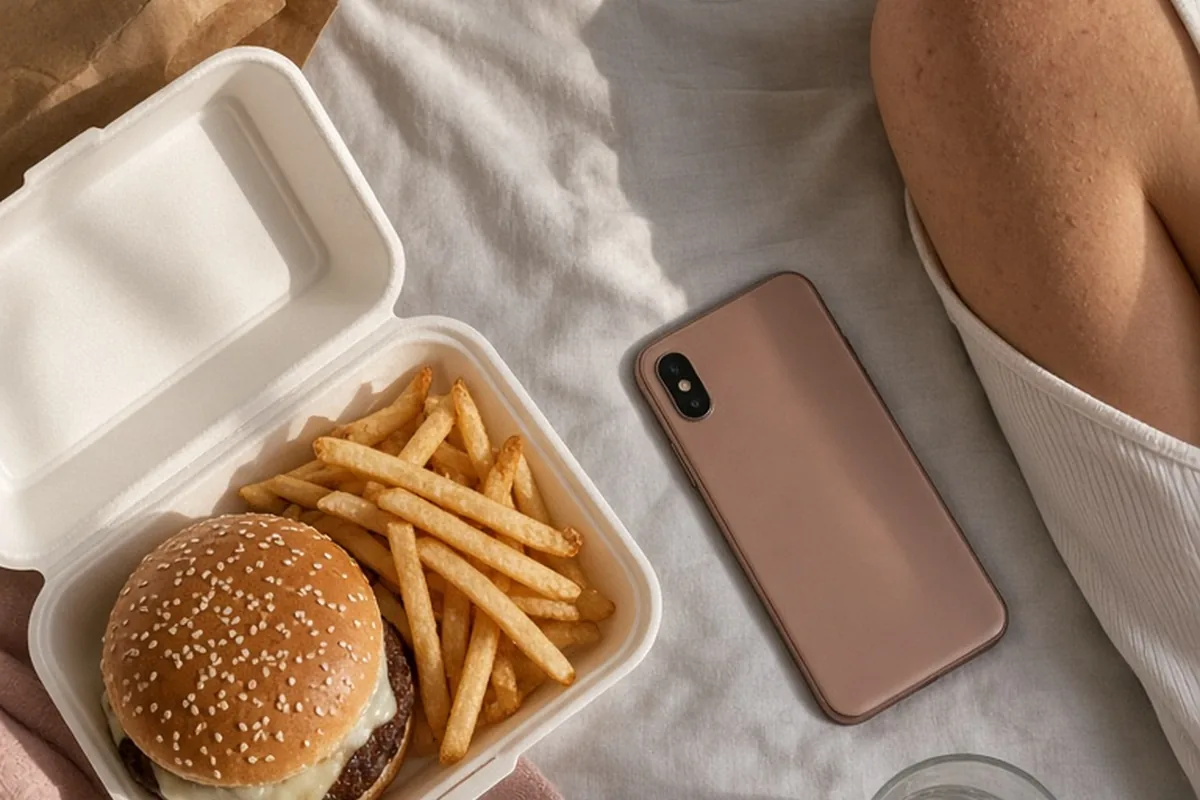
Fast food does not directly cause acne on its own, but regularly consuming items rich in refined carbohydrates, added sugars, and saturated fats can influence internal processes like blood sugar spikes and inflammation. In people prone to breakouts, these metabolic responses can trigger excess oil production and worsen clogged pores. However, genetics, hormones, and baseline skincare routines remain the dominant causes of acne.
Understanding the relationship between convenience dining and skin health helps separate persistent skincare myths from meaningful habits you can actually adjust.
How High-Glycemic Fast Food Ingredients Influence Skin Oil
A standard fast food meal often centers around refined carbohydrates, including white burger buns, seasoned french fries, breaded chicken patties, and large sugary sodas. These foods rank high on the glycemic index, meaning your digestive system breaks them down rapidly into glucose. When your bloodstream experiences a sudden surge in glucose, your pancreas responds by releasing higher amounts of insulin to manage the load. Elevated insulin levels can stimulate downstream hormones, such as insulin-like growth factor 1, which signal your sebaceous glands to produce more natural oils.
When your skin produces an excess of thick sebum, it combines with shedding dead skin cells inside the lining of your pores, creating an environment where normal skin bacteria can multiply rapidly. Over time, this cycle can lead to inflammatory papules, pustules, and persistent blackheads. While a single burger will not instantly result in a breakout the next morning, a sustained dietary pattern heavy in high-glycemic foods can keep systemic inflammation and oil production at elevated baselines. Moderating high-glycemic choices can help reduce these internal fluctuations without requiring you to eliminate convenience foods entirely.
Dietary Grease Versus Skin Sebum
A common misconception is that the physical grease in fried food travels directly from your digestive tract to the surface of your face. In biological terms, your body metabolizes dietary fats into fatty acids and energy; the oil on your french fries does not directly emerge through your facial pores. Breakouts related to greasy foods are driven primarily by systemic metabolic responses and inflammation rather than dietary fat literally migrating to the skin surface.
Physical contact with grease, however, can act as a localized topical irritant. Eating oily finger foods and subsequently touching your chin, cheeks, or mouth can transfer heavy cooking oils, salt residue, and surface bacteria directly onto your face. If you work in a fast food environment or cook with hot oil frequently, airborne aerosolized grease can settle onto exposed skin and physically occlude pores. Distinguishing between internal metabolic triggers and external pore-clogging contact allows you to address hygiene and nutrition as two distinct components of your skincare routine.
Dairy, Shakes, and Hidden Additives in Fast Food
Beyond fried items, fast food menus frequently incorporate dairy-heavy components such as milkshakes, ice cream desserts, cheese slices, and creamy dipping sauces. Dairy products contain naturally occurring hormones and bioactive molecules that some individuals find trigger their acne. Skim and low-fat dairy bases often found in commercial soft-serve machines can also feature higher relative concentrations of whey proteins and sugars, which may provoke a steeper insulin response compared to whole milk alternatives.
Condiments and marinades represent another overlooked contributor to dietary stress on the skin. Barbecue sauces, sweet dressings, and specialty burger spreads often contain significant amounts of high-fructose corn syrup and sodium. While sodium does not cause acne directly, high salt intake can contribute to temporary water retention and skin puffiness, making underlying blemishes appear more prominent. Evaluating the full scope of your meal, rather than focusing solely on the frying oil, provides a more accurate picture of how commercial meals might interact with your skin biology.
Realistic Menu Swaps That Protect Skin Without Total Restriction
Maintaining clear skin does not require complete avoidance of quick-service restaurants or social outings with friends. The most sustainable approach involves making strategic adjustments that buffer the glycemic load of your meal while still allowing you to enjoy dining out. Prioritizing lean proteins, fiber, and unsweetened beverages helps slow down glucose absorption, minimizing the hormonal cascade that drives excess sebum production.
Simple substitutions can make a substantial difference over the course of a regular week. For example, pairing a grilled chicken sandwich with a side salad or sliced fruit instead of large fries provides essential vitamins while reducing refined starch intake. Swapping out a sugary fountain drink for sparkling water, unsweetened iced tea, or regular water prevents rapid blood sugar spikes entirely. By focusing on adding nutrient-dense components rather than practicing rigid deprivation, you support long-term skin health without unnecessary lifestyle stress.
- Choose grilled or baked protein options over heavily breaded and deep-fried cuts.
- Replace standard sweetened sodas and blended shakes with water, seltzer, or unsweetened iced tea.
- Incorporate a fibrous side, such as a side salad, apple slices, or black beans, to moderate glucose absorption.
- Request sauces and sugary dressings on the side so you can control the portion size.
Why Genetics and Hormones Outweigh Diet for Many People
It is common to see individuals who eat fast food daily without developing a single blemish, while others experience breakouts despite maintaining a clean, whole-food diet. This discrepancy highlights the foundational role of genetics and hormonal balance in dermatological health. Your genes dictate your baseline pore size, natural sebum viscosity, immune response to skin bacteria, and the sensitivity of your androgen receptors.
When androgen hormones fluctuate during puberty, menstrual cycles, or periods of chronic psychological stress, they prompt the oil glands to expand and produce heavier oil regardless of your recent meals. Diet acts primarily as an amplifier or moderating factor within your genetically predetermined framework. Viewing nutrition as one supportive tool rather than the sole cause of acne prevents self-blame and helps you set realistic expectations for dietary adjustments.
How to Track Dietary Triggers Without Obsessive Habits
Because individual sensitivities vary widely, identifying whether specific fast food items affect your skin requires an observant, low-stress tracking method. Breakouts caused by systemic inflammation or dietary shifts typically do not appear instantly; they generally take anywhere from twenty-four to seventy-two hours to manifest as visible congestion or inflammation. Recording your meals alongside noticeable skin changes over a three-to-four-week window can reveal genuine personal correlations.
When keeping a skin and meal journal, focus on broad ingredient patterns rather than micromanaging individual calories. Note whether flare-ups consistently follow large dairy-heavy meals, high-sugar beverages, or specific deep-fried options. If you notice a consistent pattern, try substituting that single element for two weeks to see if your skin calms down. Avoid cutting out multiple food groups simultaneously, as extreme restriction can increase stress hormones that worsen acne independently.
Supporting Your Skin Barrier Alongside Dietary Adjustments
Dietary modifications deliver the best results when paired with a consistent, evidence-based topical skincare routine. If your skin is already prone to excess oil and clogged pores, relying on dietary changes alone is rarely sufficient to clear existing blemishes. A gentle routine designed to clear pore congestion, reduce surface bacteria, and maintain barrier hydration ensures your skin remains resilient against internal and environmental stressors.
Incorporate a mild, pH-balanced cleanser twice daily to remove surface debris and environmental oils without stripping the skin of essential moisture. Applying targeted topical actives, such as salicylic acid to dissolve pore-clogging debris or a gentle retinoid to encourage cellular turnover, addresses acne at the follicular level. Always finish with a lightweight, non-comedogenic moisturizer and broad-spectrum sunscreen to keep the moisture barrier intact and prevent post-inflammatory hyperpigmentation.
Illustrative Scenarios
Illustrative Scenario: Identifying Menu Triggers
An office worker who ate fast food lunch combinations three times a week noticed persistent jawline breakouts by Friday afternoons. Suspecting that deep-fried foods were the sole culprit, they initially attempted to avoid all restaurant meals, which proved difficult to sustain during busy workweeks. Instead, they began tracking meals and realized that every fast food visit included a large sugary soda and a milkshake dessert. They adjusted their routine by switching to unsweetened iced tea, selecting grilled chicken sandwiches, and keeping standard fries as an occasional side.
Key point: Systematic observation often reveals that liquid sugars and high-glycemic beverages contribute more to hormonal spikes than the fried items themselves, making targeted swaps more effective than unsustainable total restriction.
Frequently asked questions
How quickly does fast food trigger a breakout after eating it?
Skin cells and oil glands respond to dietary inflammation gradually, meaning a blemish usually takes between one to three days to form after a trigger meal. If a pimple appears just a few hours after eating, it was likely already developing beneath the surface. True dietary influences reflect cumulative habits rather than instantaneous reactions.
Does drinking water immediately after fast food prevent pimples?
Drinking water supports overall hydration, kidney function, and digestion, but it cannot neutralize an insulin spike or prevent excess oil production caused by high-glycemic foods. Hydration is beneficial for general skin resilience, yet it works alongside balanced nutrition rather than acting as an immediate remedy for dietary triggers.
Can I eat fast food if I use topical acne medication?
Topical acne treatments like retinoids, benzoyl peroxide, and salicylic acid actively treat and prevent clogged pores regardless of your diet. While medications handle follicular turnover on the surface, keeping high-glycemic fast food to moderate levels helps minimize internal triggers, allowing your topical routine to work more effectively.
Your next step
Keep a simple two-week log of your meals and skin changes, experimenting with swapping out high-sugar drinks and refined sides for water and fibrous options to observe your skin's personal response.