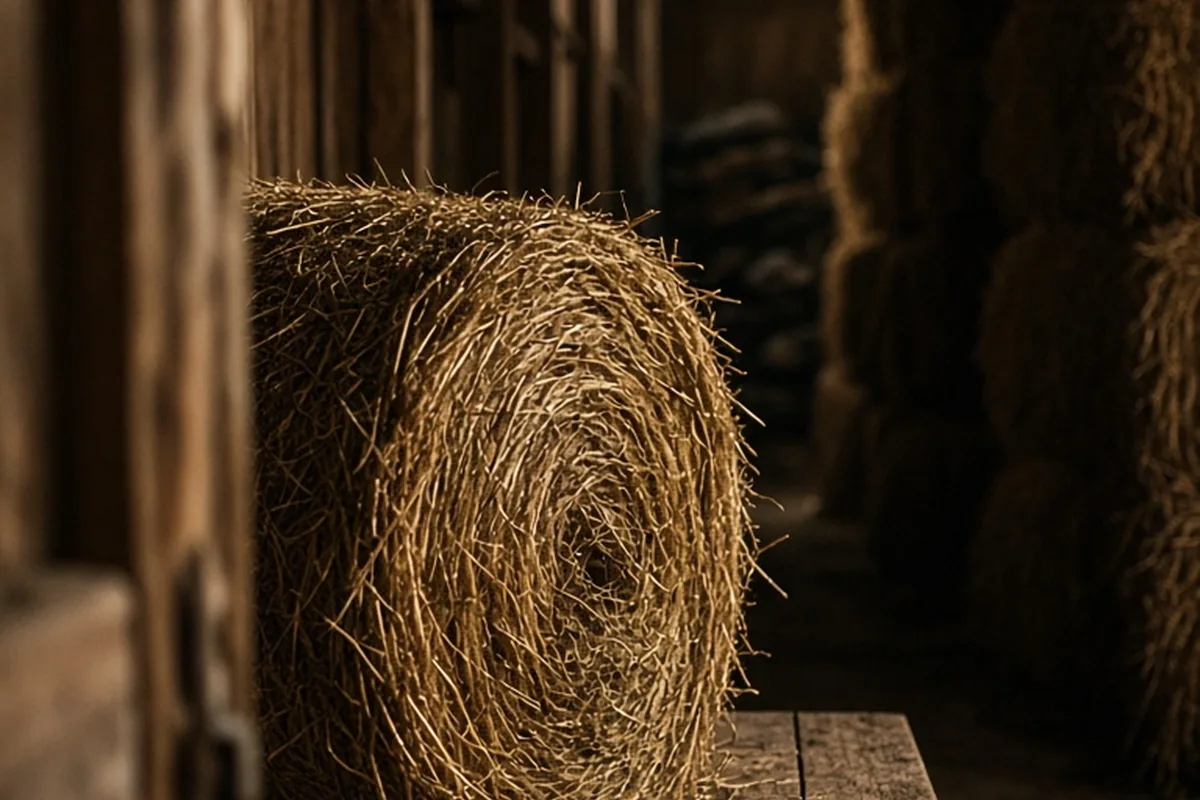
Hay moisture does not typically generate new water internally, but moisture readings can rise during the initial curing phase. As stems release trapped water toward the bale surface in a process called sweating, internal humidity climbs. Hay can also absorb ambient humidity or rain from the surrounding air. If moisture levels remain above safe thresholds, microbial activity can generate dangerous heat, ruin nutritional quality, and ignite barn fires.
Bringing in a fresh cutting of forage is rewarding, but managing bales during their first few weeks in storage requires careful attention to internal moisture and temperature changes.
Understanding the Curing Process and Bale Sweating
When grass or legume forage is cut in the field, thin leaf tissue naturally dries at a much faster rate than thick, fibrous plant stems. Even when hay rakes clean and feels crisp to the touch on the outside, the interior stems often retain residual cellular moisture. Once compressed into tightly packed bales, this trapped stem sap begins migrating outward toward the drier surfaces of the plant matter. This standard physiological equilibration is what growers commonly refer to as sweating, and it frequently causes probe readings to rise by two to four percentage points during the first week of storage.
During this early sweating period, lingering plant enzymes and epiphytic microflora consume simple carbohydrates in the presence of oxygen, generating small amounts of water vapor, carbon dioxide, and modest heat. Under good storage conditions with ample airflow, this moisture evaporates smoothly into the surrounding air, allowing the bale to settle into a stable state. However, if the initial baling moisture was too high or ventilation around the stack is inadequate, the released vapor cannot escape, creating a humid microclimate inside the bale core that accelerates biological activity.
Environmental Factors That Rehydrate Baled Hay
Beyond internal stem sweating, baled hay is naturally hygroscopic, meaning it continuously absorbs and releases moisture to match the relative humidity of its environment. Storing dry bales in a poorly ventilated barn during prolonged periods of damp, foggy, or rainy weather can cause the outer several inches of the bale to pull moisture directly from the air. Similarly, stacking bales directly against raw concrete floors or bare ground pulls moisture upward via capillary action, ruining bottom tiers with soggy, mold-prone conditions.
Improper covering practices also contribute to external rehydration. Wrapping standard non-breathable plastic tarps tightly around fresh, warm bales creates a greenhouse effect where evaporating moisture hits the cool underside of the plastic, condenses into heavy liquid droplets, and drips back onto the top of the stack. Distinguishing between internal stem sweating and external atmospheric rehydration is essential, as the former requires drier baling practices while the latter calls for better building airflow and ground vapor barriers.
The Biological and Fire Risks of Excess Moisture
When moisture levels inside a stack remain elevated above safe limits, fungal organisms such as Aspergillus and Penicillium multiply rapidly throughout the forage. As these mold colonies grow, they metabolize soluble sugars, starches, and digestible proteins, drastically reducing the overall feed value and crude protein content of the crop. Livestock fed dusty, moldy hay face significant health hazards, ranging from chronic respiratory irritation and heaves in horses to mycotic abortions and reduced milk production in ruminants.
The most severe risk associated with high-moisture hay is spontaneous combustion driven by microbial progression. Mesophilic bacteria initiate heat generation between 80°F and 130°F; if moisture remains trapped, heat-tolerant thermophilic bacteria take over, pushing core temperatures above 140°F. Once the hay passes 150°F to 160°F, purely chemical exothermic reactions take over, generating flammable gases and charring the interior until any sudden influx of oxygen causes the bale to burst into flames.
Safe Moisture Thresholds by Bale Size and Package Type
Determining whether hay is safe to store depends heavily on the size, shape, and physical density of the bale package. Small two-string square bales possess a high surface-area-to-volume ratio and relatively loose compaction, which allows moisture to dissipate more easily. Consequently, small squares can typically be baled safely at moisture levels between 16 and 18 percent, with some clean grass hays tolerating up to 20 percent if stacked loosely in a well-ventilated structure.
Large round bales and high-density commercial square bales present a much narrower margin of error because their dense mass severely restricts internal vapor movement. Large round bales stored inside should not exceed 15 percent moisture at baling, while large square bales require an even lower threshold of 12 to 14 percent. Attempting to bale large high-density packages at moisture levels suitable for small squares almost invariably leads to severe internal heat buildup, mold damage, and potential fire danger.
Monitoring Temperature and Moisture During Storage
Relying on hand testing or surface inspection is insufficient because the exterior of a bale can feel perfectly dry while internal fermentation generates dangerous temperatures deep inside. Using a dedicated electronic moisture probe and a long-stem dial thermometer is the most reliable way to assess bale condition during the critical initial curing window. Insert the testing probe horizontally into the side of the bale, pushing deep toward the center where heat and trapped moisture concentrate.
Establish a consistent daily monitoring routine across multiple points in the stack for at least three to four weeks following harvest. A normal, stable curing curve may show temperatures rising to 105°F or 110°F during the first few days before steadily trending downward toward ambient room temperature. If internal readings climb above 120°F, or if you detect a distinct sweet caramel odor or pungent tobacco smell, the stack requires frequent temperature checks and active intervention planning.
Ventilation and Stacking Strategies to Encourage Drying
How you stack bales inside storage facilities directly impacts their ability to shed excess moisture safely. Always build the base layer on wooden shipping pallets or a layer of dry old straw over a durable vapor barrier to isolate the forage from ground moisture. When stacking small square bales that were baled near the upper moisture limit, placing them on their cut edges rather than flat on their sides allows moisture to travel upward more freely along the orientation of the stems.
For large indoor stacks, incorporating ventilation gaps or building a central chimney space encourages natural convective airflow, drawing warm, humid air upward and out through high barn vents. Ensure there is at least two to three feet of open air space between the top tier of bales and the roof trusses to prevent moisture condensation. Utilizing high-volume circulation fans during the first two weeks of storage can also help move damp air out of the building during muggy weather.
Emergency Action Steps for Overheating Stacks
Understanding temperature thresholds enables you to act before an overheating situation turns into an unmanageable barn fire. At temperatures between 130°F and 140°F, check probe readings every four to six hours, clear surrounding areas of combustible materials, and prepare machinery to move bales if temperatures do not level off. If readings reach between 150°F and 175°F, internal charring and smoldering pockets may already exist, meaning that moving bales without professional support can introduce oxygen and cause an instant flash fire.
Once a stack reaches 175°F or higher, notify your local fire department immediately before touching the bales. Emergency personnel can establish charged water lines around the structure while equipment operators carefully pull the hot bales out of the building. Always relocate overheated bales to an open dirt field away from structures and dry grasses, spreading them apart individually so they can cool down safely.
Illustrative Scenarios
Illustrative Scenario: Managing a Humid Second Cutting
A small farm baled second-cutting orchard grass in small square bales at 18 percent moisture just ahead of an incoming rainstorm. During the first four days in the barn, daily probe checks showed core temperatures climbing from 85°F to 122°F as moisture readings temporarily spiked to 21 percent from stem sweating. Instead of leaving the tight stack intact, the grower restacked the warm tier onto wooden pallets with generous air gaps between rows and directed barn fans across the floor.
Key point: Daily probe monitoring identified the heat surge early, and improving passive airflow allowed the trapped vapor to dissipate safely, stabilizing core temperatures within a week.
Frequently asked questions
How long does hay continue to sweat after baling?
The initial sweating and curing process typically lasts between one and three weeks, depending on ambient relative humidity, forage density, and natural stem thickness. After roughly three weeks, internal moisture levels and core temperatures should stabilize to match ambient barn conditions.
Is hay with a sweet tobacco smell safe to feed?
A sweet, caramel, or tobacco-like aroma indicates that the hay experienced internal heating that caramelized some of its natural sugars. While livestock may find this forage palatable, the heating process often binds proteins and degrades overall digestible nutrients, making it lower in feed quality.
Can round bales be safely stored outside without covers?
Round bales can be stored outdoors if placed on well-draining gravel or pallets in sunny, breezy areas with their rounded sides aligned north to south. However, unprotected bales will inevitably suffer a outer weathering layer of two to four inches, resulting in some nutritional and dry-matter loss.
Your next step
Invest in a long-stem moisture and temperature probe, and check the core of your new bales daily for the first three weeks of storage to catch heat spikes before they compromise quality or safety.