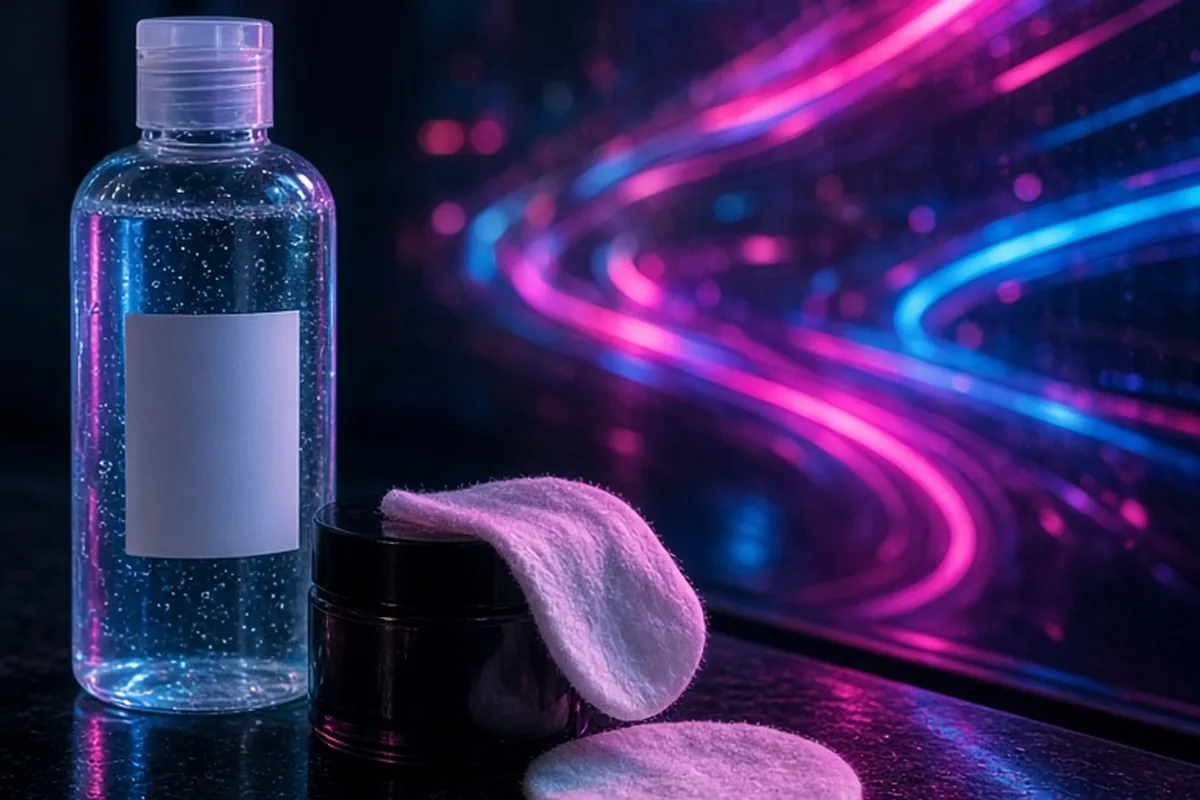
Micellar water does not inherently cause acne, but leaving its residue on your face can trigger breakouts. Formulated with surfactants that suspend oil and cosmetic pigment, micellar cleansing solutions can leave behind a lingering film if you do not rinse. For congested or acne-prone skin types, these leftover cleansing agents can trap sebum, dead skin cells, and debris inside pores, leading to irritation, closed comedones, and inflamed pimples.
Micellar water has earned a permanent place on bathroom vanities worldwide because of its convenience, lightweight feel, and reputation for gentle makeup removal. Originally developed in France as a practical response to harsh, mineral-heavy tap water, it promised a swift, no-rinse way to dissolve cosmetics and daily grime. However, many people who introduce this gentle cleansing liquid into their daily skincare regimen soon notice an unexpected emergence of tiny bumps, blackheads, or inflammatory blemishes.
How Micellar Water Cleanses and Why It Can Trap Impurities
To understand why micellar water might contribute to acne, it helps to examine how the chemistry of micelles works on the surface of your skin. Micelles are microscopic spherical clusters formed by surfactant molecules. Each surfactant molecule possesses a dual nature: a hydrophilic head that is attracted to water and a lipophilic tail that binds to oils, sebum, and cosmetic waxes. When you saturate a cotton pad with the fluid, the water-loving heads cling to the pad's fibers while the oil-seeking tails reach outward. As you sweep the pad across your face, these lipid-attracting tails grab onto makeup, excess sebum, and environmental pollution, lifting them away from the epidermis.
The problem arises from the widespread marketing claim that micellar water requires no rinsing after application. While the cotton pad absorbs a substantial portion of the dissolved debris, it rarely lifts every molecule of the surfactant formula or the impurities suspended within it. When the water component of the formula naturally evaporates from your face, it deposits a thin, invisible layer of concentrated surfactants, dissolved makeup pigments, and emulsified sebum directly over your pores. Over consecutive days of skipping a thorough rinse, this dried surfactant film can impair natural desquamation, block pore openings, and create an oxygen-deprived environment where acne-causing bacteria multiply.
Formulation Ingredients That Can Trigger Pore Congestion
Not every bottle of micellar water shares the same chemical profile, and specific formulations pose distinct risks for blemish-prone skin. The primary cleansing agents in standard micellar solutions are synthetic surfactants such as poloxamers, polyethylene glycols, or polysorbates. While dermatologists often consider these ingredients relatively mild compared to harsh sulfates, individual skin sensitivities vary widely. On sensitive or reactive skin barriers, residual surfactants can produce low-grade irritation that prompts the sebaceous glands to overcompensate by producing more oil, exacerbating existing breakout tendencies.
Bi-phase micellar waters—easily identified by their dual-layered appearance that requires shaking before use—present a heightened risk for acne-prone individuals. These products typically combine a surfactant water layer with an oil or silicone layer, such as cyclopentasiloxane or mineral oil, designed to break down waterproof mascara and long-wearing foundation. If you do not follow a bi-phase formula with a water-based wash, those heavy conditioning oils and slip agents stay behind on your skin. Similarly, formulas enriched with added fragrances, plant extracts, or heavy humectants like high-dose glycols can congest delicate pores when allowed to sit on the skin overnight.
Mechanical Friction and Cleansing Pad Habits That Worsen Breakouts
The liquid formula is only half of the equation; the physical tool and technique you use to apply micellar water can also provoke inflammatory lesions. Using a dry or insufficiently saturated cotton pad forces you to drag the material repeatedly across your skin to remove stubborn makeup. This repetitive tugging creates mechanical friction, which can disrupt the skin's moisture barrier and cause micro-tears in the delicate surface tissue. Barrier disruption leads to localized inflammation, which frequently manifests as red, tender bumps that closely resemble or trigger acne mechanica.
Application hygiene also plays a critical role in your skin's health. Some people attempt to save supplies by using a single cotton pad for their entire face, inadvertently dragging concentrated mascara, liquid foundation, and sebum back across previously cleaned zones like the cheeks and forehead. Furthermore, the growing popularity of reusable cloth pads introduces laundry-related breakout triggers. If reusable rounds are washed with heavily fragranced fabric softeners or are not dried completely before storage, they can harbor bacterial growth and detergent residues that transfer directly to your facial pores during your evening routine.
Why Rinsing and Double Cleansing Protect Acne-Prone Skin
The most effective way to prevent micellar water from contributing to acne is to reclassify it as the initial step of a two-part double cleansing ritual rather than a complete, standalone wash. Double cleansing utilizes an initial oil- or surfactant-based cleanser to dissolve surface cosmetics, sunscreen filters, and excess surface lipids, followed immediately by a gentle water-based wash to rinse everything clean. By viewing micellar water as a pre-cleanser, you enjoy its effortless makeup-dissolving abilities without suffering the consequences of residual surfactant films.
After saturating a soft cotton pad and lifting away the initial layer of cosmetics, thoroughly splash your face with lukewarm water. Following up with a mild, foaming or gel cleanser helps lift both the micellar fluid and any stubborn remnants of sunscreen or makeup left clinging to the pores. If you find yourself in a scenario without easy access to a sink—such as while camping, traveling on an airplane, or refreshing after an intense workout—carrying a facial mist or thermal water spray allows you to douse your face and gently pat away the surfactant residue with a clean microfiber cloth.
Differentiating Between Cleanser Congestion and Skin Purging
When individuals notice an increase in blemishes shortly after introducing micellar water, they sometimes mistakenly assume their skin is simply undergoing a temporary adjustment phase known as purging. However, true skin purging only occurs when an active ingredient accelerates the natural rate of cellular turnover, such as prescription retinoids, salicylic acid, glycolic acid, or other chemical exfoliants. Because standard micellar waters do not contain cell-accelerating actives, any sudden rise in blemishes is a direct reaction to pore blockage, ingredient sensitivity, or barrier distress rather than a beneficial detoxifying process.
To identify whether your micellar water is responsible for recent flare-ups, pay attention to the location and morphology of the blemishes. Breakouts induced by cleansing residues commonly appear as small, flesh-colored bumps known as closed comedones, along with localized clusters of whiteheads. These lesions frequently cluster around the perimeter of the face, such as along the hairline, jawline, temples, and around the nostrils, where people commonly miss or insufficiently swipe the skin. If these bumps develop in areas where you rarely experienced blemishes prior to using the product, the cleansing water is very likely the contributing factor.
Selecting the Right Micellar Formula for Blemish-Prone Complexions
Choosing an appropriate formulation can dramatically reduce your likelihood of developing clogged pores, even if you occasionally find yourself unable to rinse immediately. When browsing skincare aisles, bypass formulas labeled for intense hydration, ultra-nourishing care, or waterproof makeup removal, as these typically contain higher concentrations of oils and conditioning esters. Instead, look for options specifically formulated for oily, sensitive, or blemish-prone complexions, which feature minimal ingredient lists and non-comedogenic surfactant blends.
Take a close look at the ingredient deck to spot beneficial additions and potential irritants. Formulations that include zinc PCA, niacinamide, or panthenol can offer soothing and mild sebum-regulating benefits while you cleanse. Conversely, avoid products that list synthetic perfumes, denatured alcohol, essential oils, or heavy botanical extracts near the top of the label, as these additives introduce unnecessary irritation risks for already inflamed or congested skin. A simple, fragrance-free formula that rinses cleanly with lukewarm water represents the safest choice for maintaining clear pores.
A Step-by-Step Cleansing Routine to Prevent Clogged Pores
Adopting a mindful technique ensures you gain the benefits of micellar technology without compromising skin clarity. Begin by generously soaking a high-quality cotton pad with micellar water until it feels damp throughout; a partially dry pad increases surface drag and fails to emulsify makeup effectively. Instead of aggressively scrubbing across your face, press the saturated pad gently against your skin for ten to fifteen seconds over areas with heavy makeup, such as the eyelids or foundation-covered cheeks. This dwell time allows the micellar structures to break down pigment and oils naturally without abrasive rubbing.
Once the cosmetics have softened, sweep the pad outward across your skin in smooth, single-direction strokes, flipping the pad over to utilize the clean reverse side. Repeat this process with a fresh pad until it lifts no visible residue. Immediately transition to the rinsing phase by splashing your face generously with lukewarm water to dislodge loosened surfactants. Conclude your cleansing session with a nickel-sized amount of a gentle, pH-balanced water cleanser, massage it across your face for thirty seconds, rinse thoroughly, and pat your skin dry with a clean towel before applying your serums and moisturizers.
Illustrative Scenarios
Adjusting Cleansing Habits to Clear Persistent Forehead Bumps
An illustrative composite case involves a young professional who began using a popular no-rinse micellar water as her sole evening facial cleanser to streamline her bedtime routine. Over several weeks, she noticed a uniform cluster of tiny, stubborn whiteheads across her forehead and along her temples, despite not changing her daily makeup or moisturizer. After learning that surfactant residue can remain on the skin and trap daily oils, she adjusted her routine to thoroughly rinse her face with warm water and follow with a lightweight foaming gel cleanser immediately after using the micellar pad.
Key point: Treating micellar water as a first-step makeup dissolver rather than a complete rinse-free cleanser prevents surface residues from trapping oils and triggering closed comedones.
Frequently asked questions
Can I leave micellar water on my face overnight if I do not wear makeup?
Leaving micellar water on your face overnight is not recommended, even if you spent the day barefaced. The formula still deposits surfactants that mix with your natural overnight sebum production, which can clog pores and cause morning congestion. Rinsing your face with water takes only seconds and preserves your skin barrier.
Is micellar water better or worse for acne than traditional cleansing oils?
Neither product is universally better, as both serve as effective first-step cleansers when followed by water. Micellar water is often lighter and less occlusive than heavy botanical oils, but cleansing oils emulsify and rinse away with water more completely than no-rinse micellar solutions. Your individual pore sensitivity and personal cleansing preference should determine which tool you select.
Can micellar water cause fungal acne or folliculitis?
Certain micellar waters can exacerbate fungal acne (Malassezia folliculitis) if they contain specific fatty acids, oils, or polysorbates that feed yeast species on the skin. If you are prone to fungal breakouts, check your product against ingredient databases to ensure it is free from lipid-dense triggers and always rinse thoroughly.
Your next step
Inspect your current micellar water bottle tonight, check the label for heavy oils or fragrances, and commit to thoroughly rinsing your face with water after every application to keep your pores clear.