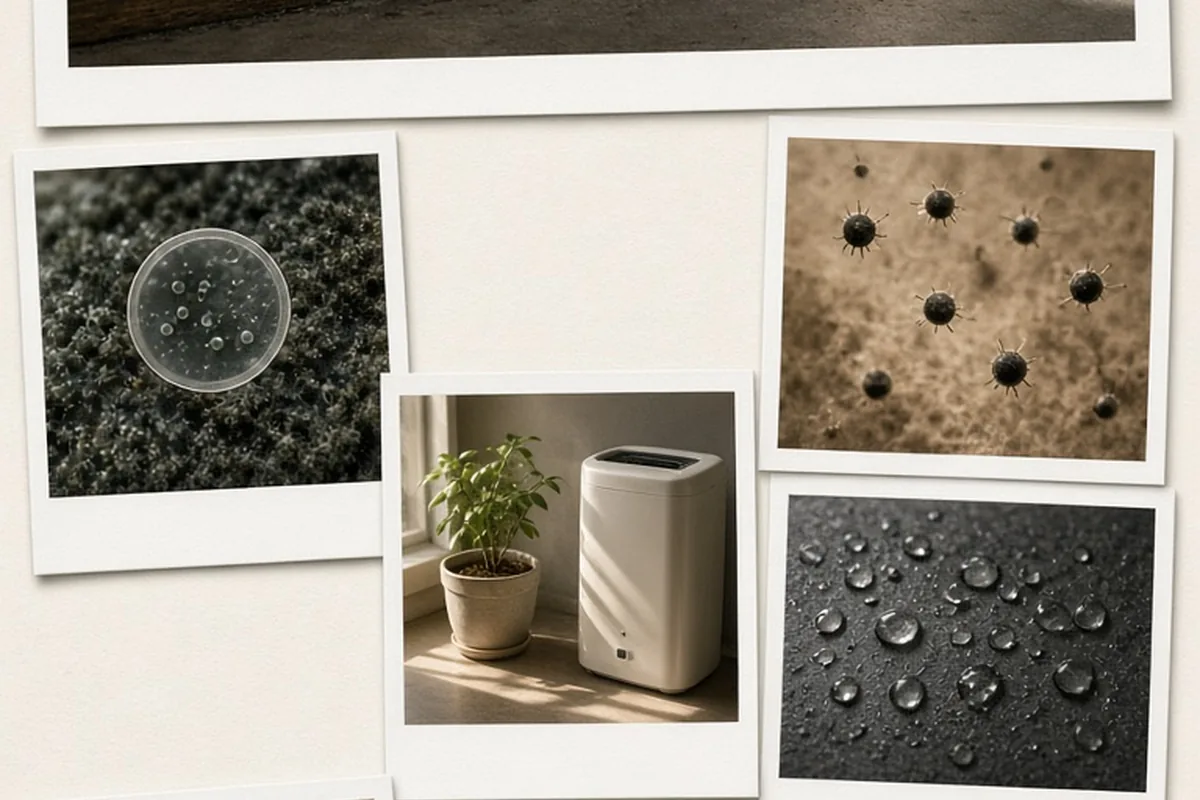
Mold cannot continue to grow, multiply, or colonize new surfaces without moisture. Fungi require water to feed and produce new cellular structures. However, lack of moisture does not kill existing mold. Instead, mold enters a dormant state where viable spores can survive indefinitely in dry conditions. As soon as humidity levels rise or moisture returns, the dormant mold reactivates and resumes active growth.
Discovering a patch of dark discoloration on a baseboard, basement framing, or drywall often leads homeowners to wonder whether simply running a dehumidifier or waiting for an area to dry out will solve the problem. Understanding the biological difference between active fungal colonization and spore dormancy is essential for making practical, cost-effective decisions about home maintenance and indoor air cleanliness.
How Fungal Growth Depends on Environmental Moisture
Mold is a living organism belonging to the kingdom Fungi, and like all living things, it relies on water to perform basic metabolic functions. For mold to feed, its microscopic filament networks, called hyphae, must release digestive enzymes onto organic materials like wood, paper, drywall backing, or carpet fibers. These enzymes break down complex carbohydrates into simple nutrients that the mold can absorb. Without available moisture, this biochemical process halts entirely because enzymes cannot dissolve nutrients in a bone-dry environment.
Moisture availability in building materials is measured either by relative humidity in the air or by water activity within the substrate itself. When indoor relative humidity drops below fifty percent, the vast majority of common indoor mold species lose access to the free moisture necessary for cell division and expansion. In this dry state, the organism ceases producing new hyphae and stops extending its colony across your walls or floors. For example, if a small plumbing leak under a kitchen sink is repaired and the wood floor dries thoroughly, the visual boundary of the existing mold patch will stop expanding across the cabinet base.
The Mechanism of Spore Dormancy in Dry Environments
While drying out a surface successfully stops mold from spreading, it does not destroy the mold that is already present. Mold species reproduce and safeguard their survival by generating millions of microscopic spores equipped with thick, protective cell walls. These cell walls act as resilient armor against dehydration, temperature fluctuations, and extended periods of drought. When the ambient moisture disappears, the active fungal colony desiccates, but the spores transition into a protective dormant state rather than dying.
In this dormant phase, mold spores can remain viable for months or even decades while resting on surfaces, within wall cavities, or inside soft furnishings. The cellular structure retains its genetic integrity and metabolic machinery, waiting for favorable conditions to reappear. A common trade-off of this dehydration process is that dry mold becomes brittle and friable. When a dry mold colony is disturbed by airflow, sweeping, or foot traffic, it shatters into fine particulate dust far more easily than moist, sticky mold, dispersing millions of airborne spores throughout the living area.
Why Inactive Mold Still Poses Practical Problems
Many people assume that once a mold patch is dry and no longer growing, it is completely harmless. However, inactive mold retains the structural proteins, cell wall components like beta-glucans, and lingering mycotoxins that were produced while the colony was alive. These biological compounds do not vanish simply because the moisture has evaporated. When brittle, dormant mold particles become airborne, they can circulate through heating and cooling systems and settle on everyday surfaces across the house.
Inhaling or contacting high concentrations of dormant mold fragments can cause nasal congestion, eye irritation, coughing, or skin sensitivity in susceptible individuals. For example, moving cardboard storage boxes that were previously exposed to dampness in a garage into an occupied bedroom often releases musty odors and fine dust that provoke respiratory discomfort, even if the boxes have been completely dry for months. Treating dried mold as inert debris can therefore lead to unexpected indoor air quality issues during home renovations or routine cleaning.
Material Porosity and the Limits of Drying Out a Room
The effectiveness of moisture control depends heavily on whether the affected material is porous, semi-porous, or non-porous. On non-porous surfaces like glazed ceramic tile, stainless steel, or glass, mold cannot penetrate beneath the surface. It feeds only on surface films of organic dust, skin cells, or soap residue. Once these hard surfaces dry, stopping growth, you can wash and sanitize them thoroughly, leaving behind a clean, spore-free finish without having to replace structural elements.
In contrast, porous materials like drywall, carpet padding, ceiling tiles, and fiberglass insulation allow mold hyphae to branch deep inside the material matrix. Even if you completely dry out a water-damaged wall with commercial air movers and dehumidifiers, the embedded fungal roots and dormant spores remain trapped within the core of the drywall. If the paper backing has sustained extensive colonization, no amount of dry air will remove the embedded biomass. In these scenarios, physical removal and replacement of the porous material is the only permanent solution.
Environmental Triggers That Wake Up Dormant Spores
Dormant mold spores require only a brief window of elevated moisture to reactivate and resume active colonization. Most household mold species can exit dormancy and begin germinating within twenty-four to forty-eight hours of being re-exposed to high humidity or liquid water. You do not need a major pipe burst or roof failure for this reactivation to happen; subtle changes in indoor microclimates provide sufficient moisture for spores to flourish again.
Common reactivation triggers include seasonal shifts, uninsulated cold spots, and everyday domestic activities. For instance, an uninsulated basement wall might stay dry and dormant during cold, dry winter months, only to break out in active fuzzy growth during humid summer weather when warm outdoor air meets the cool concrete. Similarly, repeated high humidity from unventilated showers or cooking steam can easily supply the moisture dormant spores on a bathroom ceiling need to resume spreading.
- Sustained indoor relative humidity rising above fifty-five to sixty percent
- Condensation forming along poorly insulated exterior walls, window sills, or cold-water pipes
- Intermittent micro-leaks behind appliances like dishwashers and washing machines
- Inadequate ventilation trapping steam in laundry rooms, kitchens, and bathrooms
Practical Cleaning Methods for Dry and Inactive Mold
Because dry mold breaks apart into airborne dust when scrubbed, cleaning it requires a controlled approach that minimizes spore dispersal. Never use a standard household vacuum or a dry brush on a visible mold colony, as traditional vacuum exhaust filters allow microscopic spores to pass directly through and scatter into your living areas. Instead, approach remediation with containment, damp-cleaning techniques, and proper personal protection.
Begin by isolating the area if the patch is larger than a small spot, closing interior doors and turning off central heating or cooling fans to prevent air movement. Wear a snug-fitting N95 respirator, safety goggles, and non-porous gloves. Lightly mist the surface with water or a mild detergent solution to suppress dust before wiping down non-porous surfaces with disposable towels. After cleaning, ensure the area is dried promptly, and run a vacuum equipped with a true HEPA filter across nearby hard flooring to collect any settled debris.
Illustrative Scenarios
Addressing Dormant Mold on Finished Attic Framing
A homeowner discovered dry, gray discoloration along the plywood roof sheathing inside an attic storage space during winter. A roof leak had been professionally repaired two years earlier, leaving the wood completely dry to the touch, so the homeowner assumed the mold was permanently neutralized. When summer brought sustained eighty-percent outdoor humidity, the attic air warmed, and the dormant spores rapidly produced visible dark patches accompanied by a sharp, musty odor across the upper floor.
Key point: Eliminating the original water source stops mold expansion temporarily, but dormant spores embedded in structural wood remain vulnerable to seasonal humidity. Long-term resolution requires physically cleaning or encapsulating the wood surface and maintaining attic ventilation to keep ambient moisture consistently low.
Frequently asked questions
Does direct sunlight kill dormant mold spores on household items?
Direct sunlight provides ultraviolet radiation and heat that can reduce the viability of surface spores on textiles and outdoor items over several hours. However, sunlight only affects the exposed exterior surface and cannot reach spores embedded deep inside porous materials like cushions or thick wood. It is a helpful supplemental drying step, but it should not be relied upon as a standalone remediation method.
Can you safely paint over dry mold to seal it into the wall?
Painting directly over dry mold is not recommended because paint will not adhere properly to powdery fungal residues, causing it to bubble and peel over time. Furthermore, standard paint does not destroy the underlying spores, which can grow through the new paint layer if moisture or condensation develops behind the wall. Always clean and dry the surface thoroughly, or replace damaged drywall, before applying a dedicated stain-blocking primer and paint.
How long can mold spores survive in a dry room without water?
Mold spores can survive in a dry state for several months to many years depending on the specific species and ambient temperature. Their rigid cell walls prevent total cellular collapse, allowing them to remain completely dormant until relative humidity rises. Because time alone will not eliminate viable spores, physical removal is necessary to ensure they do not reactivate.
Your next step
Inspect your home with a digital hygrometer to ensure indoor humidity stays below fifty percent, then use damp-wiping methods with a true HEPA vacuum to clean any existing dry patches rather than relying on dry air alone to solve the problem.