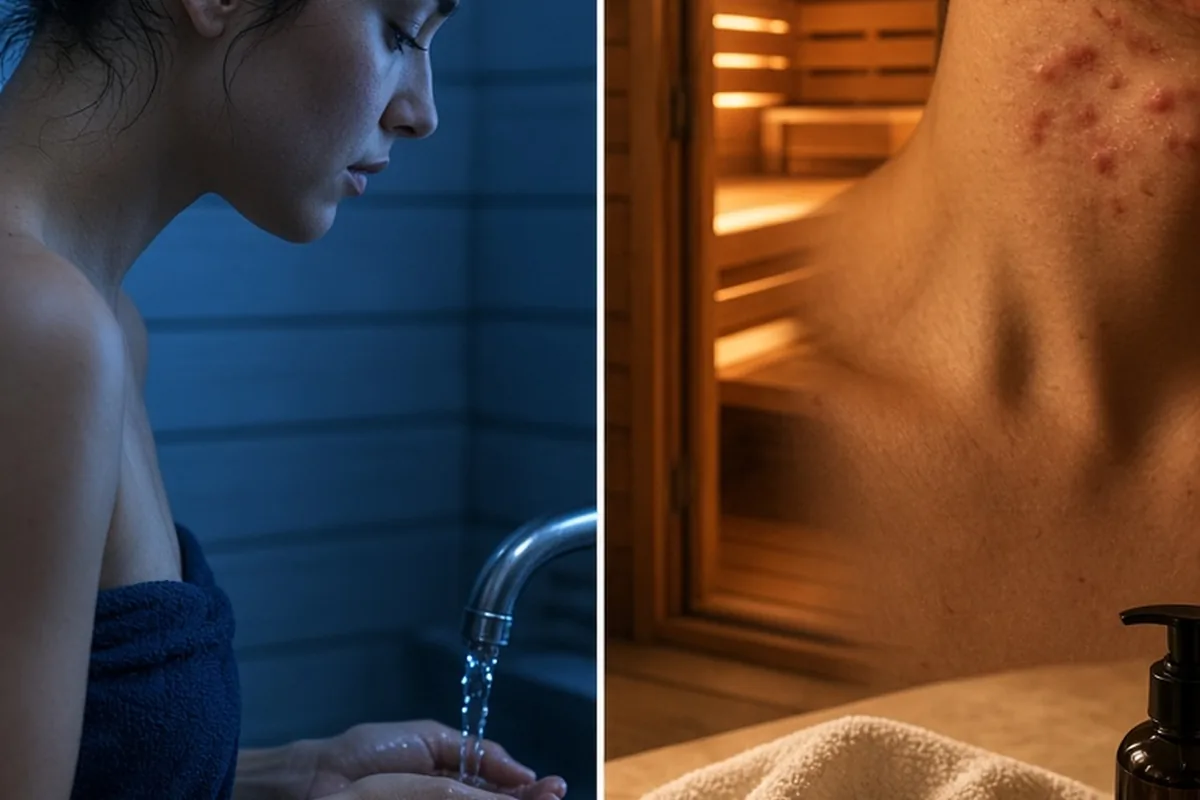
Saunas do not directly cause acne, but sitting in heat, sweat, and humidity creates conditions where pores clog more easily. If sweat, surface oils, bacteria, and residual skincare sit on warm skin without prompt cleansing, post-sauna breakouts often follow. Pre-rinsing, avoiding heavy cosmetics before heating, and washing with a gentle cleanser immediately after usually prevent irritation.
Many people turn to heat therapies to unwind, relax tight muscles, and support general recovery, only to notice unexpected pimples or textured bumps appearing along their jawline, forehead, or chest within twenty-four hours.
Heat, Sweat, and Pores: How Saunas Affect Acne-Prone Skin
A sauna raises ambient air temperatures dramatically, which prompts your body to initiate its natural cooling mechanism: heavy perspiration. Sweat itself is primarily composed of water, trace electrolytes, and small amounts of mineral salts. It does not contain the thick oils or hardened keratin plugs that create typical whiteheads or blackheads on its own. Under normal circumstances, sweating simply flushes fluid out through the eccrine sweat glands across the surface of the body.
The problem begins when that abundant moisture interacts with your skin's surface environment. Human skin is naturally colonized by bacteria and coated in sebum, an oil produced by the sebaceous glands connected to your hair follicles. When high heat liquefies surface oils, creates friction, and increases skin surface temperature, dormant bacteria and dead skin cells can pool into follicular openings. If this mixture stays on your skin as your pores cool down, it easily forms an occlusive seal that traps debris underneath, providing ideal conditions for localized inflammation.
The Difference Between Traditional, Infrared, and Steam Rooms
Not all heat modalities affect skin ecology the exact same way. Traditional Finnish saunas use dry heat generated by heated rocks or electric heaters, keeping relative humidity low, usually between ten and twenty percent. In this dry environment, sweat evaporates quickly off the skin, which can sometimes lead to superficial surface dehydration if sessions are prolonged. When skin becomes suddenly dehydrated, sebaceous glands often overcompensate later by producing extra sebum, which increases the likelihood of clogged pores over subsequent days.
Steam rooms, by contrast, maintain near one-hundred percent humidity. Moisture condensates across your face and body continuously, which softens dead surface cells and loosens superficial dirt. However, that constant saturated wetness prevents sweat from evaporating at all, leaving a thick film of heat, water, and ambient bacteria sitting directly on the skin barrier. Infrared saunas heat body tissue directly using light waves at lower overall air temperatures. While infrared produces a deep sweat at milder ambient heat, the fundamental post-session hygiene rule remains identical: leaving perspiration to dry naturally on the skin is what triggers trouble across all three formats.
Pre-Sauna Skin Preparation: What to Remove Before You Step Inside
Walking into a high-temperature chamber with a full face of cosmetic foundation, heavy silicone primers, or thick mineral sunscreens is one of the most common causes of post-sauna breakouts. When ambient heat rises to over one hundred and fifty degrees Fahrenheit, those barrier-forming products begin to melt and shift. Instead of sweat flowing freely out of the follicular canal, it mixes with cosmetic pigments, binders, and waxes, turning into an irritating slurry that drives impurities deeper into open pores.
The most effective proactive step is taking two minutes in the locker room or home bathroom to wash your face beforehand. A gentle swipe of fragrance-free micellar water or a quick rinse with a mild, non-stripping cleanser removes the day's accumulation of outdoor pollution, stale sunscreen, and makeup. Entering the heat with clean, bare skin allows your body to perspire without dissolving chemical formulas or cosmetic particles directly into your hair follicles.
In-Session Hygiene Habits That Protect Your Skin Barrier
Gym and communal spa saunas present environmental hygiene challenges that extend beyond your own sweat. Shared wooden benches harbor microscopic residues of oils, skin cells, and bacteria from countless previous visitors. If you recline directly against unwashed cedar or prop your bare chin in your hand during a session, you introduce foreign bacteria directly onto softened, heat-vulnerable skin. Always lay down a clean, dedicated cotton towel to sit on, ensuring no direct skin contact with communal surfaces.
Pay close attention to how you manage sweat during the heat exposure itself. Wiping your forehead or cheeks with a rough, scratchy towel creates micro-friction that damages the delicate stratum corneum, creating a condition known as acne mechanica. Instead of wiping or scrubbing, gently press a clean, soft cloth against your face to blot excess sweat away from your eyes. Avoid touching your face with bare hands during the session, as heat makes skin far more receptive to irritation from transferred oils.
The Post-Sauna Window: Cleansing and Cooling Down Properly
What you do in the first ten to fifteen minutes after stepping out of the sauna largely determines whether your skin stays clear or breaks out. As soon as you exit, your body gradually stops producing sweat, and the moisture on your skin starts to evaporate. When water evaporates, it leaves behind concentrated salts, dead cellular debris, and trapped sebum right at the opening of your pores. Waiting until you drive home or run errands before showering allows this film to dry down and congest the skin.
Head straight to the shower and rinse your face and body with lukewarm water. Hot water can further aggravate inflamed capillaries, while freezing water can prematurely shock the skin and trap residual sweat inside contracting pores. Use a gentle, balanced gel or cream cleanser that washes away grime without stripping natural barrier lipids. Resist the urge to use physical scrubs, rough loofahs, or strong exfoliating brushes right after heat exposure, because thermally sensitized skin easily reacts with inflammatory pustules when scrubbed.
Distinguishing True Acne from Heat Rash and Folliculitis
If you develop a sudden cluster of tiny, red, itchy bumps across your forehead, upper chest, or back after a sauna, you might not be dealing with standard acne vulgaris. Heat and high humidity frequently trigger miliaria, commonly known as heat rash, which occurs when deep sweat ducts become blocked, trapping perspiration beneath the skin. Unlike regular acne, heat rash typically appears as uniform, pinpoint pink bumps that feel prickly or itchy and resolve quickly once the body remains completely cool and dry.
Another frequent culprit in hot, humid environments is pityrosporum folliculitis, sometimes called fungal acne. This occurs when an overgrowth of normal skin yeast inflames the hair follicles, stimulated by warmth and damp, sweaty fabrics. It presents as small, uniform, monomorphic pustules that itch intensely, particularly across the shoulders, back, and hairline. Recognizing these differences matters because treating fungal overgrowth or sweat rash with harsh, drying acne medications like high-strength benzoyl peroxide can worsen underlying irritation.
Balancing Sauna Sessions with Active Skincare Ingredients
Navigating heat therapy requires strategic timing if your current daily skincare regimen contains powerful active ingredients like prescription retinoids, glycolic acid, salicylic acid, or topical acne treatments. Extreme heat stimulates peripheral vasodilation, increasing blood flow and elevating skin sensitivity. Applying strong chemical exfoliants or retinoic acid right before entering a sauna can provoke severe stinging, erythema, and barrier compromise.
Similarly, applying aggressive treatments immediately after exiting can lead to unexpected flaking and burning. When your internal temperature is still elevated and circulation is heightened, your skin absorbs topicals more rapidly and unpredictably. Keep your post-sauna routine minimalist: rely on soothing humectants such as glycerin or hyaluronic acid, followed by a light, non-comedogenic barrier moisturizer. Reserve your active serums and targeted acne medications for the following morning or evenings when your skin is completely at baseline temperature.
Illustrative Scenarios
Adjusting Sauna Timing and Product Layering for Congestion-Prone Skin
A regular gym member with combination skin began using the facility dry sauna four days a week directly after lifting weights. During these sessions, the individual sat in sweat-soaked workout attire and waited until driving home forty minutes later to shower. Within three weeks, small, stubborn inflammatory bumps developed along the jawline, chest, and hairline. The individual adjusted the routine by removing surface sunscreen with micellar water before entering the sauna, sitting on a fresh dry towel, and taking a lukewarm shower with a basic cleanser within five minutes of stepping out.
Key point: Breakouts attributed to sauna heat often stem from post-session delays and sweat trapped under tight fabrics, rather than the sauna experience itself.
Frequently asked questions
Does sweating in a sauna detoxify skin to cure existing acne?
No, sweat glands do not function as detoxification organs for internal body waste, which is primarily handled by your liver and kidneys. Perspiration can help rinse superficial debris out of unblocked follicular canals, but it cannot cure hormonal, genetic, or inflammatory acne.
How soon should I wash my face after getting out of a sauna?
You should aim to wash your face with lukewarm water and a gentle cleanser within five to ten minutes of leaving the sauna. Letting sweat dry naturally allows minerals, oils, and surface bacteria to settle back into pores and form blockages.
Can I use a sauna if I currently have an active cystic acne breakout?
You can still use a sauna, but you should monitor how your skin responds to elevated temperatures. Severe heat increases facial blood flow, which can temporarily heighten redness and throbbing discomfort around deep, tender cysts.
Should I apply heavy face cream right after a sauna session?
It is best to avoid rich, occlusive balms or heavy facial oils immediately following a session while your body is still cooling down. Choose a lightweight, oil-free hydrator with humectants so your skin can breathe without trapping lingering warmth.
Your next step
For your next sauna session, pack a clean hand towel and a travel-sized gentle cleanser so you can rinse your skin bare before entering the heat and wash away perspiration within ten minutes of stepping out.