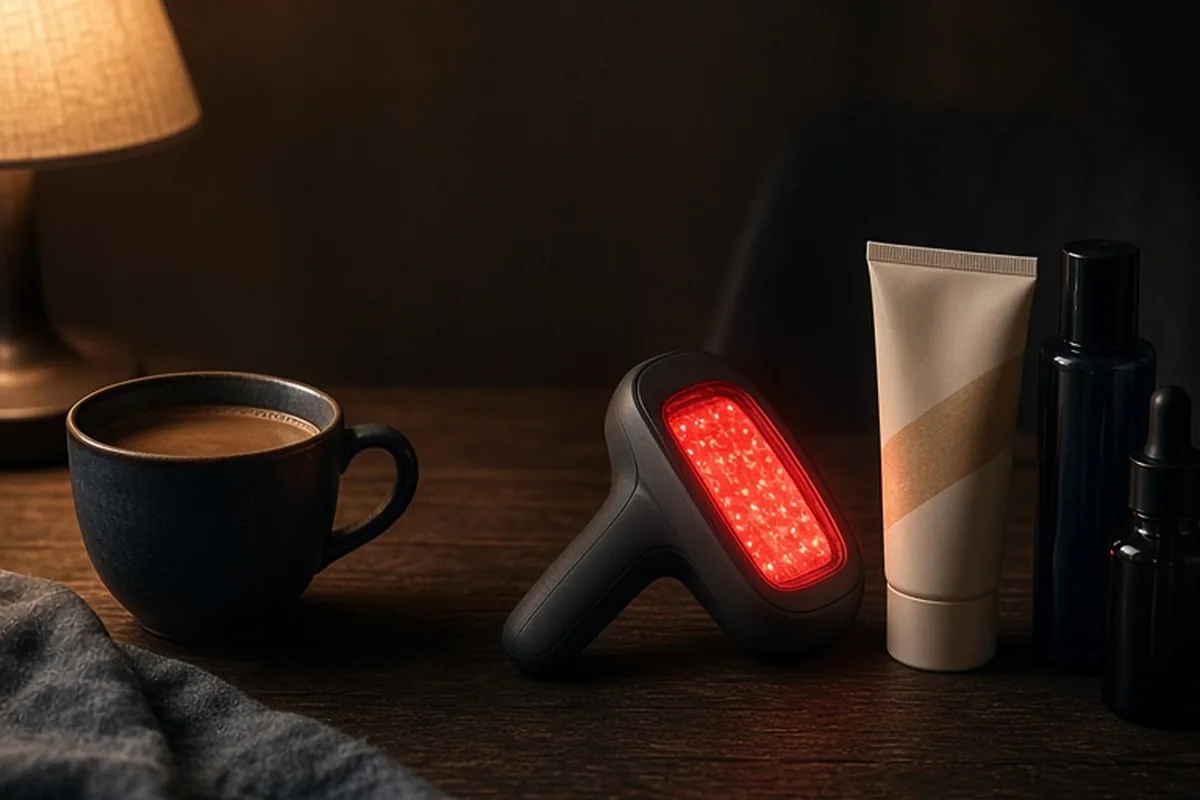
Yes, sunscreen significantly blocks red light therapy. Mineral sunscreens containing zinc oxide and titanium dioxide reflect and scatter visible and near-infrared light wavelengths, while chemical filters and heavy cosmetic bases absorb or disperse the light energy before it can penetrate your skin cells. For the most effective treatment, always perform red light therapy on clean, completely bare skin before applying sunscreen.
Red light therapy has become a staple in modern skincare routines for supporting skin tone, soothing redness, and encouraging collagen production. However, getting the full value from your home device or clinical session depends heavily on how light enters the skin tissue, making the timing of your daily sun protection essential.
How Sunscreen Filters Interact with Red and Near-Infrared Light
To understand why sunscreen impedes light therapy, it helps to examine how sunscreen ingredients are formulated to manage optical radiation. Sunscreens are engineered primarily to defend against ultraviolet radiation, which sits at shorter wavelengths between 290 and 400 nanometers. However, the physical and chemical barriers they create on the skin surface do not selectively ignore longer visible and near-infrared wavelengths used in red light devices, which typically operate between 630 and 850 nanometers.
Mineral sunscreens rely on physical particles such as zinc oxide and titanium dioxide. These opaque white pigments function by absorbing UV energy and physically scattering a broad spectrum of incoming light, including visible red light and invisible near-infrared rays. When you apply a mineral formulation, the microscopic particle layer acts like a frosted mirror, bouncing the therapeutic light away before it reaches your target dermal layers. Chemical sunscreen filters, while formulated to absorb UV rays through photochemical reactions, are carried in emulsified lotions, silicones, and oils that alter the skin refractive index. This optical distortion disperses red light, drastically decreasing the total energy dose delivered to the tissue.
The Physics of Light Penetration and Cellular Absorption
Photobiomodulation depends on a clear, direct path between the light-emitting diodes and the chromophores located inside your cells. In red and near-infrared therapy, the primary target is cytochrome c oxidase, a photoreceptor within cellular mitochondria. When sufficient photon density reaches these receptors, cellular respiration improves, which supports natural repair and tissue revitalization.
Any barrier on the skin surface diminishes what clinicians call optical irradiance or energy density. If you place a film of sunscreen, moisturizer, or makeup on your face, a portion of the photons will be absorbed by the film, scattered into the environment, or refracted away from deeper tissues. For example, sitting in front of a high-output red light panel with bare skin allows the maximum calculated milliwatts per square centimeter to penetrate the epidermis and dermis. Adding even a sheer sunscreen reduces the delivered dose, meaning your skin receives only a fraction of the intended light energy during your timed session.
The Ideal Order for Your Morning Skincare Routine
Incorporating red light therapy into a morning routine is straightforward once you structure your steps around skin cleanliness. Because sun protection is a mandatory final step for guarding against daytime UV exposure, the light session should always take place immediately after cleansing and before applying topical leave-on products.
A practical sequence begins with washing your face using a gentle, non-stripping cleanser to remove overnight sebum, sweat, and residual evening skincare. Pat your face completely dry with a clean towel, as water droplets can refract light unevenly across the surface. Sit or lie down for your scheduled red light session on this clean, dry base. Once the device turns off, proceed directly with the rest of your morning regimen: apply lightweight hydrating toners or water-based serums first, followed by a moisturizer if needed, and conclude with your broad-spectrum sunscreen as the protective outer shield.
- Cleanse thoroughly with a mild cleanser to remove oils and residues.
- Pat the skin completely dry, avoiding dampness that can refract light.
- Complete your red light therapy session on bare skin.
- Apply water-based serums or antioxidants to nourish the skin.
- Finish with a broad-spectrum sunscreen before stepping outdoors.
What Happens If You Accidentally Treat Over Sunscreen
Accidentally running a red light therapy session while wearing sunscreen or makeup will rarely cause acute skin injury, but it primarily results in wasted time and reduced efficacy. Because low-level light therapy does not emit damaging ultraviolet radiation or excessive heat, it will not cause the sunscreen to burn into your skin. However, the physical blockage means you will not achieve the desired cellular stimulation.
The primary drawback is the creation of localized warmth beneath an occlusive product layer. Some light masks and high-power panels generate mild ambient warmth. If your skin is covered with heavy mineral pastes, silicone-rich sunscreens, or tinted cosmetics, that trapped warmth combined with sweat can irritate sensitive pores, leading to temporary congestion or mild breakouts. If you realize you still have sunscreen on, it is far better to pause, wash your face, and resume the session on clean skin rather than continuing through the barrier.
Why Sunscreen Remains Essential After Red Light Sessions
A common point of confusion is whether red light therapy replaces the need for sunscreen or, conversely, whether it makes the skin hypersensitive to sunlight. Red light therapy does not provide UV protection, nor does it make the skin acutely photosensitive in the way chemical peels, topical retinoids, or laser resurfacing treatments do. It works through non-thermal, non-ionizing wavelengths that do not ablate or peel the skin surface.
Because red light does not shield against UV rays, wearing sunscreen after your session remains essential for protecting against photoaging and cellular damage from solar radiation. In fact, practicing consistent sun protection preserves the very collagen and cellular integrity that red light therapy seeks to support. After completing your light session and applying your daytime skincare, using a broad-spectrum SPF of 30 or higher ensures your skin retains the benefits of your therapy without suffering ambient UV degradation throughout the day.
Other Skincare Products That Can Block Light Penetration
Sunscreen is not the only product capable of hindering light therapy. An assortment of common cosmetic ingredients can create optical interference or unwanted thermal barriers if applied before a session. Identifying these products helps you maintain an effective routine without accidental product conflicts.
Heavy occlusive agents such as pure petrolatum, mineral oil, and dense plant butters form a physical hydrophobic layer that reflects and bends light rays. Similarly, tinted moisturizers, foundation, and powders contain iron oxides and colorants specifically formulated to block visible light, including red wavelengths. Light-sensitive active ingredients like prescription tretinoin or potent alpha-hydroxy acids are also best reserved for evening routines well away from your light sessions to prevent any unexpected skin sensitivity.
- Heavy balms and petrolatum ointments that form thick reflective films.
- Tinted moisturizers, BB creams, and foundations containing iron oxides.
- Self-tanning lotions containing dihydroxyacetone, which stains the outer layer and absorbs light.
- Dense facial oils that create uneven light refraction across the face.
Best Practices for Maximizing Your Light Therapy Results
Achieving consistent results with red light therapy requires attention to device distance, skin readiness, and treatment frequency. Position your face or body at the manufacturer-recommended distance from the device, typically between two to six inches for targeted panels or directly fitted against the skin for flexible silicone masks. Keeping the light source at the proper distance ensures the intended energy density reaches your skin without unnecessary power drop-off.
Regular device maintenance is equally critical. Over time, facial oils and airborne dust can accumulate on the LED glass or acrylic cover, creating a subtle barrier similar to a dirty window. Wipe down your device lenses regularly using a clean, dry microfiber cloth or a manufacturer-approved gentle alcohol wipe while the device is unplugged. Maintaining clean equipment and pairing it with bare, clean skin provides the most reliable pathway for consistent light delivery.
Frequently asked questions
Can I apply sunscreen immediately after finishing red light therapy?
Yes, you can apply sunscreen right after your red light session is complete. Once the light source is turned off, there is no waiting period required before continuing with your regular serums, moisturizers, and sun protection.
Does chemical sunscreen block red light as much as mineral sunscreen?
Mineral sunscreen generally blocks more red light because zinc oxide and titanium dioxide physically scatter broad wavelengths. However, chemical sunscreens still contain emollient and oily vehicle bases that refract and reduce light absorption, making both types unsuitable to wear during a session.
Should I wash my face before an evening red light session?
Yes, you should always wash your face before an evening session to remove daytime sunscreen, cosmetics, and accumulated environmental oils. Cleansing ensures your skin is fully receptive to the therapeutic light wavelengths.
Can I use a hyaluronic acid serum before red light therapy?
A lightweight, pure water-based hyaluronic acid serum is generally acceptable if your skin feels dry, but completely bare, clean skin remains the standard recommendation for optimal photon transmission.
Your next step
To get the maximum benefit from red light therapy, always use your device on clean, bare skin before applying any serums, moisturizers, or sunscreens. For your next session, cleanse your face thoroughly, complete your timed light treatment on dry skin, and then finish with your daily moisturizer and broad-spectrum sunscreen.