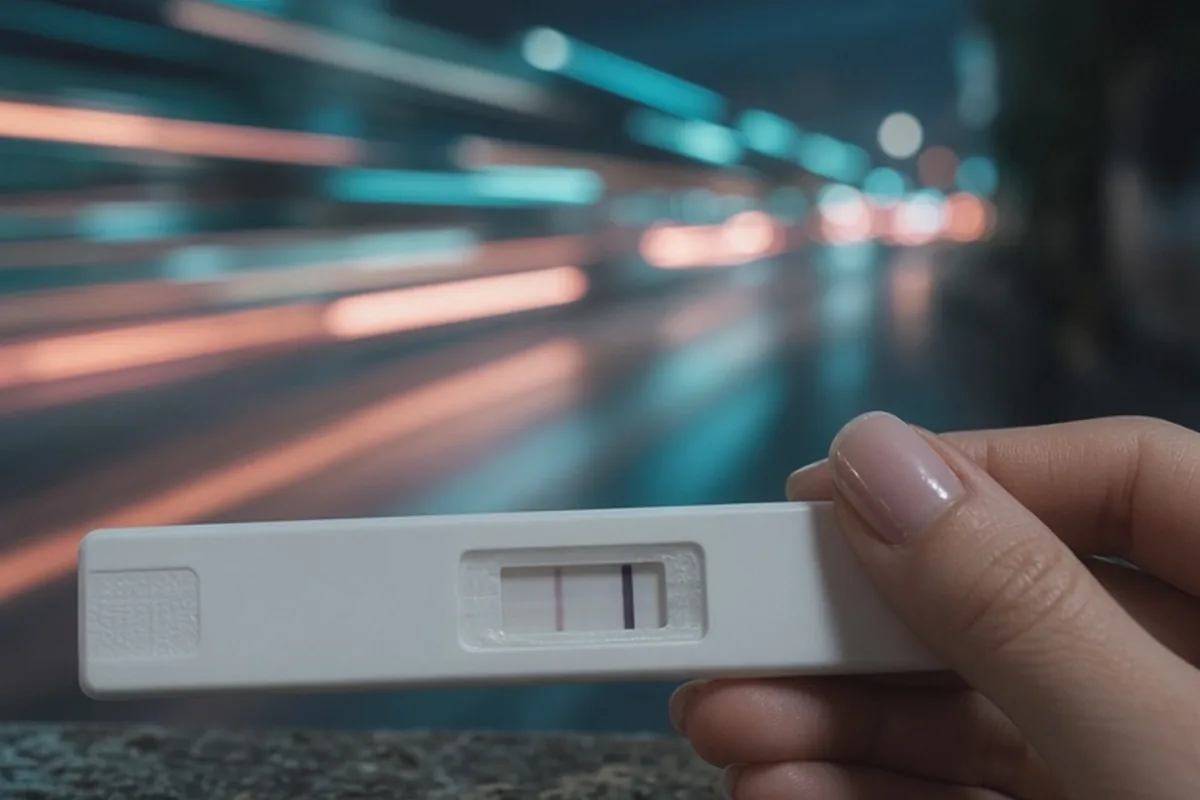
A faint line on a home pregnancy test almost always indicates pregnancy if it appears within the instructed time window. Home tests detect human chorionic gonadotropin, or hCG, which builds rapidly in early pregnancy. Even a faint colored line means the test detected the hormone. However, very faint marks can also result from testing too early, diluted urine, or evaporation lines that form as the test dries.
Seeing a faint, barely visible mark on a test strip can trigger immediate confusion and anxiety. Learning how pregnancy tests detect hormones and how to read the result window correctly can help you evaluate what you see with clarity.
How Home Pregnancy Tests Detect Early hCG
Home pregnancy tests function by detecting human chorionic gonadotropin (hCG), a hormone produced primarily by cells that eventually form the placenta. After a fertilized egg implants into the uterine lining, hCG levels enter the bloodstream and filter into your urine. The test strip contains specialized reactive antibodies bonded to dye. When urine passes over the strip, any present hCG binds to these antibodies, activating the dye and producing a visible line in the test window alongside a control line.
Because these tests are qualitative rather than quantitative, they are designed to show a line whether hormone levels are barely above the detection threshold or exceptionally high. A faint line simply indicates that the concentration of hCG in the sample is relatively low. In a typical early pregnancy, hCG levels double roughly every 48 to 72 hours, meaning a test taken just a day or two later often produces a noticeably darker, more defined line.
Distinguishing True Faint Positives From Evaporation Lines
One of the most common sources of confusion during early testing is the difference between a genuine faint positive and an evaporation line. A true positive result appears within the specific time frame listed in the product instructions, which is typically between three and five minutes. A true positive line contains visible pigment, usually pink or blue depending on the brand, even if that color is extremely pale or requires bright lighting to see clearly.
An evaporation line, by contrast, occurs when urine dries on the test strip after the recommended reading window has passed. As moisture leaves the reaction area, it can leave behind a faint, colorless, grayish, or shadowy line where the antibodies sit. Similarly, an indent line is the slight physical groove on the test strip where the reactive dye is placed, which can sometimes catch the light before or after use. If a mark appears only after ten or fifteen minutes, or if it completely lacks color, it should not be interpreted as a positive test.
- Check the result strictly within the manufacturer time limit, usually 3 to 5 minutes.
- Look for actual dye color; true positives have pink or blue tint rather than a gray or colorless shadow.
- Avoid reading or re-evaluating discarded tests pulled from the trash hours later.
Why Urine Concentration and Timing Impact Line Darkness
The timing of your test relative to your menstrual cycle plays a major role in how dark the test line appears. Implantation typically occurs between six and twelve days after ovulation, and it takes several days after implantation for hCG to accumulate to detectable levels. Testing several days before an expected period often yields a faint line because the hormone is only just crossing the minimum sensitivity threshold of the test kit.
Hydration levels also dramatically influence the intensity of a test line. Drinking large amounts of water, tea, or other fluids before taking a test dilutes the concentration of hCG in your bladder. For the most reliable results during early testing, use first-morning urine, which has sat in the bladder for several hours and contains the highest concentration of metabolic byproducts and reproductive hormones. If testing during the day, holding urine for three to four hours without excessive fluid intake can help concentrate the sample.
Understanding Test Sensitivity Variations Across Brands
Not all home pregnancy tests are calibrated to detect the same concentration of hCG. Test sensitivity is measured in milli-international units per milliliter (mIU/mL). Highly sensitive early-detection tests can pick up hCG levels as low as 10 mIU/mL, allowing them to register faint positive lines several days before a missed period. Standard retail tests often have a sensitivity threshold of 20 to 25 mIU/mL, requiring higher hormone levels before displaying a clear mark.
Using two different test brands at the same time can cause understandable confusion if one shows a faint positive and the other shows a negative. This discrepancy usually reflects differing sensitivity thresholds or variations in dye formulation rather than a faulty test. When tracking line progression over several days, sticking to the exact same brand and format provides a much more accurate comparison than switching between digital, pink-dye, and blue-dye tests.
Early Pregnancy Loss and Chemical Pregnancies
A faint positive line that does not darken over several days or gradually fades to negative can sometimes indicate a chemical pregnancy. A chemical pregnancy is an early pregnancy loss that occurs shortly after implantation, often before or around the time of an expected menstrual period. Because sensitive modern tests can detect minute traces of hCG, they can register these very early conceptions before bleeding begins.
Experiencing a chemical pregnancy can bring a complex range of emotional responses, from disappointment to grief. From a physiological standpoint, chemical pregnancies are very common and typically stem from random chromosomal abnormalities that prevent the embryo from developing further. If you notice test lines fading alongside subsequent menstrual-like bleeding, consulting a healthcare provider can help ensure your hormone levels return to baseline and offer guidance on future planning.
Practical Protocols for Retesting and Confirmation
If you see a faint line and want unambiguous confirmation, the most effective approach is a structured retesting plan. Because hCG typically doubles every two to three days in early viable pregnancies, taking another test 48 hours later provides a clearer comparison than testing multiple times in a single day. Testing repeatedly across a single afternoon often produces erratic results due to fluctuating hydration levels, which can cause unnecessary distress.
When retesting, follow standard handling practices to minimize the chance of user error. Collect a midstream sample or dip the strip in a clean cup according to the exact instructions, keep the test laid flat on a non-absorbent surface, and set a digital timer for the minimum read time. If multiple tests over a two- to four-day period continue to show consistent or darkening lines, you have strong preliminary evidence of pregnancy.
- Wait 48 hours between tests to allow hCG concentrations to rise noticeably.
- Collect your sample immediately upon waking using first-morning urine.
- Use a digital timer to check the window at the exact manufacturer-specified minute.
- Store unused test strips in a dry place at room temperature away from high humidity.
When to Contact a Healthcare Professional
While home urine tests are reliable screening tools, clinical confirmation remains the standard for initiating prenatal care. A healthcare provider can order a quantitative serum hCG blood test, which measures the precise concentration of the hormone in your bloodstream. Repeating a blood test 48 hours later offers definitive clinical insight into whether hormone levels are rising at an expected rate.
You should reach out to a healthcare provider promptly if a faint positive test is accompanied by concerning physical symptoms. While mild cramping and light spotting can occur during early implantation, severe or one-sided pelvic pain, shoulder pain, dizziness, or heavy bleeding warrant immediate medical evaluation to rule out complications such as an ectopic pregnancy.
Frequently asked questions
Can drinking too much water cause a false negative or very faint line?
Yes, excessive fluid intake dilutes the concentration of hCG in your urine. If your hormone levels are still low in early pregnancy, diluted urine can make a positive line look extremely faint or cause the test to appear negative.
Are pink-dye tests more reliable than blue-dye tests for faint lines?
Pink-dye tests are generally easier to interpret at low hormone levels because blue-dye tests are more prone to producing faint evaporation or bleeding lines that mimic positives. If you suspect an ambiguous result, a pink-dye or digital test can provide clearer visual feedback.
What should I do if my faint positive line gets lighter over a few days?
A line that consistently becomes lighter over several consecutive mornings may suggest fluctuating urine concentration or a potential early pregnancy loss, such as a chemical pregnancy. You should contact a healthcare professional to evaluate your hormone levels through quantitative blood testing.
Does a digital test work if I only have a faint line on a manual strip?
Digital tests often require a slightly higher concentration of hCG (usually around 25 mIU/mL or higher) compared to ultra-sensitive manual strip tests. If your strip test shows a very faint line, a digital test might still read negative until hormone levels rise over the next day or two.
Your next step
Wait 48 hours and retest using your first-morning urine and the same brand of test, then contact your healthcare provider for clinical confirmation.