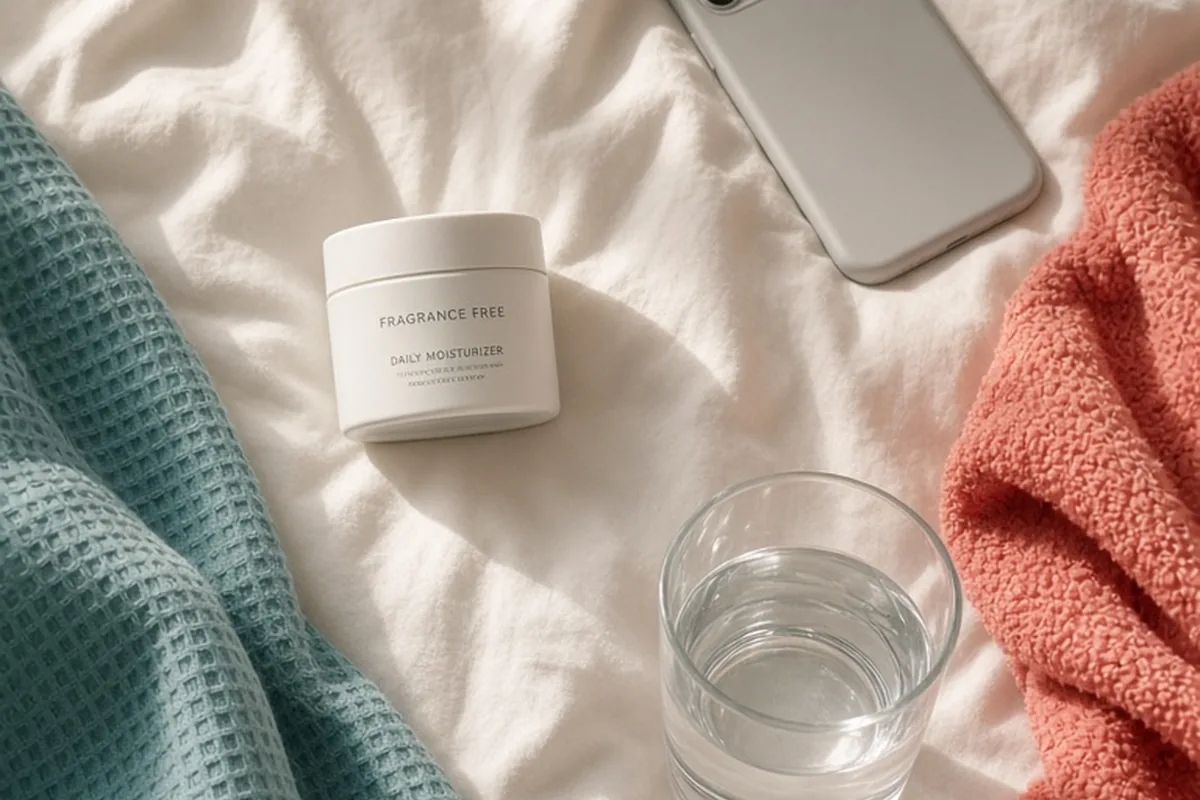
A fragrance-free moisturizer is a hydrating skincare product formulated entirely without added synthetic perfumes, essential oils, or aromatic masking agents. By eliminating unnecessary scent additives, these moisturizers deliver pure hydration and barrier-repairing lipids while minimizing the risk of allergic contact dermatitis, redness, and chronic barrier irritation across sensitive, reactive, and acne-prone skin types.
Choosing the right daily moisturizer often comes down to finding a balance between effective hydration and ingredient safety, particularly for skin prone to sudden irritation.
The Critical Difference Between Fragrance-Free and Unscented Formulas
Many consumers assume that a product labeled unscented is identical to one labeled fragrance-free, but cosmetic labeling standards treat these two terms very differently. A fragrance-free product is formulated without any fragrance chemicals, botanical distillates, or essential oils added for the purpose of imparting an aroma. In contrast, an unscented product may contain synthetic masking agents designed to neutralize the unpleasant natural odors of raw ingredients like sulfur, fatty acids, or botanical extracts. While the final unscented product may smell completely neutral to your nose, the masking fragrances still interact with your skin and can provoke sensitivity over time.
Understanding this regulatory distinction is essential for anyone dealing with an easily irritated skin barrier. Masking agents are complex chemical blends that hold the same potential for triggering allergic contact dermatitis as traditional perfumes. When your goal is reducing potential irritants, looking specifically for the exact phrase fragrance-free on the packaging ensures that no covert masking compounds have been incorporated into the emulsion.
Why the Skin Barrier Benefits from Eliminating Aromatic Compounds
The outermost layer of your skin, the stratum corneum, functions as a protective shield that keeps moisture inside while blocking environmental irritants and pathogens. Fragrance compounds, whether derived from laboratory synthesis or cold-pressed botanical plants, represent one of the most frequent causes of cosmetic contact allergies. When these volatile aromatic molecules penetrate the upper layers of vulnerable skin, they can stimulate an immune reaction, degrading structural lipids and accelerating transepidermal water loss.
Eliminating aromatic additives allows your moisturizer to focus exclusively on barrier reinforcement and cellular hydration without forcing your immune system to defend against volatile irritants. This is particularly advantageous when dealing with compromised skin conditions, where baseline inflammation makes the skin significantly more permeable. By removing scent compounds, you provide an optimal, low-stress environment for structural lipids to self-assemble and restore cellular integrity.
Key Hydrating and Restorative Ingredients to Seek in Fragrance-Free Creams
When shopping for a fragrance-free moisturizer, the absence of scent should be paired with a balanced triad of functional skincare ingredients: humectants, emollients, and occlusives. Humectants like vegetable glycerin, hyaluronic acid, and panthenol draw water into the upper skin layers from the environment and deeper tissue. Emollients such as squalane, ceramides, and cholesterol fill microscopic gaps between shedding skin cells, softening rough textures and restoring flexibility. Occlusives, including petrolatum, shea butter, and dimethicone, form a physical breathable barrier that prevents that hydration from evaporating.
A well-designed formula blends these components to replicate the skin's natural lipid matrix. For instance, a basic daily lotion featuring five percent glycerin and three essential ceramides provides deep moisture delivery alongside physical barrier repair. When checking an ingredient list, look for these restorative building blocks near the top half of the panel to ensure they exist in functionally active concentrations rather than trace marketing amounts.
Selecting the Appropriate Formula Texture for Your Specific Skin Profile
Fragrance-free moisturizers are available in a broad spectrum of textures, from lightweight fluid gels to heavy, dense balms. Selecting the correct vehicle depends on your skin's innate sebum production, environmental climate, and underlying skin goals. Oily and breakout-prone complexions generally thrive with water-based gel creams that rely on lightweight humectants and silicone emollients, delivering vital hydration without adding excess surface weight or clogging pores.
Conversely, dry or mature skin requires richer creams and ointments packed with physiological lipids and heavy occlusives to combat structural dryness. For individuals managing combination skin, a medium-weight lotion applied all over, topped with a richer balm only on localized dry zones like the cheeks, often yields the most balanced results. Consider seasonal shifts as well; many people benefit from a fluid gel in humid summer months and a barrier-dense cream during dry winter heating seasons.
- Gel formulations: Best for oily, congested, or humid environments where lightweight hydration is required.
- Lotion formulations: Balanced fluid emulsions suitable for normal to mildly dry skin profiles.
- Rich cream formulations: Lipid-dense textures ideal for dry, compromised, or mature skin needing barrier restoration.
- Ointment balms: Highly occlusive formulas intended for severe localized flaking or overnight barrier recovery.
Pairing Scent-Free Bases with Potent Active Skincare Treatments
A major practical benefit of utilizing a fragrance-free moisturizer is its seamless compatibility with potent active treatments such as retinoids, exfoliating acids, and topical vitamin C. These high-potency ingredients inherently challenge the skin barrier, often causing temporary redness, peeling, or mild flaking as cellular turnover accelerates. Introducing scented creams over newly sensitized skin dramatically increases the likelihood of stinging, contact dermatitis, and prolonged recovery periods.
A neutral, fragrance-free base acts as a reliable buffer that stabilizes the skin during active treatment cycles. You can apply a thin layer of scent-free lotion before applying a retinoid to reduce irritation through the buffering technique, or layer a rich unscented cream directly over prescription treatments to lock in moisture without triggering chemical reactivity. This separation of active treatment from gentle hydration gives you complete control over your routine's intensity.
How to Inspect Cosmetic Labels and Spot Hidden Aromatic Additives
Marketing claims on the front of a skincare bottle can occasionally be misleading, making ingredient label literacy your most reliable defense. Many products advertise themselves as pure, gentle, or clean while still packing the formulation with botanical extracts and floral waters that contain potent volatile fragrance components. Common hidden aromatic culprits include lavender flower extract, citrus peel oils, eucalyptus oil, rosemary leaf extract, and rosewater distillates.
In addition to whole plant extracts, individual fragrance isolates frequently appear toward the bottom of the ingredient list under names such as linalool, limonene, geraniol, eugenol, and citronellol. While these compounds are naturally occurring in plants, they are classified among the most common fragrance allergens in cosmetic science. Scanning the complete ingredient declaration for both generalized fragrance listings and specific botanical distillates ensures your product is genuinely inert.
Step-by-Step Patch Testing and Introduction Protocol
Even when a formula is certified fragrance-free and free of known irritants, individual skin sensitivities to specific emulsifiers, preservatives, or plant oils can still occur. Before applying a new moisturizer across your entire face, conducting a standardized patch test minimizes the risk of widespread adverse reactions. Apply a pea-sized amount of the moisturizer to a clean patch of skin on your inner forearm or behind your ear once daily for three consecutive days.
Observe the test area closely for signs of localized redness, itching, swelling, or small bumps. If the skin remains clear and calm after 72 hours, introduce the product onto a small section of your jawline for two nights before transitioning to full-face daily application. This methodical rollout helps you accurately isolate the cause if a negative reaction occurs, preventing unnecessary frustration and skin distress.
Addressing the Natural Scent of Raw Unperfumed Ingredients
First-time users of fragrance-free moisturizers are sometimes surprised to discover that the product is not completely devoid of smell. Without synthetic perfumes or masking chemicals to cover them up, the baseline aromas of raw lipids, stabilizing emulsifiers, fatty alcohols, and preservative systems become noticeable. You may detect a faint medicinal, chalky, or slightly nutty scent during application, depending on the oil base utilized in the emulsion.
This raw aroma is completely normal and typically dissipates within a minute or two after the moisturizer absorbs into the skin. Recognizing that a mild, transient baseline scent is actually proof of an unmasked, unadulterated formulation helps reframe expectations away from artificially perfumed cosmetic standards toward functional skin health.
Sustainable Routine Integration and Long-Term Skin Maintenance
Incorporating a fragrance-free moisturizer into your daily regimen is most effective when supported by equally gentle complementary products. Cleansing with a harsh, sulfate-laden foaming wash or heavily scented body bar will continue to compromise your skin barrier regardless of how restorative your post-cleansing moisturizer is. For optimal barrier maintenance, pair your scent-free cream with a low-foaming, pH-balanced cleanser and a broad-spectrum mineral or chemical sunscreen.
Apply your moisturizer immediately after cleansing or misting while your skin is still slightly damp. This application timing allows the humectants in your cream to capture surface moisture and pull it into the upper epidermal layers before the occlusive agents seal it in place. By keeping your foundational routine free from avoidable aromatic additives, you build a resilient baseline that supports lifelong skin barrier comfort.
Frequently asked questions
What is the main difference between unscented and fragrance-free products?
Fragrance-free products contain no added fragrance chemicals or aromatic extracts of any kind. Unscented products may include synthetic masking fragrances designed to neutralize the natural smell of raw ingredients, which can still cause irritation.
Are natural essential oils safer for sensitive skin than synthetic perfumes?
Natural essential oils are not inherently safer than synthetic fragrances and are among the most common cosmetic allergens. Volatile plant oils like lavender, citrus, and mint can cause significant barrier irritation and allergic contact reactions.
Why does my fragrance-free moisturizer have a faint smell?
Raw cosmetic ingredients such as fatty acids, vegetable oils, and preservative systems have their own natural scents. Without masking agents to hide them, these subtle base aromas remain noticeable during application but usually dissipate quickly upon drying.
Can oily or acne-prone skin use fragrance-free moisturizers?
Yes, fragrance-free formulations are ideal for acne-prone skin because eliminating fragrance reduces background inflammation. Look for lightweight, oil-free gel creams containing glycerin and hyaluronic acid rather than heavy occlusive balms.
Your next step
Check the ingredient labels of your current skincare products today, identify any synthetic fragrances or essential oils, and replace your primary hydrator with a verified fragrance-free moisturizer suited to your specific skin texture needs.