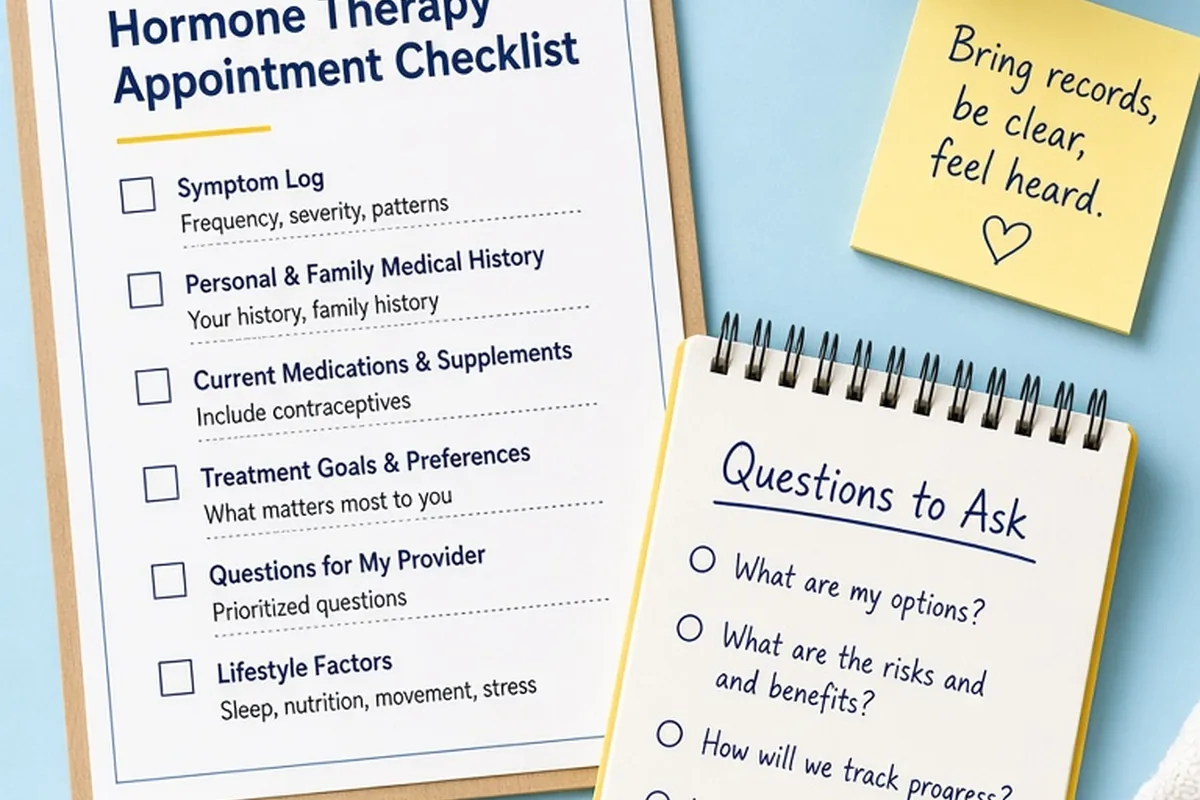
A hormone therapy appointment checklist organizes your personal symptom timeline, medical history, family health background, current prescriptions, and specific treatment goals before you meet with your clinician. Preparing clear records of physical changes, lifestyle routines, and prioritized questions allows your healthcare provider to evaluate your baseline health, assess contraindications, determine whether lab testing is necessary, and collaboratively select an appropriate hormonal or non-hormonal management plan tailored to your body and risk profile.
Navigating a consultation for hormone therapy can feel complex when you are balancing persistent physical changes with important clinical decisions. Arriving prepared with a structured record of your symptoms, relevant health records, and focused questions ensures that your time with your healthcare provider leads to a safe, clear, and individualized treatment path.
Hormone Therapy Appointment Checklist: Documenting Symptoms and Frequency
The foundation of any productive clinical consultation is an accurate, chronological record of what you are experiencing day to day. Rather than relying on general impressions, clinicians need specific details regarding the timing, severity, and frequency of your symptoms. Whether you are experiencing hot flashes, night sweats, sleep fragmentation, cognitive fog, mood variability, vaginal dryness, or uncharacteristic fatigue, documenting these occurrences over a four- to eight-week period provides invaluable diagnostic context. Note whether symptoms follow a cyclical pattern, cluster around specific times of day, or correlate with external triggers such as stress, physical exertion, or dietary changes.
When recording symptoms, use a simple numeric scale from one to ten to rate their intensity and describe their direct impact on your daily functioning. For instance, instead of noting general poor sleep, specify how many times you wake up per night, whether night sweats soak your clothing or bedding, and how daytime fatigue affects your work performance or physical coordination. If you are experiencing changes in menstrual patterns, record the exact dates, flow volume, presence of spotting, and any associated pelvic cramping. Clear observational data allows your clinician to distinguish between normal perimenopausal transitions, thyroid irregularities, and other endocrine or systemic conditions that mimic hormonal fluctuations.
It is equally beneficial to record non-physical symptoms, including sudden mood shifts, irritability, heightened anxiety, or feelings of low mood that feel distinct from your baseline emotional state. Changes in libido, comfort during sexual intimacy, and urinary urgency are common concerns that patients often hesitate to mention. Writing these topics directly onto your physical or digital checklist normalizes them as standard clinical conversation points, ensuring they receive appropriate medical attention during your evaluation.
Further reading: Office on Women's Health
Assembling Your Personal and Family Medical History
Your medical history provides the primary framework your healthcare provider uses to evaluate whether systemic or localized hormone therapy is medically appropriate. Certain health conditions influence how exogenous hormones are processed in the body or alter the risk-benefit balance of specific therapies. Before your appointment, compile a chronological list of your major diagnoses, past surgical procedures, and reproductive milestones. Include the age of your first menstrual period, pregnancy history, any history of gestational diabetes or preeclampsia, and whether you have undergone a hysterectomy, oophorectomy, or endometrial ablation.
Pay careful attention to cardiovascular, vascular, and metabolic conditions. Be sure to note any personal history of high blood pressure, elevated cholesterol, blood clotting disorders like deep vein thrombosis or pulmonary embolism, stroke, liver disease, gallbladder conditions, or migraine with aura. Because estrogen and progestogen therapies interact with hepatic pathways and vascular tone, having your exact medical diagnoses on paper allows your clinician to evaluate safer administration routes, such as transdermal patches or gels, which bypass the liver's first-pass metabolism.
Family health history is equally vital when assessing individual risk factors. Gather accurate health details regarding first-degree relatives, including parents, siblings, and children. Inquire specifically about any history of breast cancer, ovarian cancer, endometrial cancer, early-onset heart attacks, strokes, or severe osteoporosis. If genetic testing, such as BRCA or Lynch syndrome screening, has been performed within your family, bring copies of those reports so your clinician can integrate established clinical guidelines into your consultation.
Further reading: Office on Women's Health
Auditing Current Medications, Supplements, and Contraceptive Needs
Every medication, over-the-counter product, and dietary supplement you take can potentially interact with hormone therapy or influence how your symptoms manifest. Create a comprehensive inventory that lists the exact name of each substance, the dosage you take, the frequency of use, and the primary reason it was recommended or prescribed. This includes daily multivitamins, calcium and vitamin D supplements, herbal products like black cohosh or St. John's wort, over-the-counter sleep aids, allergy medications, and topical skin treatments.
Herbal remedies and dietary supplements frequently alter liver enzymes responsible for metabolizing hormones, which can either diminish treatment effectiveness or increase the concentration of circulating hormones in your bloodstream. Disclosing all non-prescription items ensures your provider can identify potential contraindications before introducing a new therapeutic regimen. If you are taking prescription medications for thyroid conditions, blood pressure, depression, or cholesterol, bring the physical pill bottles or a verified list from your pharmacy to prevent dosage recording errors.
Clarifying your contraceptive status is an essential part of this review. Hormone replacement therapy designed to manage perimenopausal or postmenopausal symptoms typically uses lower hormone concentrations than hormonal birth control and does not provide reliable contraception. If pregnancy is still a possibility and you are not using a permanent sterilization method, discuss your contraception requirements directly with your provider. Exploring whether a hormonal intrauterine device, oral contraceptive, or non-hormonal barrier method fits your overall health profile ensures both symptom management and pregnancy prevention are addressed in a unified plan.
Conversely, if you are currently using hormonal contraception to manage irregular bleeding or provide pregnancy prevention, your clinician will evaluate whether adjusting your current birth control method or transitioning toward dedicated hormone therapy better aligns with your age, cardiovascular risk profile, and therapeutic goals.
Further reading: CDC: Contraception and birth control methods
Further reading: Office on Women's Health
Comparing Hormone Therapy Delivery Methods and Treatment Goals
Hormone therapy is not a single uniform treatment; it encompasses diverse formulations, molecules, dosages, and delivery mechanisms. Systemic hormone therapy delivers hormones throughout the bloodstream to address widespread symptoms such as vasomotor flushes, night sweats, bone loss, and systemic mood changes. Localized therapy, such as low-dose vaginal creams, rings, or tablets, focuses primarily on genitourinary symptoms like vaginal dryness, discomfort during intercourse, and recurrent urinary discomfort without delivering significant systemic hormone levels.
Delivery routes for systemic estrogen include oral tablets, transdermal skin patches, topical gels, sprays, and subdermal implants. Each delivery system carries distinct practical characteristics. Oral tablets are convenient but undergo hepatic metabolism, which can influence liver enzyme production, triglycerides, and clotting factor synthesis. Transdermal formulations absorb directly through the skin into the bloodstream, maintaining steady hormone concentrations and presenting a lower risk profile regarding venous thromboembolism for many individuals. Reviewing these practical differences before your visit helps you discuss which method best matches your skin tolerance, lifestyle, and medical profile.
If you have an intact uterus, your treatment plan will typically require a progestogen alongside estrogen to protect the endometrial lining against hyperplasia or malignant cell changes. Progestogens are available as micronized oral capsules, synthetic oral progestins, combination transdermal patches, or levonorgestrel-releasing intrauterine systems. Clarify your preferences regarding routine daily dosing versus cyclical regimens, as well as whether you prefer bioidentical micronized formulations or established synthetic options, so your clinician can explain the relevant scientific evidence for each choice.
Further reading: Office on Women's Health
Targeted Questions to Ask Your Prescribing Clinician
Appointments can move quickly, making a written list of prioritized questions essential for ensuring all your concerns are addressed. Group your questions by topic to keep the conversation structured. Start with therapeutic expectations by asking how quickly you can anticipate noticeable relief for your primary symptoms, what initial side effects are considered normal adjustments, and which symptoms require an immediate follow-up communication with the clinic.
Inquire about the clinical rationale behind the specific starting dose and delivery vehicle your provider recommends. Useful questions include asking why a transdermal patch might be preferable to an oral pill for your individual risk factors, whether your dosage will be adjusted over time based on clinical response rather than arbitrary timelines, and how long the initial trial period should last before scheduling a formal progress review.
Ask clear questions about monitoring and long-term safety. For example, clarify what routine screenings you should maintain while taking hormone therapy, how your provider evaluates cardiovascular and breast health over time, and what protocol is followed if unexpected uterine bleeding occurs. If you have personal preferences regarding non-hormonal alternatives or lifestyle modifications, ask your clinician how these modalities can be integrated alongside or in place of prescription hormonal therapies.
Further reading: Office on Women's Health
Preparing Baseline Screenings, Diagnostic Records, and Clinic Logistics
To ensure a seamless evaluation, gather your most recent routine preventive screening results before your appointment. While extensive hormone blood panels are rarely required to diagnose standard perimenopause or menopause due to rapid day-to-day hormone level fluctuations, baseline health screenings confirm that starting therapy is safe. Obtain copies of your most recent mammogram report, cervical cancer screening results, lipid panel, fasting blood glucose or HbA1c, and comprehensive metabolic panel.
If you have a history of bone density concerns or take medications that affect bone turnover, bring your latest dual-energy X-ray absorptiometry (DEXA) scan results. Similarly, if you have had pelvic ultrasounds to investigate abnormal uterine bleeding, fibroids, or ovarian cysts, ensure those diagnostic imaging summaries are accessible in your patient portal or bring printed copies to the office. Having these documents ready avoids unnecessary delays in starting therapy while waiting for outside medical records to be transferred.
Verify administrative and financial details in advance. Contact your health insurance provider to understand your coverage parameters for hormone therapy formulations, including whether prior authorization is required for specific transdermal patches, bioidentical progesterone capsules, or localized vaginal therapies. Inquire whether your plan prefers specific generic equivalents or mail-order pharmacy distribution, and confirm whether your clinic participates in in-network billing for follow-up telehealth check-ins.
Further reading: Office on Women's Health
Frequently asked questions
Do I need routine blood tests to check my hormone levels before starting therapy?
Routine hormone level blood tests are generally not required to diagnose menopause or initiate standard hormone therapy because estrogen and progesterone levels fluctuate significantly from day to day. Clinicians primarily base treatment decisions on your age, clinical symptoms, and personal health history, though baseline metabolic, lipid, and thyroid blood tests are often conducted.
What is the difference between systemic and localized hormone therapy?
Systemic hormone therapy circulates throughout the entire bloodstream to relieve generalized symptoms such as hot flashes, night sweats, and bone density loss. Localized hormone therapy is applied directly to vaginal tissues in low doses to manage vaginal dryness, discomfort during intimacy, and urinary urgency with minimal absorption into the rest of the body.
Can I use hormone replacement therapy if I still need birth control?
Standard hormone replacement therapy formulations contain lower hormone doses than birth control pills and do not prevent pregnancy. If you are in perimenopause and still require pregnancy prevention, your clinician can discuss dual-purpose options such as low-dose hormonal contraceptives or combining non-hormonal birth control with your treatment plan.
How soon should I expect to see improvements after starting treatment?
Many individuals notice improvements in vasomotor symptoms like hot flashes and night sweats within two to four weeks of starting therapy, with maximum therapeutic benefits often developing by eight to twelve weeks. Genitourinary symptom relief and sleep stabilization may follow a similar timeline, and your clinician will typically schedule a follow-up visit after three months to evaluate progress.
Your next step
Print or write down your four-week symptom log, complete medication list, and top three clinical questions today so you can bring them directly to your upcoming appointment.