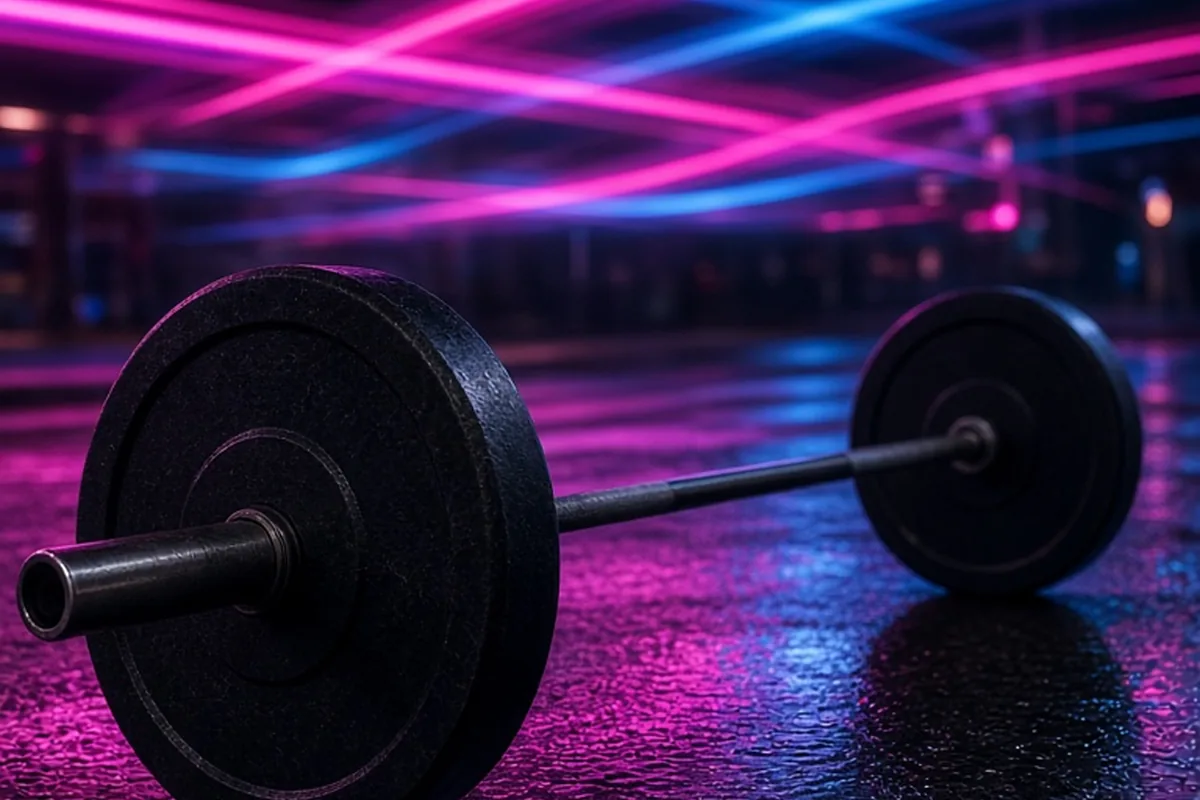
A standard women's Olympic barbell weighs 15 kilograms, which is approximately 33 pounds. In contrast to standard 20-kilogram (44-pound) bars, a women's bar features a slightly shorter total length of 6.6 feet (201 centimeters) and a thinner shaft diameter of 25 millimeters, making it easier to grip securely during dynamic lifts and general strength training.
Walking into a gym or outfitting a home workout space often brings up questions about equipment specifications, especially when different barbells look nearly identical at first glance. Understanding the exact measurements and intentional design choices behind a women's barbell helps you select the right piece of equipment for your hand size, lifting style, and long-term training goals.
Standard Dimensions and Specifications of a Women's Barbell
The standard women's barbell is engineered to precise international specifications established by governing bodies such as the International Weightlifting Federation. The bar weighs exactly 15 kilograms, which converts to approximately 33.07 pounds, though many commercial gyms and recreational lifters round this to 33 or 35 pounds for quick math. It measures 201 centimeters in total length (about 6.6 feet), making it slightly more compact than the 220-centimeter standard men's bar. The shaft itself has a diameter of 25 millimeters, which is noticeably slimmer than the 28 to 29 millimeter shafts found on standard multipurpose and powerlifting bars.
Despite these smaller dimensions, the sleeves on a women's barbell maintain the standard Olympic diameter of 50 millimeters (roughly 2 inches). This universal sleeve sizing ensures that all standard Olympic bumper plates, cast iron plates, and barbell collars fit interchangeably across both 15-kilogram and 20-kilogram bars. The loadable sleeve length is slightly shorter on a 15-kilogram bar—typically around 12.5 to 13 inches compared to the 16.4 inches found on a 20-kilogram bar—which reduces the absolute maximum plate capacity but still allows ample room for several hundred pounds of resistance.
Why Grip Diameter Matters for Hand Size and Mechanics
The primary functional difference between a women's barbell and a standard barbell is the shaft diameter. A 25-millimeter shaft reduces the distance your fingers must wrap around the steel, allowing individuals with smaller hands to achieve a complete, secure grip without excessive forearm fatigue. In dynamic movements such as the snatch or clean and jerk, where a hook grip is essential, being able to fully overlap the thumb with the index and middle fingers significantly increases grip security and reduces the likelihood of the bar slipping mid-lift.
Beyond Olympic weightlifting, a thinner shaft can also improve comfort during heavy pulling exercises like deadlifts, barbell rows, and Romanian deadlifts. When grip strength is not artificially limited by an oversized shaft, lifters can focus their effort entirely on recruiting the target muscle groups in the back and legs. However, there is a mechanical trade-off to consider: a thinner 25-millimeter shaft naturally exhibits more flex or whip under heavy loads. While this flexibility is advantageous for explosive lifts, some lifters may find it feels slightly less rigid on the upper back during heavy back squats compared to a thicker power bar.
Comparing Women's Bars to Standard, Power, and Technique Bars
Barbells come in several distinct categories designed for specific training applications, and knowing how they compare helps you select the appropriate tool for each session. A standard multipurpose or men's Olympic bar weighs 20 kilograms (44 pounds) with a 28 to 28.5 millimeter shaft, serving as the default bar in most commercial fitness facilities. Dedicated powerlifting bars also weigh 20 kilograms but feature a stiffer 29-millimeter shaft and a rough center knurling to keep the bar anchored against the back during heavy squats.
For beginners developing movement patterns or lifters rehabilitating an injury, full-weight barbells can sometimes be too heavy for initial practice. Technique bars bridge this gap, typically weighing between 5 and 10 kilograms (11 to 22 pounds) and made from lightweight aluminum. While technique bars share similar grip dimensions to a 15-kilogram bar, they carry strict weight limits—often capped at 45 to 100 pounds total—making them unsuitable for regular strength loading once basic form is established.
Here is how common barbell categories compare in weight and primary use:
Aluminum Technique Bar: Weighs 5 to 10 kg (11 to 22 lbs); designed strictly for learning form and warm-ups.
Women's Olympic Bar: Weighs 15 kg (33 lbs); features a 25 mm shaft optimized for dynamic lifting and smaller hands.
Standard Multipurpose Bar: Weighs 20 kg (44 lbs); features a 28 to 28.5 mm shaft for general strength training.
Dedicated Power Bar: Weighs 20 kg (44 lbs); features a rigid 29 mm shaft with aggressive knurling for squat, bench, and deadlift.
- Aluminum Technique Bar: Weighs 5 to 10 kg (11 to 22 lbs); designed strictly for learning form and warm-ups.
- Women's Olympic Bar: Weighs 15 kg (33 lbs); features a 25 mm shaft optimized for dynamic lifting and smaller hands.
- Standard Multipurpose Bar: Weighs 20 kg (44 lbs); features a 28 to 28.5 mm shaft for general strength training.
- Dedicated Power Bar: Weighs 20 kg (44 lbs); features a rigid 29 mm shaft with aggressive knurling for squat, bench, and deadlift.
How to Identify a Women's Barbell in a Busy Gym
In a busy fitness facility where barbells are mixed together on racks, identifying a 15-kilogram bar quickly can save time and prevent accidental misloading. Most modern manufacturers follow the International Weightlifting Federation color-coding system by placing a yellow band, yellow end cap, or yellow silicone ring on the sleeve collar of 15-kilogram bars. In contrast, 20-kilogram bars are typically marked with blue accents, while standard utility bars often feature black or silver end caps.
If the bar lacks color markings, you can identify it by physical inspection. A women's barbell is visibly shorter than a standard bar by about 7 inches, with shorter sleeves and a slightly narrower overall profile. Additionally, women's Olympic bars intentionally omit a center knurling—the textured crosshatch pattern in the middle of the shaft—to prevent skin irritation and scraping on the neck or collarbones during cleans, front squats, and snatches. When in doubt, placing two bars side by side makes the difference in length and shaft thickness immediately apparent.
Selecting the Right Barbell for a Home Gym
When outfitting a home or garage gym, choosing between a 15-kilogram bar and a 20-kilogram bar depends on who will be using the space and what types of training will occur most frequently. If you have smaller hands, prioritize Olympic lifting movements, or find standard 28-millimeter shafts uncomfortable to hold, a 15-kilogram bar is an excellent primary investment. It provides the mechanical advantages of a thinner grip while still offering sufficient tensile strength to handle heavy deadlifts, presses, and squats.
If a home gym is shared between multiple people with different hand sizes and training preferences, practical trade-offs come into play. A 15-kilogram bar can easily accommodate lifters of all genders for pulls, rows, and presses, but individuals with larger hands might find a 25-millimeter shaft feels somewhat small during heavy bench pressing. Conversely, starting with a 20-kilogram bar might create grip barriers for someone with smaller hands during pulling exercises. Evaluating your primary training style—such as CrossFit, Olympic weightlifting, or powerlifting—helps determine which bar provides the greatest day-to-day utility.
Understanding Knurling, Bushings, and Bearings
The performance of a barbell is influenced by internal rotation components and surface texture as much as its baseline weight. Inside the sleeves, barbells use either bushings, needle bearings, or a combination of both. Bushings are solid, low-friction rings (often made of bronze or composite material) that provide a controlled, steady rotation. They are durable, cost-effective, and ideal for power lifts and general strength training. Needle bearings, by contrast, use small cylindrical rollers that allow the sleeve to spin smoothly and rapidly, which protects the lifter's wrists during explosive Olympic turnovers.
The knurling pattern on the steel shaft dictates how firmly your hands stick to the bar without relying exclusively on chalk. Knurling ranges from passive (a very smooth, shallow pattern that is gentle on skin during high-repetition workouts) to aggressive (sharp, deep pyramids designed to maximize friction for maximum-effort attempts). For general fitness and Olympic lifting, a medium, volcano-style knurling provides adequate grip security without tearing hand calluses during regular, high-frequency training sessions.
Best Practices for Barbell Math and Safe Progression
Tracking your weights accurately requires accounting for the base weight of the barbell before adding plates to the sleeves. Because a women's barbell weighs 15 kilograms (33 pounds) rather than the standard 45-pound baseline many gymgoers assume, miscalculating the starting weight is a common mistake. For example, placing a pair of 25-pound plates on a 15-kilogram bar results in an 83-pound total load, whereas the same plates on a standard 45-pound bar would equal 95 pounds.
To keep your training logs consistent, establish a simple tracking habit. If your gym uses pound plates, record your baseline bar weight as either 33 or 35 pounds consistently across all workouts, or switch to recording total plate weight plus the bar. Always secure plates with matching collars to prevent uneven sliding during lifts, and consider using fractional or micro-plates (such as 0.5-pound to 1.25-pound increments) when progressing on upper-body movements like the overhead press, where jumps of ten pounds per session may be too large to sustain smoothly.
Frequently asked questions
Can men train with a women's 15-kilogram barbell?
Yes, lifters of any gender can safely use a 15-kilogram barbell for strength training and technique work. However, lifters with larger hands may find the thinner 25-millimeter shaft feels less stable during heavy pressing movements compared to a standard 28-millimeter bar.
Do women's barbells fit standard Olympic weight plates?
Yes, women's Olympic barbells have standard 50-millimeter (2-inch) diameter sleeves that accommodate all standard Olympic bumper plates and iron plates. You do not need specialized plates to use a 15-kilogram bar.
Why do women's barbells lack a center knurling?
Women's bars omit the textured center knurling to protect the lifter's chest and neck during cleans, snatches, and front squats. Because these bars are frequently used for high-repetition and dynamic lifts, a smooth center reduces friction against the body.
Is a women's barbell 33 pounds or 35 pounds?
A women's barbell weighs precisely 15 kilograms, which equals 33.07 pounds. Some gyms and manufacturers round this number to 35 pounds for convenience when calculating total weight with pound plates, but 33 pounds is the exact weight.
Your next step
Check the sleeve end caps or measure the shaft on your gym's barbells during your next session to ensure you are accurately calculating your starting weight.