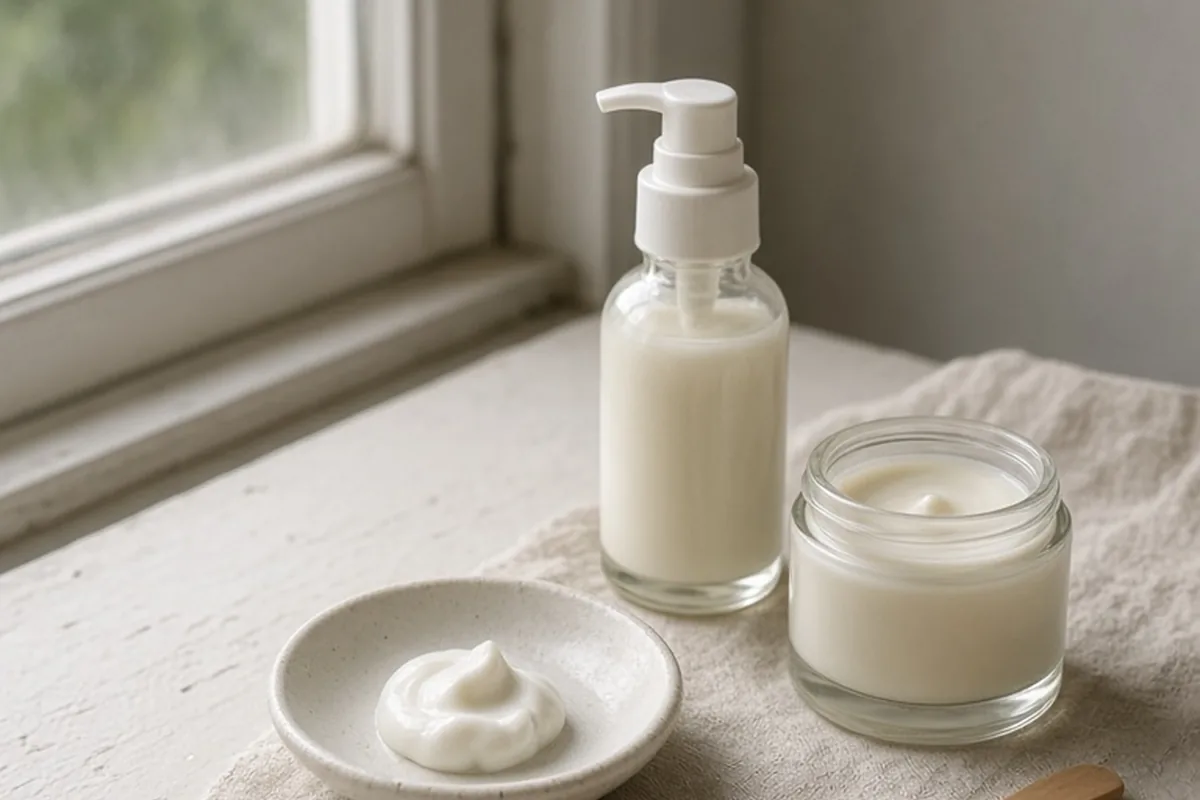
For your face, the ideal amount of moisturizer is generally a nickel-sized dollop (about one to two pumps) for lightweight lotions or gel-creams, and a pea-sized amount for dense, oil-rich creams and balms. For your body, use roughly a quarter-sized amount per limb. You should apply enough product to leave skin feeling soft, supple, and hydrated without creating a greasy film or causing product to pill.
Applying skincare products often feels like a balancing act where more does not necessarily equal better results. When it comes to daily hydration, finding the exact right portion helps your skin maintain its moisture barrier efficiently without suffocating your pores or wasting expensive formulas.
Determining Portion Sizes by Formula Texture
The consistency of your moisturizer is the primary factor that dictates how much you should dispense. Lightweight water gels, gel-creams, and fluid daily lotions contain high water content and humectants like hyaluronic acid or glycerin. Because these formulas spread quickly and absorb rapidly into the upper layers of the skin, a nickel-sized portion—roughly the diameter of a standard coin or one full pump—provides adequate slip to cover your entire face evenly. If you apply too little of a water-based gel, the product can evaporate before it forms an effective protective film, leaving your skin feeling tight within minutes.
Conversely, thick barrier creams, cold creams, and anhydrous balms rely on concentrated emollients and occlusive agents, such as shea butter, ceramides, squalane, or petrolatum. These dense formulas do not require generous spreading; a pea-sized amount is typically sufficient to coat the entire facial surface. Using more than a pea-sized measure of a rich balm can overwhelm your skin, leaving an occlusive layer that sits on top of the epidermis rather than integrating with your natural lipid barrier. When switching between summer lotions and winter creams, always evaluate the thickness of the formula before defaulting to your usual pump habits.
Calibrating Quantity for Your Specific Skin Type
Individual skin physiology influences how much product your face can comfortably absorb and utilize. If you have oily or acne-prone skin, your sebaceous glands already produce a steady supply of natural lipids. You will typically benefit from a smaller, dime-sized measure of an oil-free, non-comedogenic lotion. Overloading oily skin with excessive moisturizer does not curb sebum production; instead, it can mix with dead skin cells and surface debris, increasing the likelihood of congested pores and midday shine.
Dry and dehydrated skin types require a slightly more generous approach because the natural barrier is depleted of essential lipids or water. For chronic dryness, applying a generous nickel-sized amount of a rich cream allows the product to replenish intercellular spaces in the stratum corneum. If you have combination skin, consider zone-targeting: use a pea-sized dab across the drier cheeks and jawline, and only lightly sweep the remaining residual product across your oily T-zone rather than applying uniform layers across the entire face.
Factoring in Seasonal Changes and Climate
Environmental humidity and temperature significantly alter the rate of transepidermal water loss, meaning your moisturizer dosage should shift with the seasons. During hot, humid summer months, ambient moisture slows down water evaporation from your skin. In this environment, a dime-sized amount of a light lotion is often plenty to maintain comfort throughout the day. Using heavy layers during humid weather can trap sweat and bacteria beneath the surface, leading to heat bumps or irritation.
In contrast, cold winter weather combined with indoor artificial heating dramatically lowers ambient humidity, drawing moisture out of your skin at an accelerated pace. During these colder months, increasing your application to a plump nickel-sized dollop—or switching to a richer cream and using a full nickel-to-quarter-sized measurement—gives your skin the extra barrier protection it needs to withstand wind chill and dry indoor air. Pay attention to how your skin feels halfway through the day; persistent tightness is a clear signal to increase your portion size slightly.
Step-by-Step Technique to Maximize Coverage
How you apply your moisturizer directly affects how far a single portion goes. Rubbing a large pool of lotion between your palms before touching your face often results in the hands absorbing a substantial portion of the product before it reaches your skin. A more efficient method is the five-dot technique: dispense your measured portion onto the back of your hand, then use a clean fingertip to place small dots on your forehead, both cheeks, nose, and chin before gently smoothing outward.
Always apply your moisturizer to slightly damp skin—ideally within sixty seconds of cleansing or applying a hydrating toner. Applying moisturizer over damp skin traps existing surface water, allowing humectants to pull that moisture into the epidermal layers while enabling the product to glide effortlessly across a larger surface area. This simple habit often allows you to cut your required product volume by nearly twenty percent while achieving superior, longer-lasting hydration.
- Dispense product onto the back of your hand to prevent accidental over-application.
- Dot the formula onto your forehead, cheeks, nose, and chin to ensure even distribution.
- Smooth the product outward and upward using gentle, sweeping motions without tugging the skin.
- Press your palms gently over your face to encourage full absorption and seal the moisture.
Signs You Are Using Too Much or Too Little
Your skin provides immediate visual and tactile feedback when your moisturizer dosage is off balance. If you are applying too much product, you may notice small white flakes or rolled beads of cream forming on the skin surface, commonly known as pilling. Other common indicators of excess include makeup slipping off within an hour of application, a persistent greasy film that fails to sink in after ten minutes, or the emergence of tiny, non-inflammatory white bumps called milia around delicate areas.
Under-moisturizing presents with a distinct set of symptoms. If your skin feels taut, scratchy, or tight within an hour of your routine, you are likely applying too little product or using a formula that is too light for your barrier needs. Other signs include visible dry patches, makeup clinging to textured areas around the nose and mouth, and exaggerated fine surface lines caused by dehydration. When adjusting your routine, make small incremental changes over three to four days rather than doubling your portion overnight.
Coordinating Quantities in a Multi-Step Routine
If your daily skincare routine includes multiple steps, your moisturizer quantity must accommodate the other layers you apply. When using hydrating serums, essences, or facial oils, your skin is already partially saturated with moisture and conditioning agents. In a multi-step routine, you can often scale back your moisturizer from a nickel-sized portion to a smaller dime-sized amount, using it primarily to lock in the lightweight serums underneath without creating an excessively heavy barrier.
Sunscreen integration is another vital consideration for morning routines. Because broad-spectrum sunscreen must be applied generously—roughly a dedicated half-teaspoon or two finger lengths for the face and neck—using a heavy layer of moisturizer underneath can dilute the sunscreen film or cause it to slide around. If your sunscreen already contains moisturizing emollients, a tiny pea-sized dab of light cream on dry zones prior to sunscreen is often sufficient to keep your skin balanced and protected.
Measuring Amounts for the Neck, Décolletage, and Body
Skincare should not stop at your jawline, as the neck and chest have fewer sebaceous glands and thinner skin, making them especially vulnerable to dehydration and loss of elasticity. To treat your neck and upper décolletage properly, dispense a dedicated nickel-sized portion separate from the amount used on your face. Smooth this amount upward from your collarbones toward your jawline to avoid dragging the fragile tissue downward.
For full-body moisturization, measuring by limbs offers the most reliable consistency. As a general benchmark, use one to two full pumps (roughly a quarter-sized dollop) for each arm, two to three pumps for each leg, and two to three pumps for your torso and back. Apply your body lotion immediately after stepping out of the shower while your skin is still warm and lightly dewy to seal in water and maximize product glide across larger surface areas.
Daytime Versus Nighttime Quantity Adjustments
Your skin has different functional priorities during the day compared to the evening, which should be reflected in how much moisturizer you apply. Daytime application focuses on lightweight comfort, environmental protection, and compatibility with sunscreen and cosmetics. Consequently, daytime doses should be lean—typically a dime-to-nickel portion of a breathable lotion that absorbs within two to three minutes without leaving a tacky residue.
At night, transepidermal water loss increases while you sleep, and your skin is not competing with makeup or outdoor elements. Evening is the ideal time to apply a more generous layer—a full nickel-sized portion of a restorative night cream or a pea-sized layer of a rich sleeping balm. This slightly heavier cushion acts as a protective shield against dry bedroom air, ensuring you wake up with soft, hydrated, and fully rested skin.
Frequently asked questions
Can using too much moisturizer cause breakouts?
Yes, applying excessive amounts of moisturizer can overwhelm your skin, trapping dead skin cells, sweat, and surface oils inside your pores. If heavy occlusive creams sit on the skin without absorbing, they create a breeding ground for congestion, blackheads, and inflammatory breakouts.
How long should I wait for moisturizer to absorb before applying makeup?
You should generally wait about three to five minutes after applying moisturizer before putting on foundation or concealer. This brief window allows the emollients to integrate with your skin's surface so your makeup applies smoothly without sliding or pilling.
Is a pea-sized amount really enough for the entire face?
A pea-sized amount is plenty if you are using a concentrated balm, waterless ointment, or very dense lipid cream. For lighter everyday lotions and gel formulas, a nickel-sized portion is usually necessary to achieve full, even coverage.
Should I reapply moisturizer throughout the day?
Most people do not need to reapply moisturizer midday if their morning routine is properly balanced. However, if you spend extended time in dry heated rooms or experience localized flaking, patting a small drop of lightweight lotion onto dry spots can restore comfort.
Your next step
To establish your ideal routine, start tonight with a measured pea-to-nickel sized portion based on your product's texture, apply it to damp skin, and evaluate how your face feels thirty minutes later to fine-tune your daily dosage.