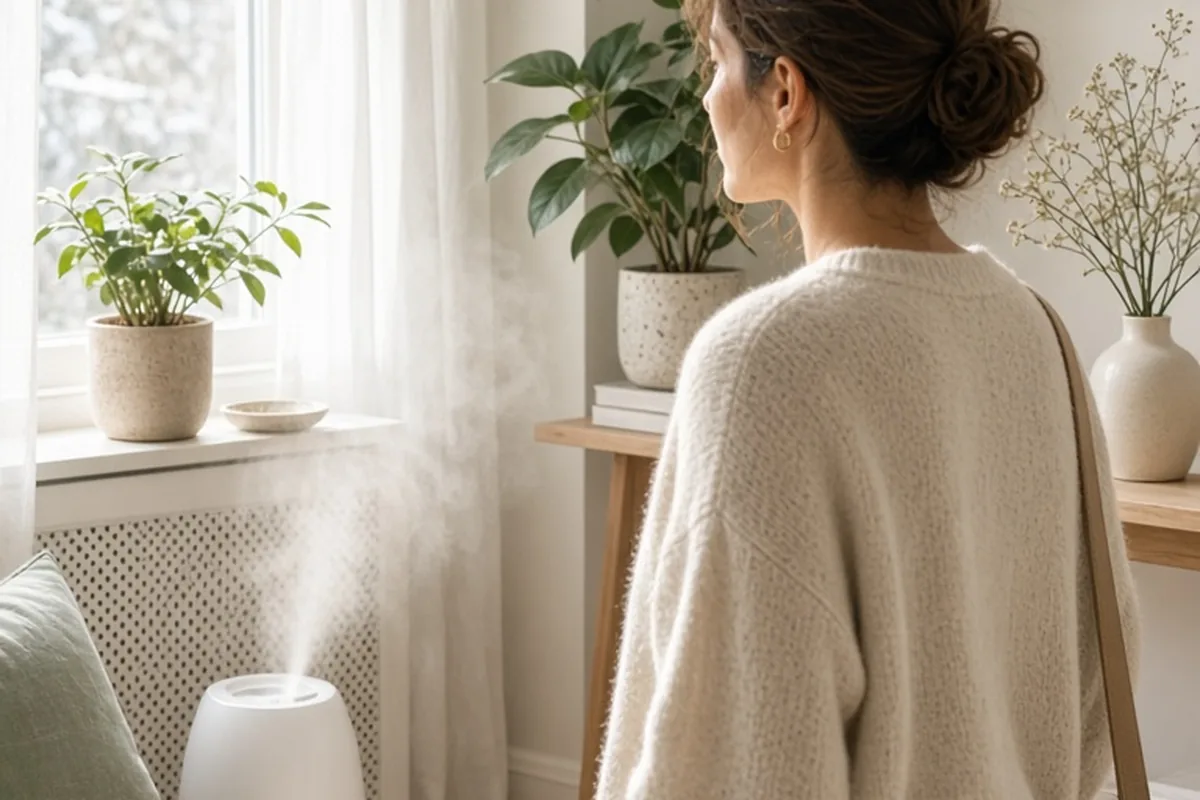
To add moisture to a room quickly, run a cool-mist or warm-mist humidifier sized for your square footage. If you do not have a humidifier, place wide bowls of water near heat registers, leave the bathroom door open after showering, air-dry laundry inside, simmer water on the stove, or group leafy houseplants together in sunny corners.
Dry indoor air is a common nuisance during cold winter months and peak summer air-conditioning seasons. When relative humidity drops too low, it can lead to scratchy throats, chapped lips, dry skin, and irritating static electricity throughout living spaces.
Choose and Position a Dedicated Humidifier
A dedicated room humidifier remains the most direct and controllable method for raising indoor moisture levels. These appliances come in several designs, primarily ultrasonic, evaporative, and steam vaporizers. Ultrasonic models use high-frequency vibrations to produce a micro-fine mist, operating quietly in bedrooms and home offices. Evaporative models use an internal wick filter and a fan to draw dry air across wet media, naturally self-regulating output because evaporation slows down as the surrounding air becomes more saturated. Steam vaporizers boil water to create warm vapor, which can provide a slight warming effect in colder rooms.
To get the best performance from a humidifier, place the unit on a flat, elevated surface roughly two to three feet off the ground rather than directly on carpeting or hardwood floors. Elevating the machine allows the expelled mist to disperse and blend into circulating air currents before settling on surfaces. Use distilled or demineralized water in ultrasonic units to prevent the dispersal of mineral residue, often called white dust, across furniture. Regular maintenance is essential; empty stagnant water daily, descale the tank with white vinegar once a week, and disinfect with diluted hydrogen peroxide to keep the output clean and fresh.
Harness Everyday Cooking and Kitchen Steam
Daily meal preparation offers an easy, cost-free opportunity to release substantial moisture into your home. Cooking foods on the stovetop that require boiling, such as soups, pasta, rice, or tea, releases water vapor directly into the kitchen and surrounding rooms. Instead of running the kitchen exhaust fan on high throughout every simmering process, keep the fan off when boiling clean water or neutral broths, allowing the rising steam to migrate naturally through nearby doorways and hallways.
You can also create an intentional stovetop simmer pot by filling a saucepan with water and gentle aromatics like sliced citrus, cinnamon sticks, or rosemary sprigs. Keep the burner on low heat and monitor the liquid level regularly so the pan never boils dry. Another effective kitchen habit is opening the dishwasher door as soon as the final heated rinse cycle completes. Releasing that trapped cloud of hot steam into the kitchen adds an immediate humidity boost while allowing your dishes to air-dry without using extra drying cycle electricity.
Recycle Steam and Residual Water from the Bathroom
Bathrooms generate concentrated pockets of humid air that are frequently vented outside through exhaust fans before the rest of the home can benefit. If your privacy and household layout allow it, leave the bathroom door wide open while showering or immediately after stepping out. The warm moisture generated by the running water will circulate into adjacent bedrooms and hallways, softening the dry atmosphere of surrounding living quarters.
If you enjoy soaking in a bathtub, avoid draining the water immediately after you finish. Allow the warm bathwater to sit in the tub until it cools down to room temperature. As the standing water rests, a portion of it will naturally evaporate into the ambient air, providing a steady moisture release over several hours. Always consider household safety when leaving standing water in a tub, particularly in homes with curious pets, toddlers, or young children, and drain the water once it is cool.
Air-Dry Wet Laundry and Towels in Living Areas
Using an electric clothes dryer vents gallons of valuable moisture outside through an exhaust duct. By shifting some of your laundry routine to indoor air-drying, you capture that evaporating water inside your home. Set up a folding drying rack in your living room, home office, or bedroom and hang damp shirts, jeans, bed linens, and socks to dry. A full load of damp laundry can release a significant volume of water vapor over eight to twelve hours as the fabric fibers dry naturally.
You can apply the same principle on a smaller scale with everyday bath towels. Instead of hanging damp towels back in an enclosed bathroom, drape them over a clothes hanger, a drying rail, or the back of a sturdy chair in the room that feels most parched. If you have hot-water or steam radiators, laying a clean, damp cotton cloth or towel over the warm metal surface accelerates evaporation without damaging the heating unit. Avoid placing wet items on electric baseboard heaters or space heaters, which present fire and electrical hazards.
Set Up Passive Evaporation Stations Near Heat Sources
Passive evaporation is a quiet, zero-electricity approach that relies on ambient airflow and thermal energy. Because evaporation depends on surface area rather than container depth, shallow, wide containers are far more effective than tall, narrow glasses. Fill ceramic baking dishes, metal cake pans, or wide decorative bowls with clean tap water and place them in areas where warm air circulates, such as along sunny windowsills, atop radiator covers, or a safe distance in front of forced-air heating registers.
To increase the rate of evaporation, you can add porous materials to the water containers. Clean river stones, terracotta saucers, or clean natural sponges placed inside the tray absorb water and draw it upward, expanding the total surface area exposed to room air. The moving warm air from your heating system sweeps over these wet surfaces, accelerating the transfer of water vapor into the living space. Refill these dishes regularly and wash them out every few days with warm, soapy water to prevent dust accumulation or bacterial films.
Incorporate Moisture-Releasing Houseplants and Pebble Trays
Living houseplants serve as natural, self-sustaining humidifiers through a biological process called transpiration. Plants draw water up from the soil through their root systems, transport it through their stems, and release the vast majority of that moisture back into the surrounding air through tiny pores in their leaves called stomata. Leafy varieties with broad foliage or dense canopies, such as Boston ferns, spider plants, peace lilies, rubber plants, and areca palms, are particularly active in transpiring moisture.
To amplify this effect, group several houseplants together in a shared corner rather than scattering them across distant areas. Clustering plants creates a localized microclimate where humidity levels stay noticeably higher. You can also place plant pots on shallow trays filled with a layer of small pebbles and water, ensuring the bottom of the pot rests above the waterline on the pebbles so roots do not become waterlogged. As water evaporates from the pebble tray below, it rises directly through the plant foliage, boosting moisture around the greenery and into the room.
Monitor Moisture Levels to Prevent Over-Humidification
While adding moisture makes dry air significantly more comfortable, indoor humidity requires balance. Excessive moisture in an enclosed space can encourage the growth of mold, mildew, and dust mites, as well as cause structural issues like peeling paint or damp drywall. A comfortable and safe indoor target is generally between thirty and fifty percent relative humidity. Maintaining this range provides relief from dry air symptoms while keeping environmental moisture within a manageable threshold.
An inexpensive digital hygrometer is the most reliable tool for tracking indoor humidity levels accurately. Place the hygrometer away from direct drafts, exterior doors, and cooking appliances to get an accurate baseline reading for the room. If your hygrometer reads above fifty percent, or if you notice visible condensation forming on cold windowpanes or interior walls, temporarily scale back moisture-adding activities, open interior doors to promote airflow, and ensure your home has adequate ventilation.
Frequently asked questions
What is the fastest way to add moisture to a dry room?
Running an ultrasonic or steam humidifier provides the quickest increase in room moisture because it actively disperses fine water vapor into the air. Boiling a wide pot of water on the stove or hanging wet bath towels directly in the room also produces noticeable relief within an hour.
Can I leave a bowl of water in my bedroom to increase humidity?
Yes, leaving a wide, shallow bowl of water in your bedroom will gradually raise humidity through natural evaporation. Placing the bowl near a warm windowsill or a safe distance from a heat register will help speed up the process.
How do I know if my room has too much moisture?
You can check your room with a digital hygrometer to see if relative humidity exceeds fifty percent. Physical signs of excess moisture include fog or water droplets on window glass, musty odors, and dampness on walls or ceilings.
Is warm mist or cool mist better for adding room moisture?
Both cool mist and warm mist humidifiers are equally effective at adding overall moisture to indoor air. Cool mist models are generally safer around children and pets and use less energy, while warm mist units can make a chilly room feel slightly cozier.
Your next step
Place a digital hygrometer in your most-used room to check your baseline humidity, then choose one simple method, like a dedicated humidifier or indoor drying rack, to bring moisture into the ideal thirty to fifty percent range.