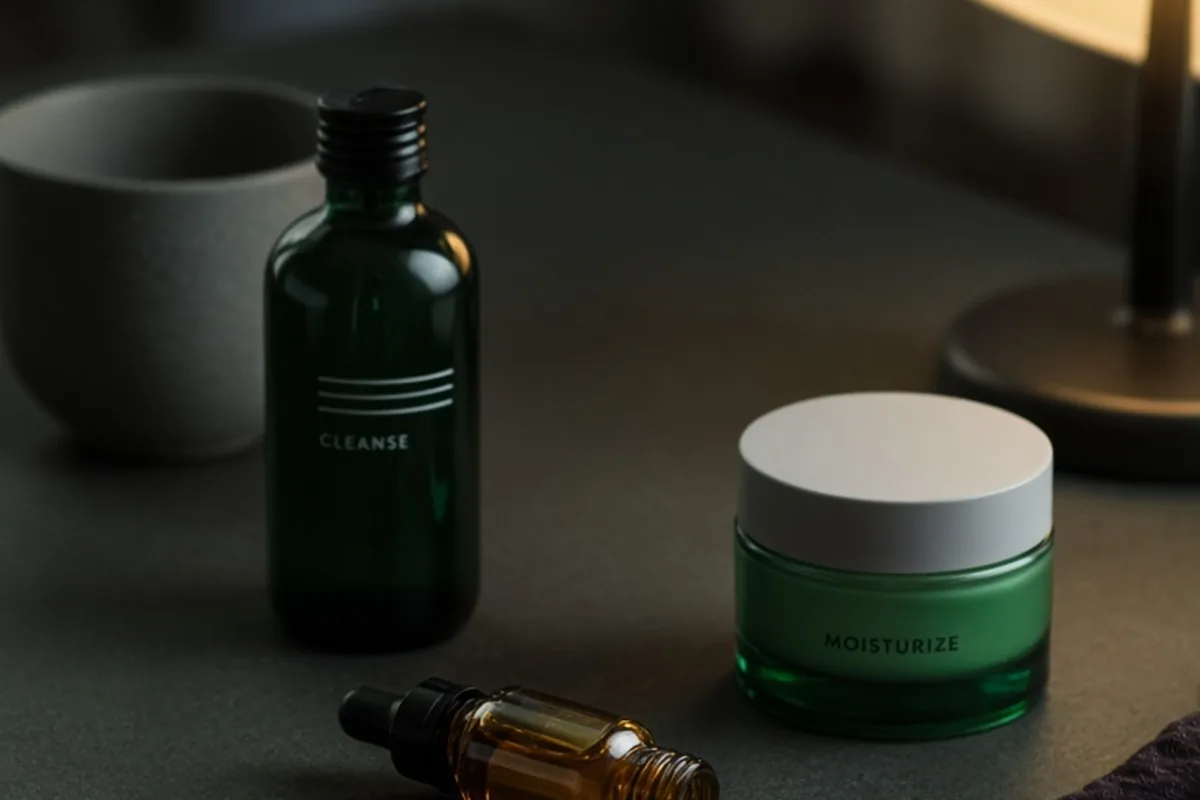
To build a simple skincare routine, focus on three core steps: cleanse, moisturize, and protect with sunscreen. In the morning, wash with water or a gentle cleanser, apply a hydrating moisturizer, and finish with broad-spectrum sunscreen. At night, cleanse away dirt and oil, then apply moisturizer to support the skin barrier. Once this foundation feels comfortable and consistent, you can optionally introduce targeted treatments for specific concerns.
Starting a skincare regimen often feels overwhelming due to multi-step trends, yet healthy skin thrives primarily on consistency and gentle care. A straightforward routine minimizes irritation, saves money, and makes it easier to track what actually works for your individual complexion.
Understanding the Core Three-Step Foundation
A functional skincare routine does not require an elaborate shelf of serums, toners, and masks. The skin possesses natural self-regulating mechanisms, including a protective lipid barrier and an acid mantle that keeps moisture in and pathogens out. When you introduce too many complex formulations at once, you increase the likelihood of product conflicts, clogged pores, and barrier disruption. Focusing strictly on cleansing, moisturizing, and sun protection provides the necessary external support your skin needs without interfering with its natural functions.
Cleansing removes accumulated grime and excess sebum, moisturizing replenishes lost hydration and lipids, and sunscreen shields the skin matrix from ultraviolet degradation. For example, someone who previously struggled with recurring redness while using six different active serums often finds their complexion settles within weeks simply by paring back to these three basics. The trade-off of this minimalist approach is patience: a basic routine focuses on long-term barrier resilience rather than overnight dramatic shifts, requiring steady adherence before evaluating changes.
Choosing the Right Cleanser for Your Skin Type
The primary purpose of a facial cleanser is to lift away sweat, airborne particles, excess oil, and residue without stripping the skin of its essential moisture. Cleansers generally fall into foaming gels, non-foaming lotions, creams, and balms. Finding the right formula depends on how much natural oil your skin produces throughout the day and how sensitive your barrier feels after washing.
If your skin feels dry, tight, or flaky, a creamy, non-foaming hydrating wash containing ingredients like glycerin can cleanse effectively while leaving moisture intact. If your skin tends toward excess oiliness or frequent congestion, a mild foaming gel cleanser can lift excess sebum without leaving the skin squeaky clean. A tight or stinging sensation immediately after rinsing is a clear sign that a cleanser is too aggressive for your skin type. Massaging your cleanser gently with lukewarm water for thirty to sixty seconds is sufficient to cleanse without mechanical irritation.
Selecting a Moisturizer That Nourishes Your Barrier
Moisturizers work through a combination of humectants, emollients, and occlusives to preserve water balance in the stratum corneum. Humectants, such as hyaluronic acid and glycerin, attract moisture into the surface layers of the skin. Emollients, such as squalane and fatty acids, smooth the spaces between skin cells. Occlusives, such as ceramides, dimethicone, or plant butters, create a light protective seal that slows down trans-epidermal water loss throughout the day and night.
Choosing an appropriate moisturizer comes down to texture and personal comfort. Oily and combination skin types generally benefit from lightweight gel-creams or oil-free lotions that absorb quickly without feeling heavy or causing shine. Dry or barrier-compromised skin usually requires richer creams containing ceramides and lipids to relieve tightness. Applying your moisturizer onto slightly damp skin immediately after cleansing helps lock in existing hydration. Keep in mind that a standard moisturizer is designed for maintenance; it will not erase deep textural scarring or persistent pigmentation on its own.
Prioritizing Daily Sun Protection Without the Greasiness
Sun protection is the most critical preventative step in any daytime skincare routine. Ultraviolet radiation reaches the skin year-round, even through overcast skies and standard window glass, contributing to collagen breakdown, hyperpigmentation, and premature aging. A broad-spectrum sunscreen protects against both UVA rays, which penetrate deeply and accelerate aging, and UVB rays, which cause surface burning.
Many people avoid daily sunscreen due to memories of heavy, greasy lotions that leave a white residue. Contemporary formulations, however, offer lightweight chemical filters that blend invisibly into deeper skin tones, as well as mineral options containing zinc oxide that soothe sensitive or reactive complexions. Look for a broad-spectrum formula with an SPF rating of at least 30. Applying roughly a nickel-sized amount to cover your face and neck ensures you receive the level of protection stated on the label.
Structuring Your Morning and Evening Workflows
Your morning and evening routines serve distinct purposes based on environmental exposure and biological rest cycles. The morning workflow is geared toward hydration and defense against daily stressors like sunlight and pollution. A practical morning sequence takes only two minutes: rinse your face with water or a mild cleanser, apply a light layer of moisturizer if your skin feels dry, and finish with a generous layer of broad-spectrum sunscreen.
The evening workflow focuses on thorough cleansing and barrier replenishment. At night, wash your face with your gentle cleanser to remove sunscreen, makeup, and daily pollutants. Follow this immediately with a nourishing layer of moisturizer to support the skin's natural nocturnal repair processes. If you wear water-resistant sunscreen or full-coverage makeup, an initial pass with micellar water or a cleansing oil prior to your regular wash can prevent residual buildup without aggressive rubbing.
Introducing Targeted Actives Gradually
Once your three-step baseline has been stable and comfortable for at least four to six weeks, you can consider adding a single targeted active ingredient to address specific concerns. For example, individuals dealing with persistent blackheads or minor breakouts might choose a low-concentration salicylic acid wash, while those seeking to address dull tone might introduce a morning vitamin C serum. Those interested in supporting cellular turnover often turn to a mild evening retinoid.
The golden rule when introducing active treatments is to change only one variable at a time. Start by using the new product just two evenings per week, gradually increasing frequency over several weeks as your skin demonstrates tolerance. Layering multiple new acids, scrubs, and strong retinoids simultaneously frequently leads to redness, peeling, and barrier damage. If you experience irritation, pause the active ingredient and return to your gentle cleanser and moisturizer until your skin calms completely.
Troubleshooting Common Routine Mistakes
One of the most frequent mistakes in skincare is switching products too quickly in search of rapid improvements. The skin cell turnover cycle typically takes roughly twenty-eight to forty days in healthy adults, meaning most gentle formulations require four to eight weeks of continuous use before their full benefits become visible. Constantly rotating cleansers, creams, and treatments makes it impossible to identify which product is helping or triggering breakouts.
Another common pitfall is over-cleansing or aggressive physical scrubbing in an attempt to eliminate oil or texture. Over-washing strips essential protective lipids, prompting the skin to produce rebound oiliness or develop heightened sensitivity. If your face stings when applying a basic moisturizer, treat it as a sign of barrier fatigue: simplify your routine, avoid active exfoliants, and stick to gentle, fragrance-free basics until balance is restored.
Frequently asked questions
How long does it take to see results from a simple skincare routine?
Most people notice improved skin hydration and reduced irritation within two to three weeks of consistent care. However, deeper improvements such as balanced oil production and smoother texture generally require four to eight weeks, aligning with your skin's natural renewal cycle.
Can I skip moisturizer if I have oily skin?
Skipping moisturizer is not recommended because oily skin can still suffer from dehydration, which is a lack of water rather than oil. When dehydrated, oily skin may produce even more sebum to compensate, making a lightweight, oil-free gel moisturizer an essential step.
Do I need to wash my face with cleanser twice a day?
Washing with a cleanser once a day in the evening is essential to remove sunscreen and daily grime. In the morning, individuals with dry or sensitive skin can often simply rinse with lukewarm water, while those with oily skin may prefer a gentle morning cleanse.
What should I do if my skin stings after applying simple products?
Stinging usually indicates that your protective skin barrier has been compromised by harsh ingredients, over-exfoliation, or environmental stress. Stop all active treatments immediately and use only a mild, non-foaming cleanser and a gentle barrier cream until your skin recovers.
Your next step
Assess your current products today, remove unnecessary steps, and commit to using only a gentle cleanser, a suitable moisturizer, and daily broad-spectrum sunscreen for the next four weeks.