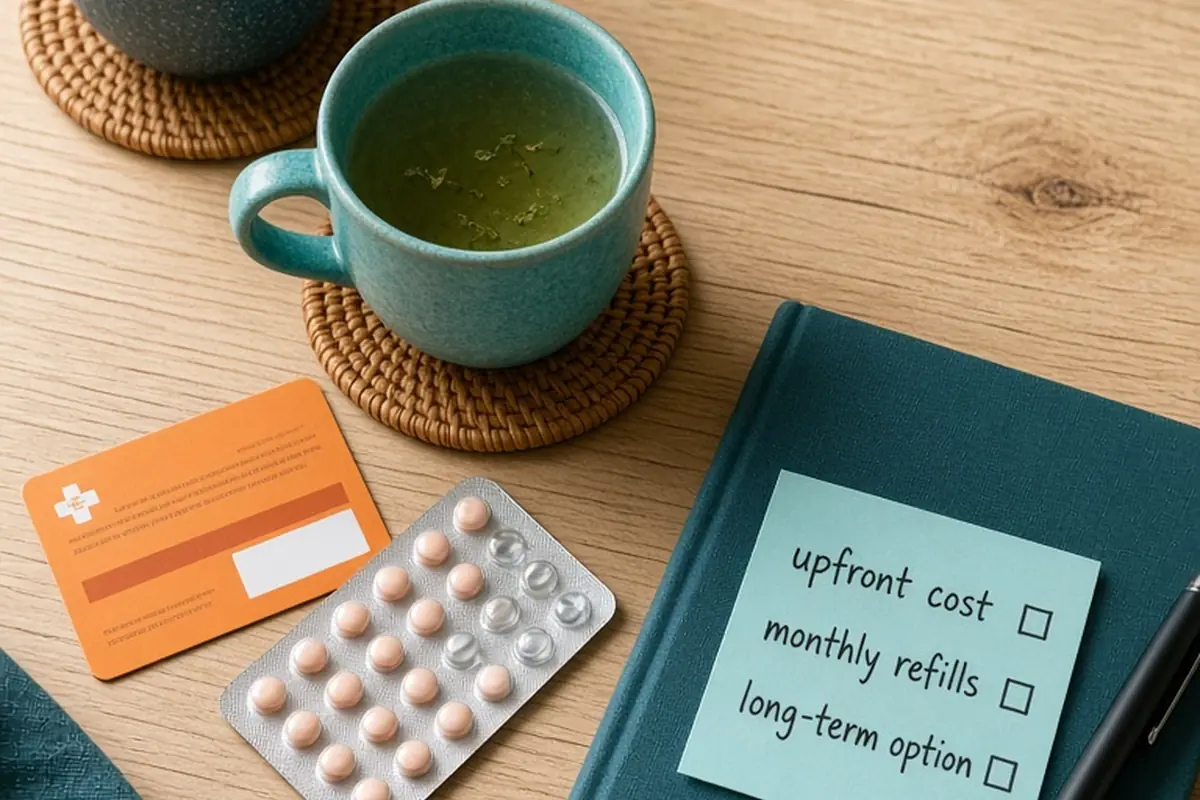
To choose birth control without insurance, evaluate your total financial commitment across three distinct categories: initial clinical evaluation fees, procedural or device expenses, and recurring supply refills. Compare short-acting methods like generic oral pills or barrier options against upfront-investment devices like implants or intra-uterine devices. Check local Title X family planning clinics, federally qualified community health centers offering sliding-scale fees, retail discount cards, and telehealth services to secure predictable, affordable pricing.
Navigating reproductive healthcare without private health insurance or public coverage requires balancing immediate cash flow with long-term contraceptive effectiveness and personal medical needs. Every contraceptive method carries a unique combination of clinical visit fees, retail product costs, and ongoing maintenance or replacement expenses. Choosing the right option involves understanding how these billing pieces interact and finding local and online resources that reduce out-of-pocket spending.
Evaluating Upfront Procedural Fees Versus Recurring Monthly Refills
When managing out-of-pocket reproductive health expenses, the primary financial division lies between long-acting reversible contraception and user-directed, short-acting methods. Long-acting options, such as intra-uterine devices and sub-dermal contraceptive implants, concentrate almost all of their total expense into an initial clinical visit that covers the device purchase, pre-insertion screening, and the medical insertion procedure itself. Once placed, these devices provide continuous pregnancy prevention across multiple years without requiring monthly pharmacy transactions or regular prescription renewals, which often yields a lower average expense over several years.
In contrast, short-acting hormonal methods—including oral contraceptive pills, transdermal patches, and vaginal rings—spread financial commitments into predictable monthly or quarterly cash outlays. While the initial medical visit for a prescription is typically less involved than a device placement, you must budget for continuous refills for as long as you use the method. Selecting between these models depends heavily on your current cash liquidity versus your projected monthly budget stability, as paying a larger lump sum at a clinic visit might not be manageable if you do not have immediate savings available.
Beyond cash flow timing, consider how long you intend to prevent pregnancy before making a choice based on financial calculations alone. If you plan to attempt pregnancy within twelve to eighteen months, the amortized value of a multi-year long-acting device diminishes significantly, making month-to-month generic oral formulations or barrier methods more financially logical. Conversely, if you desire reliable multi-year protection and can secure care through a clinic with subsidized procedural tiers, an upfront method eliminates future refill disruptions caused by budget fluctuations.
Further reading: CDC: Contraception and birth control methods
Further reading: Office on Women's Health
Comparing Prescription Contraception Formats and Supply Schedules
Choosing an affordable prescription contraceptive requires understanding the distinct retail pricing dynamics of pills, patches, injections, and rings. Combined oral contraceptive pills and progestin-only pills benefit from extensive generic competition in the pharmaceutical market, making them consistently among the most accessible out-of-pocket options at retail pharmacies. Many formulations share bioequivalent active ingredients under different brand and generic labels, giving you room to ask a prescribing clinician for the lowest-cost equivalent available at local retail counters.
Injectable contraception, administered on a set multi-week schedule by a healthcare professional or through guided self-administration, occupies a middle ground in terms of refill frequency. Each dose covers several months of protection, requiring four payments per year rather than twelve. However, you must account for whether each injection requires a separate clinical administration fee at an outpatient office or whether you can purchase the vial at a pharmacy and self-administer at home based on your clinician's guidance and state regulations.
Vaginal rings and transdermal patches generally present fewer generic alternatives in the commercial supply chain than oral tablets, which can elevate their out-of-pocket retail pricing. If you prefer these formats because they do not require daily pill schedules, discuss generic equivalents directly with your prescriber before the prescription is transmitted. Clinicians can frequently review local dispensing formularies to confirm whether an authorized generic exists that keeps monthly out-of-pocket costs manageable.
Further reading: CDC: Contraception and birth control methods
Accessing Title X Clinics and Community Health Centers with Sliding Fees
Federally funded Title X family planning clinics and Federally Qualified Health Centers represent an essential safety net for individuals navigating contraceptive care without commercial insurance. These centers receive public grant funding specifically designed to provide voluntary, confidential family planning services to anyone regardless of their ability to pay or insurance status. Clinical services at these locations are structured on a sliding-fee scale directly calibrated to household income relative to federal poverty guidelines.
When you schedule an appointment at a Title X site or community health center, the intake staff will ask for basic income documentation, such as recent pay stubs, tax records, or an official self-declaration of income if standard documentation is unavailable. Patients falling below designated income thresholds often receive initial examinations, routine contraceptive counseling, laboratory screenings, and prescription supplies or device insertions at deeply reduced rates, and in some qualifying instances, at zero out-of-pocket charge.
In addition to subsidized office visits, these clinics frequently maintain in-house dispensaries stocked with oral contraceptives, hormonal injections, implants, and intra-uterine devices acquired through government pharmaceutical pricing programs. Utilizing an integrated clinic dispensary prevents the surprise retail markups commonly experienced when transferring a paper prescription to a commercial chain pharmacy, allowing you to settle visit and medication costs simultaneously during your appointment.
Further reading: Office on Women's Health
Navigating Retail Generic Programs, Mail-Order Telehealth, and Coupons
For individuals who prefer private home delivery or lack convenient access to community health clinics, direct-to-consumer digital health platforms offer transparent cash pricing structures for birth control. Telehealth reproductive health companies typically bundle an asynchronous medical consultation fee with automatic home delivery of multi-month pill supplies. These services publish their consultation fees and per-pack medication pricing upfront, allowing you to calculate your annual out-of-pocket obligation before completing an intake questionnaire.
If you already possess a valid prescription from an in-person primary care provider or gynecologist, prescription discount cards and retail pharmacy membership programs can significantly lower your cash price at local counters. Free medication discount networks negotiate cash rates with retail pharmacy chains, frequently lowering the retail sticker price of generic combined or progestin-only pills. To find the best rate, search the specific chemical name and dosage of your prescribed medication on multiple discount databases, as discounted prices fluctuate between competing pharmacy locations within the same zip code.
Large retail grocery and department store pharmacies often maintain specialized generic value lists that offer select maintenance medications, including specific generic contraceptive formulations, for a fixed out-of-pocket fee per 30-day or 90-day fill. Requesting a 90-day supply from your prescriber rather than single-month refills frequently lowers both the per-pack cost and eliminates the need for frequent pharmacy trips, creating an efficient and reliable refill schedule.
Further reading: CDC: Contraception and birth control methods
Factoring in Insertion, Removal, and Clinician Follow-Up Expenses
When budgeting for long-acting methods like intra-uterine devices or contraceptive implants without insurance, calculating the purchase price of the physical device is only the first step. Clinical placement involves distinct professional service fees, including an initial evaluation visit to assess medical history, the procedural insertion itself, and any necessary localized anesthesia or sterile surgical tray charges. Contact the clinic billing department prior to your visit to ask for a comprehensive breakdown of all prospective medical billing codes associated with the procedure.
Equally important is planning for eventual device removal or unexpected early discontinuation. Every long-acting device will eventually reach its approved duration limit, or you may decide to discontinue the method early due to personal preference, side effects, or a desire to become pregnant. Removal requires a separate medical procedure that carries its own distinct professional fee. Omitting removal costs from your initial financial evaluation can create an unexpected financial barrier if you need the device taken out before you have secured health coverage.
Routine follow-up appointments represent another potential cash expense to evaluate. While many patients experience uncomplicated long-acting device placement, occasional follow-up visits may be warranted to check placement, address prolonged cycle alterations, or confirm string position. Inquiring whether routine post-procedure checks within the first thirty to sixty days are included in the initial procedure quote helps avoid unexpected outpatient invoices.
Further reading: CDC: Contraception and birth control methods
Further reading: Office on Women's Health
Asking the Right Billing Questions Before Your Appointment
Obtaining clear financial estimates from private medical practices, hospital-affiliated clinics, and outpatient diagnostic centers requires direct self-advocacy before receiving care. Under federal healthcare transparency guidelines, uninsured and self-pay patients have the right to receive a written Good Faith Estimate of expected charges upon scheduling an appointment or upon direct request. When calling a facility, explicitly state that you are a self-pay patient and ask to speak directly with an estimate specialist or the financial clearance department.
When discussing your visit with clinic billing representatives, ask specific questions about each expected component of your appointment. Inquire whether the office visit fee includes routine laboratory screenings, such as high-complexity pregnancy testing or cervical cytology, or if those samples are routed to third-party commercial laboratories that bill uninsured patients independently. Clarify whether the facility extends an uninsured prompt-pay discount for settling the balance in full on the date of service, as many private medical groups reduce self-pay bills significantly for immediate settlement.
Furthermore, ask whether the clinician can provide prescriptions tailored specifically to low-cost generic formularies. Clinicians interact with dozens of insurance formularies daily and may inadvertently prescribe a brand-name medication or newer progestin formulation with no generic equivalent unless you clearly communicate your self-pay status during the consultation. Open communication regarding your financial preferences allows the clinician to select safe, highly effective options aligned with your budget.
Further reading: Office on Women's Health
Developing a Contingency Plan for Missed Doses and Emergency Contraception
A complete financial strategy for self-pay contraception must include a practical contingency plan for unexpected situations, such as missed doses, expired barrier supplies, or unplanned barrier breaks. Dedicated emergency contraception pills are available over the counter without a prescription, but retail prices for brand-name formulations can be notably high at retail front-counters. Planning in advance allows you to purchase generic levonorgestrel emergency pills online or through local public health clinics at a fraction of standard pharmacy retail shelf prices.
Keeping a low-cost generic emergency contraceptive pill stored safely at home in advance eliminates the stress of rushing to a retail store during an urgent window and paying full commercial price. Verify expiration dates periodically and review package guidelines regarding storage temperatures to preserve medication efficacy. Understanding the time frame for emergency contraception—which is most effective the sooner it is taken after unprotected intercourse—ensures you can act promptly without incurring premium express delivery or emergency clinic evaluation fees.
If you encounter repeated difficulties maintaining regular refill schedules due to variable cash flow, schedule a follow-up conversation with your primary provider or local community clinic. Contraceptive counseling is an ongoing process, and shifting between delivery methods—such as transitioning from monthly pharmacy visits to a long-acting implant funded through sliding-scale subsidies—can protect you against unintended gaps in coverage while maintaining overall peace of mind.
Further reading: CDC: Contraception and birth control methods
Further reading: Office on Women's Health
Frequently asked questions
Can I get birth control for free if I do not have health insurance?
Yes, many individuals qualify for free or very low-cost contraception through federally funded Title X family planning clinics and local county health departments. Eligibility is determined by household income on a sliding-scale basis, which can reduce office visit fees and medication costs entirely for qualifying patients.
Are generic birth control pills as effective as brand-name versions?
Yes, generic birth control medications contain the identical active hormonal ingredients, strength, and dosing mechanisms as their brand-name counterparts. The Food and Drug Administration requires generic formulations to meet rigorous bioequivalence standards, ensuring identical contraceptive effectiveness and safety.
What is the most cost-effective long-term birth control method without insurance?
Intra-uterine devices and contraceptive implants are generally the most cost-effective methods over several years because their one-time insertion fee covers continuous protection for three to several years. However, this cost advantage depends on being able to manage the initial procedural payment or accessing sliding-scale clinic pricing.
Do I need a prescription to buy emergency contraception over the counter?
Standard levonorgestrel emergency contraception pills are available over the counter without a prescription or age restriction across the United States. Certain alternative prescription emergency contraception formulations require a clinician's order, which can be acquired through local clinics or online telehealth providers.
Your next step
Call your nearest Title X family planning clinic or search an established prescription discount tool today to compare verified out-of-pocket rates for your preferred birth control method.