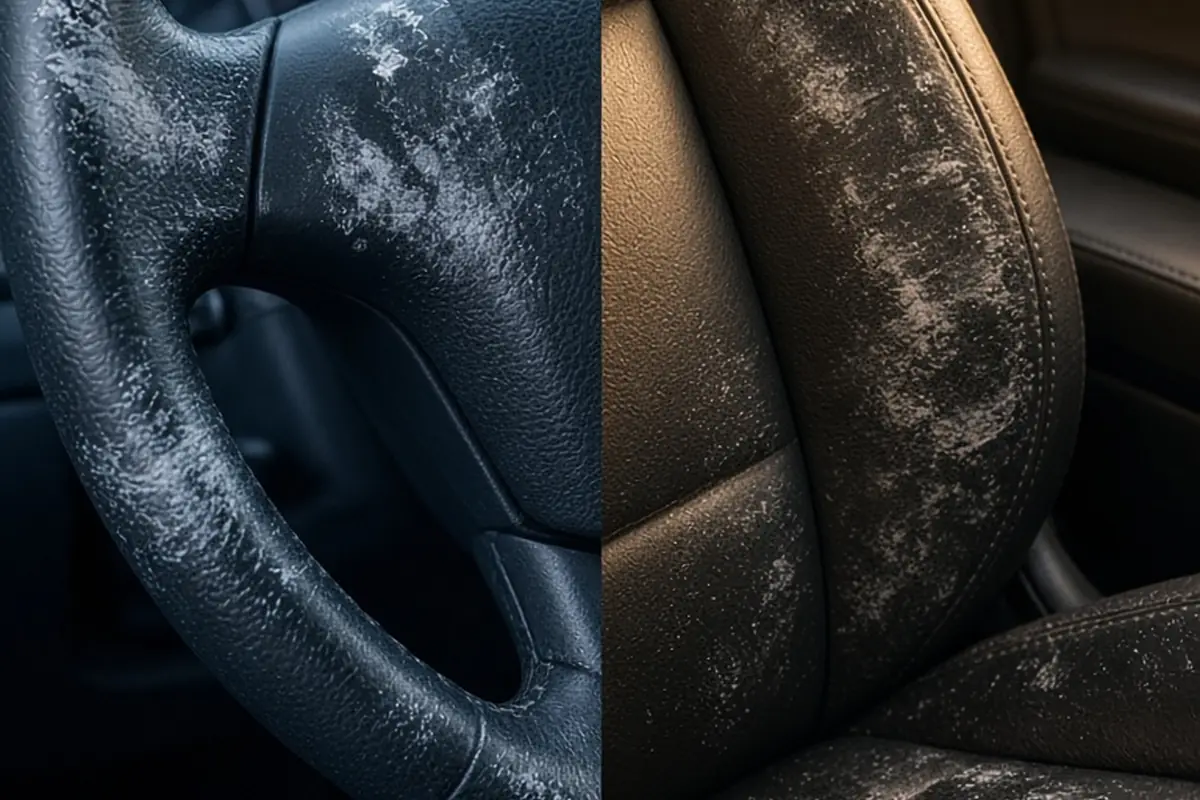
To clean sunscreen off your car interior, start by identifying the surface material. For leather and vinyl, apply a dedicated interior cleaner or diluted mild dish soap with a soft microfiber towel, gently agitating the chalky residue. For fabric upholstery, use warm water with gentle detergent or an upholstery foaming spray. Work in light circular motions, wipe away lifted oils with a damp cloth, and dry thoroughly to prevent lasting white mineral marks.
Sunscreen transfer is an inevitable part of warm-weather driving, leaving chalky white streaks and greasy handprints across steering wheels, center consoles, and seat bolsters. Because modern sunscreens rely on water-resistant emulsions and physical UV blockers like zinc oxide, standard damp wiping often smears the product rather than lifting it out of the grain.
Understanding Why Sunscreen Leaves Stubborn White Residues
Sunscreen formulations are engineered specifically to resist moisture, sweat, and friction, which makes them uniquely challenging to clean once transferred to automotive materials. Most mineral formulas contain micronized zinc oxide or titanium dioxide suspended in silicone, wax, or oil carriers. When these particles press into the microscopic grain of automotive leather, molded dashboard plastics, or fabric weaves, the carrier evaporates or binds to the surface, trapping the white pigments behind.
Attempting to rinse these marks with plain water usually causes the hydrophobic oils to repel the liquid, spreading the chalky mineral film across a wider area. High interior temperatures inside a parked vehicle can accelerate this bonding process, effectively baking the oils and pigments into textured plastics and topcoats. Recognizing that you are dealing with a combination of stubborn physical minerals and water-resistant lipids helps clarify why simple wiping fails and why a systematic degreasing approach is necessary.
Cleaning Sunscreen Stains from Leather and Synthetic Leather
Automotive leather and modern synthetic alternatives like leatherette or vegan polyurethane feature delicate clear protective topcoats that require gentle care. To treat sunscreen marks on these surfaces, select a dedicated pH-neutral automotive leather cleaner or mix a few drops of gentle liquid dish soap into warm water. Spray the cleaning solution onto a soft microfiber towel or a soft-bristled horsehair detailing brush rather than directly onto the upholstery to prevent excess liquid from pooling in perforated cooling holes or stitching.
Work the cleaner into the affected area using light, overlapping circular motions without pressing aggressively. The soft bristles or microfiber loops will reach into the textured leather grain to dislodge the trapped mineral particles. Once an emulsion forms, immediately wipe the area clean with a fresh, slightly damp microfiber cloth to pick up the suspended residue before it redeposits.
After the surface dries completely, evaluate the finish under good lighting. If the white haze has lifted, apply a quality automotive leather conditioner or synthetic protectant. This step replenishes moisture barriers and balances the sheen, keeping the treated spot from looking dull or uneven compared to surrounding panels.
Removing Smudges from Textured Vinyl and Dashboard Plastics
Textured plastics on door panels, armrests, and center consoles frequently catch sunscreen from elbows and knuckles. These hard polymers are durable, but their deep artificial grain patterns readily trap white physical UV filters. An interior all-purpose cleaner diluted specifically for automotive cockpits, or a solution of mild castile soap and warm water, serves as the safest starting point for these components.
Spray your cleaning solution lightly over a soft-bristled detailing brush to agitate the plastic surface. Agitation breaks surface tension and lifts dried sunscreen out of the micro-grooves without scratching the polymer. Avoid using aggressive scrubbing pads or melamine foam erasers on textured dashboard plastics, as these abrasive tools can permanently strip the factory matte texture and leave shiny, irreversible burnish marks.
Wipe the lifted slurry away with a clean, dry microfiber cloth. If a faint white film remains after the initial pass, repeat the process with a slightly richer soap lather rather than applying more physical pressure. Finish by applying a matte-finish interior UV dressing to restore an even tone without creating an artificial glare on your dashboard.
Lifting Sunscreen Out of Woven Fabric and Carpet Upholstery
Fabric upholstery requires a different strategy because sunscreen soaks into woven fibers rather than sitting on a non-porous topcoat. To tackle fabric stains, begin by blotting any fresh, wet product with a dry paper towel to remove excess oils before applying liquids. Avoid rubbing fresh spills, which pushes the minerals deeper into the seat padding underneath.
Mix a solution of warm water and a small amount of liquid laundry detergent or use a foaming automotive fabric cleaner. Apply the foam sparingly to the stain, working it gently into the fibers with a medium-soft upholstery brush. Allow the active surfactants two to three minutes to break down the greasy bonding agents holding the zinc oxide to the textile fibers.
Extract the cleaning solution by pressing a damp, clean microfiber towel firmly against the area to draw the moisture and dissolved oils upward. For older or deeply set sunscreen stains, a portable wet-dry upholstery extractor can flush out deep residue without saturating the underlying cushion foam. Allow the fabric to air dry completely with windows cracked or doors open to prevent moisture odors.
Safely Treating Touchscreens, Piano Black Trim, and Glass
Modern vehicle cabins feature extensive infotainment displays, glossy piano black consoles, and expansive glass surfaces that show oily sunscreen smudges instantly. These high-gloss surfaces are extremely scratch-prone and often coated with delicate anti-glare or anti-fingerprint layers that harsh chemicals can permanently ruin.
Never use standard household window cleaners, ammonia-based sprays, or high-concentration isopropyl alcohol on infotainment touchscreens or glossy interior trim. Instead, use an optical-safe screen cleaning spray or an ammonia-free automotive glass cleaner paired with a high-pile, borderless microfiber cloth. Mist the cleaner lightly onto the cloth, never directly onto the electronic screen or switchgear gaps.
Gently wipe the surface using light, straight passes rather than vigorous circles to minimize the risk of micro-marring. Flip the cloth to a completely dry, clean side for a final buffing pass to eliminate streaks and static attraction. For piano black trim around gear selectors, maintaining a light touch ensures you lift the oils without dragging grit across the soft gloss clear coat.
Managing Stubborn or Sun-Baked Mineral Build-Up
When sunscreen has baked into car surfaces over weeks of summer heat, mild soapy water may not completely remove the chalky shadows. In these instances, you can carefully introduce a specialized mineral deposit remover or a dedicated automotive interior citrus-based degreaser, provided you test it first in an inconspicuous area like the underside of a seat bolster.
Apply the mild degreasing agent to your detailing brush, gently massage the target spot for thirty seconds to loosen the bound lipids, and immediately neutralize the surface by wiping it down with a towel dampened with distilled water. Distilled water ensures that no new mineral deposits from tap water interfere with the cleaning process.
Another effective method for resilient mineral deposits on non-sensitive vinyl is an automotive steam cleaner wrapped in a microfiber cloth. The controlled heat softens baked-on waxes and sunscreen binders almost instantly, allowing the microfiber wrap to absorb the soil with minimal mechanical scrubbing. Always keep the steam head moving to prevent heat buildup on plastic seams or glued headliners.
Preventative Steps to Minimize Future Cabin Staining
While you cannot completely avoid using sunscreen during sunny drives, simple behavioral habits and interior protection can substantially reduce cleanup time. Allowing sunscreen to absorb fully into your skin for five to ten minutes before sitting in the vehicle significantly reduces immediate surface transfer onto armrests and seat edges.
Applying a ceramic-infused interior protectant to leather, vinyl, and high-wear plastics creates a microscopic sacrificial barrier. These coatings make the materials more hydrophobic and oleophobic, preventing sunscreen oils and minerals from locking tightly into the grain. When smudges do occur on protected surfaces, they typically wipe off with a simple damp cloth rather than requiring deep agitation.
Keeping a pack of dedicated automotive interior wipes or a clean microfiber cloth in your glovebox allows you to quickly blot contact points right after beach trips or outdoor sports. Addressing sunscreen transfer on the day it happens prevents heat from curing the oils, keeping your car cabin looking clean and well-maintained all season long.
Frequently asked questions
Can I use a magic eraser to scrub sunscreen off my car dashboard?
You should avoid using melamine foam magic erasers on vehicle dashboards and smooth interior plastics. Melamine foam acts as an abrasive micro-sandpaper that can permanently strip the factory finish and leave unnatural shiny or faded patches. A soft detailing brush with a dedicated interior cleaner is a much safer option.
Does hand sanitizer work to break down sunscreen marks on car seats?
Hand sanitizer should never be used on automotive leather, vinyl, or plastic surfaces. The high alcohol content can strip protective clear coats, dissolve factory dyes, and cause discoloration or cracking. Stick to pH-balanced automotive cleaners or diluted mild dish soap instead.
Why does the white sunscreen stain reappear after my car seats dry?
Stains often reappear when cleaning solutions dissolve the carrier oils but fail to fully lift the suspended zinc oxide or titanium dioxide particles out of the textured grain. When the moisture evaporates, the white mineral powder settles back into place. Re-cleaning with a soft-bristled brush and immediately wiping with a clean, damp towel will lift the lingering particles.
Your next step
Inspect your vehicle's high-contact zones today, and perform a gentle test cleaning with a diluted soap solution and soft microfiber towel on the most noticeable sunscreen mark.