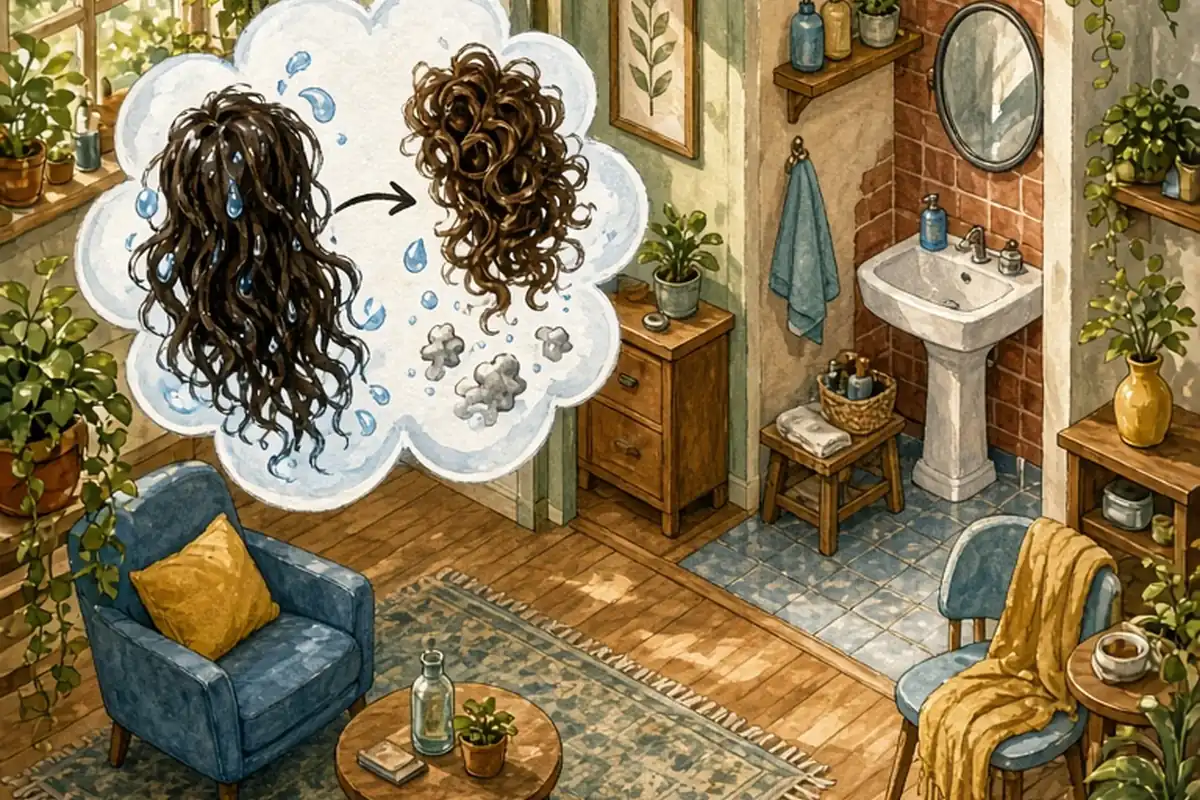
To fix moisture overload, immediately pause deep conditioning and hydrating hair masks. Wash your hair with a clarifying shampoo to remove excess softening agents, then apply a targeted protein treatment or bond builder to restore internal structure. Temporarily switch to lightweight, protein-rich styling products and reduce wash frequency until your hair regains its natural elasticity, volume, and curl definition.
When hair absorbs excessive water and rich conditioning emollients without enough structural protein to support them, strands become mushy, limp, and overly stretchy. Understanding how this imbalance occurs helps you correct the texture safely without swinging into brittle dryness.
Recognizing the Warning Signs of Moisture Overload
Moisture overload, frequently associated with hygral fatigue, occurs when the hair cuticle becomes weakened from repeated swelling and contracting as it absorbs water and heavy emollients. Instead of feeling strong and supple, over-moisturized hair feels excessively soft, gummy, or mushy when wet. When you gently pull a wet strand, it stretches far beyond its normal capacity without bouncing back, eventually snapping without resistance. Dry hair with moisture overload often looks dull, refuses to hold a curl or wave, feels limp, and develops a cotton-candy or fluffy frizz that resists standard styling products.
It is essential to distinguish moisture overload from protein overload before taking corrective action, as the treatments are opposites. Hair with protein overload feels stiff, brittle, straw-like, and snaps immediately when stretched because it lacks flexibility. In contrast, hair suffering from moisture overload has excessive elasticity and zero structural integrity. If you have been layering thick leave-in conditioners, oil-heavy deep treatments, and moisturizing cowashes without incorporating any structural ingredients, your hair is almost certainly leaning toward excess moisture.
Resetting the Hair Shaft with Clarifying Cleansers
The first physical step in correcting moisture overload is stripping away accumulated conditioning agents, film-forming humectants, and heavy plant butters that coat the hair shaft. Gentle sulfate-free shampoos and cowashes are designed to leave conditioning residues behind, which prolongs moisture overload. To create a clean foundation, wash thoroughly with a dedicated clarifying shampoo or a chelating cleanser if you deal with hard water. Focus the lather on your scalp and gently work it through the mid-lengths and ends to dissolve stubborn build-up.
While clarifying is a necessary corrective measure, it temporarily lifts the cuticles and strips away natural oils, which can leave your hair feeling somewhat rough initially. Avoid the temptation to follow this clarifying step with a heavy moisture mask. Instead, move directly into structural rebuilding. Keep in mind that clarifying should be a targeted intervention rather than an everyday habit; once your moisture balance normalizes, limit clarifying washes to once every two to four weeks to avoid unnecessary mechanical dryness.
Rebuilding Structural Integrity with Protein Treatments
Once excess moisture barriers are cleared, your hair requires protein to reinforce weakened keratin bonds and fill the gaps along damaged cuticles. Look for treatments containing hydrolyzed proteins such as hydrolyzed wheat, silk, keratin, soy, or vegetable amino acids. Because hydrolyzed proteins are broken down into small molecular weights, they can temporarily bond to the hair shaft, restoring tension, firmness, and curl memory. Bond-building formulations that reinforce internal disulfide bonds can also provide complementary structural reinforcement.
Apply the protein treatment evenly from roots to ends on damp hair, following the manufacturer's recommended processing time carefully. For moderate moisture overload, a light-to-medium protein deep conditioner left on for ten to fifteen minutes under a shower cap is usually sufficient. For severe cases where hair feels mushy and refuses to hold any shape, an intensive liquid or gelatin-based protein treatment may be required. Be mindful not to leave high-strength protein on longer than directed, as an excessive protein concentration can cause temporary rigidity.
Adjusting Styling Products and Drying Techniques
Your post-wash styling regimen plays a significant role in helping your hair maintain its newly restored strength. Temporarily eliminate heavy curl creams, pure oils like coconut or castor oil, and buttery leave-in conditioners from your routine. These rich formulations seal excessive water into the cortex and weigh down the strands. Instead, choose lightweight leave-in sprays that list hydrolyzed proteins in the first half of their ingredient lists, followed by firm-hold gels or styling foams that provide mechanical support without excess softening agents.
Drying habits are equally critical when recovering from moisture overload. Leaving hair wet for extended hours prolongs the swollen, vulnerable state of the hair cuticle. Rather than letting your hair air-dry while soaked, gently press out excess water using a microfiber towel or cotton t-shirt without vigorous rubbing. Follow with a blow dryer on low-to-medium heat with a diffuser attachment. Diffusing sets the protein and styling polymers quickly, locking in definition and reducing the amount of time the hair spends in an elastic, water-logged state.
Modifying Wash Habits to Prevent Recurrence
Preventing moisture overload from recurring requires changing everyday habits that inadvertently introduce too much water into the hair cortex. One common trigger is overnight deep conditioning or wearing wet conditioning caps for hours. Hair only absorbs a finite amount of conditioning ingredients within the first twenty to thirty minutes; leaving hair wet under plastic caps for hours degrades the cuticle layer and causes severe hygral stress.
Consider spacing out your wash days if you currently wash daily or multiple times per week. When you do wash, avoid soaking your hair in hot water for extended periods before cleansing. If you prefer frequent workouts that necessitate daily rinsing, use lukewarm water to rinse the scalp alone without fully saturating and re-conditioning your lengths every time. Streamlining your wash routine minimizes the constant expansion and contraction that leads to structural breakdown.
Establishing a Sustainable Moisture and Protein Balance
Recovering from moisture overload does not mean eliminating moisture permanently; healthy hair requires a dynamic balance between hydration for flexibility and protein for strength. As your hair begins to hold its shape and loses its gummy texture, reintroduce moderate moisture products gradually. Alternate between a balanced, hydrating conditioner on one wash day and a light protein rinse on the next, monitoring how your hair responds to touch and styling.
You can evaluate your hair's current state with a simple elasticity check on a few clean, wet strands. Take a single strand between your fingers and gently stretch it. Balanced hair will stretch slightly, around twenty to thirty percent, and bounce back to its original length when released. If it stretches endlessly and sags, increase your protein support; if it does not stretch at all and snaps instantly, introduce a light hydrating conditioner. Adjusting your routine based on these tactile cues keeps your hair resilient over time.
Illustrative Scenarios
Restoring Definition to Over-Conditioned Curls
An individual with naturally wavy hair noticed their pattern becoming limp, fuzzy, and unable to hold cast after months of daily cowashing and weekly overnight butter masks. The strands felt gummy when wet and stretched out flat with minimal tension. To resolve the issue, they eliminated the overnight treatments, used a chelating clarifying shampoo to strip residual oils, and applied a hydrolyzed wheat protein treatment for fifteen minutes. They replaced heavy styling creams with a light protein foam and diffused their hair to dry it quickly rather than air-drying for eight hours.
Key point: Shifting from heavy softening emollients to structured protein treatments and shorter drying times restores bounce and structural tension to fatigued strands.
Frequently asked questions
How long does it take to fix moisture overload in hair?
Most people notice improved texture and elasticity within one to three wash cycles after clarifying and applying a protein treatment. Severe cases involving significant structural fatigue may take several weeks of consistent, balanced care to fully stabilize.
Can I fix moisture overload without cutting my hair?
Yes, moisture overload is an imbalance that can usually be corrected using clarifying cleansers and protein-rich formulations. However, if the ends have developed extensive split ends from mechanical weakness while over-stretched, a light dusting or trim helps preserve overall hair health.
Is moisture overload the same thing as hygral fatigue?
Moisture overload refers to the general imbalance where hair has too much moisture relative to protein, while hygral fatigue is the specific physical damage caused to the cuticle and cortex from repeated excessive swelling and contracting with water. Addressing moisture overload effectively halts the progression of hygral fatigue.
Your next step
Begin by washing your hair with a clarifying shampoo on your next wash day, followed by a targeted hydrolyzed protein treatment to immediately reinforce lost structural strength.