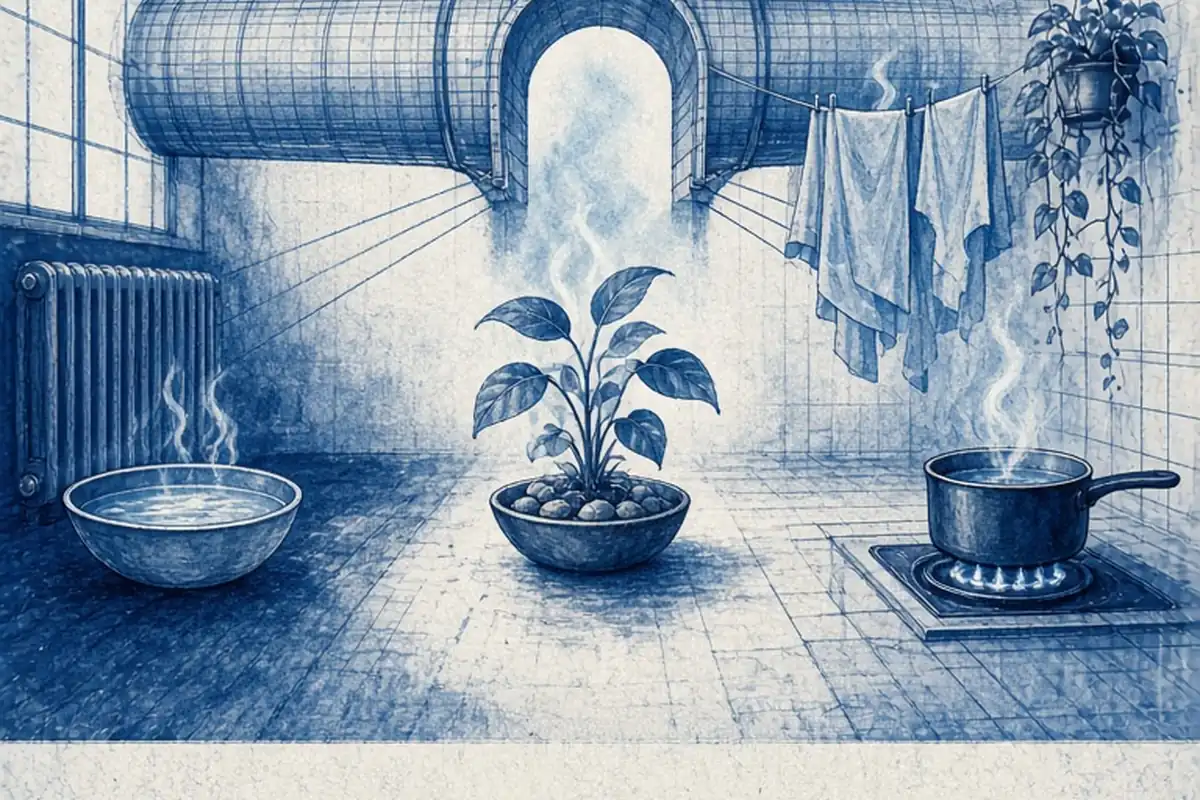
To get moisture in the air quickly, run a clean evaporative or ultrasonic humidifier sized for your room. For natural, low-cost alternatives, place shallow water pans near radiators or heating vents, air-dry freshly washed laundry indoors, leave the bathroom door open after warm showers, simmer water on the stovetop, and arrange transpiring houseplants on wet pebble trays.
Dry indoor air is common during colder months when central heating systems run continuously and strip ambient moisture from living spaces. Low humidity can leave rooms feeling uncomfortably parched, aggravate respiratory passages, and generate static electricity. Fortunately, restoring balanced moisture involves straightforward mechanical options alongside practical daily household adjustments.
Selecting and Operating a Mechanical Humidifier
Dedicated humidifiers represent the most dependable and controllable method for introducing water vapor into an indoor living area. The two most common residential varieties are ultrasonic models, which use high-frequency ceramic diaphragms to create a cool micro-mist, and evaporative models, which blow indoor air across a saturated paper or mesh wick filter. Ultrasonic units operate almost silently and consume minimal electricity, making them particularly well-suited for bedrooms, nurseries, and home offices. However, when filled with mineral-heavy hard tap water, ultrasonic units can disperse a fine white mineral dust across furniture, which means using distilled, demineralized, or filtered water is often recommended.
Evaporative humidifiers naturally self-regulate because dry air absorbs water more readily than moist air, significantly reducing the likelihood of over-saturating a small room. Whichever design you select, matching the unit output rating to the square footage of your space is essential for steady, noticeable results. The primary trade-off with any mechanical unit is routine maintenance. Water tanks should be emptied and refilled with fresh water daily, and internal components need weekly cleaning with diluted white vinegar to prevent mineral scaling and ensure the vapor emitted into your room remains clean and odorless.
Harnessing Kitchen Steam and Stovetop Simmering
Everyday meal preparation offers an easy, cost-free opportunity to release moisture into shared living areas. Simmering a wide, shallow pot of water over low heat on the stovetop produces a constant plume of warm vapor that quickly humidifies open-concept kitchens, dining areas, and adjoining family rooms. To freshen the indoor atmosphere at the same time, you can create a stovetop potpourri by dropping orange slices, cinnamon sticks, whole cloves, or fresh rosemary sprigs directly into the simmering water.
Standard kitchen appliances can also serve as passive humidity sources when used with a little intention. When your dishwasher finishes its hot wash cycle, turn off the heated dry function, open the door a few inches, and let the trapped steam billow out into the kitchen instead of condensing inside the machine. Boiling water in a conventional open kettle or removing the lid from a slow cooker during the final twenty minutes of cooking produces similar moisture-boosting results. The key consideration here is safety; open stovetop pots and boiling liquids require steady supervision and should never be left unattended around small children or pets.
Repurposing Shower Steam and Indoor Laundry Drying
Bathrooms and laundry rooms generate substantial warmth and humidity that often get vented outdoors without providing any benefit to the rest of the house. When taking a warm shower or bath, leave the bathroom door propped open—whenever personal privacy allows—so the concentrated cloud of warm steam travels into adjacent bedrooms and hallways. If you prefer taking baths, letting the warm tub water sit and cool down to room temperature before pulling the drain plug allows additional water to evaporate naturally into your living space.
Air-drying laundry indoors is another highly effective technique that requires zero added energy. Rather than running damp clothes, towels, and bedsheets through an electric dryer, hang them on a folding clothes rack placed in your living room or bedroom. A full load of clean, damp laundry can release several pints of water vapor into the air as it dries over the course of a day. To ensure success, space clothing items evenly across the drying rack so air circulates freely, which prevents fabrics from developing a damp or musty odor while they dry.
Placing Water Vessels Near Convective Heat Sources
Passive water evaporation provides a continuous, quiet moisture boost without consuming extra electricity by leveraging your home existing heating infrastructure. Placing heat-tolerant metal or ceramic vessels filled with fresh water directly on top of cast-iron radiators, baseboard heater covers, or near warm air floor registers allows heat to warm the water gently. As the water warms, it evaporates at a faster rate than it would at room temperature, while rising thermal convection currents distribute the vapor evenly throughout the room.
When setting up passive evaporation dishes, surface area is far more important than container depth. A wide, shallow baking dish or decorative tray will release moisture significantly faster than a tall, narrow vase holding the identical volume of liquid. You can also place clean, porous natural stones, ceramic baking beads, or clean sponges inside the tray so their upper surfaces extend above the waterline, effectively increasing the evaporative surface area exposed to moving air. While this approach produces a modest output compared to an electric humidifier, it is an excellent, low-maintenance supplement for compact bedrooms and home workspaces.
Using Transpiring Houseplants and Pebble Trays
Indoor foliage plants act as natural biological humidifiers through the process of transpiration. When you water a houseplant, its root system absorbs moisture from the potting soil, draws it upward through the stems, and releases the vast majority of that water back into the ambient air as clean, invisible vapor through microscopic leaf pores called stomata. Broad-leafed and lush varieties—such as Boston ferns, peace lilies, spider plants, areca palms, and rubber trees—are especially effective at elevating localized humidity when kept healthy and properly hydrated.
To maximize the moisture output of your greenery, group several potted plants together to form a collective humid microclimate. Setting plant containers on shallow plastic or ceramic trays filled with smooth pebbles and water provides an additional passive boost. The pebbles keep the bottoms of the pots elevated above the waterline to protect against root rot, while the shallow water beneath evaporates continuously up through the leaf canopy. Keep in mind that plants require consistent care, adequate natural lighting, and routine watering to transpire effectively, making them a steady supporting habit rather than an instant fix for severe dryness.
Managing Thermostat Settings and Sealing Air Drafts
Indoor humidity is tied directly to ambient temperature and how well your home retains conditioned air. When central heating systems warm cold outdoor air, its relative humidity drops significantly because warmer air has a greater capacity to hold moisture. Setting your thermostat to high temperatures causes the air to feel noticeably drier, accelerating the rate at which it draws moisture from your skin, sinuses, and wooden furniture. Lowering your thermostat by a few degrees and dressing in comfortable layers helps preserve existing moisture levels without sacrificing comfort.
Sealing structural drafts prevents dry outdoor air from infiltrating your living areas while keeping humidified indoor air from escaping prematurely. Inspect the perimeter of window sashes, exterior doorways, plumbing cutouts, and baseboards for noticeable drafts, and apply adhesive foam weatherstripping, silicone door sweeps, or caulk where gaps exist. Keeping windows latched tightly compresses the existing seals, ensuring that the moisture generated through cooking, showering, and humidifying remains trapped inside where it can maintain a comfortable indoor climate.
Monitoring Humidity Levels and Preventing Over-Saturation
While adding moisture makes dry indoor environments far more comfortable, keeping humidity within a balanced range is critical for maintaining home health. Ideally, indoor relative humidity should sit between thirty and fifty percent. When humidity falls below thirty percent, dry air causes static electricity and physical discomfort; however, when humidity climbs above fifty-five to sixty percent, excess moisture can condense on cold window panes, exterior walls, and window sills, creating prime conditions for mildew, mold, and dust mites.
An inexpensive digital hygrometer is the most reliable tool for tracking moisture levels throughout your home. Position the device on an interior wall or side table away from direct sunlight, heating vents, and the direct mist stream of a humidifier to obtain an accurate reading. If you notice heavy condensation forming on window glass, damp spots on walls, or a heavy, damp smell in the room, temporarily turn off active humidifiers, open an interior door, and allow the space to ventilate until relative humidity returns to the recommended thirty to fifty percent range.
Frequently asked questions
What is the fastest DIY way to get moisture in the air without a humidifier?
The quickest DIY method is simmering a wide pot of water on the stovetop or setting up an indoor drying rack loaded with wet laundry in your main living space. Both techniques release several pints of water vapor into the surrounding air within an hour.
Can leaving bowls of water out actually increase bedroom humidity?
Yes, shallow bowls of water placed near heat sources like radiators or warm floor registers will steadily release moisture into a bedroom via natural evaporation. While the effect is slower and more subtle than an electric unit, it offers a quiet, continuous boost for small rooms.
How can I tell if my indoor air is too dry?
Common indicators include frequent static electricity shocks, dry or itchy skin, irritated nasal passages, chapped lips, and slight gaps forming in hardwood floors. Placing a digital hygrometer in your room will confirm whether relative humidity has dropped below thirty percent.
Does leaving the bathroom door open during a shower help humidify the whole house?
A hot shower generates a dense concentration of steam that easily raises humidity in the bathroom and directly adjoining rooms when the door stays open. In larger or multi-story homes, however, the moisture disperses quickly, so it works best as a targeted moisture boost for nearby areas.
Your next step
Place an inexpensive digital hygrometer in your main living space to check your current baseline, then combine an appropriately sized room humidifier with everyday habits like indoor laundry drying and stovetop simmering to maintain a comfortable relative humidity between thirty and fifty percent.