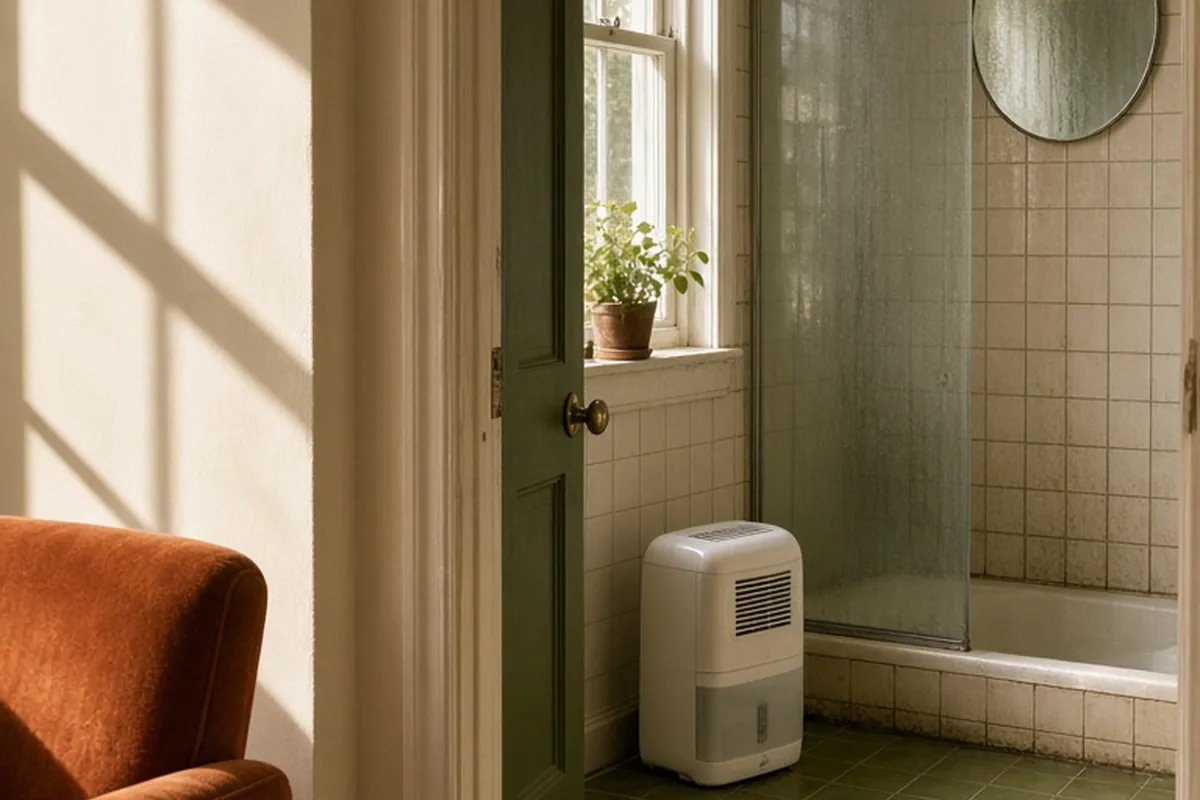
To get moisture out of a bathroom, run the exhaust fan during every shower and leave it on for twenty minutes afterward. Squeegee wet shower walls immediately, open windows slightly to cross-ventilate when weather allows, leave the door ajar after use, and place a small dehumidifier or moisture absorber in windowless or poorly ventilated spaces to capture lingering humidity.
Excess moisture in a bathroom creates damp air, foggy mirrors, and persistent dampness on grout, ceilings, and baseboards. Implementing a few reliable daily habits alongside targeted ventilation upgrades keeps the room dry, protects wall paint from peeling, and stops stale humidity from drifting into adjacent living areas.
Optimizing Exhaust Fan Run Time and Airflow
A bathroom exhaust fan serves as the primary mechanical tool for removing steam before it settles onto cool surfaces. Many people turn the fan off the moment they finish showering, which leaves the vast majority of suspended water vapor trapped inside the room. Air requires time to circulate and cycle through the exhaust ducting. Running the fan throughout the shower and allowing it to continue operating for roughly twenty minutes afterward creates negative pressure that steadily draws humid air outside, replacing it with drier air from the rest of the home.
To ensure the fan operates at peak efficiency, verify that it provides adequate airflow for the square footage of the space. Bathrooms up to one hundred square feet generally require at least one cubic foot per minute of airflow per square foot. Test the fan's mechanical pull by holding a single sheet of toilet paper or a tissue up to the intake grille while it runs; the suction should hold the paper firmly in place without assistance. If the paper drops, the grille may be clogged with accumulated lint and dust, or the ductwork leading outdoors may be obstructed. Installing a digital countdown wall timer or a humidity-sensing switch can automate this cycle, eliminating the need to remember to turn the switch off later while preventing the fan from running indefinitely and wasting electricity.
Clearing Standing Water from Shower Enclosures and Tiles
Water left clinging to shower walls, glass doors, and tub surrounds does not simply disappear; it evaporates directly into the bathroom atmosphere over several hours, keeping ambient humidity elevated long after the shower is turned off. Removing this surface water mechanically takes less than two minutes and cuts the overall moisture load in half. A simple silicone or rubber squeegee wiped down tile walls and glass panels immediately after bathing guides standing water directly down the drain rather than into the surrounding air.
For tiled showers with textured surfaces or deep grout lines where a squeegee cannot create an airtight seal, a dedicated microfiber towel can quickly absorb puddles along flat ledges, shampoo niches, and tub corners. Paying special attention to horizontal surfaces—such as the perimeter of the bathtub, the threshold of the shower door, and the top of the bench—prevents pools of water from sitting for extended periods. While this step requires an extra physical habit every time you bathe, it significantly reduces the workload on your exhaust fan and protects caulking seams from premature deterioration.
Leveraging Natural Ventilation and Cross-Drafts
In bathrooms equipped with operable windows, natural outdoor airflow can supplement or substitute for mechanical venting. Opening a window by two to four inches during and after bathing encourages warm, moisture-laden air to rise and escape. To maximize this passive exchange, leave the bathroom door cracked open an inch or two to create a continuous cross-draft, pulling dry interior air through the room and pushing steam out the window aperture.
However, natural ventilation has distinct seasonal trade-offs. During humid summer months or rainy spells, opening an exterior window can actually introduce more moisture into the house than it removes. In freezing winter weather, wide-open windows cause rapid thermal loss and can chill interior wall surfaces, causing warm indoor shower steam to condense more aggressively on cold drywall. For best results during extreme outdoor weather, keep windows closed and rely on mechanical extraction, reserving open-window cross-drafts for moderate, dry, or breezy days.
Deploying Dehumidifiers and Desiccant Absorbers
Windowless bathrooms, basement washrooms, and rooms with inadequate ducting often require dedicated moisture-extraction appliances. A compact thermoelectric or small compressor dehumidifier placed on a secure, dry countertop or vanity floor actively condenses airborne vapor into an internal reservoir. These units are particularly effective in small spaces where mechanical ventilation cannot keep pace with multiple back-to-back showers taken by family members.
When electrical outlets are limited or space is tight, passive desiccant containers using calcium chloride pellets offer an alternative for small pockets of moisture, such as under-sink cabinets, linen closets, or compact half-baths. While passive absorbers pull moisture out of the air gradually, they lack the rapid extraction power needed to clear dense shower fog from an entire room. If using an electric dehumidifier, ensure it is positioned well away from direct water spray, empty the collection bucket regularly to prevent overflow, and clean the intake filter once a month to maintain steady performance.
Managing Damp Towels, Bath Mats, and Textiles
Fabrics act as substantial moisture reservoirs inside the bathroom. Thick cotton bath towels, heavy robes, and plush bath mats absorb several cups of water during a single routine. When left bunched up on hooks, draped over the edge of the tub, or resting flat on tile floors, these textiles dry slowly through evaporation, releasing a continuous stream of humidity into the room across the entire day.
To break this continuous cycle of humidity, spread bath towels completely flat across wide towel bars rather than hanging them from single wall hooks, allowing air to circulate on both sides of the cloth. Hang bath mats over the shower curtain rod or a towel rail immediately after use so the underside does not trap water against the cool floor. If your bathroom struggles with persistent dampness, consider switching to lightweight waffle-weave towels that dry rapidly, or replace plush fabric mats with quick-drying diatomaceous earth stone bath boards that release water quickly without remaining soggy.
Adjusting Water Temperature and Flow Volume
The density of steam produced in a bathroom is directly proportional to the temperature differential between the shower water and the ambient room air. Piping-hot water creates rapid vaporization, filling the space with dense white fog within minutes. Lowering the water temperature by just a few degrees significantly reduces the volume of airborne steam generated during the shower, without compromising personal comfort.
Reducing the flow rate of the water also limits the total volume of water exposed to the air. Installing a high-efficiency, aerated low-flow showerhead restricts water output while maintaining strong spray pressure, meaning less heated water is dispersed across surfaces to evaporate. Taking slightly shorter showers and turning on the room's overhead lights and heating a few minutes before bathing to warm up cold wall surfaces can also curb the rate at which condensation forms on tiles and mirrors.
Improving Air Pathways and Room Circulation
A bathroom exhaust fan cannot move air out of a room unless it has a continuous supply of replacement air entering the space. If a bathroom door fits tightly against the finished floor with no clearance, the fan creates a vacuum effect that severely restricts its ability to pull humid air up into the exhaust duct. Ensuring a gap of one-half inch to three-quarters of an inch between the bottom of the closed door and the floor provides the necessary pathway for make-up air to enter the room continuously.
In larger bathrooms or uniquely configured spaces with deep water closets and alcoves, air can become stagnant in corners away from the main vent. Placing a small, oscillating clip-on fan or compact floor circulator pointed toward the exhaust vent encourages air movement across dead zones. Additionally, check that wall and ceiling finishes are sealed with satin or semi-gloss moisture-resistant paint, which stops water vapor from penetrating porous drywall and migrating into wall cavities where it cannot easily dry out.
Frequently asked questions
How long should I leave the bathroom fan running after a shower?
Keep the exhaust fan running for fifteen to twenty minutes after completing a shower. This timeframe gives the mechanical system enough opportunity to evacuate airborne steam and lower the room's relative humidity back to normal levels.
Is opening a window more effective than using an exhaust fan?
An exhaust fan is generally more reliable because it mechanically forces humid air out regardless of outdoor weather. Opening a window helps when outdoor air is cool and dry, but during hot, humid, or rainy days, it can introduce more ambient moisture into the home.
Can passive moisture-absorbing tubs replace an electric dehumidifier?
Passive moisture absorbers using calcium chloride work well for small, confined spaces like closets or vanities, but they lack the capacity to process heavy shower steam. For an entire bathroom, an electric exhaust fan or a portable dehumidifier is necessary to manage the volume of water vapor.
Why does my bathroom stay humid even when the exhaust fan is running?
Lingering moisture typically indicates an undersized fan, a duct clogged with lint, or a door with no bottom gap to allow intake air. Squeegeeing wet tile and spreading out damp bath mats will also resolve common sources of lingering surface evaporation.
Your next step
Test your exhaust fan today with a tissue to confirm strong airflow, and start the habit of squeegeeing shower walls and running the fan for twenty minutes after every wash.